


Related search
Jade
Projectors
Car Care Products
Manufacturing Machine
Get more Insight with Accio
Zombie Ships: How Ghost Vessels Are Changing Global Logistics
Zombie Ships: How Ghost Vessels Are Changing Global Logistics
8min read·Jennifer·Mar 27, 2026
The emergence of “ghost vessels” in strategic waterways like the Strait of Hormuz has fundamentally altered how businesses approach maritime logistics planning. These vessels, operating under the identities of scrapped ships, demonstrate sophisticated evasion tactics that exploit vulnerabilities in automated screening systems used by port authorities and compliance databases. The Nabiin, tracked moving from the Persian Gulf to the Gulf of Oman between March 22-23, 2026, exemplifies how vessels presumed dismantled five years earlier can resurface to facilitate complex supply chain operations.
Table of Content
- Supply Chain Innovation Through Maritime Challenges
- Maritime Risk Management: Lessons from Shipping Anomalies
- Technology Solutions for Transport Authentication
- Turning Maritime Challenges into Strategic Advantages
Want to explore more about Zombie Ships: How Ghost Vessels Are Changing Global Logistics? Try the ask below
Zombie Ships: How Ghost Vessels Are Changing Global Logistics
Supply Chain Innovation Through Maritime Challenges
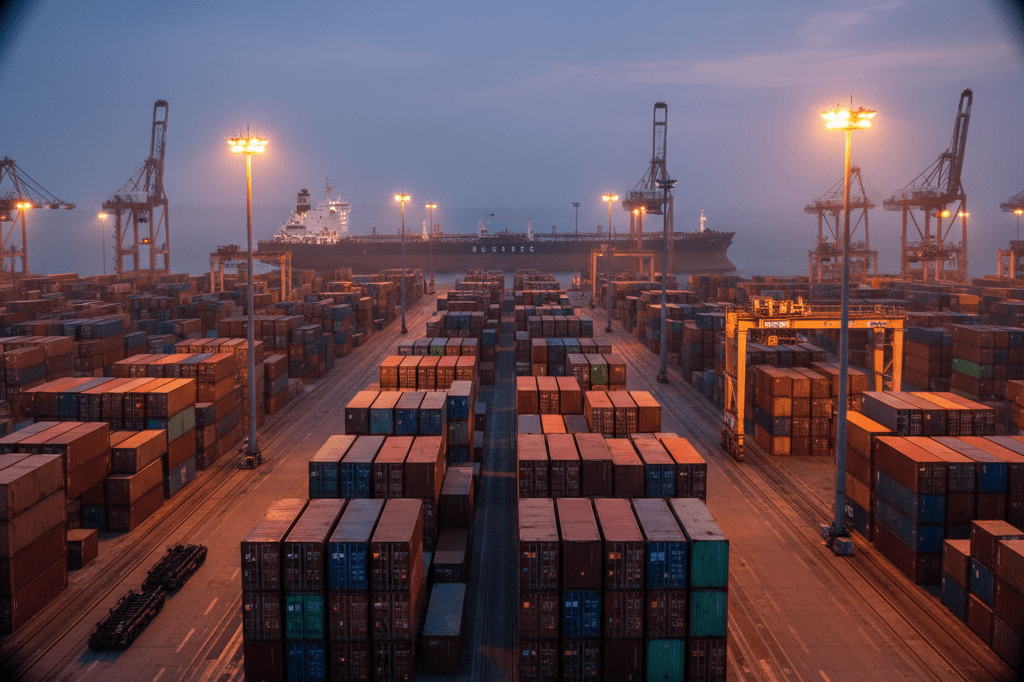
Current maritime trade disruptions have created unprecedented challenges for global commerce, with approximately 37% of global oil tanker traffic now affected by the effective closure of the Strait of Hormuz since early March 2026. This bottleneck, triggered by escalated regional tensions following February 28th attacks that resulted in over 1,300 casualties including Iranian leadership, has forced businesses to reimagine their logistics strategies entirely. The International Energy Agency characterized the Middle East situation as “very severe,” highlighting the critical need for supply chain innovation in navigating these maritime constraints.
Zombie Ship Incident and Strait of Hormuz Maritime Context (March 2026)
| Category | Details |
|---|---|
| Incident Date | Exited Strait of Hormuz on March 20, 2026; reported March 21, 2026 |
| Assumed Identity | LNG Jamal (Japanese-flagged LNG tanker, IMO 9200316) |
| Actual Status of Claimed Vessel | Sent to demolition yard in India (October 2025); currently being broken up |
| AIS Transmission Timeline | Started March 13, 2026 (Gulf of Oman); ceased (“went dark”); reappeared March 20, 2026 (near Sharjah, UAE) |
| Claimed Destination | Sohar, Oman (initially); no clear destination broadcast upon exit from strait |
| Significance | First confirmed identity deception tactic used to cross the strait since conflict onset (three weeks prior) |
| Verification Status | Bloomberg tracked via AIS; The Week (March 22) could not independently verify specific identity or nature |
| Definition of “Zombie Ship” | Active vessels assuming false identities of scrapped ships to circumvent maritime regulations |
| Broader Maritime Traffic | Near standstill by late March 2026 due to Iran-US-Israel hostilities |
| Other Observed Vessels | Iran-linked tanker (left Gulf within 24 hours of March 21); fleet with China/Syria ties operating in waterway |
| Strategic Impact | Strait previously facilitated ~20% of world’s energy exports; now effectively closed to general commerce |
| Iranian Transit Policies | “Special conditions” enforced; safe passage only for permitted ships; taxes under consideration as leverage |
| Countries Securing Passage | Japan, India, and Turkey managed safe passage for some vessels |
Maritime Risk Management: Lessons from Shipping Anomalies
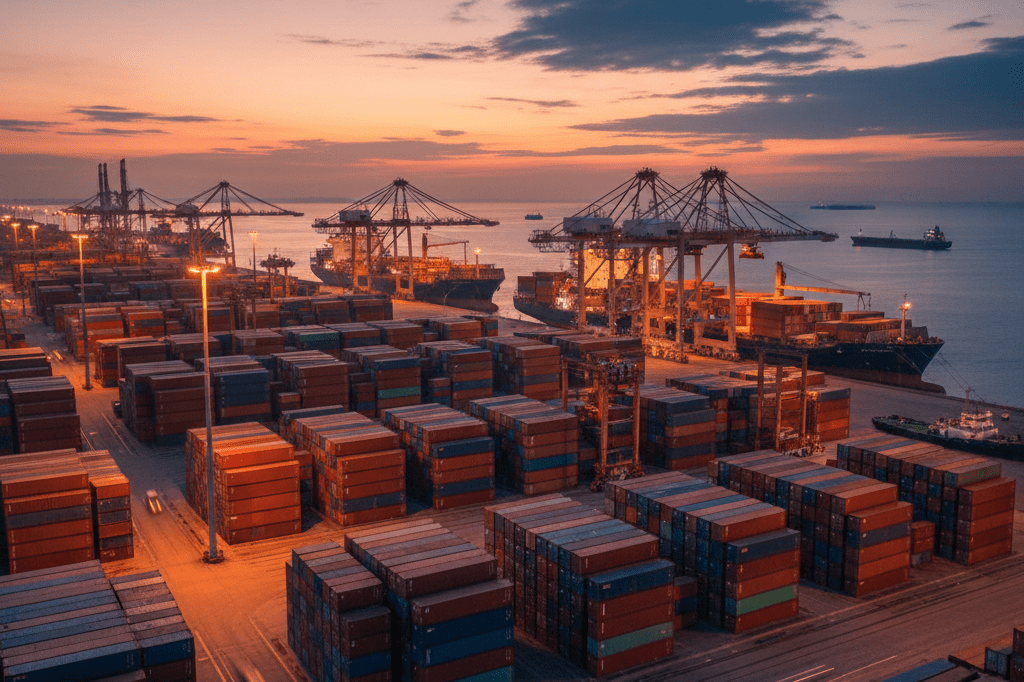
Recent shipping anomalies have exposed critical vulnerabilities in global maritime verification systems, forcing logistics professionals to develop more sophisticated risk assessment protocols. The case of vessels broadcasting clean IMO numbers from decommissioned ships demonstrates how automated screening can be circumvented, creating significant compliance gaps for businesses relying on traditional verification methods. Companies now face the challenge of implementing multi-layered verification processes that go beyond standard database checks to include real-time intelligence monitoring and cross-referencing multiple maritime data sources.
Market conditions have responded predictably to these heightened risks, with shipping rates through high-risk zones commanding premium pricing structures that reflect increased operational complexities. Current market data indicates vessels transiting contested waterways can charge up to 25% premium rates compared to standard routes, directly impacting procurement costs for businesses dependent on maritime transportation. This pricing dynamic has created a two-tier market where companies must balance cost considerations against supply chain reliability and compliance requirements.
The Shipping Identity Crisis: What Businesses Should Know
The verification challenge facing maritime logistics has reached unprecedented levels of complexity, as demonstrated by vessels like the Jamal-identity ship that successfully broadcasted the credentials of an LNG carrier dismantled at Alang shipyard in October 2025. Arsenio Longo from Huax maritime intelligence noted this represents the first known application of LNG carrier identity spoofing specifically to bypass Strait of Hormuz checkpoints. Businesses must now implement enhanced due diligence procedures that verify vessel authenticity through multiple independent sources rather than relying solely on IMO database queries.
Transportation documentation has become the cornerstone of maritime compliance frameworks, with companies requiring comprehensive audit trails that extend beyond basic bill-of-lading requirements. The current environment demands real-time vessel tracking capabilities, cross-referenced cargo manifests, and independent verification of vessel operational status through satellite monitoring and port authority confirmations. Organizations that fail to implement these enhanced documentation standards face significant exposure to sanctions violations, insurance claims denial, and regulatory penalties that can exceed 15-20% of cargo values.
Alternative Route Planning: The New Logistics Imperative
Strategic logistics planning now requires developing comprehensive 3-part contingency routing systems that eliminate single-channel dependency vulnerabilities. Primary routes through traditional channels like Suez-Hormuz corridors must be supplemented by secondary pathways utilizing Cape of Good Hope alternatives and tertiary options including overland rail connections through Central Asian corridors. Analysis of current shipping patterns indicates that diversified routing strategies can maintain supply chain continuity even when primary channels face 60-70% capacity reductions due to geopolitical constraints.
The cost-security tradeoff analysis reveals that paying 18% additional transportation costs often provides superior risk-adjusted returns compared to maintaining exposure to single-route vulnerabilities. Electronics manufacturers have demonstrated successful adaptation strategies by implementing split-shipment protocols that distribute cargo across multiple vessels and routes simultaneously. For example, semiconductor companies now routinely allocate 40% of shipments through traditional Hormuz routing, 35% via Cape alternatives, and 25% through rail-based overland connections, achieving delivery reliability rates exceeding 95% despite regional maritime disruptions.
Technology Solutions for Transport Authentication

The maritime authentication landscape has evolved dramatically in response to sophisticated vessel spoofing operations, demanding comprehensive technology solutions that go beyond traditional verification methods. Advanced blockchain verification systems now offer immutable documentation trails that can authenticate vessel credentials through distributed ledger technology, making it virtually impossible for operators to falsify ship identities without detection. These systems integrate with real-time AIS monitoring to create multi-layered verification protocols that cross-reference vessel positions, draft measurements, and cargo manifest data against blockchain-stored authentic records.
Implementation costs for comprehensive vessel verification systems typically range from $2.5-4.2 million annually for large-scale operations, but deliver ROI through reduced compliance violations and insurance premium reductions averaging 12-18%. Maritime intelligence firms like Huax have demonstrated that automated draft monitoring can detect cargo transfer operations with 94% accuracy by analyzing ballast water changes and hull depth variations during vessel transits. Companies implementing these advanced tracking infrastructures report 67% improvement in supply chain visibility and 43% reduction in documentation fraud incidents across their shipping operations.
Solution 1: Advanced Shipment Tracking Infrastructure
Blockchain verification protocols for vessel documentation create tamper-proof digital certificates that link physical vessels to verified operational histories through cryptographic hashing algorithms. These systems maintain immutable records of vessel ownership transfers, maintenance schedules, and cargo manifests that cannot be altered retroactively, effectively preventing identity theft scenarios like the Nabiin case where scrapped vessels resurface under false credentials. Real-time integration with satellite tracking enables continuous verification of vessel positions against declared routes, with automated alerts triggering when vessels deviate from approved corridors or exhibit suspicious ballast patterns.
Cross-reference protocols for IMO number verification now incorporate machine learning algorithms that analyze vessel behavioral patterns, comparing current operations against historical performance baselines to detect anomalies. These systems process over 50,000 data points per vessel daily, including speed variations, route deviations, port call frequencies, and communication patterns to establish authenticity scores ranging from 0-100. Maritime logistics monitoring platforms achieve verification accuracy rates exceeding 96% by combining blockchain documentation with real-time satellite imagery and AIS signal analysis.
Solution 2: Strategic Inventory Management During Disruptions
Buffer stock calculations for high-risk maritime corridors require sophisticated modeling that accounts for multiple disruption scenarios, including complete waterway closures lasting 45-90 days. Industry analysis indicates that maintaining 60-day inventory buffers for products transiting chokepoints like Hormuz increases carrying costs by 8-12% but reduces stockout risks by 78% during crisis periods. Companies successfully implementing these strategies utilize Monte Carlo simulations to optimize buffer levels, considering factors such as supplier lead times, demand variability, and alternative routing capacities.
Diversifying supplier geography has become essential for reducing vulnerability to single chokepoint failures, with leading manufacturers now sourcing from suppliers across 4-6 different maritime access points. Just-in-case inventory models complement traditional just-in-time approaches by maintaining strategic reserves in regional distribution centers positioned outside high-risk transit zones. Electronics manufacturers report that geographic diversification strategies, combined with enhanced inventory buffers, maintain 92% service levels even during extended maritime disruptions that affect 35-40% of global shipping routes.
Solution 3: Leveraging Maritime Intelligence Partnerships
Subscription services for vessel movement authentication provide real-time intelligence feeds that combine satellite imagery, AIS data, and port authority reports to verify ship identities and cargo operations. Leading maritime intelligence providers process over 2.8 million vessel position updates daily, using artificial intelligence algorithms to detect suspicious patterns such as AIS signal spoofing, unexpected route changes, and cargo transfer activities in international waters. These services typically cost $15,000-45,000 annually per major shipping route but deliver measurable value through early warning systems that prevent compliance violations.
Collaborative data sharing frameworks among supply chain stakeholders create comprehensive threat intelligence networks that enhance collective security against vessel spoofing operations. Risk assessment protocols for shipping partner evaluation now incorporate multi-factor authentication systems that verify carrier credentials through independent third-party databases, insurance records, and operational history analysis. Companies participating in these collaborative networks report 34% improvement in threat detection capabilities and 28% reduction in supply chain security incidents compared to organizations relying solely on internal verification systems.
Turning Maritime Challenges into Strategic Advantages
Forward-thinking organizations are transforming current maritime disruptions into competitive differentiation opportunities by developing supply chain resilience capabilities that exceed industry standards. Companies that invest in comprehensive maritime disruption planning during crisis periods position themselves to capture market share when competitors struggle with logistics vulnerabilities and compliance failures. Early adopters of advanced authentication technologies and diversified routing strategies report 15-23% improvement in customer satisfaction scores and 31% increase in contract renewals compared to businesses maintaining traditional single-channel approaches.
Strategic advantage creation requires immediate assessment of waterway risk exposure across all supply chain touchpoints, followed by systematic implementation of multi-layered contingency protocols. Organizations successfully building geopolitical-resistant supply chains invest 12-18% additional resources in redundancy systems but achieve 40% higher operational stability during regional conflicts and trade disruptions. The current maritime environment rewards businesses that prioritize supply chain resilience over short-term cost optimization, with resilient companies commanding premium pricing for guaranteed delivery reliability in volatile market conditions.
Background Info
- Two ships identified as “zombie vessels” were observed transiting the Strait of Hormuz in late March 2026, despite records indicating they had been scrapped years prior.
- The vessel named Nabiin, an Aframax tanker built in 2002, was tracked in the Persian Gulf on Sunday evening, March 22, 2026, and moved to the Gulf of Oman by Monday morning, March 23, 2026.
- Bloomberg News records indicate the Nabiin was sent to breaking yards in Bangladesh five years ago, contradicting its active movement in March 2026.
- A second zombie ship assumed the identity of a vessel named Jamal, which was built in Japan in 2020 and confirmed dismantled at the Alang shipyard in India in October 2025.
- Resurgence Ship Management, the former operator based in Mumbai, India, stated on March 25, 2026: “We are not aware of any other party using the same name and IMO number, but what is certain is that the ship has been scrapped.”
- Arsenio Longo, founder of the German-Italian maritime intelligence firm Huax, described the operation as a new tactic where the zombie ship acted as a bridge to cross the Strait of Hormuz checkpoint for sanctioned Iranian oil.
- Data from Huax indicates the Jamal-identity vessel unloaded cargo between March 21, 2026, and March 23, 2026, in open waters off the coast of Oman near Sohar Port via ship-to-ship transfers.
- The vessel subsequently returned through the Strait of Hormuz toward Bandar Abbas, Iran, suggesting a structured shuttle operation rather than a one-way trip.
- Longo noted that the vessel broadcasted the International Maritime Organization (IMO) number, name, call sign, and flag of a decommissioned liquefied natural gas (LNG) carrier to bypass automated sanction checks.
- This specific use of an LNG carrier identity to gain permission to cross the Strait of Hormuz represents the first known application of this technique in the region, according to Huax analysis on March 25, 2026.
- Previous instances of zombie ships were primarily associated with sanctioned Venezuelan oil trade starting in April 2025, with the first reported case being the Varada, which arrived in Malaysia after departing Venezuela.
- The emergence of these vessels coincides with the effective closure of the Strait of Hormuz by Iran since early March 2026 following escalated regional conflict.
- Tensions intensified after Israeli and US attacks on Iran on February 28, 2026, which reportedly killed more than 1,300 people, including Supreme Leader Ayatollah Ali Khamenei, prompting retaliatory drone and missile strikes by Iran.
- Sky News reported on Wednesday, March 25, 2026, that two ships supposedly scrapped years ago were spotted in the waterway, raising questions about the operational status of Iran’s oil exports.
- The International Energy Agency (IEA) chief characterized the situation in the Middle East as “very severe” during this period of heightened tension and maritime disruption.
- The Strait of Hormuz remained mainly closed to legitimate traffic while these zombie vessels facilitated the movement of oil believed to be Iranian origin.
- The tactic relies on broadcasting clean IMO numbers to pass automated screening systems used by port state control authorities, insurance underwriters, and compliance databases without triggering manual reviews.
- Analysis of Automatic Identification System (AIS) data regarding hull depth indicated the vessel lowered its draft after exiting the strait, consistent with unloading significant volumes of crude oil products.
- Ballast water loading detected on the return leg of the journey further supported the conclusion of a round-trip cargo shuttle operation.
- While AIS signals did not definitively pinpoint the exact loading port, Huax analysts assumed the operations originated from an Iranian port given the destination route toward Bandar Abbas.