


Related search
Kitchen Tools
T-Shirt
Dining Tables
Electric Motorcycles
Get more Insight with Accio
Youlgrave Garage Crisis Exposes Small Business Fuel Vulnerabilities
Youlgrave Garage Crisis Exposes Small Business Fuel Vulnerabilities
8min read·Jennifer·Mar 27, 2026
The suspension of fuel sales at Youlgrave Garage in Derbyshire on March 20, 2026, exemplifies how rapidly escalating wholesale costs can force small businesses into impossible decisions. Owner Mollie Ellis watched super unleaded prices surge by 20 pence per litre, while diesel prices doubled that increase, creating a scenario where maintaining current retail prices would require charging customers £1.82 per litre for super unleaded and nearly £2.00 per litre for diesel. This fuel price spike, driven by the ongoing US/Israel-Iran conflict, transformed routine inventory decisions into existential business choices.
Table of Content
- Supply Chain Shock: When Fuel Prices Paralyze Small Businesses
- Price Volatility: Managing Inventory in Uncertain Markets
- Crisis Preparation: 3 Strategies to Weather Price Storms
- Beyond the Pump: Building Resilient Business Models
Want to explore more about Youlgrave Garage Crisis Exposes Small Business Fuel Vulnerabilities? Try the ask below
Youlgrave Garage Crisis Exposes Small Business Fuel Vulnerabilities
Supply Chain Shock: When Fuel Prices Paralyze Small Businesses

The small business operations reality became stark when Ellis realized that “the small business couldn’t afford to make a loss on fuel,” despite knowing the critical role her station played in the community. The supply disruption rippled through the local economy, particularly affecting elderly residents and farmers who relied on the garage’s super unleaded supply. With international oil prices jumping from $73 per barrel to approximately $108 per barrel by mid-March 2026, the mathematical inevitability became clear: every $10 increase in barrel prices translated to roughly seven pence per litre at the pump, making sustainable retail pricing impossible for independent operators.
UK Fuel Price Trends and Market Impact (February–March 2026)
| Metric/Event | Date Range | Details & Figures |
|---|---|---|
| Petrol Prices (RAC Data) | Feb 28 – Mar 6, 2026 | Rose by 3.7p to an average of 136.53p per litre. |
| Diesel Prices (RAC Data) | Feb 28 – Mar 6, 2026 | Surged by 6p to a 16-month high of 148.35p per litre. |
| Cost to Fill Car (Petrol) | Feb 28 – Mar 6, 2026 | Increased by approximately £2 for a standard 55-litre tank. |
| Cost to Fill Car (Diesel) | Feb 28 – Mar 6, 2026 | Increased by nearly £3.30 for a standard 55-litre tank. |
| Brent Crude Oil Price | Pre-Conflict – Mar 5, 2026 | Jumped from $73 to over $100 per barrel; RAC noted $85 on March 5. |
| Energy Price Cap (Ofgem) | Jan 1 – Mar 31, 2026 | Typical household bill set at £1,758 annually (£20 higher than 2025). |
| Electricity Unit Rate | Q1 2026 Average | Averaged 27.69p per kWh with a daily standing charge of 54.75p. |
| Gas Unit Rate | Q1 2026 Average | Averaged 5.93p per kWh with a daily standing charge of 35.09p. |
| Government Support Package | Announced Mar 3, 2026 | £53 million fund launched to assist households with heating oil costs. |
Price Volatility: Managing Inventory in Uncertain Markets
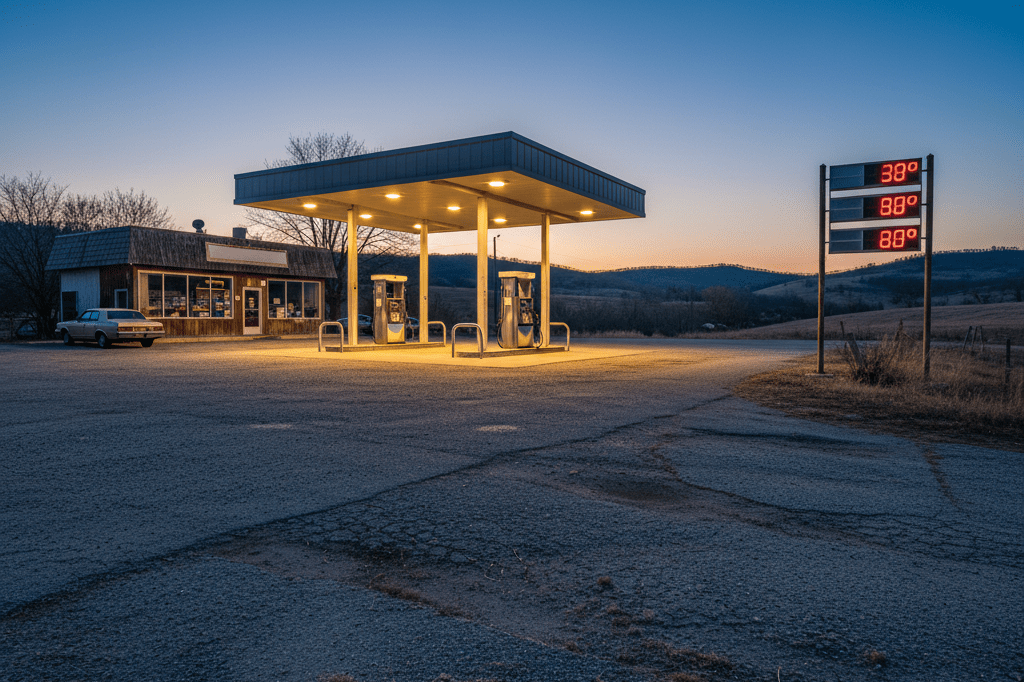
The extreme price fluctuation experienced across UK fuel markets in early 2026 exposed fundamental weaknesses in traditional inventory management systems. Martin Brass, owner of Lumbards of Ashbourne, described market conditions as “very volatile,” with suppliers unable to confirm prices until the actual delivery day, eliminating any possibility of predictive supply planning. This unprecedented uncertainty forced retailers to abandon conventional forecasting models and operate in a reactive mode that prioritized cash flow preservation over customer service optimization.
Independent fuel retailers found themselves caught between wholesale price surges and customer resistance to retail price increases. Kerry McNair, manager of Lumbards of Ashbourne, emphasized that independent garages were “absolutely not” profiteering, stating that “in order for us to remain even slightly competitive we’ve had to look at trying to reduce margins.” The compression of profit margins created a sustainability crisis where traditional inventory management principles collapsed under the weight of daily price volatility, forcing operators to choose between maintaining inventory levels and preserving business solvency.
When “Just-in-Time” Becomes “Just-Too-Expensive”
The volatility factor reached unprecedented levels when suppliers could no longer guarantee pricing structures beyond 24-hour windows, effectively destroying the foundation of just-in-time inventory systems. Independent stations like Lumbards of Ashbourne, with limited forecourt space and small underground storage tanks, became particularly vulnerable as their frequent tanker deliveries exposed them to daily price fluctuations. This cash flow pressure created scenarios where ordering fuel became a speculative activity rather than a calculated business decision, with operators unable to predict whether their next delivery would generate profit or loss.
Geographic Vulnerabilities in Supply Networks
The 4-mile problem emerged as a critical factor when Youlgrave Garage’s suspension left local residents with no nearby alternatives, highlighting how geographic isolation amplifies supply chain disruptions. Location premiums compounded these challenges, as Kerry McNair noted that her supplier charged additional fees due to Lumbards’ position “at the bottom of a hill,” where unloading difficulties for lorries created hidden costs that further squeezed already compressed margins. These geographic vulnerabilities exposed the fragility of rural fuel distribution networks, where single-point failures could isolate entire communities from essential services, particularly affecting approximately 40% of Derbyshire Dales homes not connected to gas networks and dependent on heating oil that jumped from 58 pence to £1.30 per litre.
Crisis Preparation: 3 Strategies to Weather Price Storms

The March 2026 fuel crisis demonstrated that market volatility can transform routine business operations into survival scenarios within days. Independent retailers discovered that traditional supplier relationships and inventory management practices collapsed under extreme price pressures, with wholesale costs surging by 20-40 pence per litre in just weeks. Crisis preparation strategies must anticipate these rapid market shifts and establish operational frameworks that maintain business continuity when conventional supply chains fail.
Effective crisis management requires proactive planning rather than reactive responses to market disruptions. The Youlgrave Garage suspension illustrates how unprepared businesses face binary choices between unsustainable losses and complete operational shutdowns. Strategic preparation involves three fundamental approaches: supplier diversification to reduce dependency risks, transparent customer communication to maintain relationships during price volatility, and strategic inventory management that balances carrying costs against potential market gains.
Strategy 1: Diversified Supplier Relationships
Building relationships with multiple suppliers across different geographic regions provides critical protection against single-source supply disruptions and price manipulation. Independent retailers should establish connections with at least 3-4 wholesale suppliers spanning regional, national, and alternative distribution networks to ensure competitive pricing options during volatile periods. Flexible payment terms become essential when wholesale prices fluctuate daily, requiring negotiated agreements that allow 72-hour price holds or graduated payment schedules that spread cost increases across multiple delivery cycles.
Emergency supply agreements with competitor businesses create mutual support networks that benefit entire market regions during crisis periods. These arrangements should include reciprocal fuel sharing protocols, coordinated pricing strategies to prevent destructive competition, and joint purchasing power leverage against major suppliers. The 4-mile isolation experienced by Youlgrave customers could have been mitigated through pre-established cooperative arrangements with neighboring stations that maintain emergency inventory reserves specifically for supply disruption scenarios.
Strategy 2: Transparent Customer Communication Plans
Developing price change notification systems with 72-hour advance warnings helps customers plan their fuel purchases and reduces the “very difficult behaviour” experienced by staff at Lumbards of Ashbourne during sudden price increases. Digital notification platforms, including SMS alerts and mobile app notifications, enable real-time communication about supply availability and pricing changes before customers arrive at forecourts. These systems should provide specific information about price increase percentages, duration expectations, and alternative purchasing options to maintain customer relationships during volatile periods.
Creating loyalty programs that buffer established customers from sharp price increases provides competitive differentiation and revenue stability during market disruptions. Programs offering price protection for the first 20-30 litres per month, or graduated pricing tiers based on purchase history, help retain customer base while maintaining operational viability. Digital channels become critical communication tools during supply disruptions, allowing retailers to provide updates about inventory availability, delivery schedules, and temporary service modifications without requiring physical site visits that may disappoint customers.
Strategy 3: Strategic Inventory Management
Implementing the 60/30/10 inventory rule during volatile periods allocates storage capacity to maximize both supply security and profit optimization opportunities. This approach dedicates 60% of tank capacity to baseline inventory requirements, 30% to strategic reserves purchased during price dips, and 10% to emergency buffer stock that ensures continuous operations during supply delays. Calculating true carrying costs against potential price increases requires sophisticated analysis that factors storage expenses, insurance costs, and opportunity costs against projected market movements within typical 7-14 day inventory cycles.
Using predictive analytics to anticipate global supply disruptions enables proactive inventory positioning before crisis periods impact local markets. The Strait of Hormuz closure that affected one-fifth of global oil supply could have been anticipated through geopolitical risk monitoring and early inventory accumulation strategies. Advanced analytics systems should track international crude oil futures, regional conflict indicators, seasonal demand patterns, and weather-related supply risks to generate actionable inventory recommendations that balance storage limitations against market timing opportunities.
Beyond the Pump: Building Resilient Business Models
Market volatility in 2026 revealed that fuel-dependent business models face existential risks when commodity prices experience extreme fluctuations beyond traditional operational margins. Independent retailers must recognize that price stability represents a temporary market condition rather than a guaranteed business foundation, requiring diversified revenue strategies that reduce dependence on volatile fuel margins. The 90-day operating reserve concept provides essential financial buffering against market swings that can persist for months rather than weeks, as demonstrated by the sustained oil price increases from $73 to $108 per barrel following the February 28th conflict escalation.
Business continuity planning extends beyond crisis management to encompass fundamental operational resilience across multiple revenue streams and service offerings. Service diversification creates revenue stability through non-volatile income sources including automotive services, convenience retail, food service, and electric vehicle charging infrastructure that generate consistent margins regardless of fuel price fluctuations. The approximately 40% of Derbyshire Dales homes not connected to gas networks represent expansion opportunities for heating oil delivery services, propane distribution, and renewable energy solutions that complement traditional fuel retail operations.
Background Info
- Youlgrave Garage in Derbyshire suspended all fuel sales on or before March 20, 2026, due to a sharp rise in wholesale costs linked to the ongoing conflict between the US/Israel and Iran.
- Mollie Ellis, the owner of Youlgrave Garage, stated that the price of super unleaded increased by 20 pence per litre, while diesel prices rose by more than twice that amount.
- To maintain current pricing levels would have required charging customers £1.82 per litre for super unleaded and nearly £2.00 per litre for diesel, figures Ellis indicated the small business could not sustain without incurring losses.
- The suspension was necessitated because the garage could not afford to sell fuel at a loss, despite acknowledging that many local residents, particularly elderly people and farmers, rely on the station’s supply of super unleaded.
- The nearest alternative fuel stations are located more than four miles away from Youlgrave, creating significant inconvenience for the local community following the suspension.
- International oil prices surged after air strikes on Iran began on February 28, 2026, with Brent Crude rising from $73 per barrel to approximately $108 per barrel by mid-March 2026.
- A $10 increase in the price of an oil barrel translates to a rough increase of seven pence per litre at the pump, contributing to the steep cost escalation faced by retailers.
- Approximately 40% of homes in the Derbyshire Dales are not connected to the gas network, making them reliant on heating oil which saw prices jump from 58 pence to £1.30 per litre in the High Peak area.
- About one-fifth of the world’s oil supply passes through the Strait of Hormuz, which has been effectively closed since military actions commenced, exacerbating global supply constraints.
- “Selling them would have meant charging customers £1.82 and nearly £2 a litre respectively,” said Mollie Ellis regarding the unviable retail prices for super unleaded and diesel.
- “The small business couldn’t afford to make a loss on fuel,” said Mollie Ellis explaining the decision to halt sales despite the impact on local reliance.
- While Youlgrave Garage suspended sales, other independent stations like Lumbards of Ashbourne remained open but reported high sensitivity to price fluctuations due to limited forecourt space and small underground storage tanks requiring frequent tanker deliveries.
- Martin Brass, owner of Lumbards of Ashbourne, described the market situation as “very volatile,” noting that suppliers could not confirm prices until the day of delivery.
- Kerry McNair, manager of Lumbards of Ashbourne, stated that her supplier charged slightly more due to the station’s location at the bottom of a hill, which made unloading difficult for lorries.
- Despite rising costs, McNair emphasized that independent garages were not profiteering, stating, “Absolutely not
- in order for us to remain even slightly competitive we’ve had to look at trying to reduce margins.”
- Staff at Lumbards of Ashbourne reported facing “very difficult behaviour” from customers reacting to price increases, which the garage management described as unjustified.
- The BBC East Midlands reported the suspension of fuel sales at the Youlgrave location on March 20, 2026, highlighting the immediate impact of the geopolitical conflict on local UK businesses.
- Dove Radio reported the incident six days prior to March 27, 2026, confirming the specific price hikes and the operational halt at Youlgrave Garage.