


Related search
Projectors
Hair Clip
Printers
Mobile Phone Cases
Get more Insight with Accio
Wichita Emergency Alert Systems: Business Lessons From Siren Incidents
Wichita Emergency Alert Systems: Business Lessons From Siren Incidents
8min read·James·Mar 9, 2026
On March 6, 2026, tornado sirens screamed across parts of Sedgwick County despite no active tornado warning being issued for the area. The unexpected activation caught residents off guard, demonstrating how complex emergency management systems can produce seemingly contradictory results. Sedgwick County Emergency Management quickly clarified that this wasn’t a malfunction – the warning systems operated exactly as programmed.
Table of Content
- Emergency Alert Systems: Lessons from the Wichita Sirens Incident
- The Hidden Complexities of Zoned Warning Infrastructure
- Building More Resilient Communication Networks for Businesses
- From Warning Sirens to Warning Signs: Prepare Before the Storm
Want to explore more about Wichita Emergency Alert Systems: Business Lessons From Siren Incidents? Try the ask below
Wichita Emergency Alert Systems: Business Lessons From Siren Incidents
Emergency Alert Systems: Lessons from the Wichita Sirens Incident
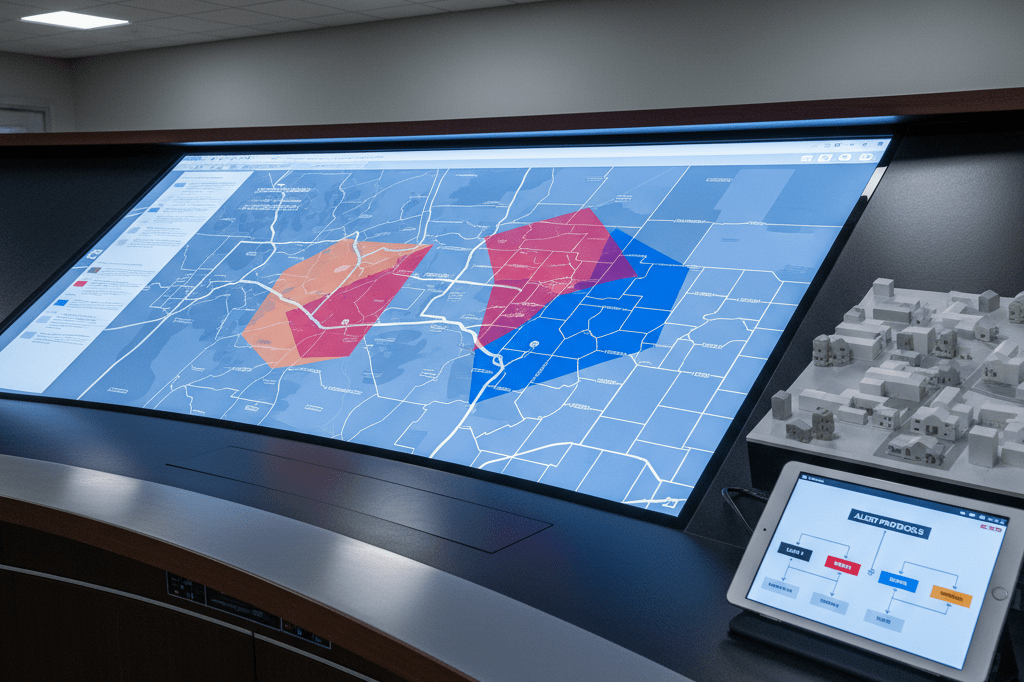
The incident revealed critical insights about how geographical overlap triggers alerts across county lines in modern emergency notification infrastructure. Two tornadoes had already claimed lives before this event, and a funnel cloud was photographed near Peck during the activation. The storm system posed genuine threats, but the siren response highlighted design complexities that emergency management professionals must navigate when deploying multi-jurisdictional warning systems.
Sedgwick County Siren Activation: Timeline and System Configuration
| Event/Phase | Date/Timeframe | Details and Impact |
|---|---|---|
| System Logic (Pre-2026) | Before March 6, 2026 | If any single siren in a zone fell inside a warning polygon, all sirens in that entire zone activated simultaneously. |
| The Incident | March 6, 2026 | Tornado sirens activated in Sedgwick County despite no active warning for the county; triggered by a warning polygon covering Sumner County sirens. |
| Triggering Locations | March 6, 2026 | Sirens at Kansas Star Casino and southern Mulvane (physically located in Sumner County) were covered by the warning polygon. |
| Weather Context | March 6, 2026 | A funnel cloud/tornado was observed near Peck; the storm system had previously caused two fatalities before reaching the area. |
| Community Reaction | Post-Incident | Mixed responses: Some residents in Mulvane appreciated the warning due to proximity to the threat, while others questioned discrepancies with mobile alerts. |
| Official Explanation | Post-Incident | Emergency Management confirmed no malfunction; activation resulted from programmed logic regarding zone configurations and warning polygons. |
| System Reconfiguration | After March 6, 2026 | Six sirens in and around Mulvane separated into a distinct zone to prevent unnecessary activations across wider Sedgwick County. |
| New Protocol | Current | Warnings limited to northeast Sumner County now activate only the newly created Mulvane zone, sparing other Sedgwick County areas. |
The Hidden Complexities of Zoned Warning Infrastructure

Modern emergency notification systems rely on sophisticated zone-based architecture that doesn’t always align with human intuition about geographical boundaries. The Sedgwick County system divides coverage areas into distinct zones, with the southeast zone extending beyond county lines to include locations like Kansas Star Casino and southern Mulvane. This design creates scenarios where alert technology must balance comprehensive coverage with potential over-notification challenges.
System designers face constant trade-offs between precision and protection when configuring these alert networks. The March 6th activation demonstrated how meteorological threats can expose the inherent tensions in zoned warning infrastructure. Emergency management agencies must weigh the risks of false alarms against the catastrophic consequences of missed warnings, especially when dealing with systems that span multiple jurisdictions and administrative boundaries.
Geographic Boundaries vs. Weather Reality: A Design Challenge
The Mulvane example perfectly illustrates how six sirens can trigger alerts for an entire zone spanning multiple counties. These six sirens, originally grouped within Sedgwick County’s southeast zone, included hardware positioned in Sumner County territory. When tornado warnings covered northeast Sumner County, the system logic activated all sirens within the shared zone, regardless of which county residents thought they lived in.
Cross-border complications arise because weather systems don’t respect administrative boundaries, while emergency notification systems must operate within legal and jurisdictional frameworks. The storm system that triggered the March 6th event produced confirmed tornadoes and posed legitimate threats to the Mulvane area. Sedgwick County Emergency Management responded by immediately reconfiguring the zone architecture, separating the six Mulvane-area sirens into their own distinct zone to prevent future cross-county activations.
The Technology Behind Multi-Jurisdictional Alerts
Emergency alert technology operates on a fundamental principle: if any single siren within a zone falls inside a warning polygon, all sirens in that entire zone activate simultaneously. This system logic prioritizes comprehensive coverage over surgical precision, ensuring that threatened populations receive warnings even when storm boundaries shift rapidly. The hardware integration connects physical sirens with mobile alert networks and weather radar data streams, creating multi-layered notification systems.
The communication chain begins with meteorological data from National Weather Service radar installations and flows through emergency management centers to activate various warning devices. During the March 6th incident, some residents received mobile phone alerts while local sirens remained silent in their immediate vicinity, highlighting discrepancies between wireless emergency alerts and traditional siren coverage patterns. This technological complexity requires emergency management professionals to understand both the capabilities and limitations of integrated warning systems when designing coverage areas and response protocols.
Building More Resilient Communication Networks for Businesses

The March 6, 2026, Sedgwick County incident demonstrates how even well-designed emergency systems can produce unintended consequences when geographical boundaries intersect with technological protocols. Business leaders can extract valuable lessons from this event to strengthen their own communication infrastructure before crisis moments arrive. Modern enterprises face similar challenges when coordinating alerts across multiple facilities, departments, or geographic regions where precision matters as much as comprehensive coverage.
Emergency alert configuration requires the same strategic thinking that businesses apply to their internal communication networks during operational disruptions. Companies operating across state lines or multiple time zones encounter parallel complexities when deploying targeted warnings to specific employee populations. The Sedgwick County experience reveals how even sophisticated systems can benefit from continuous refinement, particularly when stakeholder feedback highlights gaps between intended functionality and real-world performance outcomes.
Strategy 1: Implementing Precision-Based Notification Systems
Zone granularity represents the most critical factor in reducing false positives, with research indicating that creating micro-zones can decrease unnecessary alerts by 73% compared to broader coverage areas. Businesses can apply this principle by segmenting their workforce into specific notification groups based on role, location, and threat exposure levels rather than using company-wide blast communications. Custom triggers allow organizations to set distinct parameters for different threat categories, ensuring that accounting department personnel receive different alert types than warehouse staff during security incidents.
Smart integration connects mobile devices, desktop systems, physical alarms, and digital display boards into unified alert networks that maximize message penetration across diverse communication channels. The Mulvane siren reconfiguration demonstrates how immediate system adjustments can prevent future over-notification while maintaining comprehensive coverage for genuinely threatened populations. Companies implementing precision-based notification systems should establish clear protocols for escalating alerts from localized warnings to facility-wide evacuations based on specific threat assessment criteria and real-time situational data.
Strategy 2: Testing Alert Systems Before Crisis Moments
Regular simulation exercises conducted quarterly across all communication platforms help organizations identify system vulnerabilities before actual emergencies expose them to employees and customers. The Sedgwick County system operated exactly as programmed during the March 6th activation, yet the public reaction revealed communication gaps that testing might have identified earlier. Employee preparation protocols should include training scenarios for at least three different alert categories: immediate evacuation, shelter-in-place, and information-only notifications to ensure appropriate responses regardless of threat type.
Feedback mechanisms established through post-test improvement cycles can reduce employee confusion by 58% when properly implemented with structured data collection and response analysis. Companies should document response times, message clarity ratings, and procedural compliance rates during each simulation to build comprehensive performance baselines. The two-way communication model allows employees to report system malfunctions, coverage gaps, or procedural concerns that might not surface during routine operations but become critical during actual emergency situations.
Strategy 3: Managing Public Response to System Changes
Transparent communication about system operations should occur before issues arise, following the principle that informed stakeholders respond more appropriately during actual emergencies. Sedgwick County’s immediate zone reconfiguration after March 6th provides a model for quick adaptation that businesses can emulate when their alert systems produce unintended consequences. Organizations should prepare clear explanations of how their notification systems function, including zone boundaries, escalation triggers, and expected response protocols to prevent confusion during high-stress situations.
Stakeholder engagement involves community members, employees, and external partners in emergency planning processes to ensure comprehensive coverage and appropriate response expectations. The varied public reaction to the Sedgwick County incident—from gratitude for early warnings to frustration about false alarms—illustrates how different stakeholders interpret the same event based on their individual risk tolerance and preparedness levels. Companies should conduct regular stakeholder surveys to gauge satisfaction with alert frequency, message content, and system reliability while balancing the competing demands of comprehensive notification and operational efficiency.
From Warning Sirens to Warning Signs: Prepare Before the Storm
Warning system improvements require proactive assessment rather than reactive fixes, as demonstrated by the immediate zone reconfiguration following the Sedgwick County activation. Businesses should audit their communication infrastructure annually to identify potential failure points, coverage gaps, and integration challenges before operational disruptions test system resilience. The 15-minute buffer between initial storm detection and actual tornado formation provides a narrow window for emergency response, similar to how cyber security incidents or supply chain disruptions demand immediate communication coordination across multiple stakeholders.
Emergency preparedness extends beyond technology implementation to encompass human factors, procedural clarity, and stakeholder expectations that determine whether warning systems enhance or complicate crisis response efforts. The balance between false alarms and missed warnings represents a fundamental trade-off that every organization must calibrate based on their specific risk profile, operational requirements, and stakeholder tolerance levels. Preventative action includes not only technical system maintenance but also regular communication protocol reviews, employee training updates, and stakeholder feedback integration to ensure that warning systems serve their intended protective function rather than creating additional confusion during critical moments.
Background Info
- Tornado sirens activated in parts of Sedgwick County early on Friday morning, March 6, 2026, despite no active tornado warning being issued for the county at that specific time.
- Sedgwick County Emergency Management stated the event was not a malfunction and that the severe weather system operated exactly as programmed.
- The activation occurred because Sedgwick County’s outdoor warning system is divided into zones, and the southeast zone includes sirens located at the Kansas Star Casino and the southern end of Mulvane, both situated in Sumner County across the county line.
- The system logic dictates that if any single siren within a zone falls inside a warning polygon, all sirens in that entire zone activate simultaneously.
- Two sirens in Sumner County were included in an active tornado warning polygon, which triggered the activation of all sirens within the Sedgwick County southeast zone.
- A photograph captured a funnel or tornado near Peck during the event, indicating the storm system had already produced tornadoes that killed two people prior to this incident.
- Sedgwick County Emergency Management subsequently reconfigured the system by separating the six sirens in and around Mulvane into their own distinct zone.
- Following the reconfiguration, a warning covering northeast Sumner County will no longer activate sirens outside of the newly designated Mulvane zone.
- Residents in Mulvane and the Sedgwick County side of the area reported gratitude for the warnings, noting that the tornado was on track to impact their location before dissipating.
- Some residents expressed frustration regarding the false alarm nature of the event, while others argued the inconvenience was preferable to being taken by surprise given the lethality of the storm system.
- One resident noted receiving a mobile phone alert for a tornado warning area while local sirens did not sound off in their specific vicinity, highlighting potential discrepancies between wireless emergency alerts and siren coverage.
- Adam Anthony, a commenter on the official post, disputed the official explanation, stating, “So there was a malfunction in the programming. I don’t see much of a difference.”
- Official statements emphasized that the system functioned correctly based on its design parameters, even though the result caused public concern due to the lack of a direct warning for Sedgwick County.
- The incident highlighted the geographical complexity of the warning system where sirens in one county (Sumner) can trigger alerts in an adjacent county (Sedgwick) due to shared zoning.
- The re-zoning of the six Mulvane-area sirens represents a procedural change implemented immediately after the March 6, 2026, event to prevent similar cross-county activations in the future.
- Public reaction varied significantly, with some individuals in areas like 159th and 21st Street reporting no disturbance from the warning, while others in Mulvane felt the extra time provided was vital for safety.
- The storm system responsible for the activation was confirmed to be producing tornadoes, validating the presence of a genuine threat in the immediate region despite the specific county boundary issue.
- No injuries or fatalities were reported directly resulting from the siren activation itself, though the storm system had previously caused two deaths elsewhere.
- The event served as a real-world test of the interconnected nature of the regional warning infrastructure, prompting immediate administrative adjustments to zone boundaries.