


Related search
Camera Accessories
Educational Tools
Car Phone Holder
Gold Chain
Get more Insight with Accio
Vevor Gate Recall: Key Lessons for Child Safety Product Buyers
Vevor Gate Recall: Key Lessons for Child Safety Product Buyers
7min read·James·Mar 25, 2026
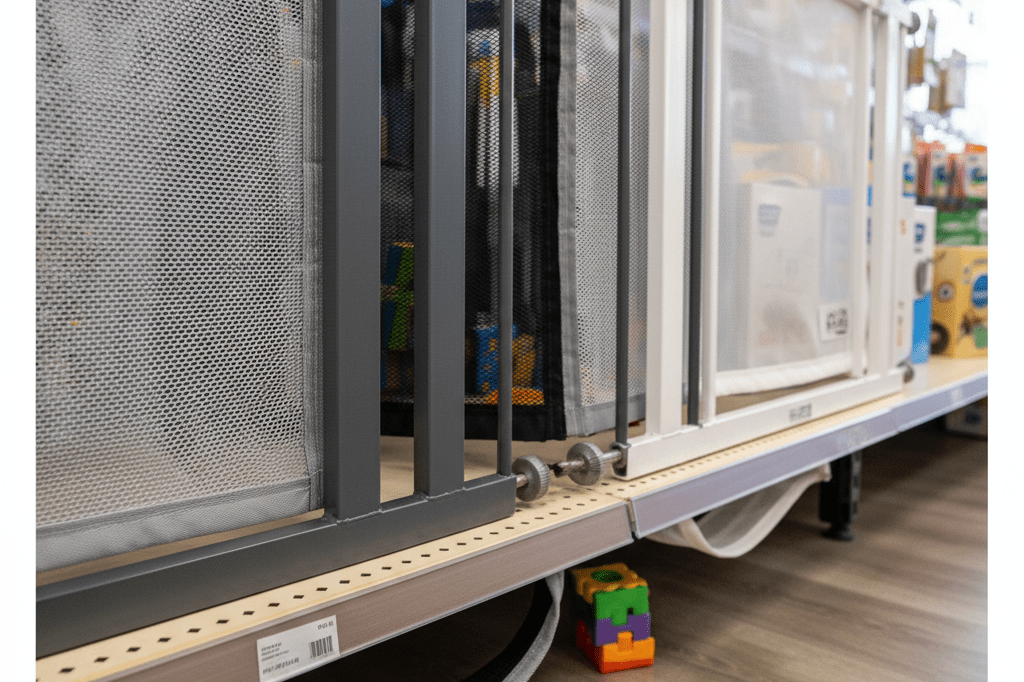
The March 2026 recall of Vevor retractable baby gates serves as a stark reminder of how design oversights can create serious safety hazards in child protection products. Three specific models – YJ-3355, YJ-3371, and YJ-33110 – were recalled due to dangerous gap issues between the gate and floor that could allow a child’s torso to pass through while trapping their head. This recall affected gates sold across the United States and Canada between November 2023 and March 2026, highlighting the widespread impact of safety defects in the global childproofing market.
Table of Content
- Product Safety Challenges: Learning from Retractable Gate Recalls
- Safety Standards in Child Protection Product Manufacturing
- Supply Chain Management During Product Safety Crises
- Strengthening Your Product Safety Framework
Want to explore more about Vevor Gate Recall: Key Lessons for Child Safety Product Buyers? Try the ask below
Vevor Gate Recall: Key Lessons for Child Safety Product Buyers
Product Safety Challenges: Learning from Retractable Gate Recalls

Safety compliance data reveals that gates with openings larger than 3 inches pose documented entrapment risks, yet these Vevor models featured metal frames approximately 34.2 inches high with problematic floor clearances. The recall specifically targeted units available in gray, black, and white colors across three width configurations: 60 inches, 76.8 inches, and 116 inches. For suppliers and retailers in the childproofing market, this incident underscores the critical importance of rigorous safety testing before product launch, as even established brands can face significant liability when mandatory safety standards are not met.
Vevor Retractable Baby Gate Recall Details
| Model Number | Maximum Width | Safety Hazard Description | Required Consumer Action |
|---|---|---|---|
| YJ-3355 | 60 inches | Entrapment hazard: Child’s torso can fit through the opening between the gate and the floor. | Stop using immediately; cut mesh screen; email photo to recalling@vevor.com for refund. |
| YJ-3371 | 76.8 inches | Entrapment hazard: Child’s torso can fit through the opening between the gate and the floor. | Stop using immediately; cut mesh screen; email photo to recalling@vevor.com for refund. |
| YJ-33110 | 116 inches | Entrapment hazard: Child’s torso can fit through the opening between the gate and the floor. | Stop using immediately; cut mesh screen; email photo to recalling@vevor.com for refund. |
Safety Standards in Child Protection Product Manufacturing

Modern safety standards for child protection products require manufacturers to address multiple technical parameters beyond basic functionality. The CPSC mandatory standard for expansion gates and expandable enclosures establishes specific dimensional requirements, material strength thresholds, and installation protocols that directly impact product design. These standards mandate that gate openings cannot exceed 2.375 inches in any direction, while structural components must withstand force loads of up to 50 pounds applied horizontally at the top rail.
Product testing protocols now incorporate accelerated aging tests, impact resistance evaluations, and dimensional stability assessments under various environmental conditions. Manufacturers must document material specifications, including mesh tensile strength ratings typically ranging from 200 to 400 pounds per square inch for premium models. The complexity of these requirements means that suppliers must invest in comprehensive quality assurance programs that extend far beyond visual inspections to include precise measurement verification and stress testing at multiple production stages.
Understanding the 3 Critical Design Flaws to Avoid
The gap problem represents the most dangerous design flaw in retractable gate systems, where insufficient floor-to-gate clearance creates entrapment zones. Technical specifications require maximum gap dimensions of 2.375 inches between any gate component and adjacent surfaces, yet the recalled Vevor models featured clearances that exceeded this threshold by significant margins. Engineering teams must calculate precise tolerances for retraction mechanisms while accounting for installation variations across different doorway widths and floor surfaces.
Material testing failures often stem from inadequate mesh strength specifications or improper fastener selection that cannot withstand the dynamic loads imposed by active children. High-quality gates typically feature polyester mesh with minimum tensile strengths of 300 PSI and stainless steel hardware rated for 75-pound working loads. Installation vulnerabilities frequently occur when wall mounting systems lack adequate anchoring depth or fail to account for drywall thickness variations, requiring manufacturers to specify minimum 1.5-inch penetration depths and include appropriate fastener selections for different wall types.
Regulatory Compliance: More Than Just Paperwork
CPSC standards establish mandatory performance requirements that significantly impact global suppliers, including specific testing protocols for gate stability, latch effectiveness, and structural integrity under simulated use conditions. These regulations require third-party testing laboratories to verify compliance with ASTM F1004 standards, which specify load testing at 50-pound horizontal forces and 25-pound vertical forces applied for 60-second durations. Manufacturers must maintain detailed test records demonstrating compliance with opening force requirements between 10 and 15 pounds for latch mechanisms, while ensuring that no component failures occur during 10,000-cycle endurance testing.
International regulatory differences create additional complexity for suppliers serving multiple markets, as Canadian safety requirements under Health Canada often include supplementary testing protocols beyond U.S. standards. Documentation requirements for importers extend beyond basic compliance certificates to include detailed material specifications, manufacturing process validations, and batch-specific quality control records. Successful suppliers maintain comprehensive technical files containing CAD drawings with dimensional tolerances, material certifications from component suppliers, and independent laboratory test reports covering all applicable safety standards for each target market.
Supply Chain Management During Product Safety Crises
Effective crisis management in child safety product supply chains demands immediate inventory control measures that can prevent widespread distribution of defective units. When safety issues emerge, suppliers must implement rapid-response protocols that include comprehensive SKU tracking systems capable of identifying affected products across multiple warehouse locations within 24-48 hours. The Vevor recall demonstrated how critical these systems become when specific model numbers like YJ-3355, YJ-3371, and YJ-33110 must be isolated from broader inventory pools containing similar products with overlapping specifications.
Distribution networks require sophisticated freeze mechanisms that can halt shipments across all channels simultaneously while maintaining operational continuity for unaffected products. Modern supply chain management systems utilize automated alerts triggered by specific product codes, enabling immediate sales stops for suspect items while preserving normal operations for compliant inventory. Advanced suppliers maintain real-time inventory tracking databases that record lot numbers, production dates, and destination data for each unit, allowing precise identification of affected products sold between specific timeframes like the November 2023 to March 2026 period identified in the Vevor case.
Step 1: Inventory Identification and Control
SKU tracking systems must incorporate barcode scanning technology linked to centralized databases that can instantly flag recalled products across multiple distribution points. Effective inventory management during recalls requires detailed product identification protocols that extend beyond basic model numbers to include specific color variations, width configurations, and packaging dates. The complexity of the Vevor recall, which affected nine different Canadian market SKUs including WZSSMBS110INPTEZHV0 and WZSSMHS71INCSDYKKV0, illustrates how granular tracking systems must differentiate between seemingly identical products with minor specification differences.
Distribution freeze procedures require automated systems capable of immediately suspending order fulfillment for identified products while maintaining normal processing for unaffected inventory. Batch separation protocols must establish clear physical and digital boundaries between recalled and safe products, utilizing color-coded storage systems and restricted access controls to prevent accidental shipments. Professional suppliers implement quarantine procedures that isolate affected inventory in designated areas with clear signage indicating recall status, production dates, and handling restrictions to minimize human error during high-stress crisis situations.
Step 2: Customer Communication Strategies
Notification templates for product recalls must balance legal compliance requirements with clear, actionable guidance that enables customers to quickly identify affected products and understand next steps. Effective recall notices include specific product identification details such as model numbers, manufacturing dates, and visual descriptions that eliminate confusion about which units require immediate action. The Vevor recall notice exemplified comprehensive communication by specifying that affected gates feature metal frames approximately 34.2 inches high and include brand names printed on corner posts, enabling precise product identification across diverse retail channels.
Multichannel outreach strategies targeting 95% buyer contact rates require coordinated communication across email, phone, postal mail, and digital platforms within 72 hours of recall initiation. Contact methods must prioritize immediate notification for high-risk products like child safety gates, utilizing automated phone systems capable of delivering recorded messages to thousands of customers simultaneously. Refund processing systems require streamlined verification procedures that accept photographic evidence of product destruction, as implemented in the Vevor case where customers emailed images of cut mesh to recalling@vevor.com, eliminating complex return logistics while ensuring product removal from circulation.
Step 3: Rebuilding Trust After Safety Issues
Quality assurance upgrades following safety crises must demonstrate measurable improvements in testing protocols through third-party verification and enhanced documentation procedures. Suppliers rebuilding market confidence typically invest in expanded testing regimens that exceed minimum CPSC requirements, including accelerated aging tests, enhanced gap measurement protocols, and increased sample sizes for batch testing. Transparency reports shared with retail partners should detail specific improvements such as upgraded mesh tensile strength specifications from 200 PSI to 350 PSI minimum ratings, or enhanced fastener specifications requiring stainless steel components rated for 100-pound working loads instead of standard 75-pound ratings.
Re-certification procedures require collaboration with independent testing agencies to validate improved safety measures and generate documentation that demonstrates compliance with updated internal standards. Professional suppliers establish ongoing relationships with CPSC-recognized laboratories capable of conducting comprehensive safety evaluations including gap measurement testing, structural integrity assessments, and installation simulation studies. Market credibility restoration typically requires 6-12 months of documented compliance performance, including batch testing records, customer feedback data, and third-party audit results that verify sustained quality improvements across all production processes.
Strengthening Your Product Safety Framework
Comprehensive product safety protocols for childproofing standards require implementation of systematic 5-point testing procedures that address gap measurements, structural integrity, latch functionality, material durability, and installation reliability before importing. These preventive measures must include precise dimensional verification using calibrated measuring equipment capable of detecting gap variations within 0.1-inch tolerances, ensuring compliance with the 2.375-inch maximum opening requirement. Advanced safety testing protocols incorporate load testing at forces exceeding standard 50-pound horizontal requirements, with premium suppliers conducting tests at 75-100 pound loads to provide additional safety margins for high-traffic commercial applications.
Supplier verification systems demand ongoing compliance monitoring that extends beyond initial product approval to include regular audit schedules, batch testing requirements, and updated certification documentation. Effective monitoring protocols require quarterly facility inspections, monthly quality control reports, and immediate notification procedures for any manufacturing process changes that could impact safety specifications. Market intelligence gathering involves continuous monitoring of regulatory updates from CPSC, Health Canada, and international safety organizations, with successful suppliers maintaining dedicated compliance teams that track evolving requirements and implement necessary adjustments to testing protocols within 30-60 days of regulatory changes.
Background Info
- Vevor, in cooperation with the U.S. Consumer Product Safety Commission (CPSC) and Health Canada, recalled specific models of retractable baby gates due to an entrapment hazard where a child’s torso could fit through the opening between the gate and the floor.
- The recall specifically covers Vevor Retractable Baby Gates with model numbers YJ-3355, YJ-3371, and YJ-33110.
- Affected units feature a metal frame approximately 34.2 inches high and are available in gray, black, and white colors.
- The gates have three primary width configurations: up to 60 inches (Model YJ-3355), 76.8 inches (Model YJ-3371), and 116 inches (Model YJ-33110).
- Specific SKUs identified in Canadian market records include WZSSMBS110INPTEZHV0 (YJ-33110, White), WZSSMBS55INCWJIRVV0 (YJ-33110, White), WZSSMBS71INC5QCB1V0 (YJ-3371, White), WZSSMHS110INEEVB7V0 (YJ-33110, Gray), WZSSMHS110INNXTGJV0 (YJ-33110, Black), WZSSMHS55INC638EDV0 (YJ-3355, Black), WZSSMHS55INC9TT7ZV0 (YJ-3371, Gray), WZSSMHS71INCL3VSHV0 (YJ-3371, Gray), and WZSSMHS71INCSDYKKV0 (YJ-3371, Black).
- Products were sold in Canada between November 2023 and March 2026.
- No injuries or deaths were reported in connection with this defect as of the recall announcement.
- Consumers were instructed to stop using the product immediately and contact Vevor for a full refund by calling (855)-599-6320 or emailing recalling@vevor.com.
- To process the recall, consumers were required to destroy the gate by cutting the mesh and email a photo of the destroyed unit to recalling@vevor.com.
- The brand name “Vevor” is printed on the corner post of the gate, while model numbers appear on the packaging and user manual.
- While no direct quote from a named executive was provided in the source text, the official recall notice stated that the products “violate the mandatory standard for expansion gates and expandable enclosures.”
- The recall applies to units sold in the United States and Canada, with specific mentions of cooperation with both the U.S. CPSC and Health Canada.
Related Resources
- Todaysparent: Vevor Retractable Baby Gates Recalled Due To…
- Ctvnews: Retractable baby gates recalled in Canada for…
- Cknxnewstoday: Entrapment risk results in baby gate recall
- Cpsc: Sanven Technology Recalls Vevor Baby Gates Due to…
- Insidehalton: Baby gates sold in Canada have been recalled…