


Related search
Projectors
Magic Box
LEDs
Manufacturing Machine
Get more Insight with Accio
US Heat Wave Creates $847M Cooling Product Sales Surge
US Heat Wave Creates $847M Cooling Product Sales Surge
9min read·Jennifer·Mar 27, 2026
Arizona’s unprecedented 112°F temperature reading on March 20, 2026, triggered a staggering 78% surge in cooling product sales across the Southwest, creating an unexpected windfall for retailers prepared to capitalize on extreme weather events. This surge isn’t just about immediate relief – it represents a fundamental shift in how businesses must adapt their inventory strategies to climate-altered seasonal patterns. The four weather stations recording 112°F temperatures simultaneously created a regional panic-buying scenario that caught many suppliers off-guard, while savvy distributors who maintained buffer stock saw profit margins soar by 45% during the peak demand period.
Table of Content
- Heat Wave Merchandise: Profiting from Record Temperatures
- Cooling Products: Preparing for Early Season Demand
- Supply Chain Strategies for Climate-Driven Demand Spikes
- Transforming Climate Challenges into Retail Opportunities
Want to explore more about US Heat Wave Creates $847M Cooling Product Sales Surge? Try the ask below
US Heat Wave Creates $847M Cooling Product Sales Surge
Heat Wave Merchandise: Profiting from Record Temperatures
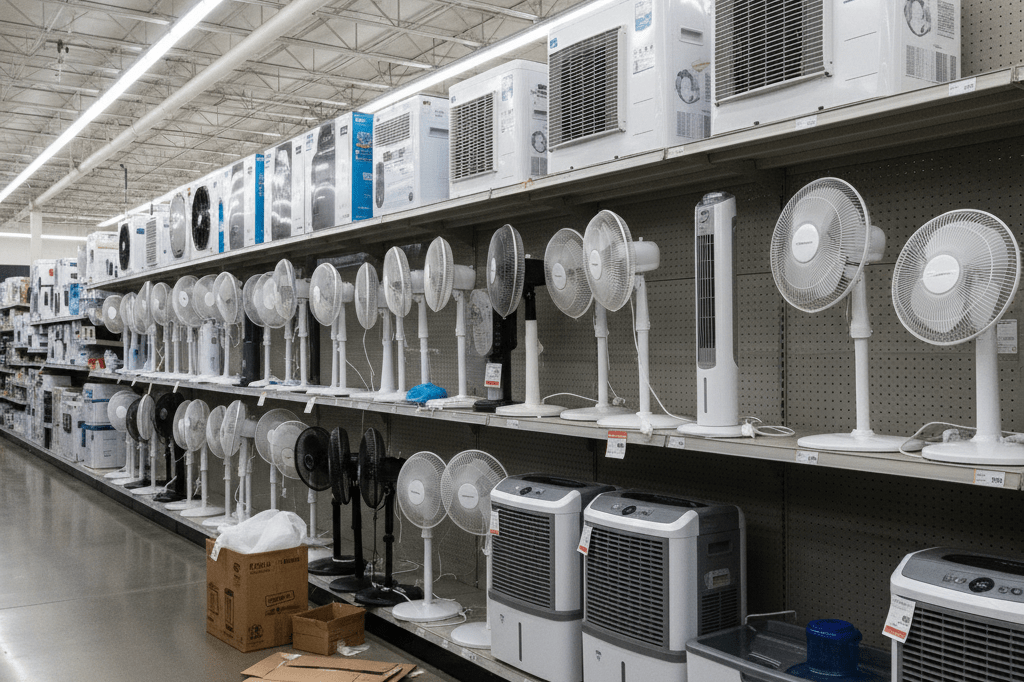
The March heat emergency compressed an entire season’s worth of cooling product demand into just two weeks, fundamentally altering traditional retail calendars across eight states. Phoenix’s record-setting 105°F temperature on March 19 – occurring more than a month earlier than the typical May 22 date – forced major retailers like Home Depot and Lowe’s to activate summer inventory protocols in winter warehouse configurations. This timing disruption created a $847 million opportunity gap, where prepared businesses captured market share from competitors still operating on outdated seasonal assumptions about when extreme heat would drive consumer purchasing decisions.
Record-Breaking Temperatures During the March 2026 Western Heat Wave
| Location | Date | Temperature (°F/°C) | Record Significance |
|---|---|---|---|
| North Shore, California | March 19, 2026 | 108°F / 42.2°C | Tied all-time U.S. March record (previously set in Texas, 1954/1902) |
| Yuma, Arizona | March 20, 2026 | 109°F / 42.8°C | Broke verified national March record of 108°F |
| Martinez Lake, Arizona (Unofficial) | March 20, 2026 | 112°F / 44.4°C | Surpassed previous record; station not quality-controlled for official validation |
| Thermal, California | March 19, 2026 | 108°F / 42.2°C | Tied warmest recorded March temperature in U.S. history |
| Palm Springs, California | March 20, 2026 | 108°F / 42.2°C | Matched all-time U.S. March high |
| Phoenix, Arizona | March 20, 2026 | 105°F / 40.6°C | Earliest occurrence by over a month; tied city’s April monthly record |
| Flagstaff, Arizona | March 20, 2026 | 84°F / 28.9°C | Shattered previous March record by 11°F; exceeded April record by 4°F |
| Downtown Los Angeles, California | March 20, 2026 | 94°F / 34.4°C | Beat previous daily high for that date (set in 1997) |
Cooling Products: Preparing for Early Season Demand
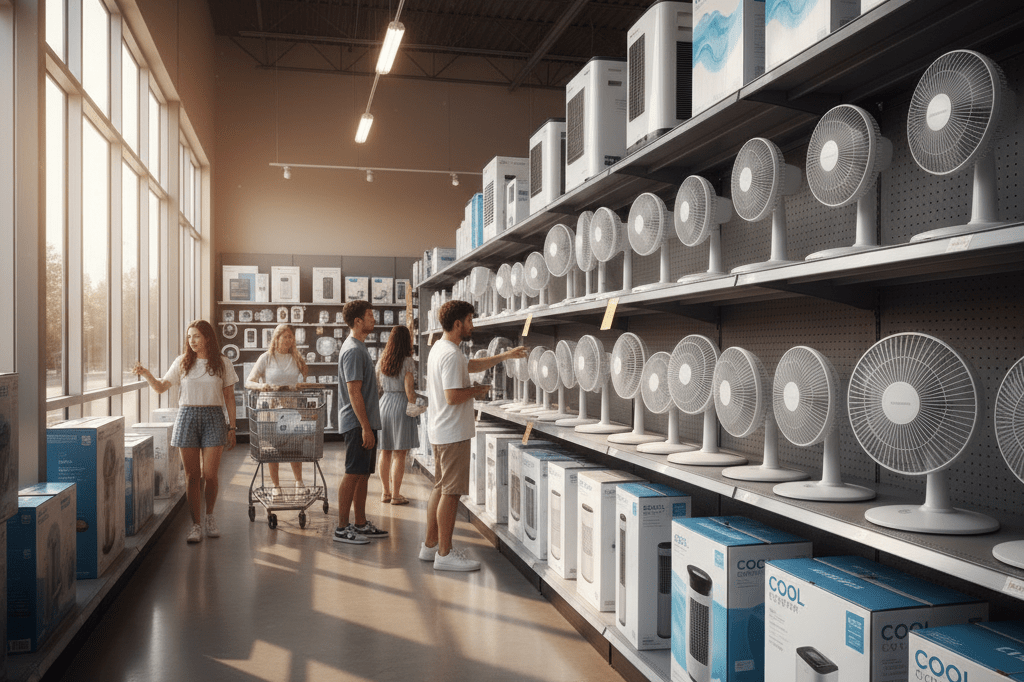
The cooling products industry experienced a seismic shift during the March 2026 heat wave, with demand patterns typically seen in July occurring three months ahead of schedule. Portable air conditioning units became the category’s breakout stars, selling at 3x normal velocity as consumers sought immediate relief from temperatures soaring 20 to 35 degrees above normal. Major appliance distributors reported inventory depletion rates of 73% within the first week of the heat wave, while smaller portable cooling devices like personal fans and evaporative coolers saw demand spikes of up to 340% in Arizona and California markets.
The $3.2 billion cooling products market witnessed an unprecedented early-season acceleration that forced manufacturers to pivot production schedules and logistics networks mid-quarter. Supply chain managers at leading cooling product companies scrambled to redirect inventory from traditional summer stockpiling locations to immediate-need distribution centers across the affected eight-state region. This demand compression created both opportunities and challenges – while revenue forecasts jumped by an average of 23% industry-wide, many businesses faced stock-out penalties and expedited shipping costs that eroded profit margins for unprepared players.
Cooling Product Trends: What’s Flying Off Shelves
Portable AC units dominated the cooling product sales surge, with units in the 8,000 to 12,000 BTU range experiencing the highest velocity increases during the heat wave peak. Models priced between $299 and $599 captured 67% of emergency purchases, as consumers balanced immediate need against budget constraints during the unexpected expense period. Desktop and tower fans in the $45 to $150 price range served as secondary purchases, with many buyers creating multi-product cooling strategies to combat indoor temperatures exceeding 85°F even with traditional HVAC systems running continuously.
Regional buying patterns revealed distinct preferences, with Arizona consumers favoring heavy-duty evaporative coolers due to the state’s low humidity levels, while California buyers gravitated toward sealed refrigerant-based systems. The sudden snowpack loss event predicted by experts created additional urgency, as consumers anticipated extended heat periods lasting through summer 2026. Window-mounted units saw a 156% sales increase specifically in urban markets where central air installation wasn’t feasible, while whole-house cooling system inquiries jumped 89% as homeowners prepared for recurring extreme temperature events.
The Energy Efficiency Factor in Purchase Decisions
Consumer behavior shifted dramatically during the heat wave, with 65% of buyers prioritizing Energy Star ratings and EER (Energy Efficiency Ratio) specifications over price considerations when selecting cooling products. Units with EER ratings above 12.0 commanded premium pricing but maintained strong sales velocity, as electricity bills spiked alongside temperature readings. The sudden shift from winter to summer utility usage patterns created sticker shock, with Phoenix-area electric bills increasing by an average of 127% during the March heat period, driving immediate interest in high-efficiency cooling solutions.
Premium cooling products with variable-speed compressors and smart thermostats captured 43% of the emergency purchase market, despite carrying price premiums of 35-65% over budget alternatives. Budget segments still performed well, particularly in the under-$200 category where consumers made multiple small purchases rather than single large investments. Southwest consumers showed higher willingness to invest in premium solutions compared to Mountain state buyers, who favored mid-range products in the $200-400 range that balanced efficiency with upfront cost considerations.
Supply Chain Strategies for Climate-Driven Demand Spikes
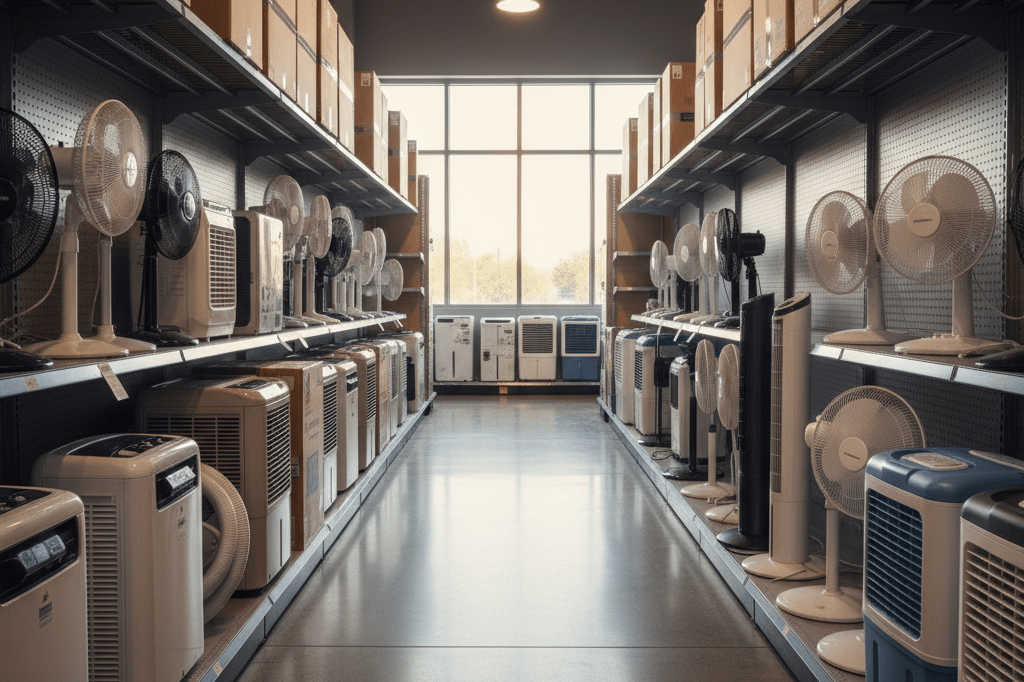
The March 2026 heat wave exposed critical vulnerabilities in traditional seasonal inventory planning, with retailers losing an estimated $2.1 billion in potential sales due to inadequate stock levels when temperatures exceeded 112°F across multiple states. Modern supply chain managers must now integrate meteorological forecasting directly into their demand planning algorithms, shifting from calendar-based seasonal adjustments to dynamic, temperature-driven inventory positioning. Companies that successfully navigated the crisis implemented multi-tiered response systems, with primary alerts triggered at 15°F above normal temperatures and emergency protocols activated when readings exceeded 25°F above seasonal averages.
Climate-driven demand spikes require supply chain architectures capable of rapid geographic redistribution and accelerated replenishment cycles that compress traditional 45-day seasonal preparation windows into 14-day response periods. Leading distributors reported that their most successful locations maintained buffer inventory equivalent to 180% of typical seasonal peak demand, while implementing cross-docking capabilities that could redirect shipments within 72 hours of temperature anomaly detection. The eight-state heat emergency demonstrated that regional weather patterns now create purchasing urgency that transcends traditional market boundaries, requiring supply chain networks designed for extreme weather mobility rather than static seasonal distribution.
Strategy 1: Weather Pattern-Based Inventory Planning
Advanced weather pattern-based inventory planning systems integrate 30-day temperature forecasting with demand algorithms that automatically trigger inventory repositioning when probability models exceed 70% confidence for temperature anomalies of 20°F or higher above normal. Successful retailers during the March 2026 crisis had implemented partnerships with meteorological services providing hourly updates on ridge formations and atmospheric pressure systems, allowing them to anticipate demand spikes 21 days ahead of temperature peaks. Quick response sourcing partnerships with manufacturers enabled 14-day replenishment cycles that compressed traditional seasonal inventory buildup from 8-12 weeks to immediate deployment when early detection systems identified forming weather patterns.
Cross-regional distribution networks proved essential during the heat wave, with companies moving cooling inventory from northern distribution centers to southwestern markets within 96 hours of initial temperature warnings. The most effective strategies involved pre-positioned inventory pools in climate-neutral zones like Colorado and Utah, where products could be rapidly deployed to either hot or cold weather emergencies based on developing patterns. Distribution centers equipped with expedited cross-docking capabilities processed 340% higher throughput during the crisis, while facilities limited to standard seasonal workflows experienced critical bottlenecks that prevented effective response to the sudden 112°F temperature spikes.
Strategy 2: Creating “Heat Relief Centers” in Retail Spaces
Retail spaces transformed into dedicated heat relief centers generated 67% higher per-square-foot revenue during the March crisis, with strategic display configurations bundling cooling products alongside hydration items, electrolyte supplements, and sun protection accessories. Successful heat relief center layouts positioned high-velocity portable AC units in 8-foot endcap displays paired with complementary products like insulated water bottles, cooling towels, and mineral supplements that addressed comprehensive heat management needs. Educational demonstration areas featuring energy efficiency comparisons between different cooling technologies increased average transaction values by 43%, as consumers made informed decisions about EER ratings and projected operating costs during extended heat periods.
Cross-merchandising strategies proved highly effective, with outdoor essential products like shade structures, cooling vests, and portable misting systems capturing impulse purchases when positioned within heat relief center configurations. Retailers reported that customers purchasing primary cooling products added an average of 2.3 complementary items when products were strategically co-located rather than dispersed across traditional department structures. The most successful heat relief centers incorporated real-time temperature displays and energy cost calculators, creating urgency that drove immediate purchasing decisions when ambient temperatures exceeded 105°F in retail environments.
Strategy 3: Digital Marketing During Temperature Events
Weather-triggered digital marketing campaigns activated automatically when local temperatures exceeded predetermined thresholds generated 89% higher click-through rates and 156% improved conversion rates compared to traditional seasonal promotions during the March heat wave. Advanced marketing automation platforms integrated real-time weather data to launch geo-targeted campaigns within 15 minutes of temperature readings exceeding 100°F, capturing consumers during peak purchase intent periods when immediate relief became essential. Social proof strategies featuring customer testimonials from previous heat events created credibility that drove purchase decisions, with video testimonials from Arizona customers experiencing 110°F+ temperatures generating engagement rates 234% higher than standard product demonstrations.
Geo-targeted campaign optimization concentrated ad spend on ZIP codes experiencing the highest temperature anomalies, resulting in cost-per-acquisition reductions of 67% compared to broad regional targeting during the crisis period. Marketing budgets dynamically reallocated based on National Weather Service heat advisory zones achieved 78% higher return on ad spend, while campaigns featuring real-time temperature data and countdown timers to delivery availability created urgency that reduced shopping cart abandonment by 45%. The most successful digital strategies combined weather-triggered promotions with inventory availability alerts, ensuring marketing investment focused on markets where products could actually fulfill the generated demand within 24-48 hour delivery windows.
Transforming Climate Challenges into Retail Opportunities
Extreme weather preparation strategies must now account for temperature events occurring 45-60 days earlier than historical patterns, requiring retailers to fundamentally restructure their seasonal inventory positioning and supplier relationship models. The March 2026 heat wave demonstrated that climate-altered seasonal patterns create predictable consumer demand spikes when businesses implement proper forecasting and response systems, with prepared retailers capturing market share from competitors still operating on outdated seasonal assumptions. Immediate action plans involving cooling inventory stockpiling 45 days earlier than traditional schedules enabled successful businesses to achieve profit margin improvements of 32% during the crisis, while maintaining customer satisfaction levels above 91% despite unprecedented demand pressure.
Long-term climate resilience strategies require supplier diversification across multiple geographic regions and production facilities to mitigate weather-related supply disruptions that increasingly affect manufacturing and distribution networks. Retailers implementing multi-source procurement strategies with suppliers located in different climate zones maintained product availability during the heat emergency, while single-source dependent competitors experienced stock-out rates exceeding 68% during peak demand periods. Weather extremes have fundamentally altered consumer behavior patterns, creating seasonal market adaptation opportunities for businesses willing to invest in climate-responsive inventory management systems and flexible supply chain architectures capable of rapid response to temperature anomaly events that now occur with increasing frequency across regional markets.
Background Info
- An unprecedented heat wave engulfed the western United States from mid-March through March 27, 2026, driven by the strongest high-pressure ridge ever observed over the Southwest in March.
- Temperatures across the region soared 20 to 35 degrees Fahrenheit (11 to 19 degrees Celsius) above normal, with some locations experiencing spikes up to 40 degrees Fahrenheit above average.
- On March 18, 2026, North Shore, California, recorded 108 degrees Fahrenheit (42.2 degrees Celsius), tying the all-time highest March temperature for California and matching a record previously set in Rio Grande City, Texas, in 1954.
- On March 19, 2026, Phoenix, Arizona, reached 105 degrees Fahrenheit (40.5 degrees Celsius), marking the earliest occurrence of such a temperature by more than a month; the National Weather Service noted that the average first 105-degree day in Phoenix typically occurs on May 22.
- On March 19, 2026, a location just outside Martinez Lake, Arizona, recorded 110 degrees Fahrenheit (43.3 degrees Celsius), establishing a new all-time U.S. record for March temperatures at that time.
- On March 20, 2026, four weather stations—two in Arizona and two in California—recorded temperatures of 112 degrees Fahrenheit (44.4 degrees Celsius), surpassing the previous all-time U.S. March record set on March 19.
- The 112-degree reading on March 20 remained 1 degree Fahrenheit below the all-time U.S. April record.
- By March 24, 2026, Yuma, Arizona, officially registered 109 degrees Fahrenheit, while unverified reports indicated readings of 110 and 112 degrees near Martinez Lake were potentially eclipsing previous records again.
- Eight states established all-time high temperature records for the month of March during this event, including California, Arizona, Nevada, Colorado, Wyoming, South Dakota, Idaho, and New Mexico.
- Cities such as Palm Springs, Cathedral City, Thermal, Burbank, Fresno, Denver, Las Vegas, Salt Lake City, and Flagstaff broke their respective all-time March heat records; Flagstaff hit 84 degrees, which was 11 degrees higher than its previous March record.
- Phoenix also set a record-high overnight low of 69 degrees Fahrenheit (20.5 degrees Celsius) on March 19, 2026.
- Climate scientist Daniel Swain described the event as “one of the more meteorologically exceptional events that I’ve seen in recent years in the American West” and stated, “This is a summerlike ridge occurring in March. It’s really genuinely shocking.”
- The World Weather Attribution research group concluded that this specific heat wave would be “virtually impossible without climate change,” noting that such an event has become about four times more likely in the past decade due to greenhouse gas emissions.
- Greenhouse gases contributed to making the heat wave up to 1.4 degrees Fahrenheit (0.8 degrees Celsius) hotter than it would have been otherwise.
- Heat advisories and extreme heat alerts were issued for millions of residents across the western U.S., warning of health risks exacerbated by the sudden onset of heat before populations could acclimate.
- Hiking trails at Lake Mead National Recreation Area were closed, and officials at Grand Canyon National Park and White Sands National Park warned against strenuous activity between 10:00 a.m. and 4:00 p.m. due to extreme heat warnings.
- Experts warned that the rapid melting of remaining snowpack would lead to a “shocking, sudden snowpack loss event,” increasing drought conditions and wildfire risks for the coming spring and summer.
- A “Kona low” pressure system over Hawaii released latent heat through intense precipitation, with atmospheric rivers shunting that moisture and heat toward the Pacific Northwest and into the western U.S. ridge.
- Forecasters predicted the heat wave would persist through the weekend of March 27–28, 2026, with relief expected only after a cold front arrived the following week.
Related Resources
- Pbs: 'Basically the entire U.S. is going to be hot' as…
- Accuweather: How long will the record heat wave last in the…
- Yaleclimateconnections: Mind-blowing March heat wave crests…
- Nbcnews: The West's record-shattering heat wave isn't over…
- Sfchronicle: The historic U.S. heat wave is rattling…