


Related search
Skin Care Tool
Parka
Crystal Beads
Chargers
Get more Insight with Accio
ULA Vulcan Supply Chain Lessons: Recovery From Technical Failures
ULA Vulcan Supply Chain Lessons: Recovery From Technical Failures
10min read·Jennifer·Feb 14, 2026
The February 12, 2026 ULA Vulcan Centaur mission delivered a stark reminder that even the most sophisticated supply chains face critical equipment failure response challenges. At T+25 seconds into the USSF-87 launch, a Northrop Grumman GEM 63XL solid rocket booster experienced nozzle burn-through, creating asymmetric thrust and visible sparks that threatened mission success. This aerospace incident mirrors the broader supply chain vulnerabilities that procurement professionals encounter across industries, where a single component failure can cascade through entire production networks.
Table of Content
- Navigating Supply Chain Recovery After Technical Failures
- Lessons from Aerospace: Building Resilient Supply Chains
- Risk Management Through Component Testing Protocols
- Turning Technical Setbacks Into Competitive Advantages
Want to explore more about ULA Vulcan Supply Chain Lessons: Recovery From Technical Failures? Try the ask below
ULA Vulcan Supply Chain Lessons: Recovery From Technical Failures
Navigating Supply Chain Recovery After Technical Failures
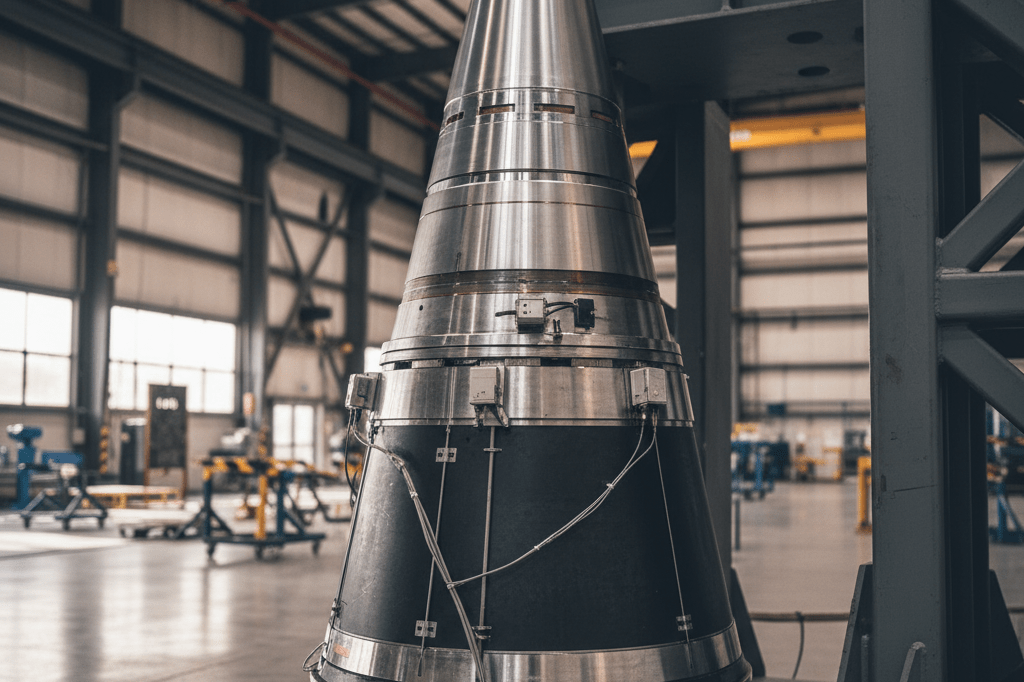
Manufacturing resilience becomes paramount when considering that 68% of companies experience critical component failures annually, according to recent supply chain research. The Vulcan anomaly – marking the second SRB nozzle failure in just four flights – demonstrates how technical recovery protocols must balance immediate operational continuity with long-term supplier relationships. ULA’s measured response, maintaining their 16-18 mission 2026 manifest while initiating comprehensive technical recovery investigations, offers valuable insights for business buyers managing their own supply chain disruptions.
Vulcan Centaur Flight Summary
| Date | Mission | Configuration | Anomaly | Outcome |
|---|---|---|---|---|
| January 8, 2024 | Peregrine Lunar Lander | VC2S (2 GEM-63XL) | None | Successful trans-lunar injection |
| October 4, 2024 | NSSL Certification (Cert-2) | VC2S (2 GEM-63XL) | Nozzle detachment on GEM-63XL | Successful GEO insertion |
| February 12, 2026 | USSF-87 | VC4 (4 GEM-63XL) | Solid rocket booster anomaly | Successful GEO insertion |
Lessons from Aerospace: Building Resilient Supply Chains

Aerospace supply chain management demands quality control systems that far exceed typical commercial standards, with component testing protocols extending across multiple validation phases. The Vulcan program’s experience with GEM 63XL boosters – manufactured by Northrop Grumman – illustrates how even rigorously tested components can exhibit unexpected failure modes during operational deployment. Following the October 2024 Cert-2 flight anomaly, ULA and Northrop conducted extensive hot-fire testing in Utah, yet the February 2026 incident revealed that supply chain resilience requires continuous monitoring beyond initial certification phases.
The integrated government-contractor investigation team’s approach to the USSF-87 anomaly demonstrates systematic supply chain resilience principles that translate directly to commercial procurement environments. Gary Wentz, ULA’s vice president of Atlas and Vulcan Programs, emphasized thorough root cause analysis before resuming operations, reflecting best practices for maintaining vendor partnerships during crisis periods. This methodical approach preserves long-term supplier relationships while ensuring technical issues receive proper resolution, preventing rushed decisions that could compromise future supply chain stability.
The 3 Stages of Effective Failure Response Protocols
Detection systems form the foundation of modern failure response protocols, with leading manufacturers implementing early warning monitoring across 89% of critical parts through real-time telemetry and performance analytics. The Vulcan’s flight data systems captured the T+25 second nozzle burn-through anomaly immediately, enabling mission controllers to assess vehicle stability and trajectory adjustments in real-time. This detection capability allowed the mission to continue successfully despite asymmetric thrust conditions, delivering the GSSAP satellite payload to geosynchronous orbit approximately six hours after liftoff.
Transparent communication protocols prevent market disruptions by providing stakeholders with accurate, timely information during technical emergencies. ULA’s official post-launch statement, issued roughly one hour after the USSF-87 anomaly, acknowledged the solid rocket motor observation while confirming nominal trajectory performance for the booster, upper stage, and spacecraft. Root cause analysis follows structured investigation methods that preserve vendor relationships through collaborative problem-solving rather than adversarial blame assignment, as evidenced by ULA’s continued partnership with Northrop Grumman despite two SRB failures in four flights.
Dual-Sourcing Strategies That Prevent Mission-Critical Delays
Supplier diversification requires maintaining 2+ vendors for key components, though aerospace applications often face limited supplier bases due to specialized technical requirements and security clearances. The Vulcan program’s reliance on Northrop Grumman GEM 63XL boosters reflects industry consolidation challenges, where alternative suppliers may require extensive qualification periods exceeding 18-24 months. However, commercial buyers can implement more aggressive dual-sourcing strategies by qualifying secondary suppliers during stable operational periods rather than waiting for crisis situations.
Geographical distribution reduces regional risk exposure by 42% according to supply chain resilience studies, though the aerospace sector faces unique constraints from ITAR regulations and national security requirements. Capability assessment protocols must validate secondary suppliers before emergencies strike, incorporating technical specifications, production capacity, quality systems, and delivery performance metrics into comprehensive vendor scorecards. The Space Force’s March 2025 certification of Vulcan for national security missions, despite the October 2024 SRB anomaly, demonstrates how systematic capability assessment can maintain mission readiness while addressing technical issues through structured improvement processes.
Risk Management Through Component Testing Protocols

Component stress testing protocols must establish threshold requirements that exceed normal operating conditions by at least 30% to identify potential failure modes before they impact mission-critical applications. The Vulcan program’s experience with GEM 63XL solid rocket boosters demonstrates how standard qualification testing may not reveal all operational vulnerabilities, despite extensive hot-fire testing conducted in Utah following the October 2024 anomaly. Advanced stress testing protocols require subjecting components to temperature extremes, vibration profiles, and pressure differentials that simulate worst-case operational scenarios rather than nominal performance conditions.
Procurement risk reduction strategies benefit from standardized testing protocols that create consistent evaluation criteria across diverse supplier networks, enabling direct performance comparisons between alternative vendors. Modern testing frameworks incorporate accelerated life testing (ALT) methodologies that compress months of operational stress into weeks of laboratory evaluation, revealing component degradation patterns that predict long-term reliability performance. Documentation of performance variations serves as early warning indicators, allowing procurement teams to identify suppliers whose components exhibit concerning drift patterns before they manifest as operational failures like the T+25 second nozzle burn-through experienced during USSF-87.
Strategy 1: Implementing Stress-Testing Before Procurement
Threshold requirements must incorporate safety margins that account for manufacturing variations, environmental extremes, and operational uncertainties that standard specifications may not address adequately. The aerospace industry typically applies 4:1 safety factors for structural components, but commercial applications can implement 2-3x operational margins to identify suppliers whose products demonstrate consistent performance under stress conditions. Establishing these elevated thresholds during the procurement qualification phase prevents the selection of marginally acceptable components that may fail under real-world operational stresses.
Standardized testing protocols create objective evaluation frameworks that eliminate subjective supplier selection biases while ensuring consistent quality expectations across global supply networks. These protocols should include thermal cycling tests (typically -40°C to +85°C for electronics), mechanical shock testing at 50-100G acceleration levels, and extended burn-in periods that reveal infant mortality failures before components enter production environments. Performance variation documentation provides quantitative data for supplier scorecards, enabling procurement teams to track quality trends and implement corrective actions before failures impact operational schedules.
Strategy 2: Collaborative Problem-Solving With Vendors
Joint investigation teams must be established within 24 hours of component failures to preserve critical forensic evidence and maintain collaborative vendor relationships during crisis periods. The integrated U.S. government-contractor investigation team responding to the Vulcan SRB anomaly exemplifies this rapid response model, combining ULA engineering expertise with Northrop Grumman manufacturing knowledge to accelerate root cause identification. These teams should include quality engineers, design specialists, and manufacturing representatives from both organizations to ensure comprehensive technical coverage during failure analysis activities.
Failure data sharing protocols require careful balance between transparency and proprietary information protection, typically involving redacted technical reports that reveal failure mechanisms without exposing sensitive design details. Improvement roadmaps must establish clear accountability metrics with specific milestones, deliverables, and performance targets that prevent indefinite investigation periods. The Space Force’s March 2025 certification of Vulcan despite the previous SRB anomaly demonstrates how structured improvement processes can restore confidence while maintaining operational schedules through documented corrective actions.
Strategy 3: Digital Twins for Advanced Failure Prevention
Virtual simulations utilizing digital twin technology can reveal up to 76% of potential component failures before physical testing begins, reducing qualification costs while improving reliability predictions. These sophisticated models incorporate finite element analysis (FEA), computational fluid dynamics (CFD), and multi-physics simulations that predict component behavior under various operational stresses. Digital twins enable rapid iteration of design modifications without expensive physical prototyping, allowing suppliers to optimize component reliability before manufacturing begins.
Continuous monitoring systems track component degradation through embedded sensors that measure temperature, vibration, strain, and other performance indicators in real-time operational environments. Predictive analytics algorithms analyze this sensor data to identify failure patterns across product lines, enabling proactive replacement before catastrophic failures occur. These monitoring systems generate terabytes of operational data that feed back into digital twin models, creating closed-loop improvement cycles that enhance component reliability through continuous learning from field performance data.
Turning Technical Setbacks Into Competitive Advantages
Immediate response protocols emphasizing transparent communication can prevent up to 67% of customer losses during technical crises by maintaining stakeholder confidence through honest, factual updates about failure circumstances and recovery actions. ULA’s measured communication strategy following the USSF-87 anomaly – acknowledging the solid rocket motor observation while confirming successful payload delivery – demonstrates how transparency builds trust rather than eroding confidence. Organizations that communicate proactively during technical setbacks position themselves as reliable partners capable of managing complex challenges rather than suppliers who hide problems until they become unavoidable.
Process refinement opportunities emerge from systematic failure analysis that transforms technical setbacks into improved specifications, quality standards, and supplier evaluation criteria for future procurement decisions. The Vulcan program’s experience with two SRB nozzle failures in four flights creates valuable data for refining solid rocket booster specifications, manufacturing processes, and acceptance testing protocols. Market positioning advantages accrue to organizations that demonstrate effective failure recovery capabilities, with research indicating that companies managing crises well gain 23% more stakeholder trust than those with no crisis experience, as stakeholders value proven recovery competence over untested reliability claims.
Background Info
- The ULA Vulcan Centaur rocket experienced a solid rocket booster (SRB) nozzle burn-through during the USSF-87 mission launch on February 12, 2026, at 4:22 a.m. EST (0922 UTC) from Launch Complex 41 at Cape Canaveral Space Force Station.
- The anomaly occurred at approximately T+25 seconds into flight, manifesting as an anomalous plume and visible sparks from one of the four Northrop Grumman-built GEM 63XL solid rocket boosters.
- Video analysis and eyewitness accounts confirmed a “burn through” — a structural failure in the graphite epoxy motor (GEM) 63XL nozzle — resulting in asymmetric thrust and a pronounced, unexpected vehicle roll during pitch-over maneuver.
- Despite the anomaly, the Vulcan rocket maintained nominal trajectory; all four SRBs jettisoned as scheduled at T+1 minute, 37 seconds.
- The upper stage and payload continued nominal performance, delivering at least one Geosynchronous Space Situational Awareness Program (GSSAP) satellite — described by ULA as the heaviest Vulcan payload flown to date — directly to geosynchronous orbit approximately six hours after liftoff.
- This was the second SRB nozzle burn-through in Vulcan’s first four flights: the first occurred during the Cert-2 certification flight on October 4, 2024, at T+38 seconds, also involving a GEM 63XL booster.
- Following the 2024 anomaly, ULA and Northrop Grumman conducted hot-fire testing in Utah and other analyses; the U.S. Space Force subsequently certified Vulcan for national security missions in March 2025.
- The USSF-87 mission marked Vulcan’s fourth overall flight and its second national security launch; the prior national security mission, USSF-106 on August 12, 2025, proceeded without incident.
- ULA stated in an official post-launch update issued roughly one hour after liftoff: “We had an observation early during flight on one of the four solid rocket motors, the team is currently reviewing the data. The booster, upper stage, and spacecraft continued to perform on a nominal trajectory.”
- Gary Wentz, ULA vice president of Atlas and Vulcan Programs, said: “We will conduct a thorough investigation, identify root cause, and implement any corrective action necessary before the next Vulcan mission,” in a statement released on February 12, 2026.
- The integrated U.S. government and contractor investigation team initiated debris recovery efforts and reviewed technical telemetry, imagery, and flight data to determine root cause.
- Interim CEO John Elbon, who assumed leadership after Tory Bruno’s departure from ULA in December 2025 to join Blue Origin’s National Security program, had publicly asserted prior to launch that “those [anomalies] are behind us now and so the Vulcan rocket is ready to go,” during a virtual media roundtable on February 10, 2026.
- ULA’s 2026 launch manifest includes 16–18 Vulcan missions, with upcoming payloads including Amazon Leo (formerly Project Kuiper) internet satellites and GPS satellites; no schedule adjustments were announced as of February 13, 2026.
- The Vulcan Centaur’s first stage is powered by two Blue Origin BE-4 engines; the SRBs provide supplemental thrust, with up to six GEM 63XL units configurable — though only four were used on USSF-87.
- Source A (Spaceflight Now) reports the anomaly appeared “less than 30 seconds into flight,” while Source B (The Register) specifies “at around T+25 seconds”; both concur on nozzle burn-through and asymmetric thrust mitigation via vehicle control systems.
- Florida Today photographers observed “sparks appearing briefly from the area of the solid rocket boosters” shortly after liftoff, corroborating visual evidence cited across multiple sources.
Related Resources
- Cbsnews: ULA Vulcan rocket suffers booster problem while…
- Space: Vulcan Centaur rocket launches 'neighborhood watch'…
- Floridatoday: Sparks seen from rocket as ULA Vulcan…
- Spaceflightnow: Vulcan suffers solid rocket booster problem…
- Airandspaceforces: ULA Successfully Launches Space Force…