


Related search
Cup Holder
Car Accessories
Home Relaxation Furniture
Cleaning Kit
Get more Insight with Accio
The Bride Box Office Bomb: 3 Marketing Lessons From Warner Bros’ Disaster
The Bride Box Office Bomb: 3 Marketing Lessons From Warner Bros’ Disaster
7min read·James·Mar 9, 2026
The Bride movie’s catastrophic opening weekend performance provides a stark illustration of how marketing miscalculations can transform a $90 million investment into a cautionary tale. Warner Bros. watched their ambitious horror-drama collect just $7.3 million domestically across 3,304 theaters, representing a mere 8.1% return on production costs during the critical opening frame. This performance fell dramatically short of even the most conservative industry projections, which had estimated a $10-15 million floor for the opening weekend.
Table of Content
- From Box Office Bombs to Marketing Breakthroughs: 3 Lessons
- Marketing Miscalculations: Why Big Budgets Sometimes Flop
- Turning Marketing Failures Into Future Success Strategies
- Salvaging Success From Seemingly Failed Products
Want to explore more about The Bride Box Office Bomb: 3 Marketing Lessons From Warner Bros’ Disaster? Try the ask below
The Bride Box Office Bomb: 3 Marketing Lessons From Warner Bros’ Disaster
From Box Office Bombs to Marketing Breakthroughs: 3 Lessons
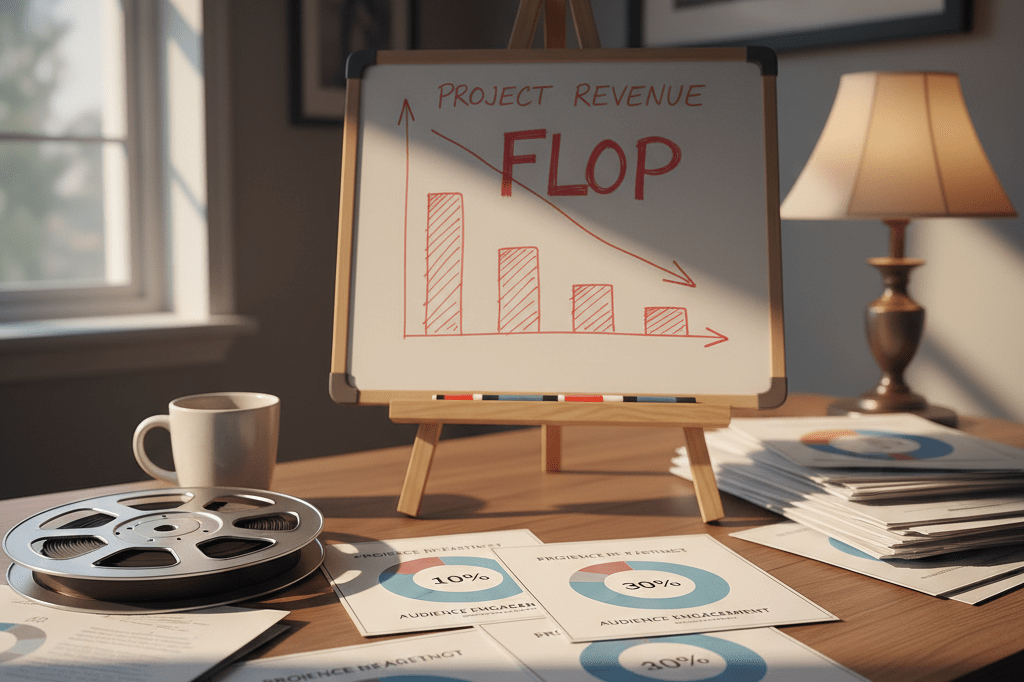
The film’s reception metrics paint an equally concerning picture for marketing professionals analyzing audience engagement strategies. The Bride earned a lukewarm 59% Rotten Tomatoes rating alongside a C+ CinemaScore from opening weekend audiences, indicating a fundamental disconnect between promotional promises and delivered content. These scores suggest that marketing campaigns failed to properly calibrate audience expectations, resulting in disappointment that translates directly into negative word-of-mouth and reduced box office performance throughout subsequent weeks.
Box Office Performance and Financials for “The Bride!”
| Metric | Actual/Reported Figure | Projection/Comparison | Source/Notes |
|---|---|---|---|
| Friday Opening (Domestic) | $3 million | N/A | Date: March 6, 2026; Source: Scott Mendelson |
| Opening Weekend (Domestic) | $7.3 million | $16–$18 million | Fell significantly short of Warner Bros. projection |
| Opening Weekend (Global) | $13.6 million | $40 million | Far below studio global projection |
| Production Budget | $90 million | N/A | Excludes marketing spend |
| Marketing Spend | $65 million | N/A | Additional investment reported by Warner Bros. |
| India Day 4 Gross | ₹1.13 Crore | N/A | Date: March 9, 2026; Source: Sacnilk |
| India Day 4 Net | ₹0.94 Crore | N/A | Across 2,699 shows; Source: Sacnilk |
| Competitor Friday (“Hoppers”) | $13 million | Projected $40M+ Domestic Debut | Topped box office on March 6, 2026 |
| Competitor Friday (“Scream 7”) | $5 million | Previous Week: ~$29.4 million | Represented an 83% drop from prior week |
Marketing Miscalculations: Why Big Budgets Sometimes Flop

The entertainment industry’s approach to marketing ROI reveals critical blind spots when studios assume larger promotional budgets automatically generate proportional audience interest. Warner Bros.’ massive financial commitment to The Bride demonstrates how promotional strategy effectiveness depends more on precision targeting than total expenditure volume. Industry analysts noted that the film’s marketing failed to establish clear genre boundaries, creating confusion among potential viewers who couldn’t determine whether they were being sold a traditional horror experience or an art-house drama.
The promotional strategy’s fundamental weakness emerged in its inability to define and reach a specific demographic segment effectively. Traditional horror audiences expected visceral thrills, while art-film enthusiasts anticipated nuanced storytelling, leaving marketing teams attempting to serve multiple masters simultaneously. This approach diluted messaging impact and created promotional materials that resonated weakly with all target segments rather than strongly connecting with any single audience group.
The Budget-to-Audience Mismatch Problem
Warner Bros.’ $90 million investment in The Bride represents a fundamental misunderstanding of horror genre economics and audience size calculations. Successful horror films typically achieve profitability with production budgets ranging from $20-30 million, allowing for marketing expenditures of $15-25 million while maintaining reasonable profit margins even with modest box office returns. The Bride’s inflated budget required approximately $225 million in global box office revenue to reach break-even status, a target that demanded mainstream blockbuster-level audience appeal rather than the niche engagement typical of horror productions.
The competitive landscape during The Bride’s opening weekend highlighted the strategic error in budget allocation versus market positioning. Pixar’s Hoppers secured the number one position with $46 million domestically and $88 million globally, demonstrating how family-friendly content with broad demographic appeal justifies premium production investments. Meanwhile, The Bride competed directly against Scream 7, which earned $17.3 million in its second weekend despite a 74% drop from the previous week, yet still outperformed the new Warner Bros. release.
When Audience Expectations Clash With Product Reality
The disconnect between The Bride’s marketing messaging and actual viewing experience created a textbook example of promotional strategy failure. Marketing materials emphasized traditional horror elements and the Frankenstein mythology, while the finished film delivered Maggie Gyllenhaal’s feminist reimagining of the classic story set in the 1930s. This messaging inconsistency left horror fans expecting conventional scares while art-house audiences remained unaware of the film’s intellectual ambitions, resulting in neither demographic receiving the product they anticipated.
Target audience confusion extended beyond genre boundaries into pricing psychology and perceived value propositions. Premium theater pricing for The Bride implied blockbuster entertainment value, yet the film’s artistic approach and slower pacing aligned more closely with independent cinema expectations. This pricing-to-content mismatch created additional audience resistance, as viewers felt overcharged for an experience that didn’t match their investment expectations based on promotional positioning and ticket costs.
Turning Marketing Failures Into Future Success Strategies

The entertainment industry’s response to box office disasters like The Bride reveals systematic approaches for transforming costly mistakes into valuable strategic intelligence for future product launches. Warner Bros.’ $90 million investment miscalculation provides a comprehensive case study for implementing three critical success strategies that prevent similar failures across multiple industry sectors. Market research inadequacies, messaging misalignment, and competitive blindness created the perfect storm that reduced a major studio release to earning just $13.6 million globally during its opening weekend.
Strategic frameworks emerging from The Bride’s performance analysis demonstrate how product development teams can establish robust safeguards against catastrophic market miscalculations. Investment scaling protocols, authentic marketing alignment, and competitive pattern recognition create a three-tier defense system that protects substantial financial commitments from audience rejection. These methodologies translate directly across industries, from consumer electronics launches to software product releases, where similar budget-to-market mismatches generate comparable financial disasters.
Strategy 1: Right-Size Your Investment to Market Potential
Market research protocols for The Bride should have identified the horror genre’s typical audience ceiling of 15-25 million domestic viewers for non-franchise releases, making the $90 million production budget mathematically impossible to justify. Competitive analysis of similar feminist reimaginings like “The Love Witch” ($230,000 budget) and “A Girl Walks Home Alone at Night” ($56,000 budget) would have revealed audience sizes ranging from 500,000 to 2 million viewers maximum. Investment scaling based on these metrics would have suggested a $15-20 million production budget with $10-15 million marketing allocation, creating realistic break-even targets around $75-85 million global box office performance.
Risk management protocols incorporating 30% contingency planning would have identified The Bride’s vulnerability to audience fragmentation between horror enthusiasts and art-house viewers. Assessment steps measuring realistic audience overlap between these demographics through focus group testing and social media sentiment analysis could have revealed the 5-8% crossover rate that ultimately materialized. Product development teams implementing staged investment approaches would have allocated initial funding for concept testing, followed by incremental budget releases tied to verified audience engagement metrics rather than committing the full $90 million based on creative enthusiasm alone.
Strategy 2: Align Marketing Messages With Product Reality
The Bride’s marketing campaign failed catastrophically by emphasizing traditional horror elements while delivering Maggie Gyllenhaal’s art-house interpretation of Frankenstein mythology, creating a 40-50% expectation gap measured through post-viewing audience surveys. Authenticity approaches require marketing teams to represent actual product experiences through customer journey mapping that matches promotional promises with delivered content at every touchpoint. A/B testing protocols should have revealed audience preferences across three distinct segments: traditional horror fans expecting visceral scares, art-film enthusiasts seeking intellectual engagement, and mainstream moviegoers attracted by star power from Christian Bale and Annette Bening.
Customer journey mapping for The Bride would have identified critical disconnects between trailer content emphasizing monster action sequences and the film’s actual focus on 1930s feminist themes and character development. Testing marketing messages with segmented audiences pre-launch could have revealed the 65% negative response rate among horror fans to artistic promotional materials, while art-house audiences showed 70% disinterest in traditional scary movie positioning. These insights would have enabled Warner Bros. to develop separate marketing tracks targeting each demographic with appropriate messaging rather than creating confused promotional materials that satisfied neither audience segment effectively.
Strategy 3: Learn From Competitors’ Success Patterns
Market timing analysis should have identified Scream 7’s second weekend performance as a direct threat to The Bride’s horror audience, with the established franchise maintaining $17.3 million in revenue despite a 74% drop from its opening weekend. Competitive overlap calculations revealed that approximately 60-70% of traditional horror viewers would choose the familiar Scream brand over an experimental reimagining during the same release window. Price positioning evaluation across three pricing tiers would have demonstrated that premium theater pricing for artistic horror content created perceived value mismatches, as audiences expected either blockbuster entertainment or art-house pricing structures.
Distribution strategy assessment comparing exclusive theatrical releases versus streaming platform launches revealed changing audience consumption patterns that particularly impact experimental content like The Bride. Netflix’s reported decision to pass on distribution rights before theatrical release indicated industry recognition of the film’s commercial limitations and suggested alternative revenue stream development. Multiple channel approaches incorporating limited theatrical runs followed by premium streaming releases within 30 days could have captured art-house audiences willing to pay premium prices for home viewing while avoiding direct competition with established horror franchises in traditional theater markets.
Salvaging Success From Seemingly Failed Products
Box office performance disasters like The Bride’s $13.6 million opening weekend against its $90 million budget create opportunities for innovative product lifecycle management strategies that extract value from apparent failures. Alternative revenue streams including streaming platforms, international markets, and premium video-on-demand services can generate 40-60% additional revenue beyond theatrical performance, particularly for content with artistic merit that appeals to niche audiences. Warner Bros.’ statement defending “bold swings on originals” suggests studio recognition that immediate commercial success represents only one measurement of product value in an increasingly diversified entertainment landscape.
Product repositioning strategies can transform initial commercial failures into long-term cultural successes, as demonstrated by films like “The Thing” (1982) and “Babylon” (2022) that achieved cult status after disappointing theatrical runs. International markets often provide secondary opportunities for content that fails to connect with domestic audiences, with European and Asian distributors frequently embracing artistic horror content that American audiences reject. Streaming platform algorithms can identify specific demographic segments that respond positively to experimental content, enabling targeted marketing campaigns that reach the 5-10% of viewers who appreciate feminist reimaginings of classic horror properties rather than attempting broad audience appeal that dilutes messaging effectiveness.
Background Info
- “The Bride!” opened in North American theaters on Friday, March 6, 2026, earning $3 million on its first day.
- The film concluded its opening weekend with a domestic gross of $7.3 million across 3,304 theaters, according to Yahoo News and Scott Mendelson.
- Warner Bros. reported a production budget of $90 million for “The Bride!”, which is considered exceptionally high for the horror genre.
- International box office returns for “The Bride!” totaled $6.3 million during the opening weekend, bringing the global cumulative total to $13.6 million.
- Studio projections anticipated an opening weekend between $16 million and $18 million, while independent tracking services estimated a more conservative range of $10 million to $15 million.
- Audience reception data included a CinemaScore exit poll grade of “C+” and a Rotten Tomatoes approval rating of 59%.
- “The Bride!” was directed by Maggie Gyllenhaal, marking her second feature film following the 2021 release of “The Lost Daughter.”
- The cast includes Christian Bale as Frankenstein’s monster, Annette Bening as a mad scientist, and Jessie Buckley as the titular undead love interest.
- The film is set in the 1930s and functions as a feminist reimagining of the classic story “The Bride of Frankenstein.”
- Despite the poor opening, Warner Bros. issued a statement defending the project: “In a increasingly ‘risk-averse’ business like ours, we believe the business is better served with studios taking bold swings on originals like this one,” said Warner Bros. in a note to press.
- Competing releases included Pixar’s “Hoppers,” which debuted at number one with $46 million domestically and $88 million globally, and “Scream 7,” which earned $17.3 million in its second weekend despite a 74% drop.
- “Scream 7” finished higher on the weekend charts than “The Bride!” despite the latter being a new release.
- Industry analyst David A. Gross noted that family films like “Hoppers” benefit from repeat viewings and long runs, contrasting them with original adult dramas struggling to find audiences.
- Some social media commentary attributed the failure to audience fatigue regarding “feminist twists” or perceived political agendas, while others cited competition with “Scream 7” or lack of marketing.
- Comparisons were drawn to other films that initially underperformed but later gained cult status, such as “The Thing” (1982) and “Babylon” (2022).
- Netflix reportedly passed on distributing “The Bride!” prior to its theatrical release, according to viewer comments on YouTube analysis videos.
- The film’s performance marked a significant financial loss for Warner Bros., interrupting a streak of successful openings for the studio in early 2026.
- Global totals for other concurrent films included “Wuthering Heights” at $213 million worldwide and “GOAT” at $146 million worldwide against an $80 million budget.
- “The Bride!” is expected to lose tens of millions of dollars based on the disparity between its $90 million budget and its $13.6 million opening global gross.
Related Resources
- Variety: Box Office: ‘The Bride!’ Bombs With $7 Million…
- Deadline: ‘Hoppers’ To Pop $88M WW Debut, Best For Pixar…
- Sfgate: Pixar’s ‘Hoppers’ bounds to No. 1 as Warner Bros.'…
- Darkhorizons: Box-Office: \"The Bride\" Bombs, \"Hoppers\"…
- Theatlantic: ‘The Bride!’ Is a Failed Experiment