


Related search
Baking Tools for Kitchen
Lip Balm
Pendant
Cleaners
Get more Insight with Accio
Small Business Social Media Marketing Strategies That Generate Real Leads
Small Business Social Media Marketing Strategies That Generate Real Leads
8min read·James·Feb 11, 2026
The harsh reality of small business social media marketing reveals staggering inefficiencies that most entrepreneurs never discover until they dig into their analytics. According to comprehensive data from Facebook Insights and cross-platform analytics, less than 2% of followers typically see any given organic post from small businesses. This microscopic reach stems from algorithmic suppression designed to drive paid advertising revenue, fundamentally undermining the perception that social platforms offer free marketing opportunities.
Table of Content
- Why Most Small Business Social Posts Fall Flat
- Content That Converts vs. Content That Bores
- Alternative Channels Outperforming Social for Small Businesses
- From Social Media Fatigue to Marketing That Actually Works
Want to explore more about Small Business Social Media Marketing Strategies That Generate Real Leads? Try the ask below
Small Business Social Media Marketing Strategies That Generate Real Leads
Why Most Small Business Social Posts Fall Flat
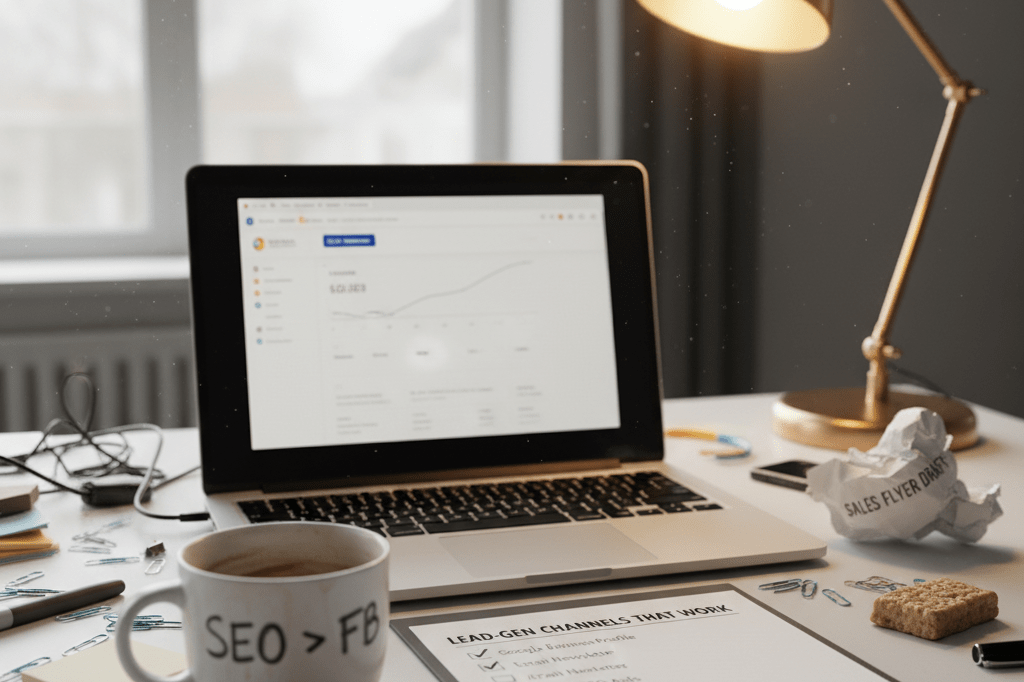
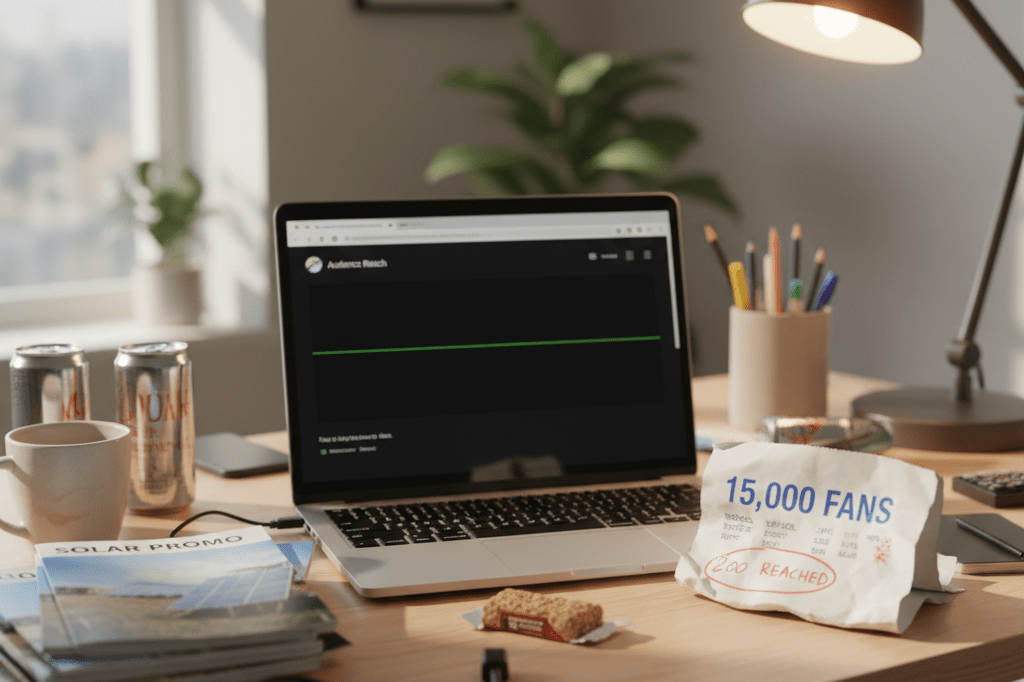
A documented case study illustrates this brutal mathematics in action: a business maintaining over 15,000 Facebook fans found that most organic posts reached fewer than 200 people, with only boosted posts managing to reach 1,500 viewers while generating under 50 meaningful interactions. These numbers expose the fundamental flaw in treating social media as a primary marketing channel without substantial advertising budgets. The platform’s “pay-to-play” structure becomes evident when considering Meta’s reported $34 billion in advertising revenue during Q3 2023 alone, confirming their business model prioritizes monetizing user attention over delivering free exposure to businesses.
Social Media Insights and Trends
| Statistic | Percentage/Value |
|---|---|
| Consumers influenced by social media for purchase decisions | 82% |
| Consumers researching brands on social media before purchasing | 74% |
| Consumers discovering new brands on social platforms | 57% |
| People following at least one brand on social media | 89% |
| Businesses using social media for marketing | 92% |
| Marketers reporting increased brand recognition via social media | 78% |
| Marketers stating social media directly increases leads | 69% |
| Businesses using social media for customer service | 72% |
| Companies including social media in crisis communication plans | 83% |
| Brands outsourcing part of their social media work | 51% |
| Marketers increasing social media budgets in the last year | 73% |
| Consumers expecting brands to respond within 24 hours | 74% |
| Consumers expecting responses within one hour | 39% |
| Consumers discovering new businesses via social media | 58% |
| Brands posting an average of posts per week on Instagram and TikTok | 5 posts |
| Marketers stating social media as primary customer acquisition channel | 83% |
| Consumers planning to visit a business after positive social media interaction | 63% |
The Misconception of Social Media as a “Free” Marketing Channel
Small business owners consistently fall into the trap of viewing social media platforms as free marketing real estate, when these systems fundamentally operate as advertising networks designed to extract payment for meaningful reach. Paul D’Ambra stated bluntly on November 7, 2023, that “Social media is not free, it is ‘pay to play’ platform to sell advertising,” highlighting how organic reach gets structurally suppressed without paid promotion. The misconception persists because platforms encourage businesses to create profiles and post content, creating an illusion of accessible marketing while systematically limiting organic visibility to drive advertising revenue.
This deceptive model leads countless small businesses to waste valuable time producing content that reaches virtually no one, while neglecting more effective marketing channels that actually generate leads and sales. The opportunity cost becomes staggering when business owners invest 5-10 hours weekly creating social content that might reach 50-100 people, compared to spending the same time optimizing their Google Business Profile or creating valuable website content that could attract thousands of potential customers.
Content That Converts vs. Content That Bores

The fundamental difference between effective and ineffective small business content lies in solving specific problems versus broadcasting generic promotional messages. Most small businesses default to templated posts featuring stock photos, inspirational quotes, and surface-level promotional content that provides zero value to potential customers. Paul D’Ambra characterized such material as “utter garbage” on November 7, 2023, specifically referencing generic solar installation posts that lack insight, keywords, or practical utility for homeowners researching solar solutions.
Converting content addresses specific pain points, answers detailed questions, and demonstrates expertise through actionable information rather than superficial brand messaging. For instance, instead of posting “We install quality solar panels!” a solar company should create content explaining “How 400-watt monocrystalline panels perform in 90-degree weather conditions” or “3 electrical code requirements that affect your solar installation timeline.” This approach transforms businesses from vendors into trusted advisors, creating meaningful engagement that translates into actual leads and sales opportunities.
Replacing Generic Templates with Problem-Solving Material
The transition from templated content to problem-solving material requires businesses to shift focus from self-promotion to customer service through information sharing. Generic templates featuring phrases like “Quality service at affordable prices” or “Call us today for a free estimate” fail to differentiate businesses or provide any meaningful value to potential customers. Effective problem-solving content addresses specific challenges with detailed, actionable solutions that demonstrate expertise and build trust with prospects actively researching solutions.
Moving Beyond Promotional Posts to Value-Driven Engagement
Value-driven engagement emerges when businesses prioritize education and problem-solving over direct sales messaging, creating content that serves customer needs rather than business promotional goals. This approach requires understanding customer pain points, industry-specific challenges, and local market conditions that affect buying decisions. For example, an HVAC company should focus on explaining “Why your AC unit freezes up during humid summers” rather than simply advertising “AC repair services available,” providing immediate value while positioning the business as a knowledgeable solution provider.
The strategic shift toward value-driven content aligns with Google’s August 2022 Helpful Content Update, which prioritizes material demonstrating E-A-T (Expertise, Authoritativeness, Trustworthiness) while penalizing shallow promotional content. Businesses creating helpful, detailed content that satisfies user intent benefit from improved search rankings, increased website traffic, and enhanced credibility with potential customers who discover their expertise through valuable information rather than intrusive advertising.
How Specificity and Local Relevance Transform Engagement Metrics
Specificity in content creation involves addressing precise customer scenarios with detailed technical information, local regulations, and market-specific considerations that generic content cannot provide. Local relevance becomes critical for service-based businesses, as customers search for solutions tied to geographic factors like climate conditions, building codes, permit requirements, and regional pricing structures. A roofing company serving Phoenix should create content about “Metal roofing performance in 115-degree desert heat” rather than generic “Benefits of metal roofing,” immediately connecting with local homeowners facing specific environmental challenges.
The transformation in engagement metrics becomes measurable when businesses implement location-specific, technically detailed content strategies that address real customer concerns. Google Business Profile interactions particularly reflect this principle, as one documented client generated 475 interactions primarily from service-related searches like “plumbing repair Sydney,” indicating new customer discovery through problem-focused content rather than brand-name recognition. This data-driven approach proves that specificity and local relevance create authentic engagement with potential customers actively seeking solutions, unlike vanity metrics from generic social media posts that attract followers but generate no meaningful business inquiries.
Alternative Channels Outperforming Social for Small Businesses
The data reveals a stark contrast between social media’s diminishing returns and alternative marketing channels that consistently deliver measurable results for small businesses. While most entrepreneurs continue pouring resources into platforms that suppress organic reach, forward-thinking businesses have discovered channels that generate genuine leads and customer interactions. These alternative approaches focus on capturing customers with actual purchase intent rather than passive social media browsers, fundamentally changing the quality and conversion rates of marketing efforts.
The strategic shift toward owned marketing assets and search-based discovery channels represents a fundamental evolution in small business marketing effectiveness. Unlike social platforms that control visibility and monetize attention, these alternative channels reward businesses that create valuable content and optimize for customer needs. The performance gap between social media and these alternatives has widened significantly, with documented cases showing 2x to 10x improvements in lead generation and customer acquisition when businesses reallocate their marketing focus.
Google Business Profile: The Overlooked Lead Generator
Google Business Profile has emerged as a powerhouse for local lead generation, consistently outperforming social media platforms in both reach and conversion quality for service-based businesses. One documented case study demonstrated that a client implementing regular GBP posts and profile optimization achieved nearly double the exposure compared to a similar business that posted exclusively on social media while neglecting their GBP since September 2021. The difference stems from GBP’s integration with Google Search, where potential customers actively seek solutions rather than passively scroll through entertainment content.
The quality of interactions through Google Business Profile reflects genuine search-intent behavior that translates directly into business opportunities. A documented client generated 475 interactions primarily from service-related searches such as “plumbing repair Sydney,” indicating new customer discovery rather than existing brand awareness. This contrasts sharply with social media engagement, where another client’s 600+ interactions predominantly came from existing brand-aware users who were already familiar with the business, demonstrating the superior lead generation potential of search-based discovery channels.
Website Content: Building an Owned Marketing Asset
Website content ownership provides strategic advantages that social media platforms can never match, offering businesses complete control over messaging, design, analytics, and conversion pathways. Unlike rented space on social platforms, websites provide permanence and full customization capabilities that allow businesses to create optimized customer journeys without algorithmic interference. The comprehensive analytics available through website ownership enable precise measurement of customer behavior, source attribution, and conversion tracking that social media platforms deliberately obscure to protect their advertising revenue models.
The scalability of website content becomes evident through documented traffic comparisons that reveal the exponential impact of content volume and quality on business growth. A case study showed a dramatic contrast between two competing businesses: one site with fewer than 10 pages attracted under 1,400 visitors over two years, while a competing site with over 200 problem-focused, renovation-related pages attracted 68,109 visitors and 124,087 pageviews during the same period. This 4,800% increase in traffic demonstrates how comprehensive, helpful content transforms websites into powerful lead generation engines that compound in effectiveness over time.
Google’s August 2022 Helpful Content Update reinforced the importance of E-A-T principles (Expertise, Authoritativeness, Trustworthiness) in website content, creating opportunities for businesses that demonstrate genuine expertise through detailed, helpful material. The algorithm prioritizes content that satisfies user intent and provides substantive value while penalizing shallow or manipulative content designed primarily for search engine manipulation. Small businesses implementing E-A-T principles through comprehensive service explanations, local expertise demonstrations, and problem-solving content achieve higher search rankings, increased organic traffic, and enhanced credibility with potential customers who discover their expertise through valuable information rather than paid advertising.
From Social Media Fatigue to Marketing That Actually Works
The growing recognition of social media’s ineffectiveness for small business lead generation has created widespread marketing fatigue among entrepreneurs who invested countless hours without measurable returns. Paul D’Ambra documented businesses with 5,000 followers that invested hours weekly in social media content creation while generating zero measurable leads, compared to businesses that achieved verifiable calls, messages, and website visits through Google Business Profile optimization and helpful website content. This stark contrast has prompted many business owners to question fundamental assumptions about digital marketing effectiveness and seek strategies that produce tangible results rather than vanity metrics.
The transition away from social media dependency involves recognizing the true cost equation of time investment versus business outcomes, revealing opportunities to redirect marketing efforts toward channels that generate actual revenue. Follower counts, likes, and shares represent misleading indicators that create an illusion of marketing success while providing no correlation to business growth or customer acquisition. The shift toward measurable outcomes requires businesses to prioritize metrics like website traffic, lead form submissions, phone calls, and actual sales inquiries that directly impact revenue generation and business sustainability.
Background Info
- Most small businesses waste time on social media due to boring, valueless content; less than 2% of followers typically see any given post, per data cited from Facebook Insights and cross-platform analytics (Paul D’Ambra, Nov 7, 2023).
- A case study showed a business with over 15,000 Facebook fans had most organic posts seen by fewer than 200 people; only a boosted post reached 1,500 people—and generated under 50 interactions (Paul D’Ambra, Nov 7, 2023).
- Social media platforms operate as “pay-to-play” advertising systems: Meta reported over $34 billion in advertising revenue in Q3 2023, confirming their core business model relies on monetizing user attention—not delivering free exposure to businesses (Paul D’Ambra, Nov 7, 2023).
- For many small businesses, Google Business Profile (GBP) outperforms social media for local lead generation: one client saw nearly double the exposure after implementing regular GBP posts and profile optimization versus a comparable client that posted exclusively on social media but neglected GBP since September 2021 (Paul D’Ambra, Nov 7, 2023).
- GBP interactions reflect search-intent behavior: one client’s GBP generated 475 interactions—mostly for service-related searches (e.g., “plumbing repair Sydney”) rather than brand-name queries—indicating new customer discovery, whereas another client’s 600+ interactions were predominantly from existing brand-aware users (Paul D’Ambra, Nov 7, 2023).
- Website content ownership provides strategic advantages over social media: unlike rented platform space, websites offer permanence, full control over design and messaging, comprehensive analytics, SEO longevity, and direct conversion pathways (Paul D’Ambra, Nov 7, 2023).
- Organic traffic scales with website content volume and quality: a site with fewer than 10 pages attracted under 1,400 visitors over two years; a competing site with over 200 problem-focused, renovation-related pages attracted 68,109 visitors and 124,087 pageviews in the same period (Paul D’Ambra, Nov 7, 2023).
- Google’s August 2022 Helpful Content Update prioritizes content that demonstrates E-A-T (Expertise, Authoritativeness, Trustworthiness), satisfies user intent, and provides depth over superficiality—penalizing low-value or manipulative material (Paul D’Ambra, Nov 7, 2023).
- “Vanity metrics” like follower count are misleading: Paul D’Ambra observed businesses with 5,000 followers investing hours weekly in social media while generating no measurable leads, whereas optimizing GBP and publishing helpful website content yielded verifiable calls, messages, and website visits (Paul D’Ambra, Nov 7, 2023).
- “It is utter garbage and offers absolutely no value to any potential client,” said Paul D’Ambra on November 7, 2023, referring to generic, templated solar installation posts lacking insight, keywords, or utility.
- “Social media is not free, it is ‘pay to play’ platform to sell advertising,” stated Paul D’Ambra on November 7, 2023, emphasizing that organic reach is structurally suppressed without paid promotion.
Related Resources
- Xpert: Organic Social vs. Paid Social Media: Wie hoch ist…
- Forbes: Here’s Why Even ‘Boring’ Small Businesses Need…
- Asiaresearchnews: Lingnan University hosts \"The City…
- Businessofapps: Top Social Media Marketing Companies (2025)
- Offgridsurvival: Social Media Marketing for Franchises is…