


Related search
Car Phone Holder
Cars
Smart Home Products
Gaming Laptops
Get more Insight with Accio
SLV Silver Rally Hits 142%: New Procurement Strategies for 2025
SLV Silver Rally Hits 142%: New Procurement Strategies for 2025
9min read·James·Dec 23, 2025
The iShares Silver Trust (SLV) has delivered an extraordinary 142% year-to-date surge as of December 23, 2025, fundamentally altering how procurement professionals approach precious metals sourcing strategies. This remarkable rally reached its zenith when physical silver breached $70 per ounce on December 23, while SLV hit a record intraday high of $62.82 the previous day. The magnitude of this price movement has forced wholesale buyers and industrial consumers to completely reassess their silver acquisition timelines and budget allocations.
Table of Content
- Silver’s 2025 Record Rally: Reshaping Market Dynamics
- The Supply Chain Revolution Behind Record Silver Prices
- Silver’s Industrial Applications Creating New Market Leaders
- Positioning Your Business For The New Precious Metals Reality
Want to explore more about SLV Silver Rally Hits 142%: New Procurement Strategies for 2025? Try the ask below
SLV Silver Rally Hits 142%: New Procurement Strategies for 2025
Silver’s 2025 Record Rally: Reshaping Market Dynamics

SLV’s assets under management have swelled to an unprecedented $34.1 billion by mid-December 2025, representing the highest level since the fund’s inception and validating silver’s emergence as a critical portfolio component. The ETF’s technical rating achieved a perfect 10/10 score from ChartMill, while outperforming 96.8% of all stocks in yearly performance metrics. This institutional confidence surge has elevated silver from a secondary precious metal consideration to a primary strategic asset class, with purchasing departments now treating silver inventory decisions with the same gravity traditionally reserved for gold holdings.
iShares Silver Trust (SLV) Overview
| Attribute | Details |
|---|---|
| Launch Date | April 21, 2006 |
| Ticker Symbol | SLV |
| Net Assets (as of Dec 18, 2025) | $11.7 billion |
| Physical Silver Holdings | 539.4 million ounces |
| Storage Location | London, England |
| Expense Ratio | 0.50% per year |
| 2025 Year-to-Date Return | +16.4% |
| 2023 Total Return | +5.1% |
| 2022 Total Return | -14.7% |
| 5-Year Average Annualized Return (2020-2024) | +3.8% |
| Institutional Ownership (Q3 2025) | 68% |
| Correlation with Spot Silver (10-year ending Dec 2024) | 0.96 |
| Assets Under Management Peak | $18.2 billion (August 2011) |
The Supply Chain Revolution Behind Record Silver Prices

The precious metals inventory landscape underwent seismic shifts throughout 2025, with silver procurement strategies requiring complete overhauls as price volatility reached levels unseen since the early 1980s. Professional buyers witnessed silver’s transformation from a predictable industrial commodity into a highly volatile strategic asset, demanding sophisticated hedging mechanisms and flexible sourcing agreements. The 37.9% one-month gain recorded through December 22, 2025, represents the largest monthly surge since August 2020, forcing procurement teams to abandon traditional monthly purchasing cycles in favor of more dynamic acquisition strategies.
Market participants have been compelled to develop entirely new frameworks for managing precious metals inventory exposure, as traditional cost-averaging approaches proved inadequate against such dramatic price swings. The speed and magnitude of silver’s rally caught many industrial consumers off-guard, particularly those in electronics manufacturing and renewable energy sectors where silver represents a critical input material. Supply chain managers now face the challenge of balancing inventory holding costs against the risk of missing favorable entry points in an increasingly unpredictable market environment.
Why Silver Outperformed Gold by 8X in Q4 2025
The gold-silver ratio correction from 86:1 toward historical norms served as the primary catalyst behind silver’s spectacular Q4 2025 performance, with analysts interpreting this metric as clear evidence of silver’s prolonged undervaluation relative to gold. According to Bespoke Investment Group, “silver moved firmly into first place in the precious metals race” during the fourth quarter, marking the first time in years that silver has outpaced both gold and platinum in quarterly returns. This ratio compression created a compelling arbitrage opportunity that institutional investors exploited aggressively, driving unprecedented capital flows into silver-focused investment vehicles.
The most dramatic evidence of this institutional rush materialized on December 23, 2025, when SLV added 533.01 tons of silver holdings in a single trading session—the largest daily increase since January 2023, bringing total holdings to 16,599.25 tons. This massive accumulation reflected not just speculative interest but genuine concern among large investors about silver’s long-term supply constraints relative to growing industrial demand. The 37.9% one-month gain through December 22 signals a fundamental market shift away from silver’s traditional role as gold’s shadow toward recognition as an independent store of value with unique industrial applications driving structural demand growth.
3 Inventory Management Lessons From The Silver Surge
Holding costs for physical silver inventory have become a critical consideration as the metal’s dramatic price appreciation creates both opportunity and risk for businesses maintaining stockpiles. Companies holding silver inventory witnessed paper gains exceeding 130% annually, but these unrealized profits came with increased insurance costs, storage fees, and opportunity costs of capital tied up in volatile assets. Procurement managers learned to implement dynamic inventory management systems that could rapidly adjust holding levels based on technical indicators and market momentum, moving away from static safety stock models toward more responsive just-in-time approaches calibrated to price volatility patterns.
Supplier contract renegotiations became essential survival tools during silver’s 133% annual price increase, with traditional fixed-price agreements proving inadequate for both buyers and sellers facing such extreme market conditions. Smart procurement teams pivoted toward flexible pricing mechanisms including escalation clauses, spot-price indexing, and volume-weighted average pricing (VWAP) structures that could accommodate rapid price movements without destroying vendor relationships. Hedging strategies evolved from simple forward contracts to sophisticated options-based approaches, with many companies implementing protective puts and collar structures to limit downside exposure while preserving upside participation in silver’s historic rally, recognizing that unprecedented volatility demanded equally unprecedented risk management sophistication.
Silver’s Industrial Applications Creating New Market Leaders
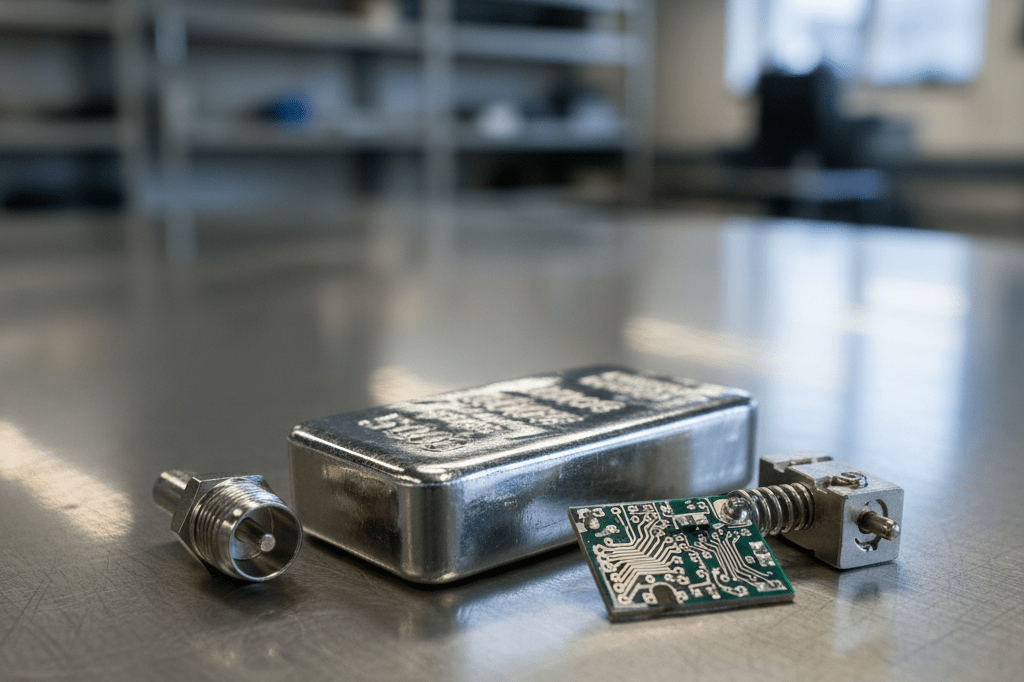
The electronics manufacturing sector has endured silver component costs surging 60% throughout 2025, forcing industry leaders to fundamentally restructure their bill-of-materials strategies and supplier relationships. Silver contacts, conductors, and circuit board components—critical for maintaining electrical performance standards—have become premium-priced inputs requiring specialized procurement approaches. Major electronics manufacturers report that silver-intensive products like high-frequency switches, RF connectors, and automotive sensor modules now demand entirely different cost modeling approaches, with some companies implementing silver-specific procurement teams to manage these specialized commodity exposures.
Solar panel manufacturers witnessed photovoltaic production costs climb 22% during Q4 2025 alone, directly attributable to silver paste price increases used in solar cell metallization processes. This cost pressure has accelerated research into reduced-silver paste formulations and alternative conductive materials, though performance trade-offs remain significant for high-efficiency panel designs. Medical device companies utilizing silver’s antimicrobial properties face unprecedented margin compression, with wound dressings, catheters, and surgical instruments incorporating silver nanoparticles experiencing cost increases that threaten product viability in competitive healthcare markets.
Manufacturing Sector: Navigating Silver’s Component Cost Spike
Electronics manufacturers have initiated comprehensive redesign programs to reduce silver content in non-critical applications, focusing on copper alternatives for lower-performance circuits and exploring graphene-based conductive materials for future product generations. Silver contacts and conductors remain irreplaceable in high-reliability applications including aerospace systems, medical equipment, and telecommunications infrastructure where performance cannot be compromised. Companies like automotive suppliers report silver usage per vehicle has increased 23% since 2020 due to electrification trends, creating a double impact from both higher consumption and dramatically elevated prices.
Solar industry participants have accelerated development of reduced-silver metallization techniques, with leading manufacturers targeting 30-40% silver content reduction through optimized screen-printing processes and alternative busbar designs. Medical product manufacturers are implementing selective silver application strategies, concentrating antimicrobial coatings only in high-risk contact areas rather than entire product surfaces. These tactical adjustments demonstrate how industrial users adapt to commodity price shocks while maintaining essential performance characteristics that justify silver’s premium positioning in critical applications.
4 Procurement Strategies For High-Value Commodity Markets
Forward contracts have emerged as essential risk management tools for companies with predictable silver consumption patterns, enabling price locks at current levels before potential further rallies push costs beyond operational thresholds. Successful forward contracting requires accurate demand forecasting and careful contract sizing to avoid over-commitment, with many manufacturers implementing 3-6 month forward coverage for 40-60% of projected silver needs. Vendor diversification strategies now extend beyond traditional supplier redundancy to include geographical spread and different supplier business models, from mining companies to recycling specialists and ETF redemption channels.
Substitute materials evaluation has accelerated across industries, with procurement teams conducting systematic reviews of silver applications to identify opportunities for copper, aluminum, or specialty alloy replacements in non-critical functions. Strategic stockpiling decisions require sophisticated cost-of-carry calculations that factor storage costs, insurance, capital costs, and obsolescence risk against projected price appreciation and supply security benefits. Companies implementing strategic stockpiling typically target 90-180 days of consumption coverage for critical silver components, while maintaining just-in-time delivery for applications where substitutes remain viable.
Positioning Your Business For The New Precious Metals Reality
Immediate supply chain auditing has become essential for companies seeking to understand their total silver exposure across direct purchases, component suppliers, and sub-tier vendors whose pricing may incorporate hidden silver cost pass-throughs. This comprehensive mapping exercise typically reveals 20-30% more silver exposure than initially apparent, particularly in complex assemblies where multiple suppliers incorporate silver-containing components without explicit disclosure. Record silver rally impacts cascade through supply chains in unexpected ways, requiring detailed spend analysis and supplier questionnaires to capture full cost implications and identify potential bottlenecks during continued price volatility.
Market adaptation strategies must address both short-term cost management and long-term competitive positioning as precious metals pricing fundamentally alters industry cost structures and profit margins. Companies developing systematic approaches to commodity volatility—including dedicated precious metals procurement specialists, enhanced supplier relationship management, and sophisticated hedging capabilities—position themselves to capitalize on competitors’ struggles with price management. The new precious metals reality demands organizational capabilities that extend far beyond traditional purchasing functions, requiring coordination between engineering, finance, supply chain, and strategic planning teams to optimize both cost performance and competitive advantage during sustained market volatility.
Background Info
- As of December 22, 2025, the iShares Silver Trust (SLV) closed at $62.47 USD, with a same-day gain of 2.53%.
- SLV’s year-to-date (YTD) price increase was reported as high as 142% by Golden10 Data on December 23, 2025; Seeking Alpha cited a 138% YTD rally as of December 22, 2025; ChartMill reported a 133.45% increase over the past year (i.e., since ~December 2024).
- SLV’s one-month gain stood at 37.9% as of December 22, 2025 (ChartMill), described by Seeking Alpha as “the largest since August 2020 and among the few such rallies since the early 1980s.”
- On December 22, 2025, SLV reached a record intraday high of $62.82 (Futunn), while physical silver hit $64.66/oz (AInvest) and later breached $70/oz on December 23, 2025 (Golden10 Data, Gelonghui Finance).
- SLV’s assets under management (AUM) totaled $34.1 billion as of mid-December 2025 (AInvest), with $33 billion in inflows cited earlier in the month.
- On December 23, 2025, iShares Silver Trust added 533.01 tons of silver holdings in a single day—the largest daily increase since January 2023—bringing total holdings to 16,599.25 tons (Gelonghui Finance).
- ChartMill assigned SLV a perfect technical rating of 10/10 and noted it outperformed 96.8% of all stocks in yearly performance.
- The gold-silver ratio stood at 86:1 as of mid-December 2025 (AInvest), interpreted by analysts as signaling silver’s historical undervaluation relative to gold.
- According to Bespoke Investment Group, silver “moved firmly into first place in the precious metals race” during Q4 2025, surpassing gold and platinum for the first time in years.
- SLV’s 2025 rally vastly exceeded major benchmarks: SPY returned 16.7% YTD (Seeking Alpha), while Bitcoin underperformed relative to earlier political-expectation-driven forecasts.
- Technical indicators showed RSI in overbought territory and strong upward momentum in moving averages—including the 200-day SMA—as of December 22, 2025 (AInvest).
- “Silver is usually thought of as the award for second place, but during the fourth quarter of 2025, it moved firmly into first place in the precious metals race,” said Bespoke Investment Group on December 22, 2025.
- “SLV has become a proxy for the broader silver market, and its technical chart tells a compelling story. The ETF has not only broken out of a decade-old trading range but is now testing uncharted territory,” stated AInvest News on December 22, 2025.