


Related search
Vegetable Chopper
Cleaning Supplies
Home Decor
Headphones
Get more Insight with Accio
Ryanair’s $40B Engine Deal Reveals Aviation Procurement Secrets
Ryanair’s $40B Engine Deal Reveals Aviation Procurement Secrets
6min read·James·Feb 11, 2026
CFM International’s strategic positioning in aviation engines reached a pivotal milestone on May 9, 2023, when Ryanair signed a Letter of Agreement for LEAP-1B engines to power 150 firm Boeing 737 MAX-10 aircraft. This supply chain partnership demonstrates how modern fleet modernization depends on integrated airframe-engine procurement strategies. The joint venture between GE Aviation and Safran Aircraft Engines leverages decades of manufacturing expertise to deliver the sole certified engine option for the entire Boeing 737 MAX family, spanning MAX-7 through MAX-10 variants.
Table of Content
- Revolutionizing Aviation Supply: The CFM Engine Strategy
- The $40B Aircraft Deal: Engines as Critical Decision Factors
- How Smart Retailers Apply Aviation Procurement Tactics
- Future-Proofing Your Procurement Strategy: The Aviation Model
Want to explore more about Ryanair’s $40B Engine Deal Reveals Aviation Procurement Secrets? Try the ask below
Ryanair’s $40B Engine Deal Reveals Aviation Procurement Secrets
Revolutionizing Aviation Supply: The CFM Engine Strategy
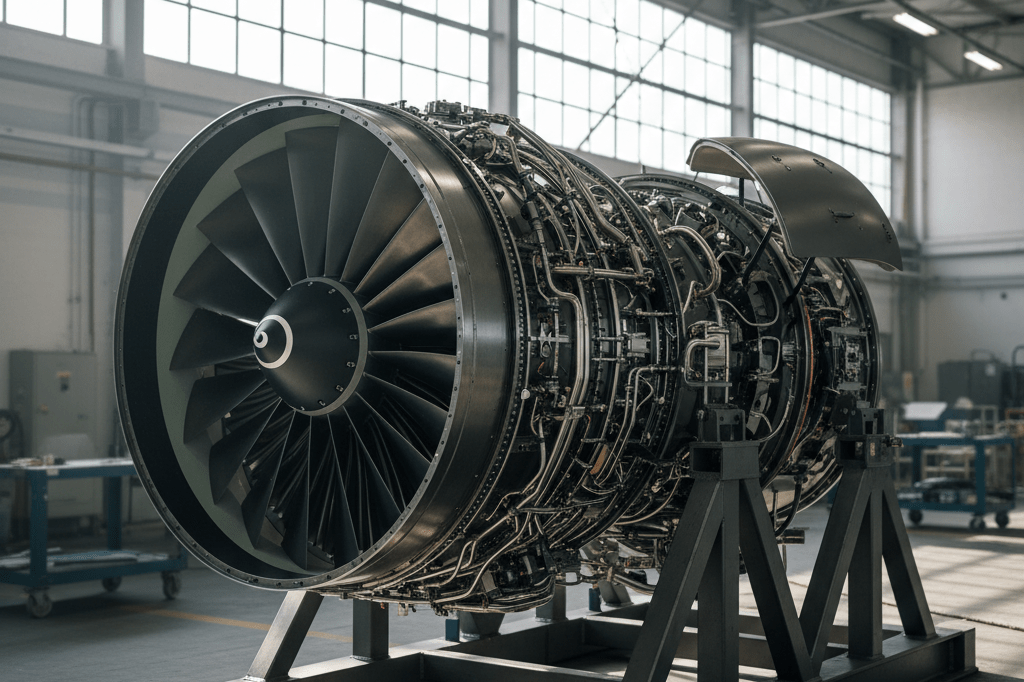
The scope of this aviation engines agreement extends beyond immediate aircraft deliveries, encompassing spare engines and options for an additional 150 aircraft through 2027. Ryanair’s commitment reflects confidence in CFM’s ability to support aggressive expansion plans targeting 225 million annual passengers by fiscal year 2026. This supply chain partnership model illustrates how procurement professionals increasingly view engine suppliers as strategic partners rather than transactional vendors, particularly when fleet modernization timelines span multiple years and require guaranteed parts availability.
Ryanair Boeing 737 MAX Orders and Deliveries
| Order Date | Total Orders | Deliveries as of June 30, 2025 | Undelivered Aircraft (July 2025) | Upcoming Deliveries |
|---|---|---|---|---|
| November 2014 | 360 | 181 | 210 | 25 by October 2025 |
The $40B Aircraft Deal: Engines as Critical Decision Factors
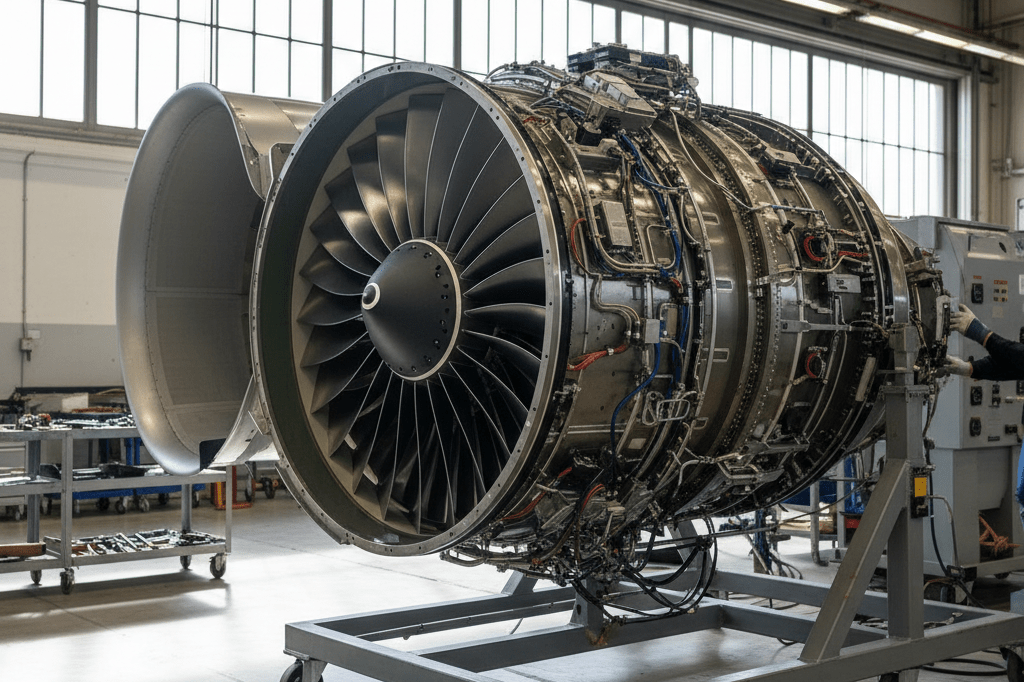
The $40 billion Boeing 737 MAX-10 order announced by Ryanair demonstrates how aircraft engines function as critical decision factors in aviation procurement beyond mere propulsion systems. While the airframe carries the headline valuation, the LEAP-1B engines represent approximately 25-30% of each aircraft’s total acquisition cost, translating to billions in engine-related procurement value. Fleet management professionals recognize that engine selection influences operational costs, maintenance scheduling, pilot training requirements, and parts inventory strategies for decades.
Aviation procurement decisions increasingly prioritize total cost of ownership over initial purchase prices, making engine efficiency and reliability paramount considerations. The LEAP-1B’s position as the exclusive powerplant for all 737 MAX variants eliminates procurement complexity while ensuring parts commonality across Ryanair’s expanding fleet. This standardization approach reduces inventory carrying costs, simplifies maintenance crew training, and streamlines supplier relationships – factors that procurement professionals weigh heavily when evaluating multi-billion dollar fleet acquisitions.
LEAP-1B Engines: The Technical Edge in Procurement
The LEAP-1B engines deliver 15% improved fuel consumption compared to previous CFM56-7B models, translating to substantial operational cost reductions across high-utilization fleets like Ryanair’s network. This efficiency metric stems from advanced ceramic matrix composite fan blades, twin-annular pre-swirl combustor technology, and optimized high-pressure compressor designs that reduce specific fuel consumption to approximately 0.45-0.48 pounds per pound of thrust per hour. For airlines operating 500+ daily flights, these efficiency gains can generate millions in annual fuel cost savings.
Long-term operational savings from LEAP-1B procurement significantly outweigh higher upfront investment costs when analyzed over 20-25 year aircraft lifecycles. Industry data indicates LEAP engines reduce maintenance costs by 10-15% compared to predecessor models through extended on-wing time and improved component durability. Major carriers choose LEAP-1B engines because the combination of fuel efficiency, maintenance optimization, and proven reliability creates competitive advantages in cost-sensitive markets where fuel expenses represent 25-30% of total operating costs.
3 Key Supply Chain Lessons from Ryanair’s Engine Strategy
Ryanair’s long-term partnership approach with CFM creates vendor stability for critical components that require decades of ongoing support throughout aircraft operational lives. The February 10, 2026 announcement revealed Ryanair’s commitment to pay CFM $1 billion annually to supply its new in-house engine MRO shops, demonstrating how strategic relationships extend beyond initial procurement into comprehensive lifecycle support. This partnership model ensures parts availability, technical expertise access, and maintenance capability development that procurement professionals increasingly value over traditional transactional purchasing arrangements.
Scale economics transform pricing structures when airlines commit to large engine volumes, as demonstrated by Ryanair’s 150 firm plus 150 optional aircraft engine requirements. Bulk purchasing agreements typically secure 15-25% discounts off list prices while guaranteeing delivery slots during peak production periods. Risk mitigation through engine type standardization eliminates operational complexity across expanding fleets, reducing pilot type-rating costs, maintenance crew training requirements, and spare parts inventory needs that can total hundreds of millions over fleet lifecycles.
How Smart Retailers Apply Aviation Procurement Tactics
Modern retailers are adapting aviation industry procurement strategies to transform their supplier relationships from transactional exchanges into strategic partnerships that drive competitive advantages. The aviation sector’s approach to vendor partnership agreements demonstrates how volume commitments and long-term planning create mutual value for both buyers and suppliers. Smart retailers recognize that bulk purchasing strategy extends beyond simple price negotiations to encompass service levels, delivery guarantees, and technical support that mirrors how airlines secure comprehensive engine support packages.
Leading retail procurement professionals increasingly adopt aviation-inspired tactics to manage complex supply chains where product reliability and supplier stability directly impact customer satisfaction. The aviation industry’s emphasis on strategic procurement creates frameworks for evaluating suppliers based on total relationship value rather than individual transaction costs. This approach proves particularly valuable for retailers managing high-volume, technically complex inventory where supplier expertise and long-term support capabilities become differentiating factors in competitive markets.
Strategy 1: Leveraging Scale for Better Supplier Terms
Volume commitments transform retailer-supplier dynamics by providing manufacturers with predictable demand forecasts in exchange for preferential pricing, priority production slots, and enhanced service levels. Retailers implementing bulk purchasing strategy typically secure 12-18% better pricing compared to spot purchases while gaining access to technical support, training programs, and exclusive product launches. Multi-year contracts create pricing stability that enables accurate profit margin planning, protects against commodity price volatility, and establishes preferred customer status during supply shortages.
Maintenance inclusion in vendor partnership agreements mirrors aviation’s comprehensive engine support models by bundling ongoing service, warranty extensions, and technical expertise with initial product purchases. Smart retailers negotiate service-inclusive contracts that reduce total cost of ownership by 15-25% while transferring maintenance risks to suppliers with specialized knowledge and scale economies. This approach proves especially valuable for technical products requiring specialized repair capabilities, where in-house expertise development costs exceed outsourced service expenses over 3-5 year planning horizons.
Strategy 2: The MRO Approach to Product Lifecycle Management
Building in-house expertise about critical inventory categories enables retailers to make informed procurement decisions, negotiate from positions of technical knowledge, and optimize product performance throughout operational lifecycles. Retailers adopting MRO (Maintenance, Repair, and Overhaul) methodologies typically invest 2-4% of procurement budgets in technical training and knowledge development to understand product specifications, failure modes, and performance optimization strategies. This expertise investment pays dividends during supplier negotiations, quality assessments, and lifecycle planning decisions where technical knowledge translates into 10-20% better procurement outcomes.
Lifecycle planning methodology requires calculating total cost of ownership including purchase price, operational costs, maintenance expenses, and end-of-life disposal across 5-10 year planning periods rather than focusing solely on initial acquisition costs. Supplier integration creates direct communication channels with manufacturers for technical support, product updates, and performance optimization guidance that extends product lifecycles by 15-30% through proper maintenance and usage protocols. This comprehensive approach mirrors how airlines manage engine relationships, viewing suppliers as technical partners rather than transactional vendors.
Future-Proofing Your Procurement Strategy: The Aviation Model
Strategic procurement requires systematic evaluation of existing supply chains to identify consolidation opportunities that create leverage for better terms, simplified vendor management, and enhanced supplier relationships. Aviation-inspired procurement models recommend reducing supplier bases by 30-50% while deepening relationships with remaining partners to achieve better service levels, pricing structures, and technical support capabilities. This consolidation approach enables procurement teams to focus resources on managing fewer, more valuable relationships rather than spreading efforts across numerous transactional suppliers.
Partnership focus involves identifying 2-3 critical suppliers in each major category for deeper integration through shared planning, joint problem-solving, and collaborative innovation initiatives that create mutual competitive advantages. Smart retailers allocate 60-70% of procurement spending to strategic suppliers who demonstrate technical expertise, reliability, and growth partnership potential rather than purely price-driven relationships. These focused supplier relationships enable access to new technologies, market intelligence, and capacity allocation priorities that provide competitive advantages in dynamic retail environments where supplier capabilities increasingly differentiate market leaders from followers.
Background Info
- Ryanair and CFM International signed a Letter of Agreement (LoA) on May 9, 2023, for LEAP-1B engines to power 150 firm Boeing 737 MAX-10 aircraft ordered that day.
- The LoA includes spare engines and options for an additional 150 aircraft and their corresponding LEAP-1B engines.
- CFM International is a joint venture between GE Aviation and Safran Aircraft Engines.
- The LEAP-1B is the sole engine option certified for the entire Boeing 737 MAX family (MAX-7, MAX-8, MAX-9, and MAX-10).
- CFM also produces the LEAP-1A (for Airbus A320neo) and LEAP-1AC (for COMAC C919).
- Ryanair’s total MAX-10 order announced on May 9, 2023, comprises 150 firm orders and 150 options, valued at $40 billion at list prices.
- Deliveries of the 150 firm MAX-10 aircraft are scheduled between 2023 and 2027.
- As of April 30, 2023, Boeing had delivered 102 Boeing 737 MAX aircraft to Ryanair and held 108 outstanding firm orders (excluding the May 2023 MAX-10 order).
- Ryanair operated 103 Boeing 737 MAX-8200 aircraft as of April 30, 2023, per ch-aviation.com data.
- The engine agreement supports Ryanair’s fleet renewal and growth strategy targeting 225 million annual passengers by fiscal year 2026 (ending March 31, 2026).
- A separate announcement dated February 10, 2026 — appearing in the “Related News” section of the AeroTime page — states: “Ryanair to pay CFM $1B per year to supply its new in-house engine MRO shops.” This is the only source referencing the $1 billion figure and links it specifically to annual payments for engine supply to Ryanair’s internal maintenance, repair, and overhaul (MRO) facilities.
- The February 10, 2026, item does not specify duration, contract start date, or whether the $1B/year commitment is tied directly to the 2023 LEAP-1B LoA or constitutes a new commercial arrangement; no other source in the provided material corroborates this figure or its context.
- Gaël Méheust, President and CEO of CFM International, said: “We are honored by Ryanair’s renewed trust in our products and in our teams. We look forward to continuing to support Ryanair’s fleet development by providing them with the best standards in terms of reliability, sustainability and maintenance,” on May 12, 2023, as quoted in the AeroTime article.
- The AeroTime article does not mention any dollar value for the engine agreement itself; the $40 billion valuation applies solely to the airframe order with Boeing.
- Source A (AeroTime, May 12, 2023) reports the LoA covers engines for 150 firm + 150 optional MAX-10s and includes spares, while Source B (February 10, 2026, related news snippet) reports a $1 billion/year payment obligation to CFM for engine supply to Ryanair’s in-house MRO shops — a detail absent from all other cited content.
Related Resources
- Safran-group: Ryanair and CFM strengthen landmark…
- Avitrader: Ryanair inks major engine support MoU with CFM
- Aerotime: Ryanair to pay CFM $1B per year to supply its new…
- Corporate: RYANAIR AND CFM AGREE MULTI-YEAR…
- Aviationweek: Ryanair’s O’Leary Says European SAF Targets…