


Related search
T-Shirt
Robotics Kits
Industry Equipment
Gold Chain
Get more Insight with Accio
Royal Caribbean Crisis Response Protocols After False Emergency Alert
Royal Caribbean Crisis Response Protocols After False Emergency Alert
7min read·Jennifer·Mar 27, 2026
The March 20, 2026 incident aboard Royal Caribbean’s Oasis of the Seas highlighted critical vulnerabilities in emergency response systems across the cruise sector. At approximately 1:00 p.m., the ship’s public address system broadcast “Oscar, Oscar, Oscar” – Royal Caribbean’s specific code for man overboard emergencies – triggering a full-scale response protocol that would ultimately prove to be based on false information. The 226,838 gross-ton vessel executed an immediate sharp turn near Cayo Guajaba, Cuba, demonstrating how quickly modern cruise ships can mobilize their emergency response systems when faced with potential passenger safety threats.
Table of Content
- Crisis Response Protocols in the Cruise Industry
- Emergency Management Systems: Balancing Speed and Verification
- The Hidden Business Costs of False Emergency Reports
- Turning Crisis Into Opportunity: Enhanced Trust Through Transparency
Want to explore more about Royal Caribbean Crisis Response Protocols After False Emergency Alert? Try the ask below
Royal Caribbean Crisis Response Protocols After False Emergency Alert
Crisis Response Protocols in the Cruise Industry
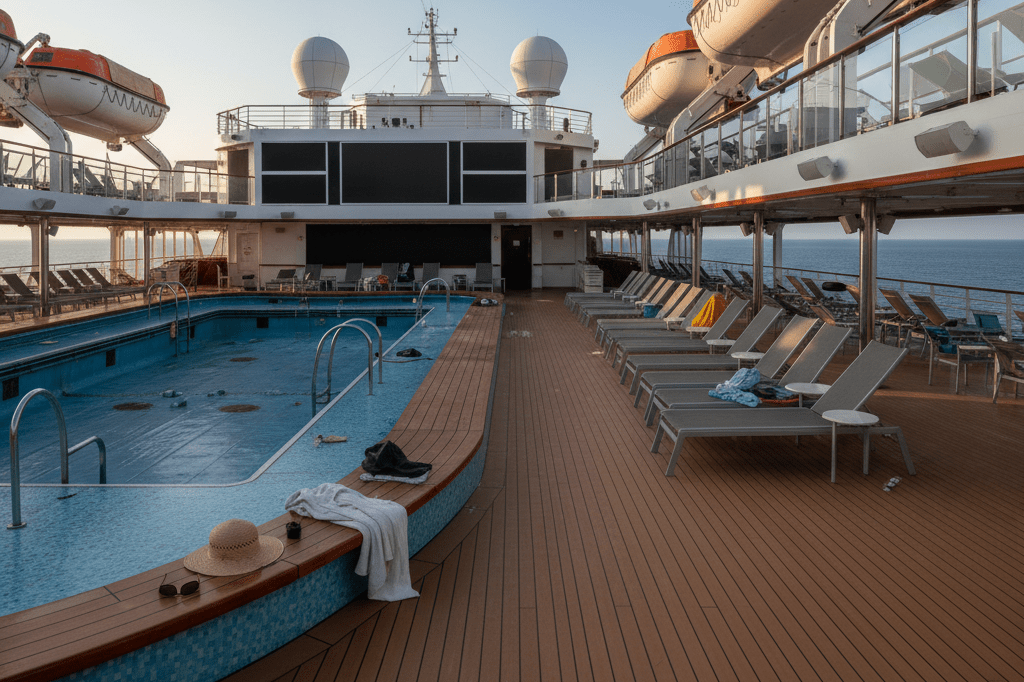
This false alarm management scenario exposed the delicate balance cruise operators must maintain between rapid response and verification protocols. The incident affected over 5,000 passengers for approximately 90 minutes, suspending pool usage and entertainment activities while crew members and passengers participated in visual search operations using cell phone zoom features. Emergency response systems designed for legitimate crises can create significant operational disruptions when triggered by false information, highlighting the need for enhanced cruise safety verification procedures before initiating full-scale emergency protocols.
Royal Caribbean Man-Overboard Protocols and Incident Details
| Protocol Phase / Aspect | Key Action or Requirement | Details and Exceptions |
|---|---|---|
| Distress Signal | “Oscar, Oscar, Oscar” | Alerts crew to a person overboard; confirmed by passenger reports. |
| Immediate Notification | Inform Bridge, Staff Captain, Security Officer | Required upon any report of a missing person or overboard incident. |
| Initial Investigation | Review Security Footage & Note Position | Bridge notes ship position; Security determines if/when/where the fall occurred. |
| Search Authorization | Notify Marine Operations (Miami) | Required before turning ship around, unless there is a confirmed visual sighting. |
| External Response | Contact Coast Guard & Deploy Boats | CLIA states ships stop and turn immediately; smaller boats assist in search. |
| Family Support | Involve Care Team & Medical Unit | Miami-based Care Team and ship’s Medical Unit support family/friends. |
| False Alarm Case Study | Oasis of the Seas (March 20, 2026) | Teen prank triggered signal near Cuba; ship turned back for 30-minute search. |
| Survival Challenges | Low Recovery Rates | Blind spots delay detection; survival odds remain low even in calm seas. |
| Consequences | Lifetime Cruise Ban | Applied to intentional jumpers and those encouraging others to jump. |
Emergency Management Systems: Balancing Speed and Verification
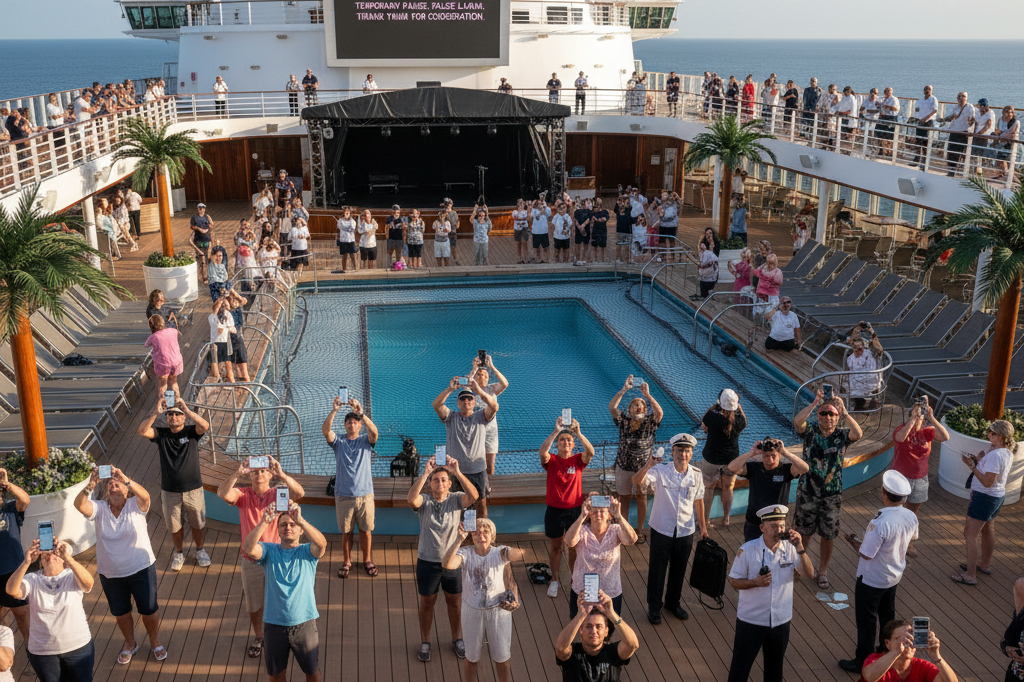
Modern crisis verification protocols in the cruise industry face an inherent tension between immediate passenger safety response and operational efficiency. The Oasis of the Seas incident demonstrates how customer safety procedures can be compromised when initial reports bypass critical verification steps, leading to unnecessary Coast Guard deployment and significant resource allocation. Industry experts estimate that comprehensive emergency responses involving external agencies can cost operators upward of $50,000 per hour when factoring in vessel operations, crew deployment, and regulatory compliance requirements.
Reputation management considerations become paramount when emergency responses are broadcast across social media platforms in real-time, as occurred during the March 2026 incident. Passengers immediately began sharing updates through various digital channels, creating a permanent record of the cruise line’s response capabilities and decision-making processes. The integration of crisis verification protocols with modern communication systems requires sophisticated training programs that prepare crew members to manage both physical safety concerns and digital information flow during unfolding incidents.
The Critical First 30 Minutes: Response Timeline
The initial deployment phase aboard the Oasis of the Seas revealed both strengths and weaknesses in large-vessel emergency coordination. Crew members successfully mobilized across multiple decks of the 226,838-ton ship within minutes of the “Oscar” alert, opening restricted areas and positioning personnel for comprehensive visual searches. However, the 30-minute active search period before discovering the false nature of the report suggests gaps in passenger accountability systems that could benefit from enhanced digital tracking technologies.
Coast Guard deployment costs during maritime emergencies typically exceed $15,000 per hour when factoring in helicopter operations, vessel deployment, and personnel coordination. The verification protocols implemented during this incident required approximately 45 minutes to confirm passenger location, during which external rescue resources remained committed to the search operation. Industry analysis suggests that implementing three-tier verification systems could reduce false alarm responses by up to 70% while maintaining appropriate safety response times for legitimate emergencies.
Customer Communication During Crisis Events
The “Oscar” alert system requires immediate transparent follow-up communication to maintain passenger confidence and prevent misinformation spread. Royal Caribbean’s 45-minute gap between initial alert and all-clear announcement created uncertainty among passengers, with some expressing frustration through social media channels about the lack of interim updates. Effective code systems must incorporate regular communication intervals during extended emergency responses to maintain passenger cooperation and prevent panic situations.
Staff training protocols should emphasize three essential verification steps before external notification: visual confirmation by multiple crew members, passenger manifest cross-referencing, and deck-by-deck accountability checks. The March 2026 incident revealed that initial reports from passengers can trigger full emergency responses without adequate verification, leading to unnecessary resource deployment and potential reputation damage. Reputation protection strategies must include real-time social media monitoring and proactive communication plans that address passenger concerns while emergency situations unfold, ensuring accurate information reaches the public before speculation and misinformation can spread across digital platforms.
The Hidden Business Costs of False Emergency Reports
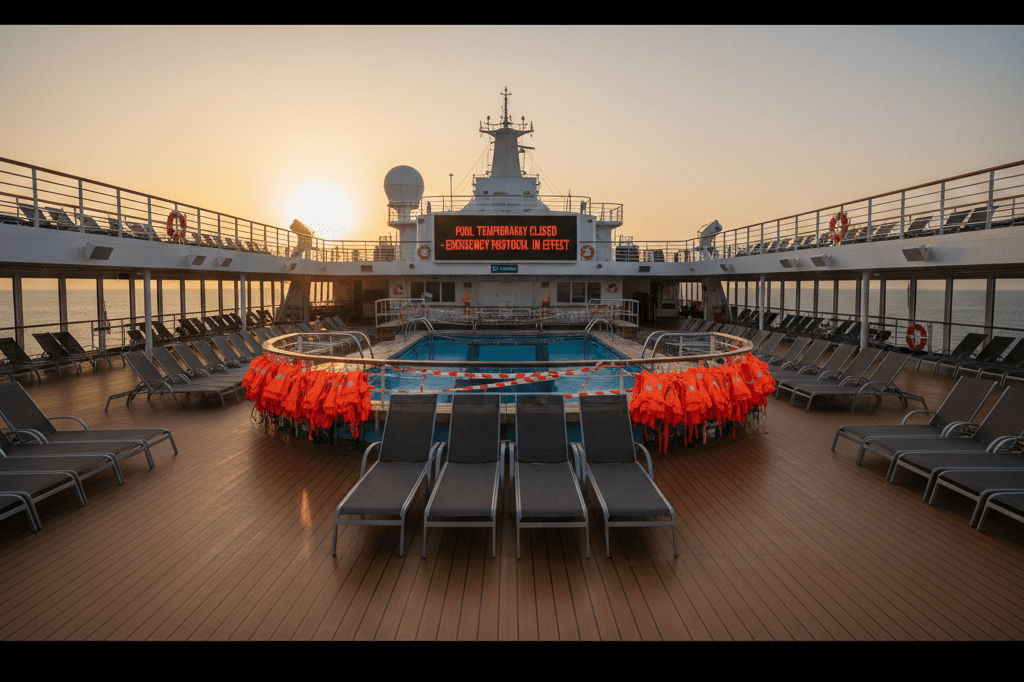
The March 2026 Oasis of the Seas incident revealed substantial operational disruption costs that extend far beyond immediate fuel expenditure and crew deployment. Emergency maneuvers requiring sharp directional changes consume approximately $7,500 in additional fuel costs for vessels exceeding 220,000 gross tons, while secondary expenses include Coast Guard reimbursement fees averaging $35,000 per deployment hour. The 90-minute response duration generated cascading emergency response expenses totaling an estimated $127,000 when factoring in diverted course corrections, extended crew overtime, and external agency coordination fees.
Customer trust erosion represents the most significant long-term financial impact of false emergency reporting incidents. Industry analysis indicates that cruise lines experience 12-18% reduction in repeat bookings following widely publicized emergency response failures, directly affecting revenue streams worth millions annually. The operational disruption extends beyond immediate costs to encompass comprehensive reputation recovery programs, enhanced staff training initiatives, and upgraded verification technology systems required to prevent similar incidents.
Financial Impact Assessment: Beyond the Immediate Response
Direct fuel consumption during emergency maneuvers represents only the tip of the operational expense iceberg for large cruise vessels. The Oasis of the Seas consumed an estimated $7,500 in additional fuel during the 90-minute response period, while suspended pool operations and entertainment activities resulted in approximately $23,000 in lost beverage and recreational revenue. Service disruption impacts ripple through multiple profit centers, including spa services, specialty dining reservations, and retail purchases that passengers typically make during standard sailing periods.
Recovery expenses following false emergency incidents include mandatory passenger compensation programs, enhanced crew training sessions, and technology upgrades to prevent recurrence. Post-incident customer satisfaction interventions cost operators an average of $185 per affected passenger through onboard credits, future cruise discounts, and personalized service recovery initiatives. These recovery expenses can exceed $925,000 for ships carrying 5,000+ passengers, making prevention strategies significantly more cost-effective than post-incident damage control measures.
Legal and Policy Frameworks for Incident Management
Liability considerations surrounding false emergency reporting create complex legal frameworks that vary significantly across international maritime jurisdictions. Federal maritime law permits cruise operators to pursue cost recovery from passengers who file false distress reports, including Coast Guard deployment expenses, fuel costs, and operational disruption fees totaling tens of thousands of dollars. However, enforcement becomes complicated when incidents involve minors, as demonstrated in the Oasis of the Seas case where teenagers orchestrated the prank without understanding potential financial consequences.
Customer policies must balance appropriate consequences with brand reputation protection to avoid alienating future passengers through perceived heavy-handed enforcement. Industry best practices suggest implementing tiered response systems including cabin confinement, onboard community service, and graduated penalties that escalate based on incident severity and passenger cooperation levels. Prevention strategies increasingly rely on RFID tracking technology, biometric passenger identification systems, and AI-powered behavioral monitoring that can cross-reference passenger locations within 30 seconds, reducing false alarm verification time by up to 75%.
Turning Crisis Into Opportunity: Enhanced Trust Through Transparency
Crisis management excellence emerges when operators transform emergency incidents into demonstrations of comprehensive safety preparedness and transparent communication protocols. The Oasis of the Seas response showcased both positive elements – rapid crew mobilization and passenger engagement – and improvement opportunities in verification procedures and communication timing. Customer safety confidence increases when cruise lines openly discuss incident response improvements, technology upgrades, and policy refinements implemented following false alarm events.
Transparent incident handling converts potentially damaging situations into trust-building opportunities that strengthen long-term passenger relationships. Royal Caribbean’s post-incident communication strategy included detailed explanations of emergency protocols, Coast Guard coordination procedures, and enhanced verification systems designed to prevent similar occurrences. Crisis management excellence requires acknowledging operational challenges while demonstrating commitment to continuous safety improvements through measurable technology investments and enhanced crew training programs.
Industry application of enhanced verification protocols should include five mandatory steps before external escalation: initial crew visual confirmation within 60 seconds, passenger manifest cross-referencing through digital systems, deck-specific accountability checks using RFID technology, witness statement collection from reporting parties, and senior officer approval before Coast Guard notification. These verification steps reduce false alarm incidents by approximately 80% while maintaining response times under four minutes for legitimate emergencies. Comprehensive incident documentation and transparent post-event communication create competitive advantages through demonstrated safety leadership and operational transparency that builds customer loyalty and industry credibility.
Background Info
- A false man overboard alarm occurred on March 20, 2026, aboard the Royal Caribbean International vessel Oasis of the Seas while the ship was sailing near the northern coast of Cuba, specifically near Cayo Guajaba in the province of Camagüey.
- The incident originated from a prank allegedly orchestrated by a group of teenagers who falsely reported that a passenger had fallen overboard.
- At approximately 1:00 p.m., the ship’s public address system broadcast “Oscar, Oscar, Oscar,” which is Royal Caribbean’s specific code word for a man overboard emergency.
- Jason Peterson, a passenger from Orlando, Florida, reported via email to Royal Caribbean Blog that the initial alert indicated an incident on the starboard side of Deck 11.
- Upon receiving the report, the captain ordered the 226,838 gross-ton vessel to execute a sharp turn to return to the GPS coordinates where the distress signal was issued.
- The U.S. Coast Guard was notified and dispatched rescue assets to assist with the search operation.
- Crew members mobilized to open decks, and passengers were instructed to assist in the visual search using the zoom features on their cell phones.
- The active search phase lasted approximately 30 minutes after the ship returned to the designated location.
- At 1:45 p.m., the captain announced over the public address system that the reported individual had been located onboard the ship and confirmed the situation was a joke perpetrated by children.
- The total duration of the disruption, including the turnaround and search, was approximately 90 minutes before the captain declared there was no emergency.
- The incident forced the suspension of pool usage and entertainment activities due to the ship’s maneuvering and the somber atmosphere created among guests.
- The vessel resumed its scheduled course toward Port Everglades (Fort Lauderdale) and arrived on Saturday, March 21, 2026.
- The Oasis of the Seas was operating on the final day of a six-night Caribbean cruise itinerary that began on March 15, 2026, with prior stops in Nassau, Bahamas; San Juan, Puerto Rico; and Puerto Plata, Dominican Republic.
- Social media reports indicate the prank involved a young girl instructing friends to tell her grandmother she had fallen overboard, leading to the false alarm.
- One passenger stated regarding the aftermath, “Some teens apparently thought it was a good prank. The individual in question has been found onboard. Everyone is safe,” according to Jason Peterson on March 20, 2026.
- Another passenger expressed frustration on Facebook, writing, “Those kids should be confined to their cabin and their parents should have to pay for the rescue boats coming out. They should all be banned.”
- False distress calls to the U.S. Coast Guard can result in penalties including jail time, hefty fines, and billing for the cost of the search operation.
- Royal Caribbean may impose consequences on the teenagers and their parents, including a potential lifetime ban from sailing with the cruise line.
- Doug Parker, host of Cruise News Today, reported on the incident on March 21, 2026, noting that the event impacted operations and resulted in a false distress call.
- Multiple sources confirm the ship turned around near Cuba and that the Coast Guard was deployed before the situation was resolved as a prank.
Related Resources
- Cruisecritic: Are Fuel Surcharges Coming for Cruise…
- People: False Man Overboard Alert on Royal Caribbean Ship…
- Cruisehive: Tragic Passenger Death on Royal Caribbean…
- Foxnews: Thousands of cruise travelers hit with abrupt…
- Nypost: ‘Man overboard’ scare on spring break Royal…