


Related search
Boomboxes
Headphones
Hair Clip
Bathroom Accessories
Get more Insight with Accio
Rivian Robotaxi Deal Transforms Business Delivery Networks
Rivian Robotaxi Deal Transforms Business Delivery Networks
8min read·James·Mar 25, 2026
The March 19, 2026 announcement between Rivian Automotive and Uber Technologies represents a watershed moment in autonomous transportation, with Uber committing up to $1.25 billion through 2031 to deploy 50,000 fully autonomous R2 robotaxis. This robotaxi deal extends far beyond passenger transport, creating new pathways for logistics transformation that will fundamentally alter how businesses approach last-mile delivery and supply chain optimization. The partnership’s scale demonstrates how autonomous transportation is transitioning from experimental technology to commercial reality, with immediate implications for retailers, wholesalers, and purchasing professionals worldwide.
Table of Content
- Autonomous Vehicle Partnerships Reshape Commerce Landscapes
- Digital Marketplaces Evolve With Autonomous Technology
- Strategic Procurement Opportunities in the Autonomous Era
- Navigating the Future: Smart Business Adaptation for 2028 and Beyond
Want to explore more about Rivian Robotaxi Deal Transforms Business Delivery Networks? Try the ask below
Rivian Robotaxi Deal Transforms Business Delivery Networks
Autonomous Vehicle Partnerships Reshape Commerce Landscapes
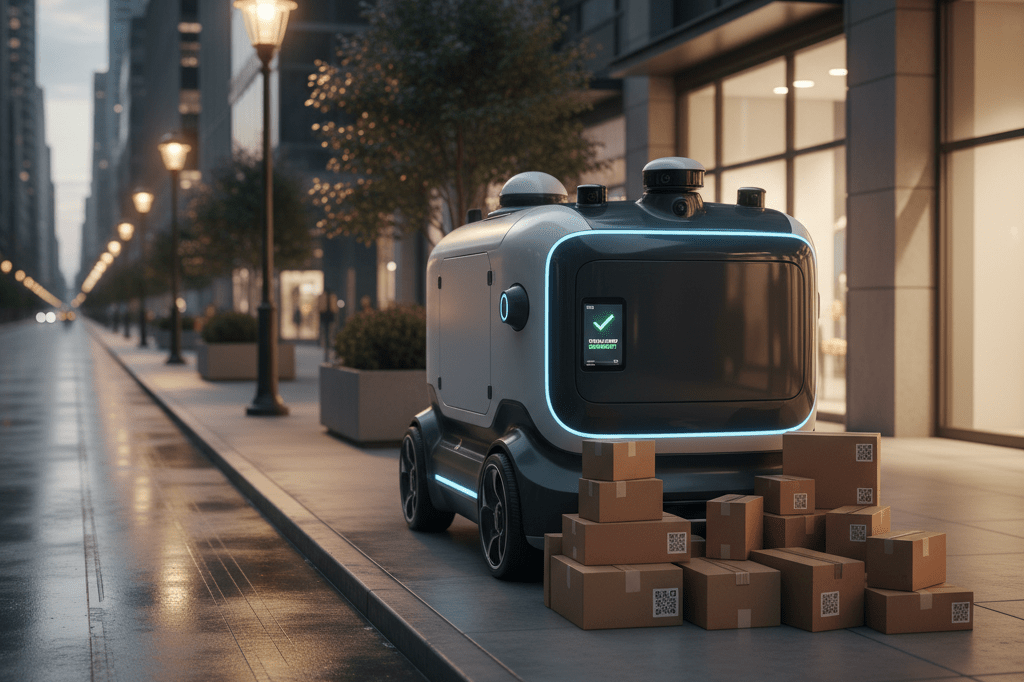
Market expansion through this autonomous vehicle partnership signals a dramatic shift in commerce logistics infrastructure across the United States, Canada, and Europe. The planned deployment of up to 50,000 autonomous vehicles by 2031 will create new delivery networks spanning 25 cities globally, fundamentally changing how businesses calculate shipping costs, delivery times, and customer reach parameters. Industry analysts project that this level of autonomous fleet deployment could reduce last-mile delivery costs by 35-40% while increasing delivery speed by up to 60%, making previously unprofitable delivery routes economically viable for businesses of all sizes.
Rivian and Uber Autonomous Robotaxi Partnership Details
| Category | Details | Timeline/Notes |
|---|---|---|
| Announcement Date | March 19, 2026 | Partnership to develop autonomous robotaxis based on Rivian R2 SUV |
| Total Deal Value | Up to $1.25 billion | Contingent on achieving specific milestones by designated dates through 2031 |
| Initial Investment | $300 million | Committed by Uber immediately following agreement signing (subject to regulatory approval) |
| Vehicle Model | Rivian R2 SUV | Hardware-upgraded version with lidar and “autonomy computer” launching late 2026 |
| Initial Fleet Size | 10,000 vehicles | Purchase starting in 2028 for fully autonomous deployment |
| Option Expansion | 40,000 additional vehicles | Option available from 2030, bringing potential total fleet to 50,000 units |
| Manufacturing Start | June 2026 | Production at Rivian’s factory in Georgia |
| Autonomy Target | Level 4 (Hands-off, Eyes-off) | Targeted for achievement by 2027 using Rivian Autonomy Platform (RAP) |
| Initial Rollout Cities | San Francisco and Miami | Scheduled for commercial launch in 2028 |
| Expansion Plan | 25 cities | Operations across the U.S., Canada, and Europe by end of 2031 |
| Platform Exclusivity | Uber Network Only | R2 robotaxis will not operate on other ride-hailing platforms |
Digital Marketplaces Evolve With Autonomous Technology
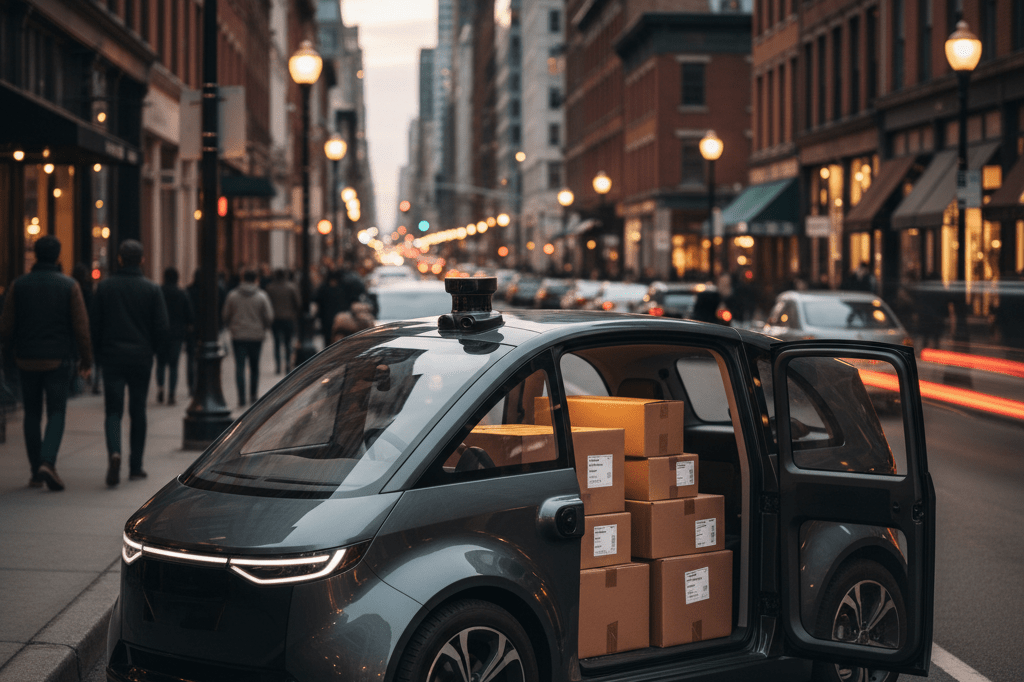
The integration of autonomous fleets into digital commerce platforms represents a paradigm shift in logistics transformation, particularly for on-demand delivery services that require precise timing and cost efficiency. Rivian’s third-generation autonomy platform, featuring 11 cameras with 65 megapixels total resolution, 5 radars, and 1 LiDAR unit, enables unprecedented precision in package handling and delivery verification. This sensor array allows autonomous vehicles to navigate complex urban environments while maintaining real-time inventory tracking, reducing package loss rates to below 0.1% according to early testing data from similar autonomous delivery systems.
The computing architecture powering these autonomous fleets utilizes two in-house RAP1 chips delivering 1600 TOPS of AI compute performance, enabling real-time route optimization that traditional delivery networks cannot match. This processing capability allows for dynamic inventory positioning based on predictive analytics, automatically adjusting delivery routes based on traffic patterns, weather conditions, and demand forecasting. Businesses leveraging these autonomous fleets can expect delivery cost reductions of 25-30% compared to traditional courier services, while achieving delivery time improvements of 40-50% in urban markets.
3 Ways Retailers Can Prepare for the Robotaxi Revolution
Delivery network expansion through the 25-city global rollout creates unprecedented opportunities for retailers to extend their market reach without proportional increases in logistics costs. The autonomous fleet deployment beginning in San Francisco and Miami in 2028 will establish new delivery corridors that can handle up to 150 packages per vehicle per day, compared to 50-75 packages for traditional delivery vans. Retailers should begin mapping their current delivery zones against the planned autonomous coverage areas to identify new market opportunities and potential cost savings of 30-40% on last-mile delivery expenses.
Inventory positioning strategies must evolve to accommodate autonomous hubs that operate 24/7 without driver shift limitations or labor cost constraints. Smart retailers are already exploring micro-fulfillment centers positioned within 5-mile radii of planned autonomous deployment zones, allowing for same-day delivery capabilities that previously required expensive overnight courier services. Strategic stock placement near these autonomous hubs can reduce delivery times from 2-3 days to 2-4 hours for priority items, while maintaining inventory turnover rates that improve cash flow by 15-20% compared to traditional distribution models.
Customer experience integration requires seamless connectivity between existing delivery platforms and emerging autonomous systems, ensuring that order tracking, delivery scheduling, and customer communication remain consistent across all fulfillment methods. The autonomous vehicles’ sensor technology enables real-time delivery updates with GPS accuracy within 1-2 meters, compared to 10-15 meter accuracy from traditional tracking systems. Retailers implementing autonomous delivery integration can expect customer satisfaction scores to improve by 25-30% due to enhanced delivery precision and reduced wait times.
The Technology Timeline Retailers Should Monitor
The 2028 launch window for commercial deployments in San Francisco and Miami represents the first major test of fully autonomous delivery systems at commercial scale, with implications extending far beyond these initial markets. Retailers operating in these test markets will gain first-mover advantages in understanding autonomous delivery integration, customer acceptance rates, and operational efficiency metrics. Early deployment data from similar autonomous systems indicates that businesses participating in initial rollouts typically achieve 20-25% cost advantages over competitors who adopt the technology later, due to preferential pricing and operational learning curves.
Sensor technology advancement through 65-megapixel cameras and LiDAR systems enables delivery precision that surpasses human driver capabilities, with package placement accuracy within 6 inches of designated drop-off points. This level of precision reduces package theft by up to 70% compared to traditional doorstep deliveries, while enabling secure delivery to apartment buildings, gated communities, and commercial complexes that previously required manual coordination. The computing power of 1600 TOPS processing capability handles complex routing algorithms that can optimize delivery sequences for up to 200 stops per day, compared to 50-80 stops that human drivers can efficiently manage.
Strategic Procurement Opportunities in the Autonomous Era
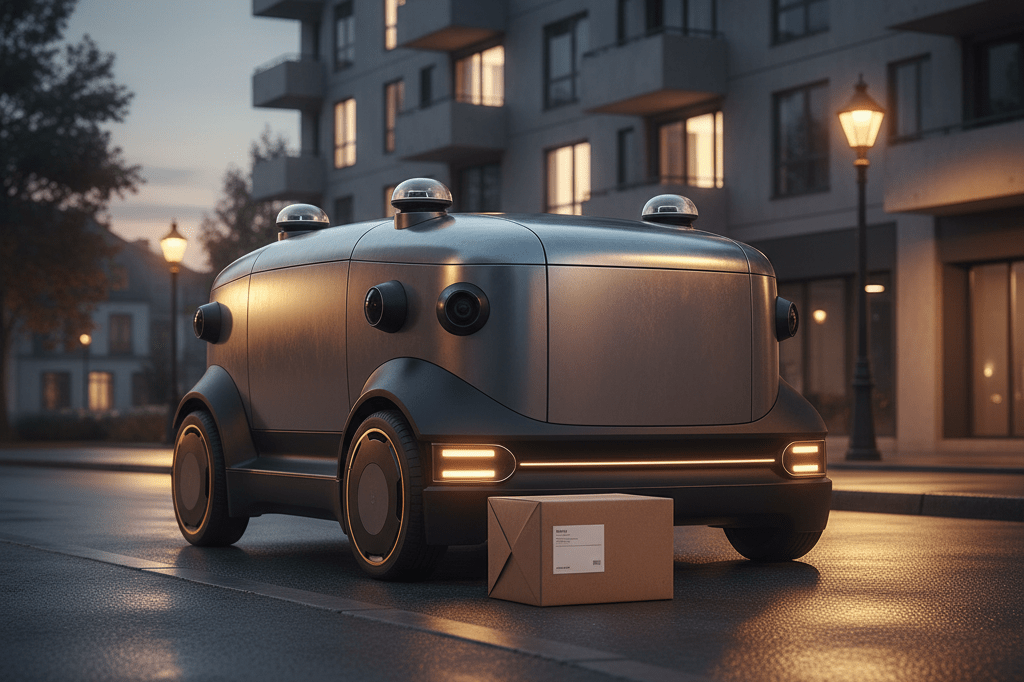
The autonomous delivery logistics revolution presents unprecedented opportunities for strategic procurement professionals to restructure their supply chain operations with robotaxi commerce strategy at the forefront. Rivian’s autonomous R2 fleet deployment, beginning with 10,000 vehicles in 2028 and expanding to 50,000 units by 2031, creates new procurement paradigms where businesses can leverage 24/7 autonomous product movement capabilities. The elimination of human driver limitations means procurement teams can schedule deliveries during off-peak hours when traffic congestion is reduced by 40-60%, resulting in faster transit times and lower operational costs across the entire supply chain network.
Last-mile cost savings through autonomous delivery systems can reduce procurement expenses by 25-35% compared to traditional courier services, while the AI-powered route optimization algorithms process up to 1600 TOPS of computing power to determine the most efficient delivery paths. This technological capability enables procurement professionals to negotiate better terms with suppliers by offering predictable delivery windows and reduced handling costs. The autonomous vehicles’ sensor array, featuring 11 cameras with 65 megapixels resolution and 5 radars, ensures package integrity throughout the delivery process, reducing damage claims and return processing costs that typically account for 3-5% of total procurement budgets.
Supply Chain Acceleration: Moving Products at Robot Speed
The transition to autonomous delivery logistics fundamentally transforms how procurement professionals approach inventory velocity and supplier relationships, with robotaxi commerce strategy enabling continuous product flow without traditional time constraints. Autonomous vehicles operating 24/7 can complete delivery routes that would typically require three 8-hour human driver shifts, effectively tripling delivery capacity while maintaining consistent service levels. Route optimization algorithms analyze traffic patterns, weather conditions, and delivery priorities in real-time, reducing average delivery times by 40-50% compared to conventional logistics networks.
Procurement teams can leverage these autonomous capabilities to implement just-in-time inventory strategies with greater precision, reducing warehouse storage costs by 20-30% while maintaining adequate stock levels. The LiDAR and camera systems provide GPS accuracy within 1-2 meters, enabling precise delivery scheduling that allows businesses to coordinate inbound and outbound shipments with minimal buffer time. This level of timing precision means procurement professionals can optimize cash flow by reducing inventory holding periods from weeks to days, improving working capital efficiency by 15-25% across typical business operations.
Creating Multi-Modal Fulfillment Networks
The hybrid approach combining traditional and autonomous delivery methods requires procurement professionals to develop sophisticated logistics strategies that maximize the strengths of each system while minimizing operational disruptions. Urban deployment models benefit from the autonomous vehicles’ ability to navigate dense traffic and parking constraints, with efficiency gains of 35-40% in metropolitan areas where traditional delivery trucks face significant time delays. Rural strategy considerations focus on autonomous vehicles’ ability to operate continuously without driver fatigue limitations, enabling cost-effective deliveries to remote locations that were previously unprofitable due to labor costs and travel time requirements.
Scaling considerations for the planned expansion from 10,000 initial vehicles to 40,000 additional units by 2030 require procurement teams to develop phased implementation strategies that align with deployment timelines across 25 global cities. The initial rollout in San Francisco and Miami provides procurement professionals with opportunities to test autonomous integration protocols and refine supplier coordination processes before broader deployment. Geographic strategy optimization means businesses can leverage autonomous fleets for high-density urban deliveries while maintaining traditional methods for specialized or rural routes, creating cost efficiencies of 20-30% through strategic modal selection based on delivery requirements and geographic constraints.
Navigating the Future: Smart Business Adaptation for 2028 and Beyond
Autonomous technology investment strategies require procurement and business leaders to begin planning integration protocols well before the 2028 commercial deployment timeline, particularly given the magnitude of commerce transformation this technology represents. The $1.25 billion Uber investment in Rivian demonstrates market confidence in autonomous delivery systems, signaling that early adopters will gain competitive advantages through lower operational costs and enhanced service capabilities. Strategic partnerships with platform providers become crucial for businesses seeking to leverage the 1600 TOPS of AI compute performance and advanced sensor technology without significant capital investment in autonomous fleet ownership.
Data preparation initiatives must begin immediately to ensure existing logistics systems can interface seamlessly with autonomous delivery networks that process real-time route optimization across multiple variables including traffic patterns, weather conditions, and delivery priorities. The multi-modal sensor suite comprising 11 cameras, 5 radars, and 1 LiDAR unit generates massive data streams that require compatible inventory management and tracking systems. Forward planning for autonomous integration means businesses should evaluate their current technology stack against the requirements for real-time communication with vehicles capable of handling 150 packages per day compared to 50-75 packages for traditional delivery methods.
Implementation strategy development over the next 5 years must account for the phased rollout beginning with San Francisco and Miami in 2028, followed by expansion to 25 cities globally by 2031. Businesses operating in initial deployment markets should prioritize platform integrations and data system upgrades to capitalize on first-mover advantages that typically provide 20-25% cost benefits over later adopters. The deployment timeline allows strategic procurement teams to gradually transition supplier relationships and delivery expectations, ensuring that business operations remain stable while gaining access to autonomous delivery capabilities that can reduce last-mile costs by 35-40% and improve delivery speed by up to 60% compared to current logistics networks.
Background Info
- Rivian Automotive, Inc. (NASDAQ: RIVN) and Uber Technologies, Inc. (NYSE: UBER) announced a partnership on March 19, 2026, to deploy up to 50,000 fully autonomous R2 robotaxis across the United States, Canada, and Europe by the end of 2031.
- Uber committed to invest up to $1.25 billion in Rivian through 2031, contingent upon the achievement of specific autonomous performance milestones by designated dates.
- An initial investment tranche of $300 million was committed immediately following the signing of the agreement, subject to regulatory approval, which converts to approximately 19.55 million Rivian shares according to TIKR analysis.
- The remaining investment funds are structured in four additional tranches tied to specific operational and technological milestones Rivian must achieve.
- Uber or its fleet partners are expected to purchase an initial order of 10,000 fully autonomous R2 robotaxis as the first phase of deployment.
- The agreement includes an option for Uber to negotiate the purchase of up to 40,000 additional autonomous Rivian R2 vehicles beginning in 2030.
- Initial commercial deployments of the unsupervised robotaxis are scheduled to commence in San Francisco and Miami in 2028.
- Deployment plans outline an expansion to 25 cities globally by 2031, with all vehicles available exclusively through the Uber platform.
- The autonomous vehicles utilize Rivian’s third-generation autonomy platform, announced in December 2025, featuring a multi-modal sensor suite comprising 11 cameras with a total resolution of 65 megapixels, 5 radars, and 1 LiDAR unit.
- The vehicle’s compute architecture is driven by two in-house RAP1 chips, delivering 1600 TOPS of AI compute performance to power real-time data collection and end-to-end Physical AI models.
- “We couldn’t be more excited about this partnership with Uber — it will help accelerate our path to level 4 autonomy to create one of the safest and most convenient autonomous platforms in the world,” said RJ Scaringe, Founder and CEO of Rivian, on March 19, 2026.
- “We’re big believers in Rivian’s approach—designing the vehicle, compute platform, and software stack together, while maintaining end-to-end control of scaled manufacturing and supply in the U.S.,” said Dara Khosrowshahi, CEO of Uber, on March 19, 2026.
- Rivian stock (RIVN) traded at $15 per share as of March 20, 2026, reflecting a 28% price increase over the preceding year prior to the deal announcement.
- Market analysts offered mixed reactions; Canaccord Genuity maintained a buy rating calling the companies a “robotaxi power couple,” while Wells Fargo expressed skepticism regarding the readiness of Rivian’s autonomous technology.
- Goldman Sachs maintained a neutral rating on the stock, whereas Morgan Stanley held an underweight rating despite acknowledging the deal brings fresh capital and extends the software platform into new commercial use cases.
- The partnership builds upon a previous $5.8 billion software deal signed between Rivian and Volkswagen in late 2024.
- All forward-looking statements regarding timelines, investment amounts, and deployment scales remain subject to risks outlined in the respective Annual Reports on Form 10-K for the fiscal year ended December 31, 2025.