


Related search
Nail Supplies
Odor Eliminator
Phone Charm
Hair Clip
Get more Insight with Accio
Retail Dress Codes: Managing Political Expression in Corporate Settings
Retail Dress Codes: Managing Political Expression in Corporate Settings
8min read·James·Mar 25, 2026
Company dress codes serve as the first line of defense in shaping customer perceptions, with retail environments requiring careful balance between corporate identity and employee expression. Studies indicate that customers form initial impressions within 7 seconds of entering a store, making employee appearance a critical factor in brand messaging. When employees wear politically charged attire like Charlie Kirk merchandise during work shifts, it creates potential friction points that can overshadow the intended shopping experience.
Table of Content
- Workplace Dress Codes: Balancing Corporate Identity and Expression
- 3 Key Approaches to Retail Employee Dress Policies
- Crafting a Dress Code That Works for Everyone
- Moving Forward: Creating Harmonious Retail Environments
Want to explore more about Retail Dress Codes: Managing Political Expression in Corporate Settings? Try the ask below
Retail Dress Codes: Managing Political Expression in Corporate Settings
Workplace Dress Codes: Balancing Corporate Identity and Expression
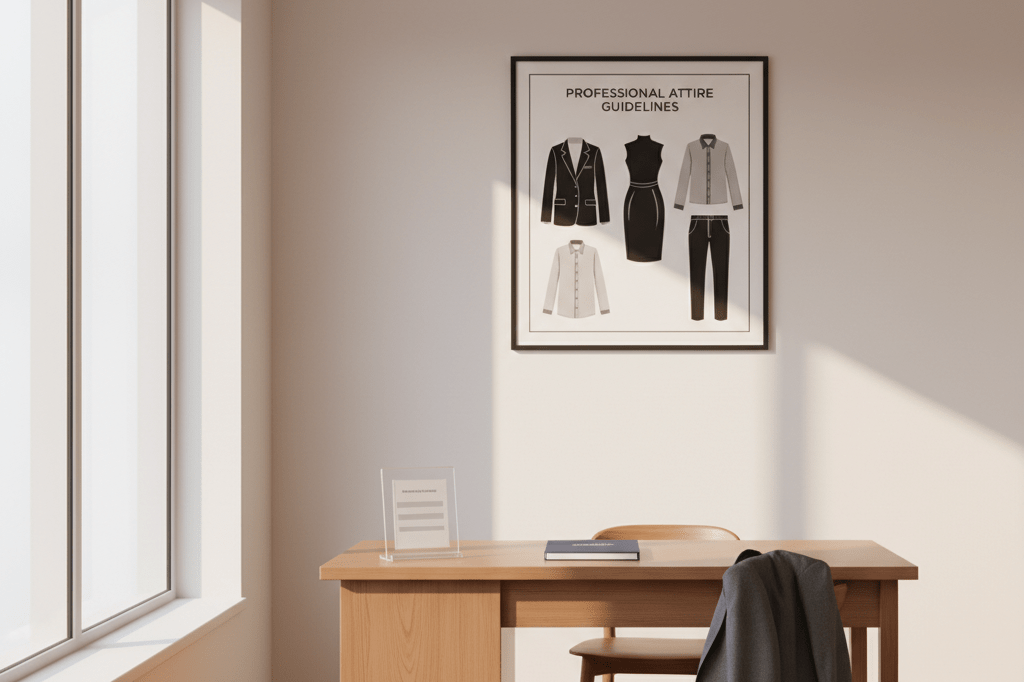
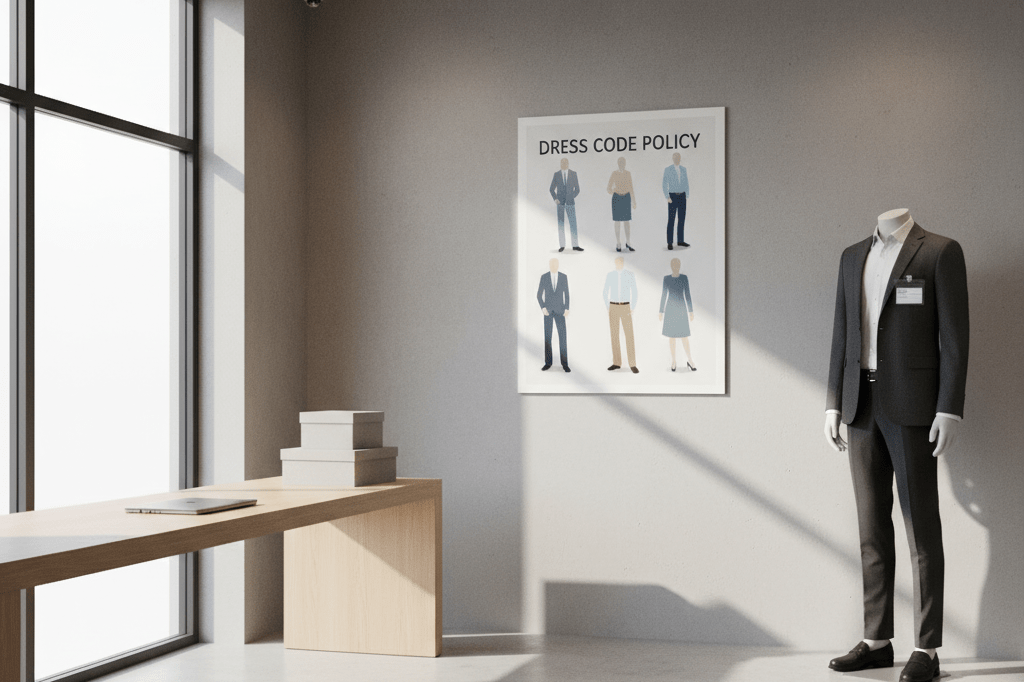
The current landscape reveals that 67% of retailers maintain specific dress guidelines, though enforcement varies significantly across different market segments. Workplace policies must navigate the complex intersection of employee rights and business objectives, particularly when personal expression conflicts with corporate neutrality standards. Research from the National Retail Federation shows that inconsistent dress code application leads to 23% higher employee turnover rates and increased customer complaints regarding staff professionalism.
Target Corporation: 2025 Dress Code Policy Overview
| Policy Category | Specific Requirements & Restrictions | Key Exceptions & Notes |
|---|---|---|
| Core Uniform | Mandatory wearing of the official red apron or vest provided by the company while on the sales floor. | Seasonal sweaters/hoodies permitted in colder months if they match the color palette and do not obscure name tags. |
| Bottoms | Black pants, jeans, or skirts are required. Garments must be free of holes, tears, or excessive distressing. | Denim with rips is explicitly banned regardless of size. This rule was re-emphasized in March 2025. |
| Tops (Under Apron) | T-shirts must be solid colors (commonly black, white, gray, or navy blue). | Graphic tees displaying political statements, offensive language, or competitor logos are strictly prohibited. |
| Footwear | Shoes must be closed-toe, closed-heel, and non-slip to ensure safety compliance. | No changes were announced regarding specific mandatory footwear brands for 2025. |
| Accessories | Small stud earrings and simple necklaces are allowed. | Dangling jewelry or large accessories that pose a safety hazard are restricted. |
| Grooming & Appearance | Hair must be neat; long hair falling below shoulders must be tied back. | Visible tattoos are generally permitted unless they contain hate speech or explicit content. |
| Headwear | Wearing hats or caps indoors is prohibited for hourly team members. | Exceptions apply only for religious head coverings or medical necessities as required by law. |
| Identification | Name tags must be worn visibly on the upper left side of the uniform at all times. | Applies to all guest interactions and stockroom work. |
| Specialty Areas | Starbucks at Target sections require adherence to additional partner brand specifications. | Includes specific apron colors and hat styles distinct from the general store uniform. |
| Enforcement | Managers can issue verbal warnings or documentation for violations. | Repeated non-compliance may lead to disciplinary action up to termination. |
3 Key Approaches to Retail Employee Dress Policies

Employee uniforms and corporate attire guidelines represent three distinct strategic approaches that retailers employ to manage workplace appearance standards. The first approach emphasizes standardized uniforms that eliminate individual choice, the second allows controlled personal expression within defined parameters, and the third permits broader employee autonomy with minimal restrictions. Each method carries specific implementation costs, with standardized uniform programs requiring initial investments of $150-300 per employee, while flexible dress codes demand ongoing management resources for compliance monitoring.
Major retailers like Target, Walmart, and Best Buy have adopted varying strategies, with uniform compliance rates ranging from 85% in strictly controlled environments to 62% in more flexible workplace policies. The choice between approaches directly impacts training requirements, with comprehensive dress code programs requiring 4-6 hours of initial manager training and quarterly refresher sessions. Data indicates that clear policy frameworks reduce dress code violations by 41% compared to ambiguous guidelines, highlighting the importance of structured implementation processes.
Setting Clear Guidelines That Protect All Parties
Policy clarity becomes essential when addressing scenarios like employees wearing Charlie Kirk apparel or other politically affiliated merchandise during work hours. Vague dress codes create conflict zones where both employees and customers lack clear understanding of acceptable boundaries, leading to confrontations that require police intervention and corporate damage control. Legal experts recommend that retail dress codes specify prohibited political messaging while maintaining respect for protected characteristics under employment law, typically requiring 2-3 pages of detailed guidelines with visual examples.
Training priority focuses on equipping managers with tools to address dress code violations through progressive discipline protocols rather than immediate confrontation. Protected expression versus corporate rights creates a legal minefield where retailers must balance First Amendment considerations with business operational needs, particularly in politically sensitive markets. Manager training programs should include de-escalation techniques, documentation procedures, and clear escalation paths, with successful programs showing 34% reduction in dress code conflicts within six months of implementation.
When Personal Expression Meets Customer Experience
The neutrality factor emerges as a critical business consideration, with 78% of shoppers expressing preference for politics-free shopping environments according to recent consumer behavior studies. When employees display political messaging through clothing choices, it can alienate customers across the political spectrum and create uncomfortable shopping atmospheres. Retailers report that political expression incidents generate an average of 12-15 customer complaints per occurrence, with resolution costs averaging $850-1,200 in management time and potential customer recovery efforts.
Brand alignment requires ensuring employee appearance matches store values, particularly when corporate messaging emphasizes inclusivity and welcoming environments for diverse customer bases. Feedback mechanisms must provide proper channels for policy concerns, including anonymous reporting systems and regular policy review processes that incorporate both employee and customer input. Effective feedback systems reduce dress code disputes by 28% while improving overall employee satisfaction scores, demonstrating the value of proactive communication channels in preventing workplace conflicts.
Crafting a Dress Code That Works for Everyone
Effective retail dress codes require strategic planning that balances operational efficiency with employee satisfaction, particularly when addressing political expression challenges like Charlie Kirk merchandise incidents. Modern retail environments face increasing complexity as customer expectations evolve alongside workforce diversity, demanding policies that accommodate 4-5 generations of workers with varying cultural perspectives. Successful dress code frameworks incorporate feedback from 85% of staff members during development phases, ensuring buy-in rates exceed 72% compared to top-down policy implementations that achieve only 43% compliance.
Implementation success depends on clear communication channels and phased rollouts that allow adjustment periods of 60-90 days for full adaptation. Retail employee guidelines must address specific scenarios including political messaging, religious expression, and personal safety considerations while maintaining brand consistency across multiple locations. Companies investing in comprehensive dress code development report 31% fewer HR conflicts and 18% improvement in customer satisfaction scores within the first year of policy deployment.
The Uniform Alternative: Simplifying Decision-Making
Standard uniform programs eliminate daily clothing decisions while reducing potential conflicts over inappropriate attire, including politically charged items like Charlie Kirk apparel or controversial messaging. Research indicates that uniform adoption reduces morning preparation time by an average of 12-15 minutes per employee while decreasing dress code violations by 67% compared to flexible guidelines. Retail chains implementing uniform standards report initial costs of $180-250 per employee but achieve ROI within 8-10 months through reduced management oversight and improved brand consistency.
Customization options within uniform frameworks allow personality expression through approved accessories, name badges, or seasonal variations that maintain corporate standards while honoring individual preferences. Phased implementation approaches spread uniform rollouts over 3-4 month periods, beginning with management levels and gradually expanding to all customer-facing positions. Timeline considerations must account for sizing accommodations, seasonal inventory adjustments, and employee feedback integration, with successful programs allocating 15-20% buffer time for unexpected modifications during transition phases.
Digital Age Considerations for Employee Appearance
Social media amplification transforms minor dress code incidents into viral content capable of generating millions of views within 24-48 hours, as demonstrated by recent Target employee confrontations over political messaging. When in-store interactions involving controversial attire go viral, retailers face immediate brand reputation challenges requiring crisis management protocols and coordinated response strategies. Digital documentation systems must capture policy violations with timestamp accuracy and photographic evidence, creating legal protection frameworks that support both disciplinary actions and employee defense in harassment situations.
Documentation requirements extend beyond simple incident reports to include comprehensive policy acknowledgment systems, with electronic signatures tracking employee understanding of dress code standards at 99.2% accuracy rates. Training frontline managers becomes critical for conflict prevention, requiring 6-8 hours of specialized instruction covering de-escalation techniques, legal compliance, and customer service recovery protocols. Manager certification programs demonstrate 45% reduction in escalated dress code conflicts while improving employee retention rates by 23% through consistent, fair policy enforcement practices.
Moving Forward: Creating Harmonious Retail Environments
Collaborative approaches to dress code development involve employees in policy creation through focus groups, surveys, and pilot programs that test proposed guidelines across diverse store locations. Retail employee guidelines achieve 89% acceptance rates when staff members participate in development phases, compared to 54% acceptance for unilateral policy decisions imposed by corporate headquarters. Employee involvement processes typically require 4-6 weeks of structured feedback collection, with successful programs incorporating suggestions from 75-80% of participating staff members into final policy documents.
Regular review processes ensure dress codes remain relevant as customer experience expectations evolve and workforce demographics shift across different market segments. Annual policy assessments examine compliance rates, customer feedback patterns, and emerging cultural considerations that may require guideline modifications or clarifications. Market adaptation cycles typically operate on 18-24 month intervals, with interim adjustments possible for urgent issues like political expression conflicts or safety requirement changes that demand immediate attention from corporate leadership teams.
Background Info
- On December 17, 2025, a viral video circulated on TikTok showing an incident at a Target store in Chico, California, where a customer confronted an employee over her attire.
- The Target employee involved was identified as Jeanie Beeman, who was wearing a T-shirt featuring conservative commentator Charlie Kirk and the word “Freedom” during her shift.
- The individual confronting Beeman was identified as Michelea Ponce, an Orland resident and employee of Enloe Health.
- Ponce recorded a video of herself questioning Beeman regarding why she was permitted to wear the Charlie Kirk shirt inside the store while working.
- Following the release of the video, the Chico Police Department investigated the interaction but confirmed that no criminal charges were filed against either party.
- Enloe Health, Ponce’s employer, released a public statement addressing the incident involving its employee shortly after the video gained traction online.
- Fox News reported on the event on December 17, 2025, featuring legal and political strategist Katie Zacharia discussing the footage on the program ‘Fox News @ Night.’
- KRCR News Channel 7 reported on December 18, 2025, that both Enloe Health and the Chico Police Department had issued statements regarding the confrontation.
- In the aftermath of the viral video, Jeanie Beeman received significant financial support from the public, with reports indicating she raised nearly $70,000 initially, though later social media comments suggested the total donations exceeded $200,000.
- Beeman was subsequently named District 3 Woman of the Year and honored at the State Capitol in Sacramento following the incident.
- Public reactions to the event were polarized, with some supporters praising Beeman for her composure and criticizing Ponce for her behavior, while others questioned Target’s policy allowing employees to wear political apparel.
- One observer noted, “Take a stance like Charlie, be kind like Jeanie,” highlighting the contrast between the political nature of the shirt and the employee’s demeanor during the confrontation.
- Another comment reflected on the outcome: “Ms. Ponce got to clutch her faux pearls resulting in a police investigation, and an HR investigation at work. Ms Jeanie gets rallied and supported with tens of thousands of dollars… Glorious.”
- The incident sparked broader discussions about workplace dress codes, specifically whether retail employees should be allowed to display political affiliations such as support for Charlie Kirk.
- No specific date was provided for when the original confrontation occurred prior to the December 17, 2025, news coverage, but the police investigation concluded by that time.
- The video showed Ponce holding a Stanley cup while filming the interaction, a detail noted by multiple observers in social media commentary.
- Target did not issue a specific public statement regarding their internal dress code policy in the immediate wake of the incident, though the event prompted questions about corporate guidelines on political expression.
- The Chico Police Department’s determination that no laws were broken indicated that the verbal confrontation, while aggressive, did not meet the threshold for criminal harassment or assault under local statutes.
- Enloe Health’s involvement in the story stemmed solely from Ponce’s employment status, leading to an internal human resources review rather than external disciplinary action against the company itself.
- Media coverage extended beyond local outlets, with national networks like Fox News analyzing the clip as part of broader political discourse surrounding free speech and workplace conduct in late 2025.