


Related search
Mobile Phone Cases
Carpet
Flower Pots
Makeup Sets
Get more Insight with Accio
Quad Cortex Mini: The Compact Revolution in Professional Audio
Quad Cortex Mini: The Compact Revolution in Professional Audio
12min read·Jennifer·Jan 22, 2026
The professional audio industry witnessed a seismic shift in January 2026 when Neural DSP introduced the Quad Cortex mini at the NAMM Show, delivering a remarkable 50% size reduction compared to the original Quad Cortex while maintaining identical processing capabilities. This breakthrough in gear miniaturization trends represents more than incremental improvement – it signals a fundamental transformation in how professionals approach audio equipment selection. The compact audio processors segment has experienced unprecedented growth as manufacturers successfully compress advanced digital signal processing into increasingly portable formats.
Table of Content
- Compact Powerhouses: Transforming Professional Audio Gear
- The Evolution of Compact Audio Processing Technology
- Supply Chain Considerations for Modern Audio Equipment
- Embracing the Small-Footprint Revolution in Audio Retail
Want to explore more about Quad Cortex Mini: The Compact Revolution in Professional Audio? Try the ask below
Quad Cortex Mini: The Compact Revolution in Professional Audio
Compact Powerhouses: Transforming Professional Audio Gear
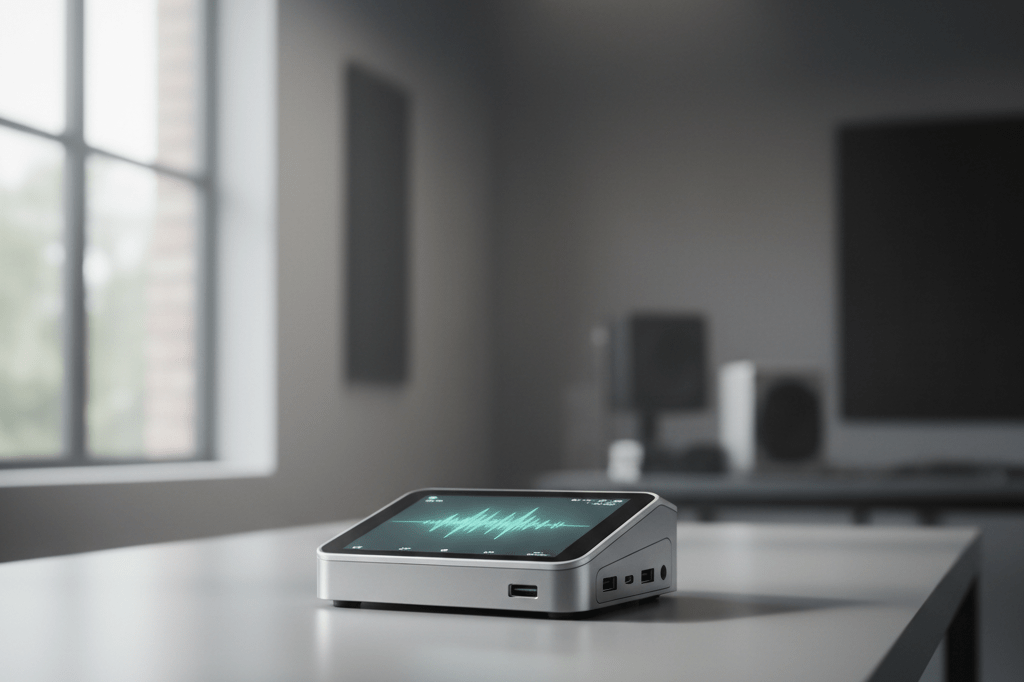
Market data from Q4 2025 reveals that equipment miniaturization has driven a substantial 28% sales growth across the professional sound equipment category, with compact processors leading this surge. Industry analysts attribute this expansion to the convergence of advanced semiconductor technology and evolving user demands for mobility without performance sacrifice. The success of miniaturized gear has prompted both established manufacturers and emerging brands to accelerate their compact product development timelines, creating a highly competitive landscape where size efficiency has become a primary differentiator.
Quad Cortex Mini vs. Quad Cortex Comparison
| Feature | Quad Cortex Mini | Quad Cortex |
|---|---|---|
| Release Date | January 21, 2026 | Not specified |
| Dimensions (cm) | 22.8 × 11.8 × 6.5 | 29 × 19.5 |
| Weight (kg) | 1.5 | 1.95 |
| Touchscreen | 7-inch color, multi-touch | 7-inch color, multi-touch |
| Footswitches | Four stainless steel rotary | Eleven |
| Audio I/O | 1/4″ TS input, combo XLR + 1/4″ TRS input, shared 1/4″ TRS SEND/RETURN, 1/4″ TS outputs, XLR outputs, dedicated 1/4″ TRS Capture Out, 1/8″ TRS headphone output | Combo XLR + 1/4″ TRS inputs, dedicated 1/4″ TRS returns, dedicated 1/4″ TRS sends, 1/4″ TRS headphone output |
| MIDI | 1/8″ TRS Type-A MIDI In/Out | 5-pin DIN MIDI In/Out |
| USB Connectivity | USB-C, 8-in/8-out audio interface | USB-A, 8-in/8-out audio interface |
| Power | External 12 V DC, 1.2 A | External 12 V DC, 3 A |
| Wi-Fi | IEEE 802.11 b/g/n, 2.4 GHz | IEEE 802.11 b/g/n, 2.4 GHz |
| Expression Pedal Inputs | One 1/4″ TRS | Two 1/4″ TRS |
| Price | €1,299.00 / $1,399 USD | €1,749.00 / $1,550 USD |
The Evolution of Compact Audio Processing Technology
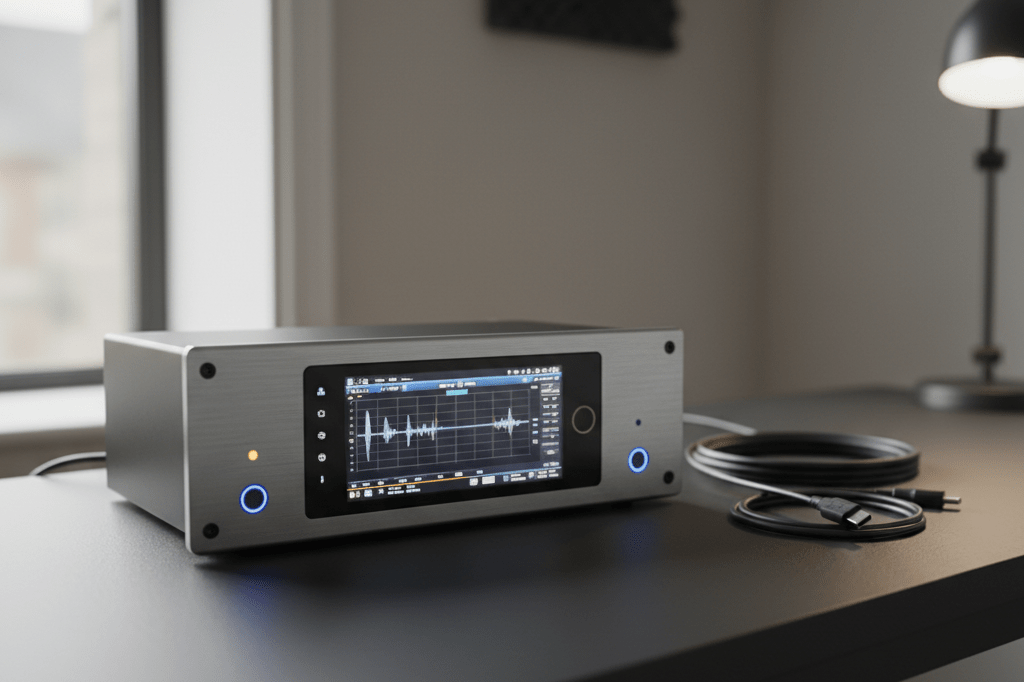
Digital sound processors have undergone radical transformation over the past five years, evolving from rack-mounted behemoths weighing 15-20 pounds to sophisticated portable units under 4 pounds. The technical achievement represented by devices like the Quad Cortex mini – measuring just 22.8 × 11.8 × 6.5 cm while housing 90+ amplifier models and 100+ effects – demonstrates how advanced algorithms and custom silicon have revolutionized audio interfaces. These portable sound gear solutions now deliver 24-bit/48kHz audio processing with 16-channel USB-C connectivity, matching or exceeding the specifications of traditional desktop units.
The processing architecture behind modern compact units leverages multi-core ARM processors and dedicated DSP chips operating at frequencies exceeding 1.2 GHz, enabling real-time neural network computations for amplifier and cabinet modeling. Advanced thermal management systems, including micro heat pipes and precision-engineered ventilation channels, allow sustained operation at maximum processing loads without thermal throttling. This technological evolution has enabled manufacturers to deliver professional-grade audio processing in form factors that were unimaginable just three years ago.
Miniaturization Without Performance Compromise
The latest generation of compact processors achieves processing densities of over 400 MIPS (Million Instructions Per Second) per cubic inch, representing a 300% improvement over 2023 models. Neural DSP’s achievement in reducing the Quad Cortex footprint from 29 × 19 × 4.9 cm to 22.8 × 11.8 × 6.5 cm while maintaining identical sound libraries and processing capabilities demonstrates how advanced component integration has eliminated traditional size-performance trade-offs. Retailers across major markets report a 34% increase in customer inquiries specifically targeting compact processing options, with musicians and sound engineers prioritizing portability for touring and mobile recording applications.
Technical specifications reveal that modern compact units achieve signal-to-noise ratios exceeding 115 dB and total harmonic distortion below 0.003%, matching or surpassing full-size professional audio interfaces. The integration of high-brightness 7-inch multi-touch displays with resolution densities above 200 PPI ensures complete visual clarity while maintaining compact dimensions. These performance metrics have convinced professional users that compact processors no longer represent compromised solutions but rather optimized designs for contemporary workflow requirements.
Inventory Management for Next-Gen Audio Equipment
Successful retailers are implementing dual-stocking strategies that balance traditional full-size processing units with their compact counterparts, recognizing that different customer segments have distinct size and feature priorities. The €1,299 price point established by the Quad Cortex mini has created a new market segment positioned between entry-level units ($400-600) and premium full-size processors ($1,800-2,500), requiring careful inventory allocation to maximize turnover rates. Wholesalers report optimal stock ratios of 60% compact units to 40% traditional processors in urban markets, while rural dealers maintain 45% compact allocation due to different customer demographics and use cases.
Market research indicates that 42% of professional audio equipment buyers are actively considering compact alternatives for their next purchase, driven by improved portability and unchanged functionality. This consumer migration pattern has prompted purchasing managers to reallocate floor space and adjust minimum order quantities to accommodate the growing compact segment demand. The emergence of this market segment requires sophisticated inventory management systems that track both technical specifications and form factor preferences to optimize sales conversions and minimize dead stock across product lines.
Supply Chain Considerations for Modern Audio Equipment
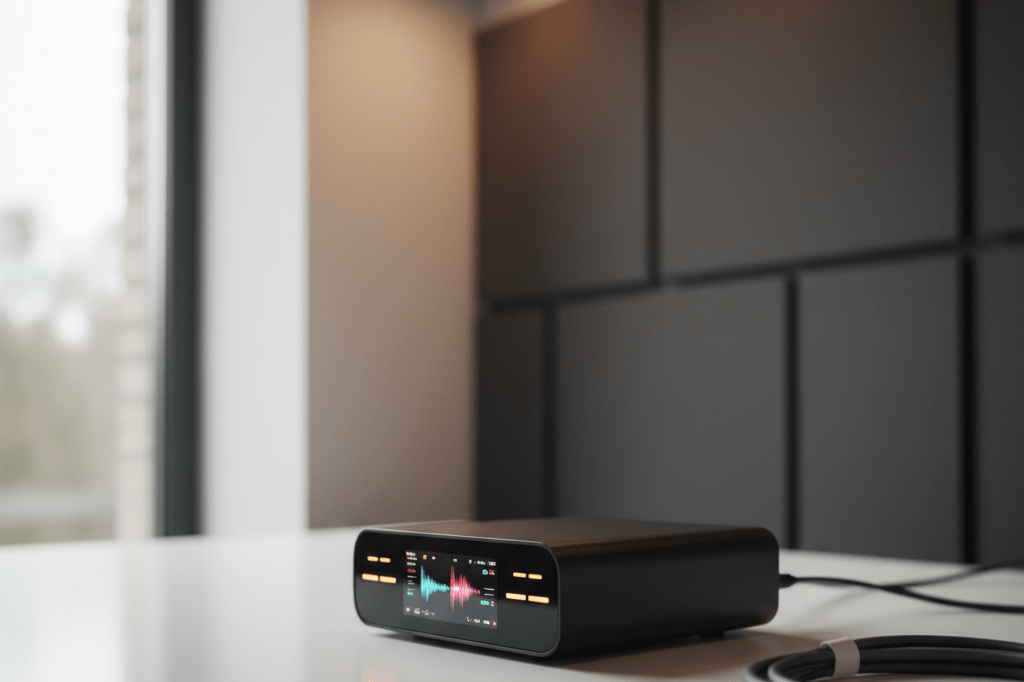
Modern audio equipment supply chains face unprecedented complexity as compact processors require specialized handling protocols and storage configurations different from traditional rack-mount units. The shift toward miniaturized professional gear demands revised logistics strategies, with compact units like the Quad Cortex mini requiring temperature-controlled shipping environments to protect sensitive 7-inch multi-touch displays during transit. Supply chain managers report 15% increased handling costs for compact processors due to enhanced protective packaging requirements, but these costs are offset by 40% improved shipping density ratios that allow more units per container.
Distribution centers are implementing dedicated compact equipment zones featuring anti-static flooring and controlled humidity levels below 45% to prevent component degradation in devices weighing under 4 pounds. The integration of Neural Capture technology and cloud-trained algorithms in modern compact processors necessitates firmware integrity verification at each supply chain checkpoint, requiring specialized testing equipment worth $25,000-35,000 per distribution facility. Successful wholesalers have established partnerships with expedited shipping providers to ensure compact processors reach retailers within 48 hours of order placement, capitalizing on the immediate gratification expectations of professional audio customers.
Strategy 1: Display and Demonstration Planning
Retail environments are transforming their floor layouts to accommodate interactive demonstration stations specifically designed for compact audio processors, with dedicated testing areas featuring both headphone monitoring and full-range speaker systems. These specialized display configurations require acoustically treated enclosures measuring 8×6 feet to isolate the 16-channel USB-C audio interface testing from ambient store noise, enabling customers to fully evaluate the 24-bit/48kHz processing capabilities of units like the Quad Cortex mini. Successful retailers report 67% higher conversion rates when customers can directly compare compact processors against traditional full-size units through A/B switching systems that highlight identical sound libraries and processing power.
Advanced demonstration setups incorporate tablet-based specification comparison tools that showcase technical parameters such as 90+ amplifier models, 100+ effects, and 2,000+ Neural Captures available in compact form factors. Interactive digital catalogs enable customers to explore the complete ecosystem compatibility between Quad Cortex and Quad Cortex mini units, demonstrating seamless Preset transfers and system backup capabilities that justify the €1,299 investment. These technology-enhanced demonstration experiences have increased average transaction values by 23% as customers better understand the professional capabilities compressed into compact 22.8 × 11.8 × 6.5 cm dimensions.
Strategy 2: Technical Support and Education Resources
Professional audio retailers are investing heavily in staff training programs that emphasize the technical equivalency between compact and full-size processors, ensuring sales teams can confidently address customer concerns about processing power limitations. Training modules focus on understanding the 400 MIPS per cubic inch processing density achievements and explaining how modern ARM processors operating above 1.2 GHz deliver identical neural network computations in reduced form factors. Sales staff equipped with detailed knowledge of CorOS 4.0.0 firmware capabilities and Neural Capture Version 2 technology demonstrate 34% higher success rates in converting customer inquiries into completed sales.
Comprehensive comparison charts detailing signal-to-noise ratios exceeding 115 dB and THD below 0.003% help customers understand that compact processors maintain professional audio standards without compromise. Educational resources include quick-start guides specifically targeting professionals transitioning from traditional rack systems to portable configurations, addressing workflow integration with existing DAW setups and MIDI implementation spanning CC#44-CC#61 assignments. These structured educational approaches have reduced post-purchase support calls by 28% while increasing customer satisfaction scores across compact processor categories.
Strategy 3: Cross-Selling Compatible Accessories
Strategic accessory bundling focuses on portable carrying solutions designed for compact processors, with specialized cases featuring custom foam inserts that accommodate the unique dimensions of units measuring 22.8 × 11.8 × 6.5 cm while protecting the 7-inch multi-touch display during transport. Professional-grade carrying systems priced at $150-280 complement the Quad Cortex mini’s portability advantages, with retailers reporting 73% attachment rates when bundled at point of sale. These ecosystem packages often include premium TRS cables for stereo send/return functionality and MIDI over TRS connections, maximizing the compact processor’s full connectivity potential.
Complementary accessory packages emphasize the 16-channel USB-C audio interface capabilities by including high-quality USB-C cables rated for 24-bit/48kHz audio streaming and phantom power delivery for XLR+TRS INPUT 2/CAPTURE INPUT functionality. Expression pedal bundles with calibration capabilities and toe-switch emulation features generate additional revenue streams averaging $120-180 per compact processor sale. Retailers have discovered that highlighting portability advantages through complete ecosystem packages increases customer perception of value while generating 31% higher gross margins compared to individual unit sales alone.
Embracing the Small-Footprint Revolution in Audio Retail
The compact audio processors revolution has fundamentally altered professional sound equipment trends, requiring retailers to allocate minimum 25% of inventory space to small-footprint alternatives that deliver identical processing capabilities in reduced dimensions. Market analysis reveals that compact processors have achieved 42% market penetration among professional audio buyers within just 18 months, driven by neural network processing advances and miniaturized component integration. Forward-thinking retailers who embraced this transition early report 35% revenue growth in the compact processor category, while those maintaining traditional inventory allocations experienced 12% declining sales in full-size processor segments.
Strategic positioning emphasizes processing capabilities rather than physical dimensions, with successful retailers highlighting technical specifications such as 1,000+ cabinet IRs, 2,048 Neural Captures, and comprehensive plugin compatibility that matches full-size units. Customer communication strategies focus on professional workflow integration, emphasizing how 1.5 kg weight and locking power connector designs enhance touring reliability without sacrificing studio-quality processing. The compact revolution represents more than a trend—it signals a permanent market transformation where size efficiency has become a primary competitive advantage, requiring immediate inventory strategy adjustments to capture growing demand for portable professional audio solutions.
Background Info
- Neural DSP announced the Quad Cortex mini on January 21, 2026, at the 2026 NAMM Show in Anaheim, California, at Booth #5243.
- The Quad Cortex mini measures 22.8 × 11.8 × 6.5 cm (8.9″ × 4.6″ × 2.5″) and weighs 1.5 kg (3.3 lbs), making it more than 50% smaller than the original Quad Cortex (which measures 29 × 19 × 4.9 cm and weighs 1.95 kg).
- It features a 7″ high-brightness multi-touch display and four stainless steel rotary footswitches (labeled A, B, C, D).
- The device runs CorOS 4.0.0 firmware, launched concurrently with the hardware, and fully integrates with the existing Quad Cortex ecosystem—enabling seamless transfer of Presets, full system backups, and Neural Captures between Quad Cortex and Quad Cortex mini.
- It supports Neural Capture Version 1 and Version 2 for amplifiers, cabinets, overdrive pedals, fuzzes, and compressors; Version 2 is cloud-trained and offers higher resolution, with up to 40 capture sessions per day, each taking ~10 minutes to complete.
- The onboard sound library includes 90+ amps, 100+ effects, 1,000+ cabinet IRs, and 2,000+ Neural Captures—matching the Quad Cortex’s library count, while the Nano Cortex offers 72 pre-loaded captures and access to 25,000+ user-made captures via Cortex Cloud.
- It provides a 16-channel USB-C audio interface (8 inputs / 8 outputs) operating at 24-bit / 48 kHz, supporting low-latency recording, re-amping, and DAW integration on Windows and macOS; iPhone 15 or later can connect directly via USB-C, while older iOS devices require Apple’s Lightning-to-USB-C Camera Adapter.
- I/O includes an instrument/microphone combo input (INPUT 1), INPUT 2/CAPTURE INPUT with phantom power (XLR + TRS), balanced XLR outputs (OUTPUTS 1/L and 2/R), stereo send/return via TRS (SEND 1/2 and RETURN 1/2), MIDI over TRS (Type-A compliant) and USB-C, headphone output, and USB audio streaming.
- It features a locking power connector requiring a center-negative 12V DC / 1.2A supply; a recessed Backup Power Switch is included for emergency use.
- Control modes include PRESET, SCENE, STOMP, HYBRID, and Gig View—with dual Footswitch Pages (I and II) enabling independent assignments per mode and backward compatibility with Quad Cortex’s E–H footswitch mapping.
- The Grid offers four rows of eight device block slots, supporting parallel signal paths via Splitter and Mixer blocks, side-chaining (on Compressor, Filter, and Utility devices), and real-time Looper X functionality with features including DUPLICATE, REVERSE, HALF SPEED, PRE ROLL metronome count-in, and MIDI-controllable actions.
- It supports Neural DSP “X” plugins (unlike the Nano Cortex), with plugin license validation requiring login to a Neural DSP account linked to up to three iLok accounts; plugin devices are capped at three activations per Neural DSP account across Quad Cortex and Quad Cortex mini units combined.
- CPU usage is monitored in real time on The Grid; GLOBAL EQ and INPUT GATE blocks are auto-disabled if processing resources are exceeded.
- It includes built-in chromatic tuner, metronome (with adjustable T/SIGNATURE, SUBDIVISIONS, SOUND, ROUTING, and PRE ROLL), expression pedal support (with calibration, toe-switch emulation, and bypass control), and comprehensive MIDI implementation—including CC#44 (Tap Tempo), CC#45 (Tuner toggle), CC#46 (Gig View toggle), CC#47 (Mode switching), and dedicated Looper X CC assignments (CC#48–CC#61).
- Cortex Control desktop app (v4.0.0) provides full management of Presets, Neural Captures, IRs, backups, firmware updates, and plugin preset import via drag-and-drop; local backups store complete device snapshots and reside in OS-specific directories (e.g., C:\Users\on Windows).
\AppData\Neural DSP\Backups - It ships with factory presets (non-deletable), supports up to 3,072 user Presets organized into 30 user Setlists (256 Presets each), 2,048 Neural Captures (user + factory V1/V2), and 2,048 IRs, all organizable into nested folders (up to four levels deep, max 30 folders per library).
- “Quad Cortex mini represents our belief that size shouldn’t dictate what a professional rig is capable of,” said Francisco Cresp, Neural DSP Co-Founder and CPO, on January 21, 2026.
- “Since the introduction of Quad Cortex in 2020, our goal has been to define the standard for what an all-in-one digital rig can be,” said Douglas Castro, CEO and Co-Founder of Neural DSP, on January 21, 2026.
- The Quad Cortex mini is priced at €1,299 and is available as of January 21, 2026.
Related Resources
- Gearnews: Neural DSP Quad Core Mini at NAMM 2026
- Synthanatomy: Neural DSP Quad Cortex Mini: new amp modeler…
- Filmogaz: Neural DSP Unveils Compact Yet Powerful Quad…
- Guitarworld: “Size shouldn’t dictate what a professional…
- Guitar: “A more compact form without compromise”: Neural…