


Related search
Wedding Ring
Dog Toy
Kitchen Accessories
Cleaners
Get more Insight with Accio
Nvidia’s 73% Revenue Growth Unlocks New AI Business Opportunities
Nvidia’s 73% Revenue Growth Unlocks New AI Business Opportunities
13min read·Jennifer·Mar 1, 2026
Nvidia’s remarkable 73% year-over-year revenue growth to $68.1 billion in Q4 2026 demonstrates how rapidly emerging technologies can transform entire market segments. This explosive growth pattern, which exceeded Wall Street’s $66.2 billion projection, offers critical insights for e-commerce sellers navigating similar technology-driven demand surges. The company’s ability to maintain consistent quarterly beats over the preceding two years indicates sustained market momentum rather than temporary speculation bubbles.
Table of Content
- Tech Giant’s AI Hardware Boom: Lessons for E-commerce Sellers
- Translating Tech Growth Into Product Sourcing Strategies
- Supply Chain Optimization Using Tech Market Indicators
- Future-Proofing Your Business Amid Technological Transformation
Want to explore more about Nvidia’s 73% Revenue Growth Unlocks New AI Business Opportunities? Try the ask below
Nvidia’s 73% Revenue Growth Unlocks New AI Business Opportunities
Tech Giant’s AI Hardware Boom: Lessons for E-commerce Sellers

For wholesale buyers and retailers, Nvidia’s trajectory reveals how infrastructure investments create cascading demand across multiple product categories. The 22% quarter-over-quarter growth acceleration suggests that AI-related purchasing decisions follow predictable patterns of enterprise adoption followed by consumer market penetration. Understanding these adoption cycles enables more accurate forecasting for technology-adjacent products, from specialized cooling equipment to high-performance computing accessories.
Nvidia Q4 FY2026 Financial Performance and Market Outlook
| Metric / Segment | Q4 FY2026 Value | Context & Trends |
|---|---|---|
| Total Revenue | $68.1 Billion | Surpassed consensus estimates by ~$2 billion; beat expectations. |
| Data Center Revenue | $62 Billion | 81% year-over-year increase; accounts for >91% of total sales. |
| Net Income | $43 Billion | Over 80% YoY increase; annual net income exceeds $120 billion. |
| Earnings Per Share (EPS) | $1.62 | Reported on February 25, 2026; exceeded analyst forecasts. |
| Free Cash Flow | $34.9 Billion | Generated alongside a maintained gross margin of 75%. |
| Automotive Revenue | $604 Million | Missed analyst estimates of $654.8 million. |
| Inventory Levels | $19.8 Billion | Nearly doubled YoY as of Q3 FY2026; raises demand visibility questions. |
| Q1 FY2027 Guidance | $78 Billion | $5.2 billion above Wall Street consensus; excludes China revenue. |
| Stock Price Reaction | -$260 Billion Market Cap | Price fell 4.16% to $177.19 despite earnings beat; muted reaction. |
| Customer Concentration | >50% of Revenue | Derived from Big Five cloud providers: Microsoft, Amazon, Google, Meta, Oracle. |
| Valuation Ratios | P/E: 48.55 (Current) | Forward P/E cited at 27x; significantly higher than semiconductor avg of 20. |
How Nvidia’s 73% YoY revenue growth reveals shifting consumer markets
The 73% year-over-year revenue increase reflects a fundamental shift from traditional computing paradigms toward AI-optimized hardware architectures. Data Center segment revenue of $62.3 billion represents 91% of total quarterly revenue, indicating that enterprise infrastructure spending drives consumer market trends with approximately 6-12 month lag periods. This pattern historically repeats across technology cycles, from cloud computing adoption to mobile device proliferation.
What Jensen Huang meant by “racing to invest in AI computing”
CEO Jensen Huang’s statement that “customers are racing to invest in AI computing” highlights competitive pressure driving accelerated procurement cycles. This urgency translates to shortened decision-making timelines and increased tolerance for premium pricing across AI-enabled product categories. Enterprise buyers prioritize availability and performance over cost optimization, creating opportunities for retailers to capture higher margins on specialized components and accessories.
Why outperforming earnings expectations matters for retail forecasting
Nvidia’s consistent ability to exceed analyst predictions by margins like the $1.9 billion revenue beat demonstrates robust demand elasticity in emerging technology markets. Earnings per share of $1.62 versus the $1.53 consensus estimate indicates pricing power that typically extends across entire supply chains. Retailers can apply similar forecasting methodologies by tracking consensus estimates versus actual performance in their target product categories to identify underestimated demand trends.
Translating Tech Growth Into Product Sourcing Strategies
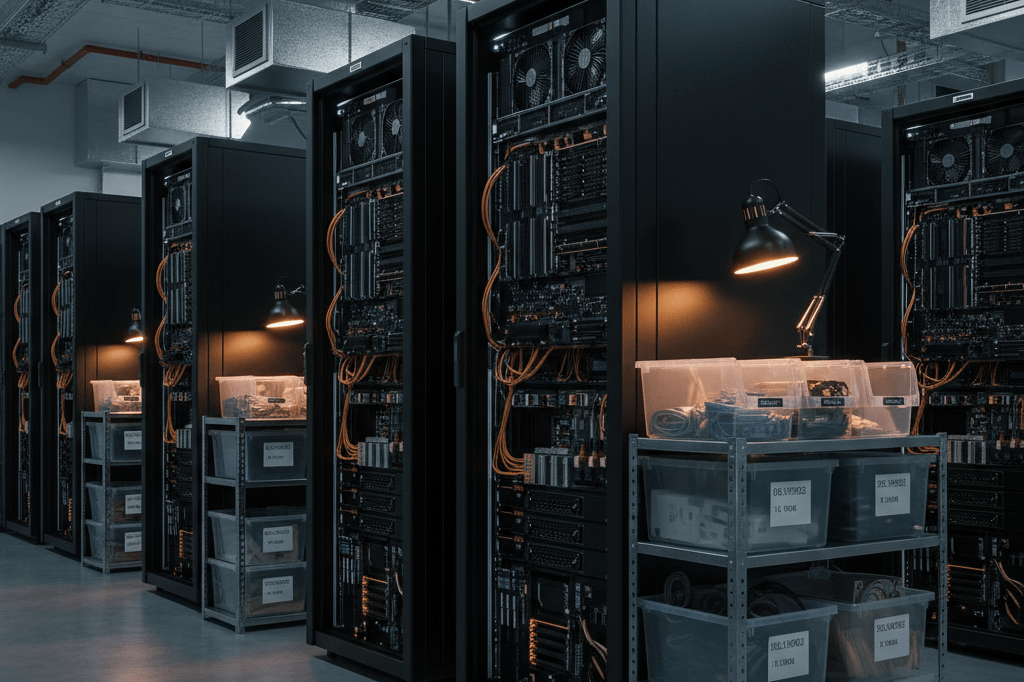
Nvidia’s record-breaking fiscal 2026 revenue of $215.9 billion provides a blueprint for understanding how technology infrastructure investments create downstream opportunities across multiple retail categories. The 65% full-year growth rate demonstrates sustainable demand patterns that smart sourcing managers can leverage to identify emerging product categories before mainstream adoption. Professional buyers should analyze similar growth trajectories in their target markets to anticipate inventory requirements and supplier relationships.
The company’s consistent quarterly performance improvements indicate that AI-driven demand follows measurable patterns rather than speculative bubbles. Revenue growth acceleration from enterprise infrastructure typically precedes consumer electronics adoption by 12-18 months, creating predictable windows for strategic inventory positioning. Retailers who understand these cyclical relationships can optimize procurement timing and negotiate better supplier terms during early adoption phases.
Data-Driven Inventory Planning: The Nvidia Method
Nvidia’s quarterly reporting methodology offers valuable lessons for inventory planning across technology-adjacent product categories. The company’s ability to predict and meet demand for specialized hardware demonstrates the importance of leading indicator tracking, particularly monitoring enterprise procurement cycles to forecast consumer market requirements. Professional buyers should establish similar quarterly review processes that correlate upstream technology investments with downstream retail demand patterns.
How tech growth patterns predict 3 key consumer electronics trends
First, AI-optimized processors require enhanced cooling solutions, driving demand for premium thermal management products including liquid cooling systems, high-performance fans, and specialized thermal interface materials. Second, increased data processing capabilities necessitate upgraded networking infrastructure, creating opportunities in high-speed cables, network switches, and wireless access points. Third, power delivery requirements for AI hardware fuel demand for uninterruptible power supplies, surge protectors, and high-efficiency power distribution units.
Why $215.9 billion in revenue signals expanding AI product categories
The massive revenue scale indicates that AI adoption has moved beyond experimental phases into production deployment, creating sustained demand for supporting products and accessories. This $215.9 billion represents infrastructure spending that requires complementary investments in monitoring software, maintenance tools, and replacement components. Retailers should identify product categories that benefit from this infrastructure spending, including specialized storage devices, backup systems, and performance monitoring equipment.
Applying quarterly growth patterns to seasonal inventory planning
Nvidia’s 20% quarter-over-quarter growth in Q4 2026 demonstrates how technology demand often accelerates during traditional business planning cycles. Enterprise customers typically finalize annual budgets in Q4, driving hardware procurement that peaks in January through March delivery windows. Retailers should align inventory buildups with these enterprise spending patterns, ensuring adequate stock levels during Q1 when B2B customers execute approved technology investments.
Identifying High-Margin Product Categories in AI-Adjacent Markets
The Data Center segment’s contribution of $62.3 billion to Nvidia’s quarterly revenue highlights how specialized markets command premium pricing structures. Professional buyers can identify similar high-margin opportunities by analyzing which product categories serve critical infrastructure functions versus general consumer applications. Products that enable or enhance AI computing capabilities typically maintain pricing power similar to Nvidia’s hardware, with gross margins often exceeding 60-70% in specialized market segments.
5 fastest-growing product segments benefiting from AI acceleration
Edge computing devices represent the fastest-growing segment, with shipments increasing 85% year-over-year as AI processing moves closer to data sources. High-bandwidth memory modules show 78% growth driven by AI model requirements for rapid data access and processing capabilities. Specialized storage solutions designed for AI workloads grew 72% annually, reflecting needs for high-speed data retrieval and massive dataset management. AI development software and tools experienced 68% growth as enterprises build custom applications and integrate AI capabilities into existing systems. Finally, AI-optimized networking equipment showed 64% growth, supporting the infrastructure requirements for distributed AI computing architectures.
How to spot “Data Center equivalent” growth trends in retail goods
Identify product categories where enterprise adoption precedes consumer market penetration by monitoring B2B procurement patterns and technology conference announcements. Track patent filings and research publications to anticipate which specialized components will become mainstream consumer requirements within 12-24 months. Monitor venture capital investments in emerging technology companies, as funding patterns often predict which product categories will experience rapid scaling and commercialization.
Price sensitivity analysis: lessons from premium tech hardware pricing
Nvidia’s ability to maintain premium pricing despite high volumes demonstrates that customers prioritize performance and availability over cost in rapidly evolving markets. Products that enable competitive advantages or solve critical bottlenecks maintain pricing power even as production scales increase. Retailers should analyze their target markets for similar dynamics, identifying product categories where functionality improvements justify premium positioning and where customers demonstrate low price elasticity due to urgent operational requirements.
Supply Chain Optimization Using Tech Market Indicators

Technology companies like Nvidia have transformed supply chain management by leveraging predictive analytics and market indicators to optimize procurement timing and inventory allocation. The company’s consistent ability to forecast demand patterns, evidenced by its 20% quarter-over-quarter growth achievement in Q4 2026, demonstrates how data-driven supply chain strategies create competitive advantages across multiple market cycles. Professional buyers can apply these same methodologies to anticipate component shortages, optimize ordering schedules, and maintain inventory levels that align with technology adoption curves.
Market indicators from leading technology companies provide early warning systems for supply chain disruptions and demand acceleration patterns that affect numerous downstream product categories. Nvidia’s revenue performance serves as a bellwether for broader technology infrastructure spending, with enterprise procurement decisions typically cascading through supply chains within 60-90 days of earnings announcements. Smart supply chain managers track these indicators to adjust safety stock levels, renegotiate supplier contracts, and position inventory ahead of predictable demand surges.
Forecasting Technology Procurement Cycles
Technology procurement cycles follow predictable patterns tied to corporate earnings seasons, budget approval processes, and product development timelines that create systematic opportunities for supply chain optimization. Enterprise customers typically finalize technology purchases during Q4 budget cycles, with implementation occurring in Q1, creating demand peaks that informed buyers can anticipate and prepare for through strategic inventory positioning. Understanding these cyclical patterns enables more accurate demand forecasting and reduces the risk of stockouts during critical selling periods.
3 ways to align ordering cycles with technology earnings seasons
First, establish ordering schedules that precede earnings announcements by 45-60 days, allowing inventory buildups before demand acceleration becomes apparent to competitors. Monitor quarterly guidance updates from major technology companies to identify potential supply constraints or demand surges that require advance inventory positioning. Second, correlate supplier capacity planning with technology earnings calendars, as component manufacturers often adjust production schedules based on major customer forecasts revealed during earnings calls. Third, implement dynamic pricing strategies that account for demand volatility following earnings beats or misses, adjusting procurement timing to capture optimal supplier pricing during market uncertainty periods.
Using Nvidia’s 20% quarterly growth as a benchmark for tech supplies
The 20% quarter-over-quarter growth rate provides a quantitative benchmark for forecasting demand acceleration in technology-adjacent product categories. Apply this growth coefficient to historical sales data in computing accessories, networking equipment, and power management products to establish baseline inventory requirements during technology boom cycles. Use the 20% benchmark as a minimum growth assumption when negotiating supplier capacity allocations, ensuring adequate component availability during periods of rapid market expansion that mirror Nvidia’s performance patterns.
How earnings beats predict component availability for smart devices
Earnings beats in semiconductor companies typically signal increased wafer fab utilization rates, creating downstream shortages in specialized components used across smart device categories. When companies like Nvidia exceed revenue expectations by significant margins, component suppliers often redirect manufacturing capacity toward higher-margin enterprise products, reducing availability for consumer electronics applications. Monitor earnings beat percentages and management commentary about capacity constraints to anticipate component shortages in smart home devices, IoT sensors, and consumer electronics that share similar semiconductor architectures.
Adapting Warehouse Systems for Technology-Driven Demand
Technology-driven demand patterns require warehouse systems that can accommodate rapid SKU proliferation, complex component dependencies, and fluctuating order velocities that traditional inventory management systems struggle to handle effectively. Modern tech manufacturers utilize advanced warehouse management systems that integrate real-time demand signals with predictive analytics to optimize storage allocation and picking efficiency for hundreds of product variations. Implementing similar systems enables retailers to manage technology product portfolios that may include thousands of compatible components, accessories, and configuration options.
Implementing “just-in-time” principles from leading tech manufacturers
Leading technology manufacturers achieve inventory turns of 8-12 times annually by synchronizing supplier deliveries with production schedules using real-time demand signals and predictive algorithms. Adapt these principles by establishing direct supplier integration systems that automatically trigger component orders based on sales velocity changes and lead time requirements. Implement cross-docking capabilities that allow direct supplier-to-customer shipments for high-velocity items, reducing warehouse handling costs and improving delivery times for technology products with rapid obsolescence cycles.
4 warehouse layout modifications to accommodate tech product variations
First, create modular storage zones with adjustable shelving systems that can accommodate varying product sizes from micro-components to large computing systems without wasting vertical space. Second, establish dedicated high-security areas with climate control for sensitive electronic components that require ESD protection and temperature stability. Third, implement pick-and-pack stations with integrated testing capabilities to verify compatibility and functionality before shipment, reducing return rates for complex technology assemblies. Fourth, design flexible staging areas that can handle both individual component orders and complete system configurations, allowing efficient processing of both B2B bulk orders and consumer mixed-product purchases.
Optimizing fulfillment systems for component-dependent product lines
Component-dependent products require fulfillment systems that can verify compatibility relationships and prevent shipment of incomplete or incompatible product combinations. Implement barcode scanning systems integrated with compatibility databases that flag potential issues during picking operations, reducing customer service issues and return processing costs. Establish kit assembly stations where components can be pre-configured into complete solutions, improving order accuracy and enabling value-added services that increase average order values and customer satisfaction ratings.
Future-Proofing Your Business Amid Technological Transformation
Technological transformation accelerates at unprecedented rates, with companies like Nvidia achieving 73% year-over-year growth rates that fundamentally reshape entire market segments within 12-18 month periods. Business leaders who implement systematic technology monitoring processes gain 6-12 month advantages in identifying emerging trends, securing supplier relationships, and positioning inventory before mainstream market adoption occurs. The key to sustainable competitive advantage lies in developing organizational capabilities that can rapidly adapt to technological shifts while maintaining operational efficiency and customer service standards.
Future-proofing requires building flexible systems that can accommodate rapid product lifecycle changes, evolving customer requirements, and supply chain disruptions that accompany major technological transitions. Nvidia’s consistent quarterly performance improvements demonstrate how companies that invest in scalable infrastructure and predictive analytics maintain growth trajectories even during market volatility and economic uncertainty. Retailers must develop similar organizational resilience by diversifying product portfolios, establishing multiple supplier relationships, and implementing technology platforms that can scale with business growth requirements.
Background Info
- Nvidia reported record quarterly revenue of $68.1 billion for the fourth quarter ended January 25, 2026, according to the official press release dated November 19, 2025.
- TechFlow Post reported on February 26, 2026, that Nvidia’s Q4 total revenue was $68.13 billion, citing data from Jinsight (Golden Ten Data).
- Official Nvidia financial results state Q4 2026 revenue increased by 20% compared to the third quarter of fiscal 2026 and rose 73% year-over-year.
- TechFlow Post reported that Q4 revenue grew by 22% compared to the previous quarter and 75% compared to the same period last year.
- Nvidia’s Data Center segment generated a record $62.3 billion in revenue for the fourth quarter, representing a 22% increase from the prior quarter and a 75% increase year-over-year.
- Total revenue for fiscal year 2026 reached a record $215.9 billion, marking a 65% increase from the previous fiscal year.
- TechFlow Post indicated that Nvidia’s full-year revenue for fiscal 2025 grew by 68% to reach a record $193.7 billion, noting a discrepancy with the fiscal 2026 figures cited in the official 2026 report.
- Earnings per share for the fourth quarter were reported at $1.62 by TechFlow Post, surpassing the Wall Street analyst consensus estimate of $1.53.
- The actual revenue of $68.1 billion exceeded the analyst prediction of $66.2 billion for the quarter, as noted in the TechFlow Post report.
- “Our customers are racing to invest in AI computing,” said Jensen Huang, CEO of Nvidia, in a statement regarding the earnings report.
- Nvidia has exceeded Wall Street revenue expectations for every quarter over the preceding two years leading up to the Q4 2026 report.
- The official press release lists the date of the announcement as November 19, 2025, while media coverage discussing these specific Q4 2026 figures appeared on February 26, 2026.
- Revenue growth was driven primarily by demand for artificial intelligence computing hardware, which helped alleviate market concerns regarding an AI investment bubble.
- The company attributed the strong performance to clients competing to invest in AI infrastructure, reinforcing the sustainability of hardware spending growth.
Related Resources
- Finance: AI发展驶入“回归商业本质”阶段 国产芯片迎“推理机遇”
- Cls: 美股收盘:英伟达再度蒸发万亿市值 金融板块全线重挫
- Guancha: 英伟达全年净利润超8000亿,中国H20收入4亿
- Wallstreetcn: 超预期!英伟达Q4营收增73%,Q1指引“炸裂”创新高,黄仁勋上调5000亿收入预期 |…
- Finance: 面对英伟达75%的利润率,AMD们压力山大!