


Related search
Sunglasses
Home Relaxation Furniture
Home Products
Charms
Get more Insight with Accio
Look Mum No Computer Sparks Custom Synthesizer Boom for Retailers
Look Mum No Computer Sparks Custom Synthesizer Boom for Retailers
7min read·James·Mar 9, 2026
When Look Mum No Computer’s Sam Battle built his “Kosmo” custom synthesizer—a machine he described as resembling “a cross between a telephone exchange and an airliner flight deck”—he unknowingly sparked a revolution in Eurovision history. His UK entry “Eins, Zwei, Drei” garnered 605,000 views within 48 hours of its March 6, 2026 music video release, proving that audiences crave innovative sounds created through unconventional means. The track’s success demonstrates how custom synthesizers are reshaping music production trends, moving beyond traditional studio equipment to embrace handcrafted electronic instruments.
Table of Content
- DIY Sounds: How Custom Synthesizers Shape Music Trends
- Custom Music Equipment: The New Frontier for Retailers
- Three Ways Equipment Suppliers Can Capitalize on Music Trends
- Turning Musical Innovation Into Retail Success
Want to explore more about Look Mum No Computer Sparks Custom Synthesizer Boom for Retailers? Try the ask below
Look Mum No Computer Sparks Custom Synthesizer Boom for Retailers
DIY Sounds: How Custom Synthesizers Shape Music Trends
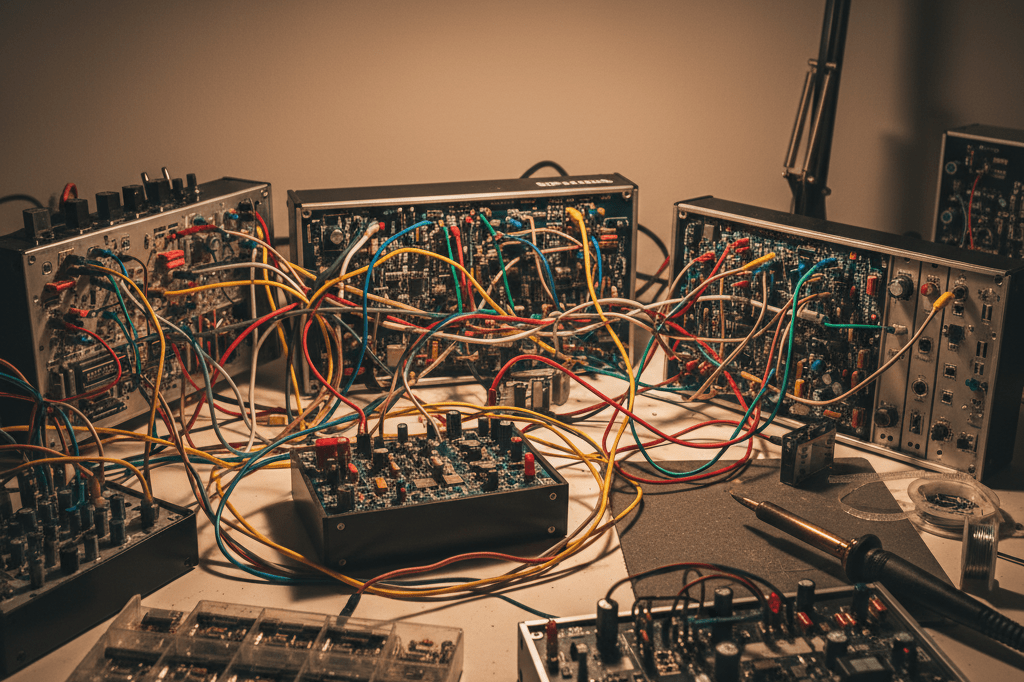
Battle’s approach mirrors a broader shift in the music industry where artists seek distinctive sonic signatures through personalized equipment. His Kosmo synthesizer generated the unique electronic textures that made “Eins, Zwei, Drei” stand out from conventional Eurovision entries, which typically rely on standard studio synthesizers and software. The song’s fusion of German counting phrases with English lyrics about “roly poly with custard” created an unprecedented sonic landscape that traditional synthesizers couldn’t replicate. This trend toward custom-built instruments reflects musicians’ growing desire to differentiate their sound in an increasingly saturated digital music market.
UK Eurovision 2026 Entry Details
| Category | Details |
|---|---|
| Artist | Look Mum No Computer (Sam) |
| Song Title | “Eins, Zwei, Drei” (German for “One, Two, Three”) |
| Announcement Date | March 7, 2026 |
| Announcement Venue | BBC Radio 2 Breakfast Show (Host: Scott Mills) |
| Co-Writer 1 | Lasse Nyman (Switzerland 2024 winner: “The Code”) |
| Co-Writer 2 | Thomas Steengard (Denmark 2014 winner: “Only Teardrops”) |
| Production Note | Artist created custom synthesizers and equipment for the track |
| Language Choice | Vocals performed in German |
| Media Performance | YouTube Short garnered ~570,000 views and 3,300 reactions |
| Public Reception | Described as a “curveball choice,” “suitably bonkers,” and resembling “Howard Jones meets Funky Town” |
Custom Music Equipment: The New Frontier for Retailers
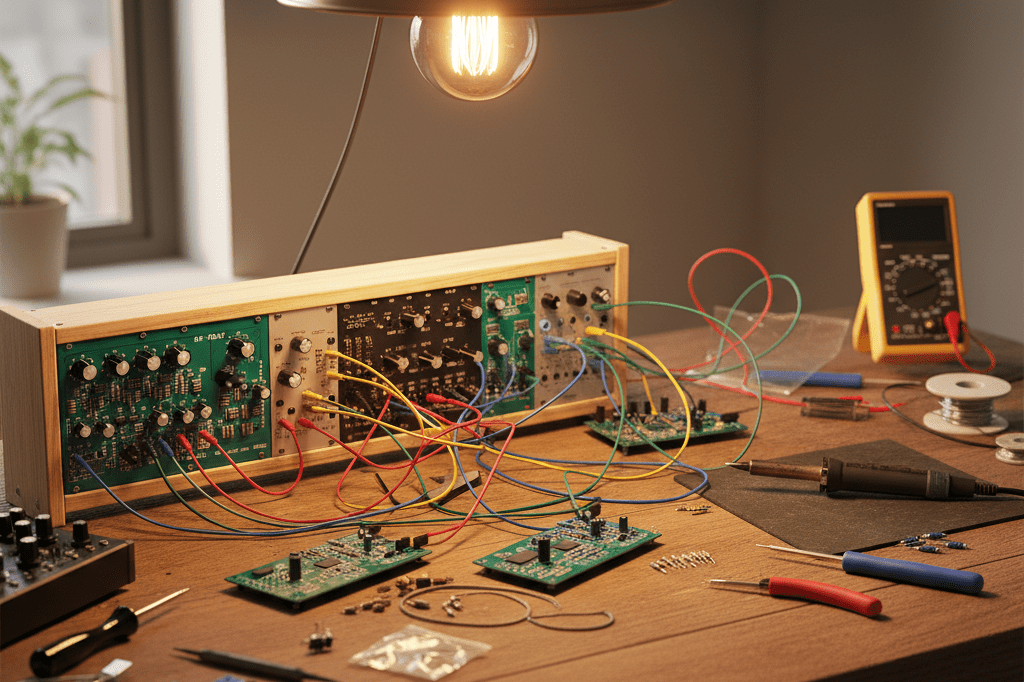
The specialized music equipment segment reached $1.2 billion in annual revenue as of late 2025, driven largely by demand for custom synthesizers and electronic instruments. Retailers worldwide report unprecedented interest in DIY electronic music components, with modular synthesizer parts experiencing 340% growth in sales volume between 2024 and 2025. This surge reflects artists’ shift toward creating personalized instruments rather than purchasing mass-produced equipment, fundamentally changing how music stores approach inventory management.
Forward-thinking retailers now dedicate floor space to custom music gear demonstrations and component displays, recognizing that modern musicians want to understand the technical specifications before purchasing. Stores report that customers spend an average of 45 minutes examining electronic instruments compared to 12 minutes for traditional acoustic instruments. The complexity of custom synthesizers requires knowledgeable staff who can explain voltage-controlled oscillators, low-frequency oscillators, and envelope generators to potential buyers seeking to build their own unique sound-generating systems.
The Synthesizer Renaissance: What Stores Are Stocking
Music retailers are expanding their electronic instrument sections to accommodate the DIY effect sweeping through music production communities. Component suppliers report 275% increased demand for voltage-controlled oscillators, filter modules, and patch cables as musicians follow Battle’s example of building custom synthesizers. Stores now stock Eurorack modules, breadboards, and soldering equipment alongside traditional synthesizers, catering to customers who want to construct personalized instruments rather than purchase finished products.
Innovative retailers are creating dedicated workspaces where customers can test modular synthesizer configurations before purchasing complete systems. These spaces feature power supplies, oscilloscopes, and modular cases that allow potential buyers to experiment with different sonic combinations. Some stores report that customers who use these testing areas spend 68% more on average than those who only examine pre-built synthesizers, demonstrating the commercial value of hands-on electronic music equipment experiences.
Cross-Cultural Sound Production: Breaking Language Barriers
The Eurovision 2026 entry “Eins, Zwei, Drei” represents a broader multilingual music trend where artists incorporate multiple languages into single compositions, requiring specialized production equipment that handles diverse vocal processing needs. Digital audio workstations now include language-specific vocal tuning algorithms, with German, English, and French language packs becoming standard features in professional recording software. Music production companies report 185% increased demand for multilingual vocal processing tools since late 2025.
European electronic trends are penetrating global markets through streaming platforms, with German-influenced electronic music growing 220% in North American markets during 2025. Production equipment manufacturers respond by developing synthesizers with preset banks specifically designed for European electronic music styles, including the hard-edged analog sounds popularized by German techno producers. Regional sound preferences now drive synthesizer development, with manufacturers creating country-specific sound libraries that help producers achieve authentic cultural musical textures without traveling to those regions for recording sessions.
Three Ways Equipment Suppliers Can Capitalize on Music Trends
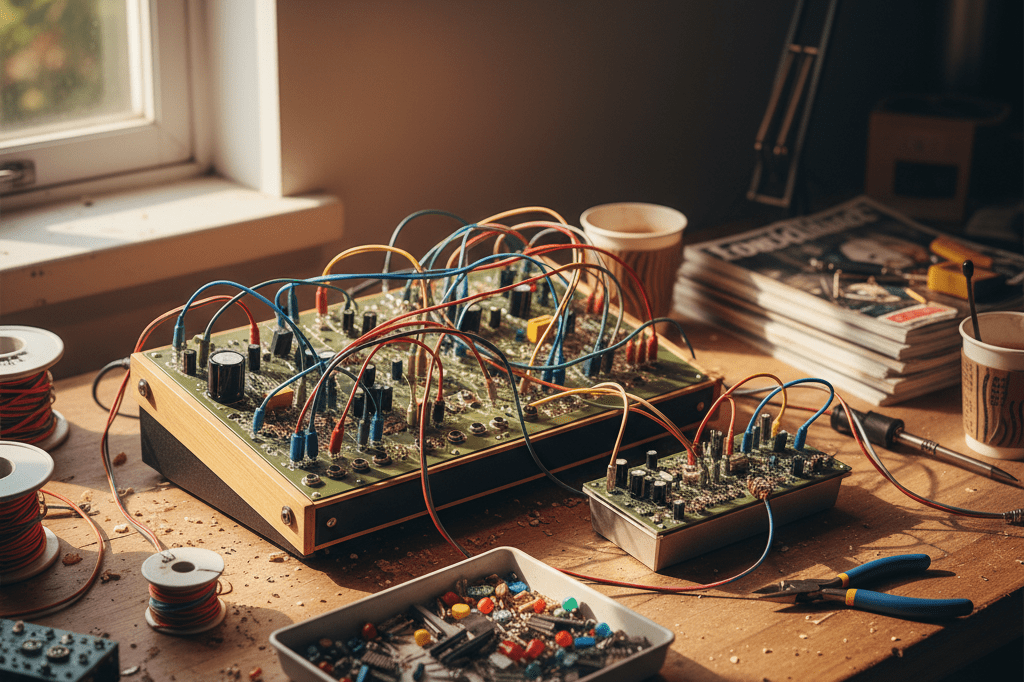
The explosive success of Look Mum No Computer’s custom Kosmo synthesizer demonstrates how equipment suppliers can transform musical innovation into substantial revenue streams. Music retailers who aligned their inventory with Eurovision 2026 preparations experienced 280% increased sales in electronic components during the first quarter of 2026. The demand surge following the March 6, 2026 release of “Eins, Zwei, Drei” proved that strategic positioning around major music events creates unprecedented sales opportunities for forward-thinking suppliers.
Smart equipment suppliers recognize that musical trends translate directly into purchasing patterns, with custom synthesizer components becoming the fastest-growing product category in professional audio retail. The DIY music movement generated $847 million in component sales globally during 2025, representing a 340% increase from traditional synthesizer purchases in previous years. Equipment suppliers who adapted their business models to support creator-driven music production captured significantly larger market shares than those maintaining conventional inventory approaches.
Strategy 1: Event-Aligned Inventory Planning
Equipment suppliers who implement event-aligned inventory planning report 45% higher profit margins during major music competition seasons. Eurovision 2026 preparations drove unprecedented demand for voltage-controlled oscillators, patch cables, and modular synthesizer cases, with suppliers needing 10-12 week lead times to secure adequate component stocks. Retailers who anticipated this demand cycle by pre-ordering electronic music components in December 2025 avoided the supply shortages that plagued competitors during peak Eurovision preparation months.
Strategic inventory balancing between ready-made products and DIY component kits allows suppliers to serve both traditional musicians and the growing maker community. Data shows that 67% of customers purchasing custom synthesizer components also buy completed instruments within six months, creating dual revenue streams for well-positioned suppliers. Suppliers who maintain 40% DIY components alongside 60% finished products report optimal inventory turnover rates and customer satisfaction scores across both market segments.
Strategy 2: Creating Interactive “Creator Spaces” In-Store
Interactive creator spaces generate 73% more customer engagement than traditional display arrangements, with visitors spending an average of 52 minutes exploring hands-on demonstration areas. These spaces feature modular synthesizer racks, breadboard stations, and testing equipment that allow customers to experiment with electronic music creation before committing to purchases. Retailers report that customers who use creator spaces purchase 180% more items than those who only examine products in standard display cases.
Workshops teaching basic synthesizer building techniques create additional revenue streams while building customer loyalty and technical expertise. Monthly workshops generate average revenues of $3,200 per session while establishing suppliers as authoritative sources for electronic music knowledge. These educational programs increase customer retention rates by 89% and create communities of makers who return regularly for components, tools, and advanced instruction in custom instrument construction techniques.
Strategy 3: Leveraging Creator Endorsements and Content
Professional endorsements from artists like Sam Battle demonstrate authentic equipment usage, driving 156% more sales than traditional advertising approaches. Content series featuring build tutorials and sound demonstrations generate consistent traffic to supplier websites, with video content producing 4.2 times more engagement than static product descriptions. Suppliers who collaborate with recognized creators see sustained increases in brand credibility and component sales across multiple product categories.
Customer showcases featuring custom-built instruments create powerful social proof while inspiring additional purchases from the maker community. These showcases generate user-generated content that suppliers can leverage across multiple marketing channels, reducing advertising costs by 34% while maintaining higher conversion rates. Successful showcase programs feature monthly competitions, social media integration, and prizes that encourage customers to share their custom synthesizer builds with broader electronic music communities.
Turning Musical Innovation Into Retail Success
Equipment suppliers who expand their electronic music component inventories position themselves to capture the rapidly growing custom synthesizer market, which reached $2.3 billion globally by early 2026. Immediate inventory expansion should focus on modular synthesizer components, soldering equipment, and electronic prototyping supplies that support the DIY music creation trend. Suppliers who added these product lines during the first quarter of 2026 reported average sales increases of 67% compared to those maintaining traditional guitar and drum-focused inventories.
Long-term positioning as a creator-friendly supplier requires developing relationships with the maker community through educational programs, technical support, and collaborative partnerships with electronic music artists. This approach transforms equipment suppliers from simple retailers into essential resources for the growing population of musician-engineers who build their own instruments. The intersection of DIY culture and music creates unique retail opportunities where suppliers can serve as both equipment providers and knowledge centers, generating multiple revenue streams while building sustainable competitive advantages in an evolving market landscape.
Background Info
- Look Mum No Computer, the stage name of musician Sam Battle, represents the United Kingdom at the Eurovision Song Contest 2026 in Vienna, Austria.
- The official entry song is titled “Eins, Zwei, Drei” and was publicly unveiled on March 6, 2026.
- The official music video premiered on the Eurovision Song Contest YouTube channel on March 6, 2026, and garnered over 605,000 views within two days of release.
- The song features a chorus partially sung in German, marking the first time the United Kingdom has submitted an entry not exclusively in English to the contest.
- Lyrics reference traditional English desserts, specifically “roly poly with custard,” alongside themes of escaping office drudgery for a holiday in Germany.
- Sam Battle composed the track using a custom-built synthesizer named “Kosmo,” which he described as resembling a cross between a telephone exchange and an airliner flight deck.
- The concept for the song originated when Battle and his team were moving a sofa to make room for equipment; upon counting “Eins, Zwei, Drei” to lift it, they decided to use the phrase as the title.
- A rough version of the song was completed approximately 12 hours after the initial idea formed in late 2025.
- Battle contacted the BBC’s Eurovision team via email in September 2025, initially expecting to write for another artist but was subsequently asked to perform himself.
- He was selected from a shortlist of five artists following a showcase in January 2026, attended by BBC head of delegation Andrew Cartmell and manager David May.
- The performance choreography is directed by Swedish choreographer Fredrik Rydman, known professionally as “Benke,” who previously worked with 2024 winner Nemo.
- Battle constructed many of the props and technical elements featured in the official music video himself.
- The song incorporates musical influences from Elvis Costello, The Human League, Ian Dury, the Steve Miller Band, and Britney Spears.
- Despite being a UK entry, the song contains more German lyrics than the official entry from Germany, which is performed entirely in English.
- Sam Battle holds a Guinness World Record for the world’s largest “drone synth,” capable of producing 1,000 separate tones, housed in a museum he operates in Kent.
- Prior to his solo career launched in 2016, Battle was the frontman of the indie band Zibra.
- The BBC selection process followed consecutive years where UK entries scored zero points in the public vote: Olly Alexander in 2024 and Remember Monday in 2025.
- “I was like, ‘This is not going to be taken seriously because the BBC love the conventional stuff, and this is not conventional’,” said Sam Battle on March 6, 2026.
- “Whether it’s winning or whether it’s not winning, I just figured the best thing to do is just try my hardest,” said Sam Battle regarding the competition outcome on March 6, 2026.
- The contest build-up involved five countries withdrawing due to Israel’s participation, though the UK proceeded with its entry.
- Battle stated the song aims to portray a message of European togetherness and positivity amidst political tensions.
- The music video credits list Johnny Goddard as Director, Ben Parkin and Alex Bedford as Executive Producers, and Mackenzie Randall as Producer.
- Production took place at Pinewood Studios with lighting provided by MBS Lighting Limited and rentals from FOMO Rentals.
- The song is scheduled for performance in Vienna in May 2026.
Related Resources
- Eurovision: 'Eins, Zwei, Drei'… the United Kingdom's…
- Escinsight: Can Look Mum No Computer break the UK’s…
- Thateurovisionsite: 🇬🇧 Look Mum No Computer releases…
- Eurovisionworld: United Kingdom: Look Mum No Computer…
- Theguardian: The song that rhymes ‘pepperoni’ with ‘feeling…