


Related search
Smart TVs
T-Shirt
Sleeping Chair
Solar Panels
Get more Insight with Accio
L’Oca Quality Market Closure: Edmonton Retail Lessons for Buyers
L’Oca Quality Market Closure: Edmonton Retail Lessons for Buyers
7min read·James·Mar 9, 2026
L’Oca Quality Market’s March 6, 2026 announcement to close both Edmonton-area locations signals a significant shift in the grocery industry landscape. The premium grocery concept, which operated a sprawling 45,000-square-foot space in Sherwood Park and a second location on 142 Street in west Edmonton, couldn’t sustain its locally focused, hand-crafted business model despite backing from established investors including the Priestner family. This quality market closing demonstrates how even well-funded premium concepts can struggle against execution challenges and market realities in today’s competitive Edmonton retail landscape.
Table of Content
- The Edmonton Retail Evolution: L’Oca Market Closing Lessons
- 3 Critical Lessons from L’Oca’s Market Closure for Retailers
- The Inventory Liquidation Opportunity for Smart Buyers
- Future-Proofing Your Retail Concept After L’Oca’s Exit
Want to explore more about L’Oca Quality Market Closure: Edmonton Retail Lessons for Buyers? Try the ask below
L’Oca Quality Market Closure: Edmonton Retail Lessons for Buyers
The Edmonton Retail Evolution: L’Oca Market Closing Lessons
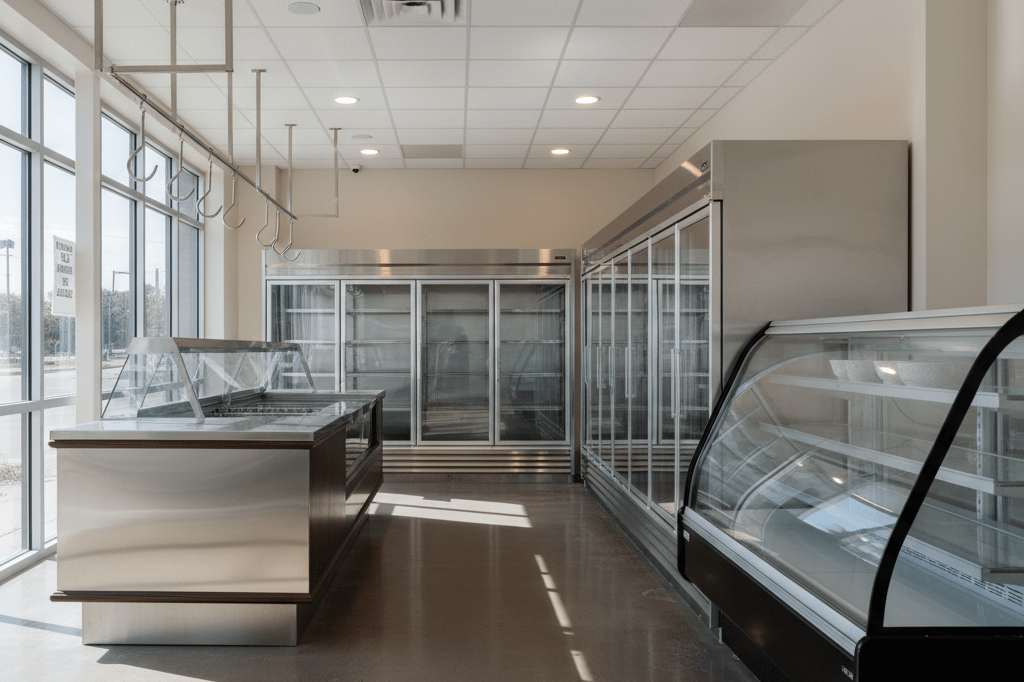
The closure affects two strategic locations that opened within just 1-2 years of operation, with the Sherwood Park store launching approximately two years prior and the west Edmonton location opening just over one year before the March 12, 2026 shutdown date. Each location operated as an ambitious multi-concept venue combining grocery market, restaurant, deli, butcher, bakery, cafe, floral shop, bar, and liquor store under one roof. The rapid timeline from opening to closure highlights the grocery industry changes affecting premium food retailers who face mounting pressure to achieve profitability within increasingly compressed timeframes while managing complex operational overhead costs.
L’OCA Quality Market: Store Timeline and Details
| Location/Project | Status & Dates | Key Specifications & Features |
|---|---|---|
| Sherwood Park (Flagship) | Opened May 2024; Closed March 12, 2026 | 340 Baseline Road (former RONA); 45,000 sq. ft.; Pyro & Oro restaurants |
| Edmonton | Opened 2025; Closed March 12, 2026 | Second company location; Hand-crafted business model |
| St. Albert (Planned) | Scheduled for 2026; Cancelled | Erin Ridge North; 4 acres of land; Planned 30,000 sq. ft. facility |
| Culinary Leadership | Active until closure | Paul Moran (Top Chef Canada winner, former Michelin Star recipient) |
| Restaurant Concepts | Operated at Sherwood Park | Pyro (14-foot wood-burning grill) and Oro (Modern Italian dining) |
| Development Partners | St. Albert Project Only | Landrex identified as partner in northeast city development |
| Closure Outcome | Effective March 12, 2026 | All employees and suppliers paid in full; Cited unsustainable business model |
3 Critical Lessons from L’Oca’s Market Closure for Retailers
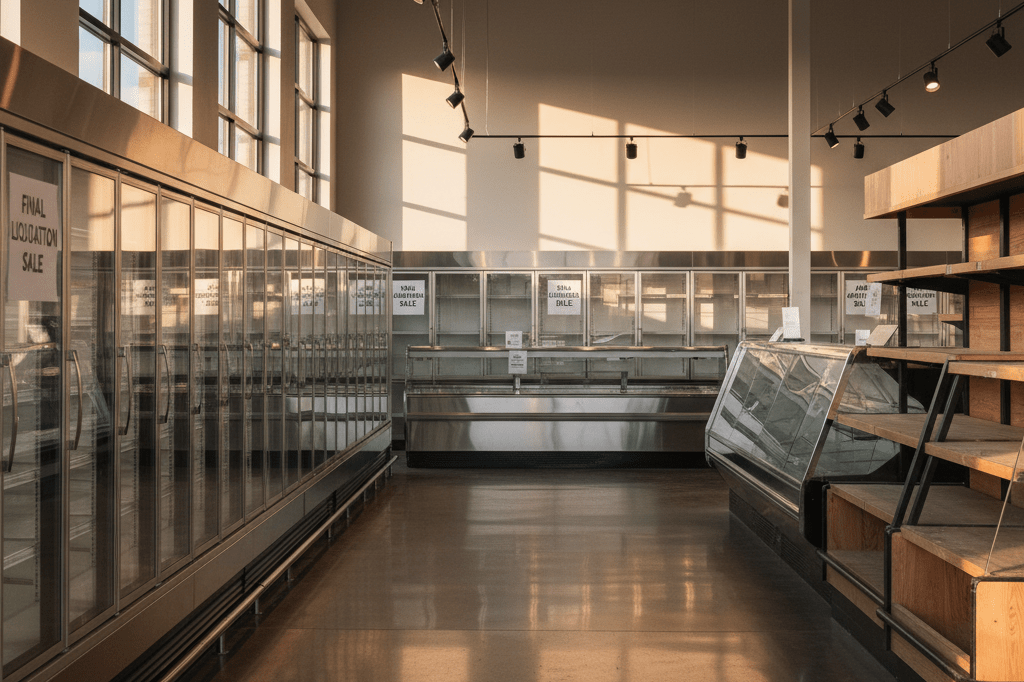
L’Oca’s closure offers valuable insights into retail sustainability challenges facing premium food concepts in mid-tier Canadian markets. The company’s own statement revealed they were “humbled by the difficulty of executing a locally focused, hand-crafted business model” and couldn’t identify “a sustainable path forward for the business.” This market strategy failure demonstrates how execution complexity can overwhelm even well-capitalized ventures when operational demands exceed revenue generation capabilities within the critical 12-24 month establishment period.
The closure impacts broader understanding of premium food concepts viability in markets like Edmonton, where consumer spending patterns and competitive density create specific sustainability thresholds. Despite plans to expand with a third St. Albert location, L’Oca’s inability to establish profitable operations within two years signals that market strategy must align more closely with local economic realities. The company’s commitment to paying all employees and suppliers in full demonstrates responsible closure practices, but the underlying business model challenges remain instructive for retailers considering similar ventures.
The “Local-Premium” Model: Why Execution Matters
Operating 45,000 square feet of retail space with an artisanal focus creates inherent scale challenges that L’Oca couldn’t overcome despite significant investment backing. The Sherwood Park location, housed in a former Rona building supply store, required extensive conversion costs and ongoing operational expenses that premium pricing couldn’t offset within the 24-month operational window. Large-format premium concepts demand higher customer traffic volumes and average transaction values to cover fixed costs, creating execution pressure that smaller, focused retailers can avoid through more manageable overhead structures.
Edmonton consumer willingness to pay premium pricing appears to have fallen short of L’Oca’s revenue requirements, particularly when competing against established grocery chains with lower price points and streamlined operations. The timeline problem became critical when the business couldn’t establish sufficient market position within less than 24 months of operation. Premium price point sustainability requires consistent customer loyalty and repeat purchasing patterns that take longer to develop than L’Oca’s operational timeline allowed, especially in markets where consumers have numerous grocery alternatives at lower price levels.
Location Strategy: When Geography Determines Destiny
L’Oca’s decision to occupy repurposed spaces previously used by Rona and Andy’s Valleyview IGA created both opportunities and challenges in their location strategy. The former Rona space in Sherwood Park provided substantial square footage at potentially favorable lease terms, but required significant investment to convert from building supply retail to premium food operations. Repurposed retail spaces often involve hidden conversion costs and layout limitations that can impact operational efficiency and customer flow patterns essential for multi-concept integration success.
The multi-concept integration approach of combining seven different retail experiences under one roof created operational complexity that proved difficult to manage profitably. Edmonton’s competitive grocery landscape includes established players like Sobeys, Save-On-Foods, Walmart, and Costco, all offering different value propositions that collectively serve diverse consumer segments. Market saturation realities in Edmonton meant L’Oca faced direct competition across multiple categories simultaneously – from grocery pricing against discount chains to restaurant competition from established dining venues – making it challenging to achieve dominant market position in any single category while maintaining premium positioning across all concepts.
The Inventory Liquidation Opportunity for Smart Buyers
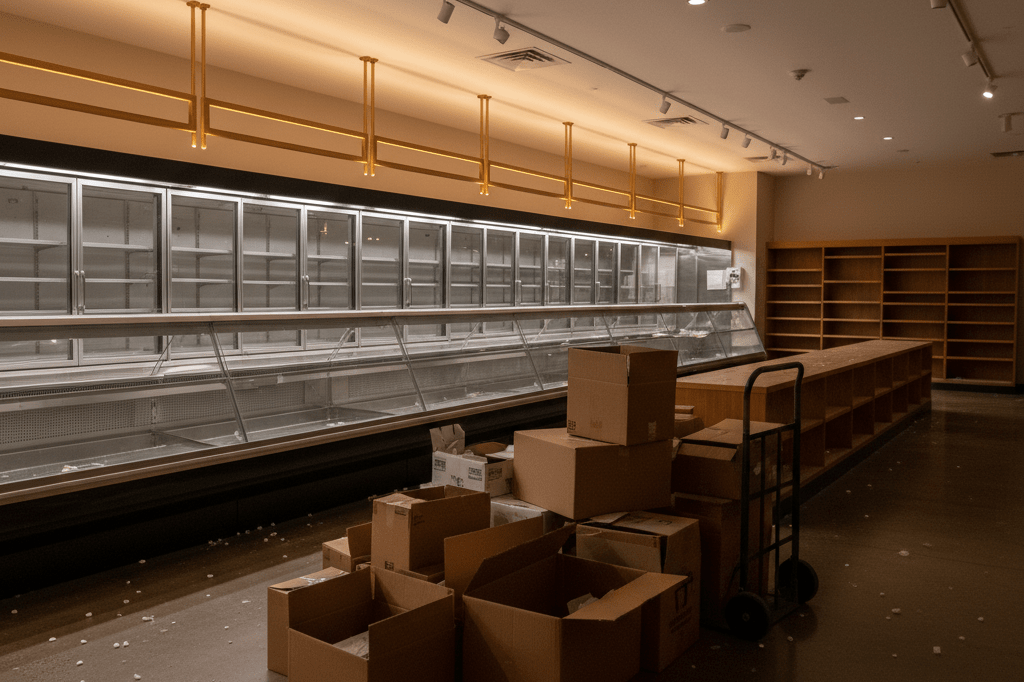
L’Oca’s March 12, 2026 closure creates a time-sensitive inventory acquisition opportunity for strategic buyers looking to capitalize on premium retail equipment at significant discounts. The narrow six-day window between the March 6 announcement and final closure date means buyers must act decisively to secure market closing sales advantages on high-quality commercial equipment. Smart retailers and restaurant operators can leverage this situation to acquire barely-used fixtures, refrigeration systems, and specialized food service equipment that would typically cost 60-80% more when purchased new from commercial suppliers.
The inventory acquisition timeline becomes critical for buyers seeking to negotiate bulk equipment purchases before liquidation companies take control of remaining assets. L’Oca’s multi-concept format means available equipment spans butchery tools, bakery ovens, restaurant bar installations, and commercial refrigeration units that collectively represent hundreds of thousands of dollars in original investment. Retail equipment buyers who can move quickly during this liquidation phase will find opportunities to secure premium fixtures that can immediately enhance their own operations while avoiding the typical 12-16 week lead times associated with custom commercial installations.
Strategic Equipment Acquisition Timeline
The March 6-12, 2026 window represents the optimal negotiation period for acquiring L’Oca’s premium fixtures before third-party liquidators potentially inflate pricing or sell equipment in less favorable lot configurations. Direct negotiations with L’Oca management during this period allow buyers to inspect specific equipment pieces, verify operational condition, and negotiate bulk pricing on coordinated equipment sets. Premium fixtures available include commercial-grade deli cases, artisanal bakery ovens, restaurant prep equipment, and bar installations that collectively cost L’Oca an estimated $800,000-$1.2 million in original investment across both locations.
Supplier relationship transfer opportunities emerge as L’Oca vendors seek to maintain Edmonton market presence through new retail partnerships. Established relationships with local food distributors, specialty product suppliers, and service contractors become available for transfer to buyers who can demonstrate operational capability and financial stability. These vendor relationships often include negotiated pricing structures, delivery schedules, and product allocation agreements that new retailers typically require 6-12 months to establish independently, providing immediate operational advantages for strategic acquirers.
Repurposing Premium Food Equipment: ROI Calculations
Butchery equipment acquisition presents 30-40% cost savings opportunities on commercial-grade meat processing tools, cutting tables, and specialized refrigeration units that L’Oca installed for artisanal operations. Professional butcher block tables, commercial meat grinders, vacuum packaging systems, and temperature-controlled aging units typically retain 70-85% of original value when purchased within 24 months of installation. Buyers can expect to acquire $50,000-$80,000 worth of butchery equipment for approximately $30,000-$50,000, creating immediate cost advantages for retailers planning meat department expansions or independent butcher shop operations.
Restaurant and bar fixtures represent the highest value acquisition opportunity, with barely-used premium installations including commercial espresso machines, wine storage systems, draft beer equipment, and custom millwork that L’Oca installed during their recent store conversions. Energy-efficient freezer and refrigeration systems offer long-term operational savings through reduced electricity consumption and maintenance costs compared to older commercial units. Strategic buyers can acquire complete refrigeration systems worth $100,000-$150,000 for 40-50% of replacement cost, while gaining access to warranty coverage and service contracts that transfer with equipment ownership.
Future-Proofing Your Retail Concept After L’Oca’s Exit
L’Oca’s closure demonstrates the critical importance of rightsizing retail concepts to match market demand and operational capabilities in the Edmonton retail market. The 45,000-square-foot Sherwood Park location and substantial west Edmonton space created overhead burdens that premium pricing couldn’t overcome within the 24-month operational window. Future retail concepts must balance ambition with operational efficiency, targeting the 10,000-20,000 square foot range that allows for premium positioning without creating unsustainable fixed cost structures that require unrealistic customer traffic volumes to achieve profitability.
Quality food retail strategy must prioritize concept validation through smaller-scale testing before committing to large-format operations that demand immediate market capture for financial viability. L’Oca’s multi-concept approach of combining seven different retail experiences created operational complexity that exceeded management capabilities and market demand in Edmonton’s competitive landscape. Smart retailers can learn from this execution challenge by focusing on 2-3 complementary concepts that share operational synergies rather than attempting to serve every customer need under one roof, allowing for more focused execution and clearer value proposition communication.
Operational efficiency emerges as the determining factor for retail success, trumping concept ambition when market realities demand sustainable profit margins within compressed establishment timeframes. Edmonton’s grocery market includes established competitors like Sobeys, Save-On-Foods, and Costco who have optimized operations over decades to serve price-conscious consumers effectively. New entrants must demonstrate superior operational efficiency in their chosen market segment rather than attempting to compete across multiple categories simultaneously, as L’Oca’s experience shows that execution complexity can overwhelm even well-funded retail ventures when operational demands exceed revenue generation capabilities.
Background Info
- L’Oca Quality Market announced on March 6, 2026, that it will close both of its Edmonton-area locations.
- The final day of business for both the Sherwood Park and Edmonton stores is set for Thursday, March 12, 2026.
- The closure affects two specific sites: a location on Baseline Road in Sherwood Park and a second location on 142 Street in west Edmonton.
- The Sherwood Park store opened approximately two years prior to March 2026, occupying a 45,000-square-foot space formerly used by a Rona building supply store.
- The west Edmonton store opened just over one year prior to March 2026 in the former Andy’s Valleyview IGA location.
- L’Oca had previously planned to open a third store in St. Albert before announcing the closure.
- Each location operated as a combined grocery market and restaurant complex featuring a deli, butcher, bakery, cafe, floral shop, restaurant/bars, and a liquor store.
- Investors in the venture included the Priestner family, identified as the founders of the Edmonton-based Go Auto vehicle dealership empire.
- L’Oca stated in a release on March 6, 2026, that “We were humbled by the difficulty of executing a locally focused, hand-crafted business model, and despite our best efforts, we didn’t see a sustainable path forward for the business, so we made the difficult decision to close.”
- The company confirmed it would pay all employees and suppliers in full and on schedule following the closure.
- The announcement was reported by CTV News Edmonton on Friday, March 6, 2026.
- No conflicting reports regarding the closure date or reasons were found in the provided text; the source attributes the decision solely to sustainability issues with the business model.
Related Resources
- Meyka: March 07: L’Oca Quality Market to Shut Edmonton…
- Edmontonjournal: L'OCA Quality Market closing Edmonton and…
- Edmonton: L’Oca Quality Market to close its Edmonton…
- Ctvnews: Edmonton-area grocery/restaurant chain L’Oca…
- Stalbertgazette: L'OCA Quality Market closing its doors…