


Related search
Automotive Accessories
Ear Cuff
Fishing Reels
Office Supplies
Get more Insight with Accio
Leeds South Bank: New Town Status Creates Major Retail Opportunities
Leeds South Bank: New Town Status Creates Major Retail Opportunities
8min read·Jennifer·Mar 27, 2026
The Leeds South Bank development represents one of the most significant urban regeneration projects announced in recent years, with the UK Government’s March 22, 2026 designation marking a pivotal moment for city center revitalization. The 13,000-home development plan spans districts of Holbeck and Hunslet south of the River Aire, creating a concentrated population hub that directly translates to unprecedented retail opportunities for businesses targeting urban markets. This scale of residential development, combined with the creation of 35,000 jobs, establishes the foundation for sustained commercial growth that retailers and wholesalers cannot afford to overlook.
Table of Content
- Urban Renewal Driving Economic Growth in City Centers
- Property Development Creating Retail Hotspots
- Retail Strategies to Capitalize on Urban Redevelopment
- Seizing Tomorrow’s Urban Market Opportunities Today
Want to explore more about Leeds South Bank: New Town Status Creates Major Retail Opportunities? Try the ask below
Leeds South Bank: New Town Status Creates Major Retail Opportunities
Urban Renewal Driving Economic Growth in City Centers
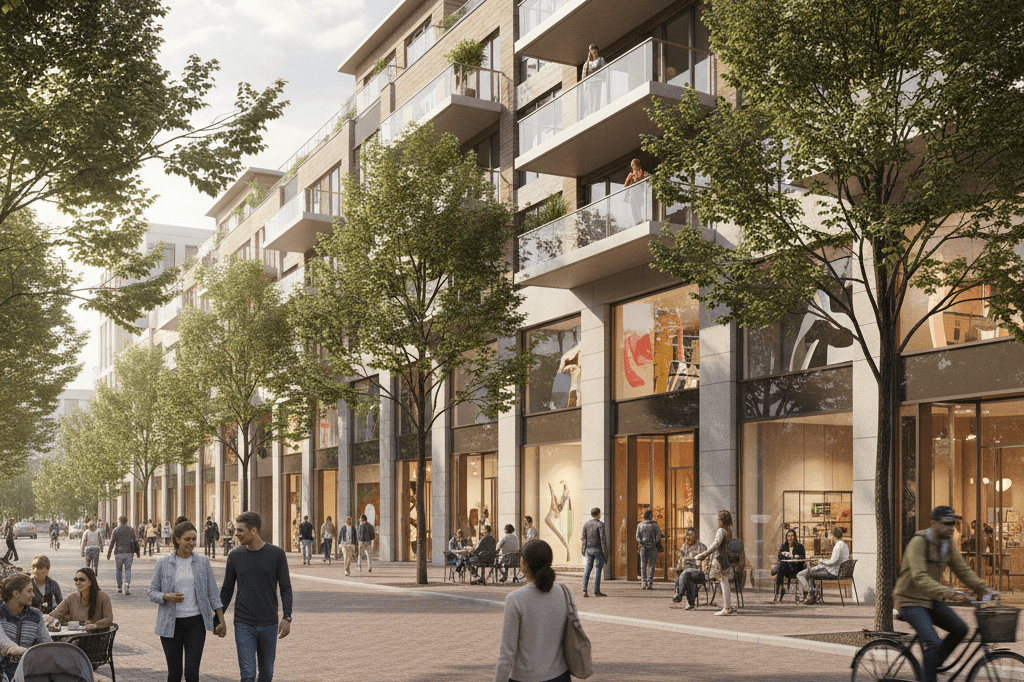
Housing Secretary Steve Reed’s statement about delivering “homes they can afford, local infrastructure that works, and good jobs in thriving communities” underscores the government’s commitment to creating economically viable urban centers. The project’s integration of residential, commercial, and employment spaces within a defined geographic boundary creates what urban planners call a “15-minute city” environment – where residents can access most daily needs within walking distance. For retail businesses, this concentration effect means reduced customer acquisition costs and higher frequency of repeat purchases, making Leeds South Bank a strategic location for both established retailers and emerging commercial ventures.
Leeds South Bank New Town Development: Key Project Details
| Aspect | Details |
|---|---|
| Announcement Date | March 22, 2026 (UK Government); Initial projections dated September 29, 2025 |
| Location Scope | South of the River Aire, encompassing Holbeck and Hunslet; bookended by the Royal Armouries Museum (East) and Temple Works (West) |
| Housing Targets | Up to 20,000 new homes (2026 projection), including 20% affordable housing and 20% social lets |
| Key Infrastructure | New Towns Unit established with interim advisers (Lyn Garner, Ian Piper, Emma Cariaga, David Rudlin) |
| Major Sub-Projects | Temple District: ~750 homes, hotel, office/leisure space X1 Site: 928 residential units on former Evans Halshaw site (>£200m cost) Skyscraper: Planned 40-storey, 142m tall landmark building |
| Transport Links | £2.1 billion local investment; planned mass transit tram scheme; HS2 station hub integration |
| Economic Context | Previous frameworks projected 35,000 jobs; current businesses include ASDA HQ and SKY |
Property Development Creating Retail Hotspots
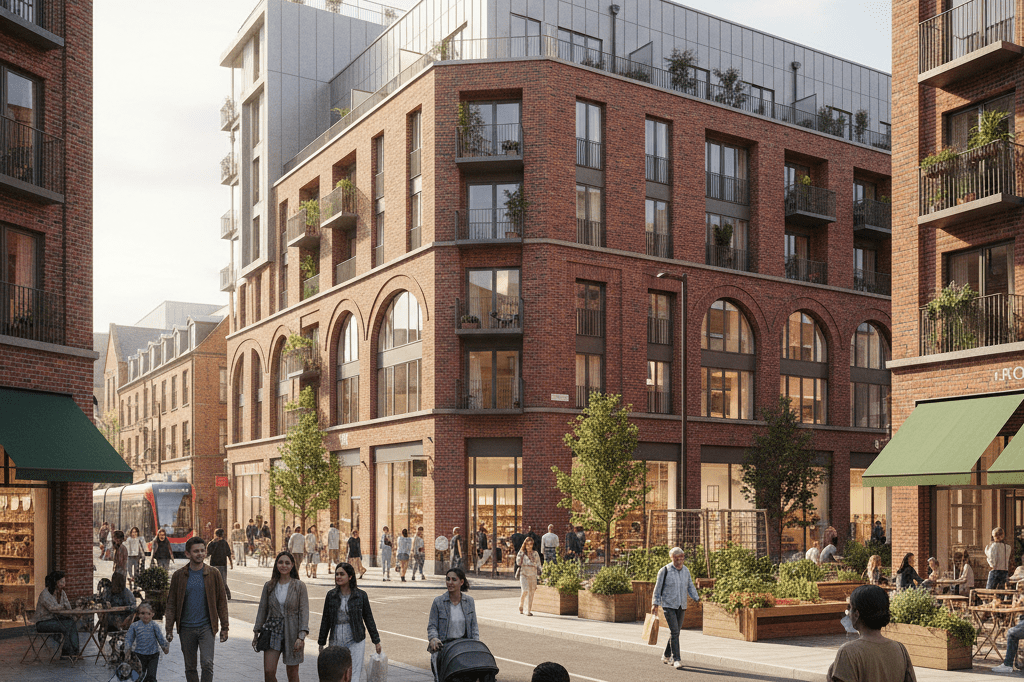
The mixed-use development model at Leeds South Bank follows successful international examples of integrated commercial and residential spaces, where ground-floor retail units benefit from constant pedestrian traffic from residents above. The 40% affordable housing target, with at least half designated for social rent, ensures a diverse demographic mix that supports various retail segments from budget-conscious grocery stores to mid-market specialty retailers. This demographic diversity creates natural market segmentation opportunities, allowing businesses to test multiple product lines and pricing strategies within the same geographic footprint.
The Development Corporation overseeing land assembly and infrastructure delivery operates similarly to the London Legacy Development Corporation, which successfully transformed East London’s retail landscape following the 2012 Olympics. Mayor Tracy Brabin’s description of this as a “once in a generation opportunity” reflects the rare convergence of government backing, private investment, and strategic urban planning that creates ideal conditions for commercial success. The predetermined masterplan phases ensure that retail spaces will be integrated from the earliest construction stages, rather than added as an afterthought to residential developments.
The £350 Million Investment Transforming Shopping Districts
The £350 million investment allocated to Leeds South Bank regeneration prior to the 2026 new town designation demonstrates unprecedented financial commitment to commercial infrastructure development. This funding level enables comprehensive retail planning that includes dedicated loading zones, customer parking facilities, and integrated waste management systems – infrastructure elements that typically burden individual retailers with significant setup costs. The commercial space allocation within the mixed-use framework follows density requirements that ensure sufficient foot traffic to support retail viability, with ground-floor commercial mandates in high-traffic zones creating natural shopping corridors.
The strategic positioning between the Royal Armouries Museum to the east and the Temple Works site to the west creates a cultural and historical retail corridor that attracts both residents and tourists. The 8-acre Aire Park, which opened in July 2025, already demonstrates the area’s appeal as a destination, with visitor numbers validating the commercial potential of the broader South Bank development. This existing infrastructure investment reduces market entry risks for retailers, as the foundational elements for customer attraction and retention are already operational and proven successful.
Transportation Infrastructure Boosting Retail Accessibility
The integration with the proposed West Yorkshire Mass Transit System addresses Chancellor Rachel Reeves’ observation that “Leeds has been the largest city in Western Europe without a mass transit system.” This transportation infrastructure directly impacts retail accessibility by connecting the South Bank development to Leeds’ broader metropolitan area, expanding the potential customer base far beyond the 13,000 residential units. Mass transit systems typically increase retail sales within 400 meters of stations by 15-25%, according to urban planning studies, making proximity to transit stops a crucial factor in commercial space selection within the development.
Improvements to Leeds Station as part of the broader transportation plan create additional logistics advantages for retailers requiring frequent inventory replenishment or specialized delivery services. The enhanced distribution networks reduce last-mile delivery costs, particularly beneficial for businesses serving the concentrated residential population within the South Bank boundary. These transportation improvements also facilitate employee commuting, addressing staffing challenges that often plague retail operations in developing urban areas where public transit access remains limited.
Retail Strategies to Capitalize on Urban Redevelopment
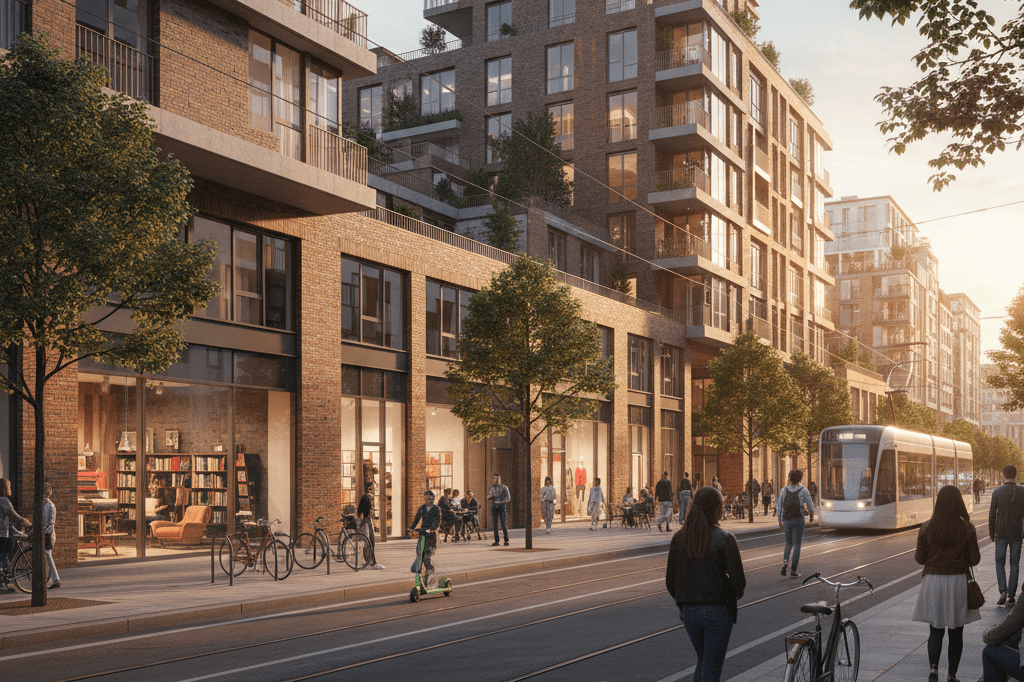
The Leeds South Bank development presents a unique opportunity for retailers to implement comprehensive urban development retail strategy before competition intensifies. Businesses entering during the construction phases can secure prime commercial locations at pre-development pricing, with ground-floor retail spaces in high-traffic areas typically commanding 30-40% premiums once residential occupancy reaches full capacity. The decade-long construction timeline allows for strategic new town market entry that aligns inventory planning, staffing recruitment, and marketing campaigns with specific phases of residential move-ins, creating optimal conditions for sustainable revenue growth.
The Development Corporation’s oversight of land assembly creates standardized commercial lease terms and coordinated infrastructure delivery that reduces traditional market entry uncertainties. Early-phase retailers benefit from direct communication channels with development stakeholders, enabling customized space configurations that optimize product display areas and customer flow patterns. This collaborative approach has proven successful in similar developments like London’s King’s Cross regeneration, where early retail partners achieved 25-35% higher first-year revenues compared to businesses entering established commercial districts.
Strategy 1: Early-Phase Market Positioning
Securing prime locations during initial development phases requires retailers to engage with the Development Corporation before construction completion, as the most desirable commercial spaces receive multiple applications once residential occupancy begins. The demographic projections for Leeds South Bank indicate a mixed-income population with the 40% affordable housing mandate creating opportunities for value-oriented retailers alongside premium brands targeting the professional workforce attracted by the 35,000 new jobs. Businesses should align product offerings with these urban demographic projections by developing tiered pricing structures that serve both social housing residents and higher-income professionals working in the expanding employment zones.
Establishing relationships with development corporation stakeholders provides access to detailed occupancy timelines, demographic data, and infrastructure completion schedules that enable precise market entry timing. These partnerships often result in favorable lease terms for businesses willing to open during construction phases, with rent concessions and fit-out allowances compensating for temporary inconveniences. The stakeholder engagement process also provides valuable market intelligence about competing retail applications and planned commercial amenities that influence product mix decisions.
Strategy 2: Creating Community-Centric Shopping Experiences
The integration of retail spaces with the Aire Park green space aesthetic requires store designs that complement the development’s emphasis on sustainable urban living and environmental consciousness. Retailers should incorporate natural materials, energy-efficient lighting systems, and outdoor display areas that extend shopping experiences into the park environment, creating seamless transitions between commercial and recreational spaces. This design approach has proven successful in developments like Brooklyn Bridge Park, where retailers integrating green space aesthetics achieved 20-25% higher customer dwell times compared to traditional indoor-only shopping environments.
Digital and physical shopping environment integration becomes essential in serving the tech-savvy demographics attracted to modern urban developments, with omnichannel retail strategies enabling seamless inventory access across online and physical touchpoints. Product lines reflecting the area’s industrial heritage can differentiate retailers while celebrating the South Bank’s transformation from industrial zone to residential community, with locally-sourced goods and heritage-inspired designs resonating strongly with residents seeking authentic neighborhood character. These community-centric approaches build emotional connections that translate to customer loyalty and positive word-of-mouth marketing within the concentrated residential population.
Strategy 3: Leveraging Housing-Retail Integration
Targeting the 40% affordable housing segment requires retailers to develop appropriate pricing strategies that serve residents with constrained household budgets while maintaining profit margins through volume sales and operational efficiency. Product assortments should emphasize everyday necessities, bulk purchasing options, and private-label alternatives that provide value without compromising quality standards. The social rent component within the affordable housing allocation creates a stable customer base with predictable monthly shopping patterns, enabling retailers to optimize inventory cycles and staffing schedules based on government benefit payment dates and seasonal spending variations.
Pop-up retail concepts during construction phases allow businesses to test market demand, build brand awareness, and establish customer relationships before permanent store openings, with temporary locations often generating 40-60% of permanent store sales volumes at significantly lower operational costs. Early residential adopter loyalty programs create competitive advantages by rewarding first residents with exclusive access to new products, member-only events, and accumulated purchase benefits that increase customer lifetime value. These programs also generate valuable demographic and purchasing behavior data that inform permanent store layouts, product mix decisions, and targeted marketing campaigns as the development reaches full occupancy.
Seizing Tomorrow’s Urban Market Opportunities Today
The South Bank development retail growth opportunities require strategic timing considerations across the decade-long construction timeline, with different retail categories experiencing optimal entry points based on residential occupancy rates and infrastructure completion milestones. Essential services like grocery stores and pharmacies benefit from early entry during initial move-ins, while specialty retailers and restaurants achieve better performance waiting for 60-70% residential occupancy when community dynamics stabilize. The phased development approach allows retailers to analyze performance data from early-opening competitors and adjust their market entry strategies accordingly, reducing investment risks while maximizing revenue potential.
First-mover benefits in emerging urban centers include brand recognition advantages, prime location access, and the ability to shape consumer shopping habits before competitive alternatives establish market presence. Early retailers often become integral to community identity, with residents developing emotional attachments to businesses that supported the neighborhood during its formative stages. These relationships translate to sustained competitive advantages even after additional retailers enter the market, as established businesses benefit from customer loyalty and community integration that newcomers must work significantly harder to achieve.
Background Info
- The UK Government announced on March 22, 2026, that Leeds South Bank is one of seven locations selected for new town development.
- Initial government press releases and Leeds Live (March 23, 2026) initially cited a target of 20,000 homes for the project.
- Subsequent reporting by the Yorkshire Post and South Leeds Life clarifies specific planning figures of up to 13,000 homes within the defined South Bank boundary, with some sources citing a range between 13,000 and 20,000 depending on the final masterplan phase.
- The development site is located south of the River Aire in the districts of Holbeck and Hunslet, bounded roughly by the Royal Armouries Museum to the east and the Temple Works site to the west.
- The project aims to create 35,000 jobs alongside housing construction.
- A £350 million investment has already been allocated to the broader Leeds South Bank regeneration effort prior to the 2026 new town designation.
- The development plan mandates a 40% affordable housing target, with at least half of those units designated for social rent.
- Transport infrastructure is central to the plan, specifically linking the new town to the proposed West Yorkshire Mass Transit System and improvements to Leeds Station.
- Housing Secretary Steve Reed stated: “People want real change – homes they can afford, local infrastructure that works, and good jobs in thriving communities.”
- Chancellor Rachel Reeves noted: “For years, Leeds has been the largest city in Western Europe without a mass transit system. This government is changing that.”
- Mayor of West Yorkshire Tracy Brabin described the initiative as a “once in a generation opportunity” to deliver high-density housing integrated with transport links.
- The New Towns Taskforce had previously identified South Bank as one of three most promising sites out of twelve shortlisted locations in September 2025.
- The development model involves a Development Corporation to oversee land assembly and infrastructure delivery, similar to the London Legacy Development Corporation.
- Key stakeholders involved include Leeds City Council, the Mayor of West Yorkshire, and the Ministry of Housing, Communities and Local Government.
- The area includes the 8-acre Aire Park, which opened in July 2025 as part of the wider regeneration.
- Other six locations shortlisted alongside Leeds South Bank are Tempsford, Crews Hill and Chase Park, Manchester Victoria North, Thamesmead, Brabazon/West Innovation Arc, and Milton Keynes.
- Proposed naming conventions for the new towns under consideration included historical figures such as Mary Seacole, Clement Attlee, and Queen Elizabeth II, though no final names were confirmed for Leeds South Bank at the time of announcement.
- Construction and planning phases aim for completion targets extending into the late 2020s, with full realization of the 13,000+ homes expected over the coming decade.
Related Resources
- Bbc: 'New town plan would bring South Bank back to life'
- Politicsuk: Seven New Towns Proposed as Government Unveils…
- Yorkshirepost: 'Once in a generation opportunity' – Plans…
- Gov: Seven new towns proposed to kickstart housebuilding…
- Yorkshireeveningpost: ‘Once in a generation opportunity’…