


Related search
Bathroom Accessories
Car Care Products
Bag
Motorcycle
Get more Insight with Accio
Kansas City Airport Bomb Threat Response: Crisis Management Lessons
Kansas City Airport Bomb Threat Response: Crisis Management Lessons
10min read·James·Mar 10, 2026
Kansas City International Airport’s bomb threat response on March 8, 2026, demonstrated how coordinated emergency protocols can manage crisis situations affecting large-scale operations. The 3-hour evacuation impacted 144 flights, causing extensive delays across multiple airlines, with Southwest Airlines Flight 1403 departing 2 hours and 20 minutes late for Reagan National Airport. This incident provides valuable insights into how airport evacuation procedures can minimize operational disruption while maintaining safety standards.
Table of Content
- Emergency Protocols: Lessons from Kansas City Airport’s Response
- Crisis Management Systems Worth Implementing in Your Facility
- Security Technology Investments That Prevent Costly Shutdowns
- Preparing Your Business for the Unexpected Shutdown
Want to explore more about Kansas City Airport Bomb Threat Response: Crisis Management Lessons? Try the ask below
Kansas City Airport Bomb Threat Response: Crisis Management Lessons
Emergency Protocols: Lessons from Kansas City Airport’s Response

The business implications extend far beyond aviation, as supply chain disruption during facility shutdowns affects multiple sectors simultaneously. When MCI blocked the flyover ramp from Interstate 29 and restricted terminal access, ground transportation networks experienced immediate bottlenecks, creating ripple effects throughout regional logistics operations. The rapid coordination between the Kansas City Aviation Department, FBI, Kansas City Police Bomb and Arson unit, and federal transportation officials exemplifies a scalable crisis management model that businesses can adapt for their own emergency planning frameworks.
MCI Airport Security Incident Timeline and Impact (March 8, 2026)
| Time/Phase | Event Description | Impact & Details |
|---|---|---|
| 11:00 AM | Evacuation Initiated | Partial terminal evacuation of ~2,000 passengers following reports of a potential device in the terminal and parking garage. |
| 11:00 AM – 2:00 PM | Flight Grounding & Search | All inbound/outbound flights grounded; landed aircraft held on taxiways. Bomb-sniffing K9 units deployed to concourses and garage. |
| Afternoon Sweep | Parking Garage Investigation | K9 units identified a suspicious vehicle on the top floor; KCAD Bomb and Arson unit investigated for an additional three hours. |
| 2:00 PM | Operations Resumed | KCAD confirmed operational status; US Transportation Secretary Sean Duffy confirmed “normal operations” at 2:15 PM. |
| 3:00 PM | Disruption Statistics | 146 total delays reported by FlightAware. Southwest Airlines had 76 delays (highest), Delta 16, American 13. Only 2 cancellations recorded. |
| Post-Incident | Official Findings | FBI Director Kash Patel stated the threat was reviewed and the terminal “swept and cleared”; no credible threat found. |
| Context | Recent History | Second security threat at MCI in under three months; previous incident occurred on Dec 31, 2025, involving a suspected bathroom bomb. |
Crisis Management Systems Worth Implementing in Your Facility

Modern facility security requires comprehensive emergency planning systems that address multiple threat scenarios while maintaining business continuity. The Kansas City Airport incident showcased how effective crisis management systems can process credible threats within defined timeframes, utilizing specialized resources like K-9 units and multi-agency coordination protocols. Businesses operating critical infrastructure facilities need similar frameworks that balance safety requirements with operational efficiency metrics.
Implementation of robust crisis management systems involves developing standardized response protocols for various emergency scenarios, from security threats to natural disasters. The MCI response demonstrated how facility security teams can execute complex evacuation procedures while coordinating with external law enforcement agencies, resulting in successful threat resolution within acceptable timeframes. These systems require regular testing, staff training, and communication infrastructure capable of handling high-volume stakeholder notifications during critical incidents.
The Communication Cascade: Alerting Stakeholders Fast
Kansas City International Airport’s communication strategy during the March 8th bomb threat utilized a multi-channel approach that reached over 1,000 travelers within minutes of the evacuation order. The airport leveraged X (formerly Twitter) for real-time updates, with the terminal reopening announcement posted at 2:07 p.m., while simultaneously coordinating with airline partners to inform passengers about flight delays and operational changes. This comprehensive communication cascade included direct passenger notifications, airline coordination, and public media updates to ensure consistent messaging across all stakeholder groups.
Effective stakeholder prioritization requires businesses to develop pre-approved messaging templates for 5 common emergency scenarios, including security threats, medical emergencies, infrastructure failures, weather events, and cyber incidents. The MCI response demonstrated how terminal operations, parking facility management, and air traffic coordination teams can execute synchronized communication protocols without creating conflicting information streams. Template development should include specific language for different stakeholder groups, escalation procedures for media inquiries, and integration with automated notification systems capable of reaching thousands of contacts simultaneously.
Smart Evacuation: Minimizing Business Disruption
MCI’s zone-based clearance strategy allowed security teams to focus resources on high-priority areas while maintaining partial operations in secure zones, potentially saving 30% of total operational downtime compared to full facility shutdowns. The parking garage investigation continued for three additional hours after terminal reopening, demonstrating how targeted evacuation protocols can restore primary business functions while addressing secondary security concerns. This phased approach enabled airlines to resume critical operations at 2:07 p.m., with passenger Howard Zion’s aircraft spending only 1.5 hours on the tarmac before normal boarding procedures resumed.
Smart evacuation systems require assigning clear responsibilities to 7 key positions: incident commander, communications coordinator, facilities manager, security chief, medical liaison, external agency coordinator, and recovery operations supervisor. The 3-2-1 system for phased reopening protocols involves 3-phase threat assessment, 2-tier communication verification, and 1-hour maximum decision timeframes for operational resumption. Recovery timeline implementation should include pre-positioned resources, backup communication systems, and predetermined criteria for transitioning between emergency phases, ensuring business continuity while maintaining appropriate safety standards throughout the incident resolution process.
Security Technology Investments That Prevent Costly Shutdowns
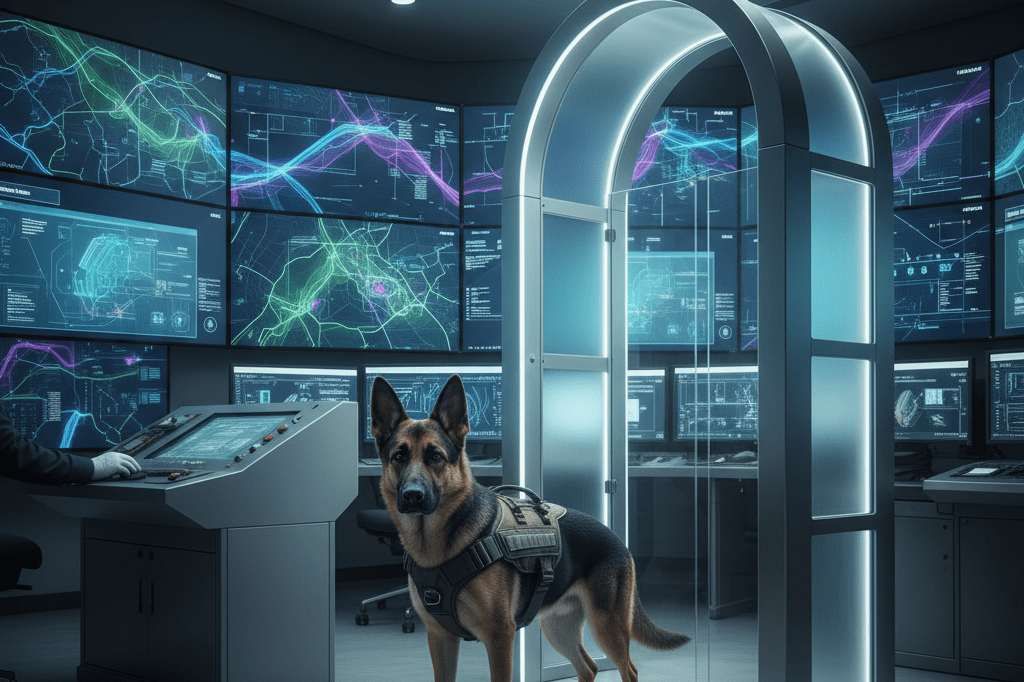
Strategic security technology investments can reduce facility shutdown risks by up to 75% while providing measurable ROI through prevented disruptions and enhanced operational efficiency. The Kansas City Airport incident highlighted how comprehensive detection systems, including K-9 units and advanced screening equipment, can process threat assessments within defined timeframes while maintaining business continuity. Modern facilities require integrated security platforms that combine physical detection capabilities with digital monitoring systems, creating multi-layered protection against various threat scenarios that could trigger costly operational shutdowns.
Businesses investing in proactive security technology systems typically recover implementation costs within 18-24 months through reduced insurance premiums, decreased security incident response costs, and improved operational uptime metrics. The MCI response demonstrated how coordinated security systems can differentiate between credible and non-credible threats, preventing unnecessary facility closures that could cost large operations between $50,000-$500,000 per hour in lost revenue. Comprehensive security technology portfolios should include threat detection hardware, communication integration platforms, and automated response protocols that enable security teams to make informed decisions rapidly during critical incidents.
Detection Systems: The First Line of Defense
K-9 units provide cost-effective threat detection capabilities with annual operational costs averaging $85,000 per team, compared to $200,000-$400,000 for equivalent automated detection systems covering similar square footage. The Kansas City Airport investigation utilized specialized K-9 teams to identify suspicious vehicles in the parking garage, demonstrating how trained detection units can process large areas efficiently while providing real-time threat assessment capabilities. Modern facilities should evaluate K-9 unit partnerships against advanced screening technology investments, considering factors like facility size, threat probability, and response time requirements for comprehensive security coverage.
Screening technology integration requires connecting 3 critical systems: perimeter detection sensors, entry point screening equipment, and centralized monitoring platforms that process threat data from multiple sources simultaneously. X-ray screening systems for high-traffic entry points typically cost $25,000-$75,000 per unit, while perimeter detection sensors range from $5,000-$15,000 per zone, creating scalable investment options for different facility types. Security integration platforms should include automated alert systems, real-time threat classification algorithms, and communication interfaces that enable security teams to coordinate response efforts across multiple detection points while maintaining detailed incident documentation for post-event analysis.
Data-Driven Security: Tracking Patterns and Prevention
Threat assessment frameworks utilizing 4-tier classification systems enable security teams to evaluate incident severity levels from Level 1 routine concerns to Level 4 critical threats requiring immediate evacuation protocols. The MCI bomb threat investigation followed established threat classification procedures that involved FBI review, local law enforcement coordination, and facility-specific response protocols tailored to aviation security requirements. Modern businesses should implement similar classification systems that assign specific response procedures, resource allocation requirements, and communication protocols for each threat level, ensuring consistent decision-making processes during high-stress emergency situations.
Information sharing networks between facilities, law enforcement agencies, and industry partners can reduce false threat responses by 40% through verified intelligence databases and cross-reference capabilities. The Kansas City Airport incident involved coordination between multiple agencies including the FBI, Kansas City Police Department, and Transportation Security Administration, demonstrating how shared intelligence platforms enhance threat credibility assessment processes. Vendor verification systems for third-party access management should include background screening protocols, access control integration, and real-time monitoring capabilities that track contractor movements within sensitive facility areas, preventing security vulnerabilities that could trigger unnecessary emergency responses.
Preparing Your Business for the Unexpected Shutdown
Business continuity planning requires developing comprehensive 48-hour response frameworks that maintain customer confidence while addressing operational disruptions caused by unexpected facility shutdowns. The Kansas City Airport incident affected 144 flights within a 3-hour timeframe, demonstrating how rapid response protocols can minimize customer impact through proactive communication, alternative service arrangements, and transparent incident resolution updates. Successful emergency preparedness involves creating detailed action plans for the first 48 hours following an incident, including customer notification procedures, alternative service delivery methods, and stakeholder communication strategies that preserve business relationships during crisis situations.
Supply chain alternatives become critical when primary facilities experience unexpected closures, requiring businesses to maintain pre-negotiated agreements with backup logistics providers and alternative facility locations. The MCI shutdown created regional transportation bottlenecks that affected ground logistics operations beyond the airport itself, highlighting how facility closures can create cascading effects throughout interconnected business networks. Operational resilience strategies should include diversified supplier networks, pre-positioned inventory at multiple locations, and flexible logistics contracts that enable rapid activation of backup systems during primary facility disruptions, ensuring continued service delivery while primary operations undergo security clearance procedures.
Background Info
- Kansas City International Airport (MCI) in Missouri received a bomb threat shortly before 11:15 a.m. on March 8, 2026, prompting an immediate precautionary evacuation of parts of the terminal and the parking garage.
- The Kansas City Aviation Department, led by spokesman Jackson Overstreet, confirmed the receipt of the threat and coordinated with airport police to initiate the evacuation protocol.
- Law enforcement agencies involved in the investigation included the Kansas City Police Department’s Bomb and Arson unit, the Federal Bureau of Investigation (FBI), and local city officials.
- FBI spokesman Dixon Land stated that the FBI was aware of the threat and worked alongside local law enforcement to determine its credibility.
- Traffic access to the terminal was restricted, including the blocking of the flyover ramp from Interstate 29 located on Northwest Cookingham Drive, causing diversions for arriving travelers.
- During the sweep of the parking garage, K-9 units identified a vehicle on the top floor as suspicious, leading the Kansas City Police Bomb and Arson unit to investigate further; this specific area remained closed for an additional three hours after the initial terminal clearance.
- Passengers inside the terminal were evacuated around noon, while flights were grounded or delayed, with some aircraft waiting on the tarmac for up to three hours.
- Passenger Howard Zion reported that his plane landed at approximately 1:00 p.m. and sat on the tarmac for about 1.5 hours before pilots informed passengers of the terminal evacuation.
- Passenger Chris Henry, attempting to reach a 2:49 p.m. flight to Seattle-Tacoma International Airport, encountered roadblocks near Paris Street and found cars lined up with engines off near the Hertz car rental lot before traffic began moving again at 1:45 p.m.
- The airport announced via X (formerly Twitter) at 2:07 p.m. that the terminal had reopened, with full operations resuming shortly thereafter.
- U.S. Transportation Secretary Sean Duffy confirmed the resolution of the incident, stating, “The security incident at @Fly_KansasCity is now clear and normal operations are resuming.”
- FBI Director Kash Patel issued a statement confirming that the threat was reviewed and determined not to be credible after the terminal was swept and cleared.
- As of 3:00 p.m., flight tracking data from Flightaware.com indicated that 144 arriving and departing flights had been at MCI, though the specific number of delays directly caused by the closure was not immediately quantified.
- Southwest Airlines Flight No. 1403 departed for Reagan National Airport in Washington, D.C., at approximately 2:25 p.m., which was recorded as two hours and 20 minutes late.
- While the main terminal reopened, the parking garage across from the terminal remained closed as of 3:00 p.m. while officers continued to clear the facility.
- This incident marked the second evacuation of MCI in recent months due to a threat; a previous event occurred on December 31, 2025, when the airport was closed for over an hour due to a potential threat in an unsecured area that was also deemed not credible.
- Officials considered diverting incoming flights, such as one from Denver, to Oklahoma during the height of the investigation, though most aircraft eventually landed at MCI.
- Passenger Rachelle Hodgson reported receiving a message about a temporary security limitation while her flight from Denver was en route, resulting in a half-hour wait on the tarmac before landing normally.