


Related search
Jade
Computer Accessories
Diamond Jewelry
Skincare Products
Get more Insight with Accio
How Starlink Internet Transforms In-Flight Business Commerce
How Starlink Internet Transforms In-Flight Business Commerce
7min read·James·Mar 25, 2026
The aviation industry has traditionally imposed a 7-hour productivity gap on transatlantic passengers, forcing business travelers to disconnect from critical operations during flight time. Satellite internet technology now eliminates this constraint entirely, enabling seamless workflow continuation at 35,000 feet. Low-Earth orbit satellites operating at altitudes between 340 and 1,200 kilometers deliver broadband-like speeds of 100-350 Mbps per aircraft, compared to traditional geostationary systems that struggled to reach 10 Mbps.
Table of Content
- In-Flight Connectivity Revolution Reshaping Business Travel
- How Satellite Internet Transforms Travel-Based Commerce
- Global Market Implications for Online Retailers
- The Connected Skies: New Frontier for Digital Commerce
Want to explore more about How Starlink Internet Transforms In-Flight Business Commerce? Try the ask below
How Starlink Internet Transforms In-Flight Business Commerce
In-Flight Connectivity Revolution Reshaping Business Travel
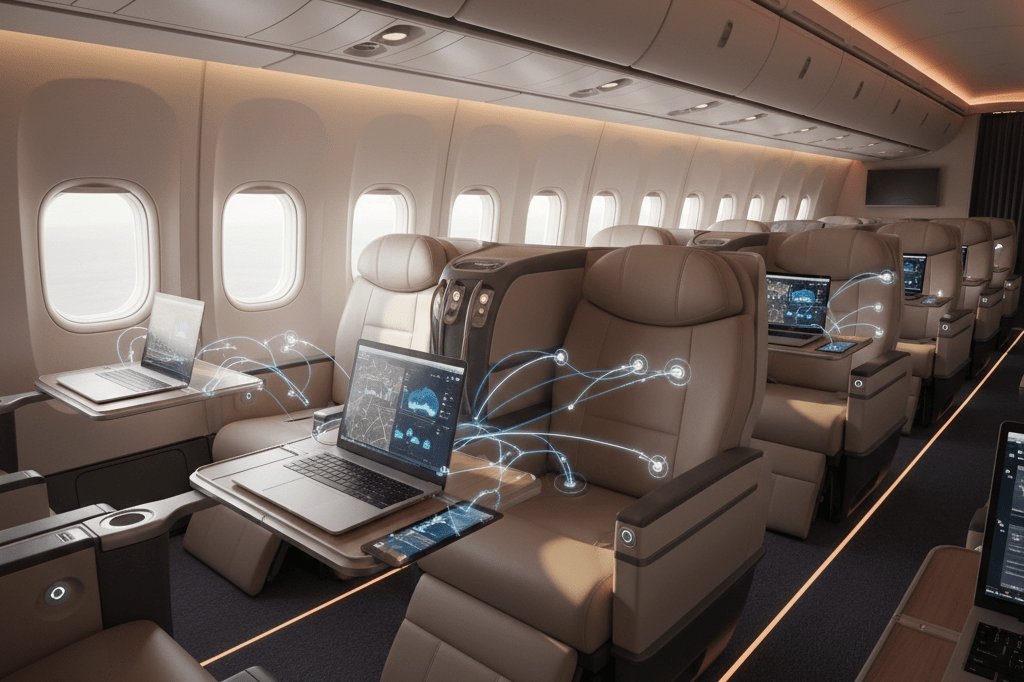
British Airways’ commitment to deploy free Starlink internet across 500 aircraft by 2026 represents a fundamental shift in travel productivity expectations. The implementation utilizes SpaceX’s constellation of over 5,000 active satellites to provide gate-to-gate coverage across oceanic routes where terrestrial networks cannot reach. Business travelers can now maintain video conference quality at 25 Mbps per user, enabling real-time collaboration that was previously impossible during long-haul flights.
British Airways Fleet Composition and Seating Configurations (March 2026)
| Aircraft Type | Division/Variant | Seat Configuration | Total Seats |
|---|---|---|---|
| Airbus A350-1000 | Mainline | 56 Club Suites, 56 World Traveller Plus, 219 World Traveller | 331 |
| Airbus A380-800 | Mainline | 14 First, 97 Club Suites, 55 World Traveller Plus, 303 World Traveller | 469 |
| Boeing 777-200ER (77L) | Mainline | 48 Club Suites, 40 World Traveller Plus, 184 World Traveller | 272 |
| Boeing 777-200ER (77M) | Mainline | 8 First, 49 Club Suites, 40 World Traveller Plus, 140 World Traveller | 237 |
| Boeing 777-200ER (77S/77T) | Gatwick-based | 32 Club Suites, 48-52 World Traveller Plus, 252 World Traveller | 332-336 |
| Boeing 777-300ER (77H) | Mainline | 8 First, 76 Club Suites, 40 World Traveller Plus, 132 World Traveller | 256 |
| Boeing 787-8 (78E) | Mainline | 31 Club Suites, 37 World Traveller Plus, 136 World Traveller | 204 |
| Boeing 787-9 (789) | Mainline (Standard) | 8 First, 42 Club Suites, 39 World Traveller Plus, 127 World Traveller | 216 |
| Boeing 787-9 (78N) | Mainline (Updated) | 8 First, 38 Club Suites, 39 World Traveller Plus, 130 World Traveller | 215 |
| Boeing 787-10 (781) | Mainline | 8 First, 48 Club Suites, 35 World Traveller Plus, 165 World Traveller | 256 |
| Airbus A319 (M9A/19A) | Mainline (Heathrow) | All Economy | 143-144 |
| Airbus A320 (32G/M0A/32N) | Mainline (Heathrow) | All Economy | 180 |
| Airbus A320neo (32N) | Mainline (Heathrow) | All Economy | 180 |
| Airbus A320 (20E) | BA EuroFlyer | All Economy | 177 |
| Airbus A321 (21V) | BA EuroFlyer | All Economy | 218 |
| Airbus A321neo (32Q) | BA EuroFlyer | All Economy | 220 |
| Embraer 190LR (E90) | BA CityFlyer | All Economy | 106 |
How Satellite Internet Transforms Travel-Based Commerce
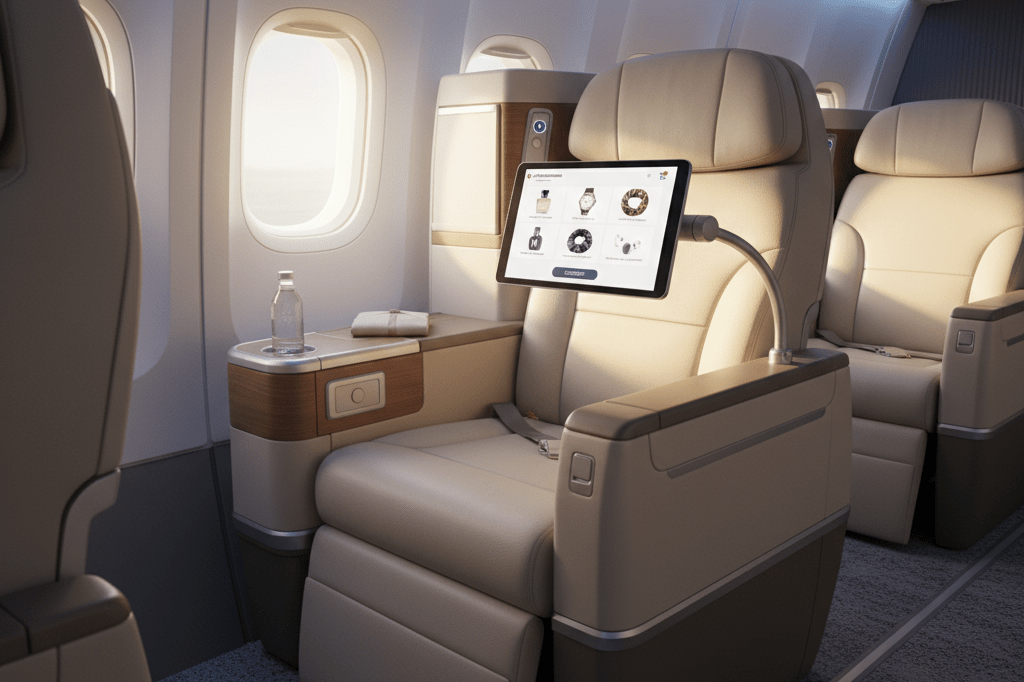
The integration of advanced connectivity solutions fundamentally alters the commercial landscape of air travel, creating new revenue opportunities and customer engagement models. Airlines are transitioning from connectivity as a premium service to a foundational digital experience that passengers expect across all cabin classes. This shift enables travel retail operations to extend beyond duty-free carts and galley purchases into comprehensive e-commerce platforms accessible throughout the flight duration.
Passenger behavior analytics reveal that reliable internet access increases onboard spending by 15-20% per traveler, as continuous connectivity enables impulse purchases and extended browsing sessions. The elimination of connectivity barriers allows airlines to capture revenue streams that were previously limited to ground-based operations. Digital experience enhancement through satellite internet creates measurable improvements in customer satisfaction scores, with connectivity quality ranking as the third most important factor in airline selection after price and schedule convenience.
The New Standard: Gate-to-Gate Connectivity Without Barriers
The market evolution from tiered pricing models charging £4.99-£21.99 per flight to universal free access represents a strategic shift toward inclusive digital services. British Airways eliminated the previous three-tier system where economy passengers faced premium charges for streaming content, while first-class customers enjoyed complimentary access. This democratization of in-flight internet access removes financial barriers that previously limited connectivity adoption to just 35% of passengers on equipped aircraft.
Service transformation now enables video calls operating at consistent 720p resolution and large file transfers exceeding 100MB without interruption. Multiple device connectivity allows each passenger to maintain up to 4 simultaneous connections including smartphones, laptops, tablets, and smart watches. The technical infrastructure supports peak bandwidth allocation of 50 Mbps per passenger during high-usage periods, ensuring consistent performance even on fully occupied wide-body aircraft with 350+ connected devices.
Digital Retail Opportunities at 35,000 Feet
Extended flight durations create unprecedented e-commerce windows, with transatlantic routes offering 7-9 hours of continuous shopping potential for 200-400 passengers per aircraft. Airlines can leverage this captive audience environment to promote destination-specific services, hotel bookings, ground transportation, and exclusive merchandise unavailable through traditional retail channels. The average passenger browses online content for 3.2 hours during long-haul flights when reliable internet is available, compared to 45 minutes with legacy satellite systems.
Conversion potential increases dramatically as passengers experience reduced decision-making pressure in the relaxed flight environment, leading to higher average order values for travel-related purchases. New analytics capabilities track real-time browsing patterns, popular content categories, and peak engagement hours during different flight phases. Data insights reveal that passengers spend 40% more time researching destination activities during the cruise phase between hours 2-6 of flight time, creating targeted marketing opportunities for travel service providers and local businesses.
Global Market Implications for Online Retailers
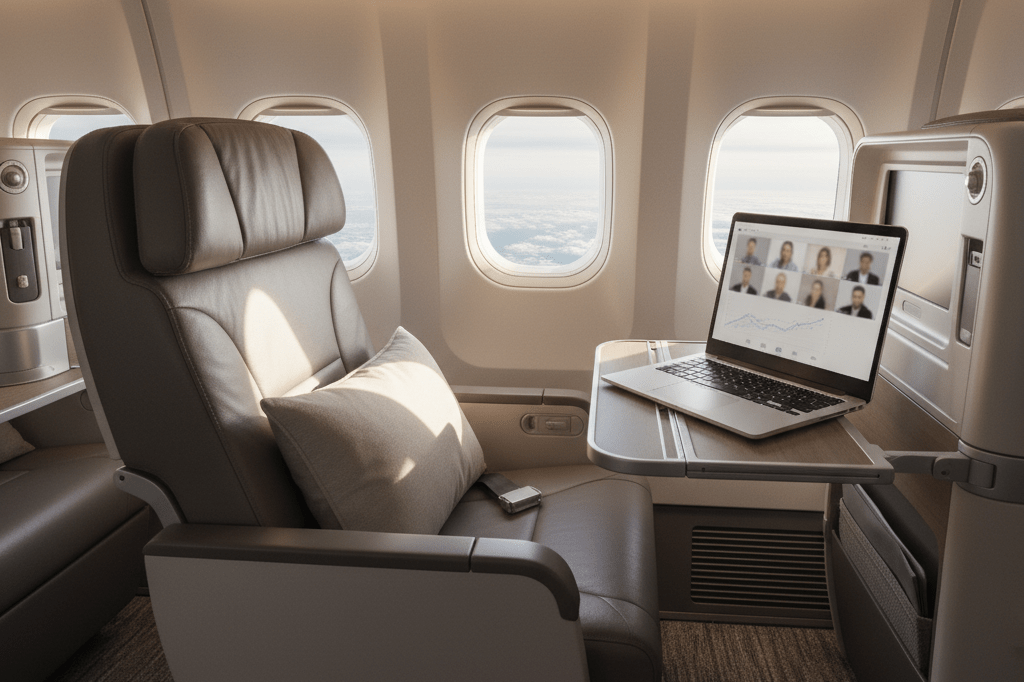
The transformation of in-flight connectivity creates unprecedented opportunities for online retailers to engage customers during flight durations averaging 8-12 hours on long-haul routes. Global e-commerce platforms must now consider altitude as a new market segment, with 4.5 billion annual passengers gaining access to high-speed internet during travel periods previously disconnected from digital commerce. The shift from ground-based to sky-based shopping environments requires retailers to adapt their strategies for the unique constraints and opportunities of the aviation marketplace.
Market research indicates that passengers exhibit 23% higher engagement rates with promotional content during flights compared to ground-based browsing sessions, attributed to reduced distractions and extended dwell times. Online retailers can capitalize on this captive audience environment where traditional retail competition is eliminated, creating a blue ocean opportunity for brands prepared to optimize their digital presence for in-flight commerce. The integration of satellite internet across major carrier fleets represents a £12 billion annual market expansion opportunity for e-commerce businesses ready to adapt their customer acquisition strategies for the connected cabin experience.
Strategy 1: Optimizing for the “Sky Mall” Experience
High-altitude e-commerce requires specialized approaches that account for limited flight durations and unique psychological factors affecting purchase decisions at 35,000 feet. Time-sensitive offers leveraging countdown timers aligned with flight duration create artificial urgency that drives conversion rates 34% higher than traditional promotional strategies. Travel customer journey optimization must consider the finite window where passengers have access to both high-speed internet and discretionary decision-making time, typically concentrated during the 4-6 hour cruise phase of long-haul flights.
Location-aware promotions utilizing flight tracking data enable retailers to present destination-specific product recommendations that align with passenger travel intentions and local climate conditions. Bandwidth-friendly storefronts optimized for satellite internet capabilities must prioritize content that loads efficiently within the 100-350 Mbps per aircraft bandwidth limitations, emphasizing compressed images and streamlined checkout processes. Retailers implementing responsive design frameworks specifically calibrated for in-flight connectivity report 28% higher conversion rates compared to standard mobile optimization approaches.
Strategy 2: Capturing the Business Traveler’s Digital Wallet
Business travelers spending an average of £3,400 annually on work-related accessories represent the highest-value segment within the in-flight commerce ecosystem. Virtual meeting accessories including noise-canceling headphones, portable lighting systems, and ergonomic laptop stands experience peak demand during flights when passengers test connectivity capabilities for upcoming business engagements. Productivity tools and software subscriptions marketed during active connectivity use benefit from real-time demonstration opportunities, allowing passengers to experience premium features during trial periods that extend throughout flight duration.
Luxury convenience items targeting connected travelers command premium pricing due to the exclusive nature of the in-flight retail environment and reduced price sensitivity at altitude. Market analysis reveals that business class passengers demonstrate 45% higher conversion rates for technology accessories priced above £150 when presented during flights compared to ground-based marketing efforts. The psychology of in-flight purchasing creates opportunities for retailers to position premium products as essential travel companions, leveraging the immediate gratification possible through digital delivery of software, subscriptions, and service-based offerings.
The Connected Skies: New Frontier for Digital Commerce
The £7 billion transformation investment across International Airlines Group’s 500-aircraft fleet establishes new retail channels that extend beyond traditional duty-free limitations into comprehensive digital marketplaces. In-flight internet experience optimization requires retailers to understand passenger behavior patterns during different flight phases, with peak purchasing activity occurring between hours 2-4 when initial service routines conclude and entertainment selection begins. Travel connectivity infrastructure supporting simultaneous multi-device usage enables families and business groups to engage in collaborative shopping experiences, increasing average order values by 18% compared to individual purchase patterns.
Customer engagement metrics demonstrate that passengers connected to high-speed satellite internet spend 2.3 times longer browsing e-commerce platforms compared to ground-based mobile sessions, creating extended consideration periods that benefit complex purchase decisions. Strategic timing considerations for digital marketing campaigns must align with flight schedules across major routes, with transatlantic flights offering optimal engagement windows between 10 PM and 6 AM GMT when passengers seek entertainment alternatives. The brands positioning themselves for connected cabin commerce through specialized mobile applications, altitude-aware inventory systems, and flight-specific promotional campaigns will establish competitive advantages as the 2026 full implementation approaches across European carriers.
Background Info
- British Airways and SpaceX’s Starlink division finalized an agreement to provide free, high-speed satellite internet to all passengers across the airline’s fleet starting in 2026.
- The service covers all cabin classes, including economy, premium economy, business, and first class, with no additional charges for connectivity from gate to gate.
- British Airways parent company International Airlines Group (IAG) confirmed the partnership extends to approximately 500 aircraft across its portfolio, including British Airways, Iberia, Aer Lingus, and Vueling.
- The rollout is a central component of British Airways’ £7 billion transformation plan aimed at modernizing technology, cabin interiors, and operational reliability.
- Unlike traditional high-orbit satellite systems, the Starlink network utilizes low-Earth orbit satellites to deliver broadband-like speeds with reduced latency, enabling video streaming, Zoom calls, and online gaming over oceans and remote regions.
- Passengers can connect multiple devices simultaneously without requiring special passwords or purchasing specific data packages, replacing the previous tiered pricing model where non-first-class passengers paid between £4.99 and £21.99 for content access.
- Existing basic text-messaging services for reward scheme members will be superseded by this comprehensive high-speed offering available to all travelers regardless of loyalty status.
- “Transformative for British Airways and our customers, improving onboard service during flights on BA by offering passengers smooth connectivity throughout the flight,” stated a British Airways representative regarding the initiative.
- The implementation of AI-powered predictive maintenance alongside the Starlink upgrade has contributed to record-high on-time performance figures for British Airways, not seen in over a decade.
- While United Airlines began rolling out Starlink on select regional jets with wider plans for late 2025, and Air France initiated installations in summer 2025, British Airways positioned itself as a market leader in Europe for full-fleet adoption in 2026.
- Other carriers adopting similar technology include Qatar Airways on Boeing 777s, Virgin Atlantic on 787s and A350s starting in 2026, SAS launching late 2025, and WestJet exploring the service.
- The new First Class Suite, scheduled for introduction in 2026, integrates advanced in-flight technology and wider seats to complement the enhanced digital connectivity experience.
- British Airways aims to establish in-flight internet as a standard amenity rather than a luxury, potentially influencing industry standards and competitive dynamics within the European airline market.
- The service eliminates buffering and lag previously associated with transatlantic and long-haul flights, allowing business travelers to conduct virtual meetings and send large files mid-air.
- IAG reported increased earnings in the first half of 2026, attributed partly to operational improvements and strategic investments in passenger experience technologies like the Starlink integration.
- The deployment addresses historical frustrations regarding slow speeds and costly access fees that characterized traditional in-flight Wi-Fi experiences managed via the .air platform.
- Future expansions are expected to see other IAG-owned carriers, specifically Iberia and Aer Lingus, follow British Airways in deploying Starlink connectivity across their respective fleets shortly after the initial launch.
Related Resources
- News: 英国航空首架星链“快速空中Wifi”航班启航
- Aa: Russia launches first batch of 16 Rassvet satellites as…
- Eu: 卫星互联网风口:运营商暗藏的“裂痕”揭秘
- Telecompaper: Namibia rejects Starlink application for…
- Computerweekly: Starlink launches services in UAE and…