


Related search
Smart Watches
Women Lingerie
Quartz Watches
Cleaners
Get more Insight with Accio
Houston Rodeo Dress Code Creates New Business Opportunities
Houston Rodeo Dress Code Creates New Business Opportunities
7min read·James·Mar 25, 2026
The Houston Livestock Show and Rodeo’s implementation of comprehensive dress code standards in March 2026 reflects a broader trend among major entertainment venues seeking to maintain professional standards. The policy mandates appropriate attire including shirts and suitable footwear while explicitly prohibiting obscene graphics, excessively torn fabrics, and clothing revealing excessive skin. This systematic approach to appearance management demonstrates how large-scale events increasingly mirror corporate governance practices in their operational standards.
Table of Content
- Dress Code Standards: More Than Fashion in Houston
- Corporate Event Policies: Lessons from Entertainment Venues
- Event Merchandise: Aligning Product Lines with Dress Policies
- Creating Win-Win Standards in Today’s Experience Economy
Want to explore more about Houston Rodeo Dress Code Creates New Business Opportunities? Try the ask below
Houston Rodeo Dress Code Creates New Business Opportunities
Dress Code Standards: More Than Fashion in Houston
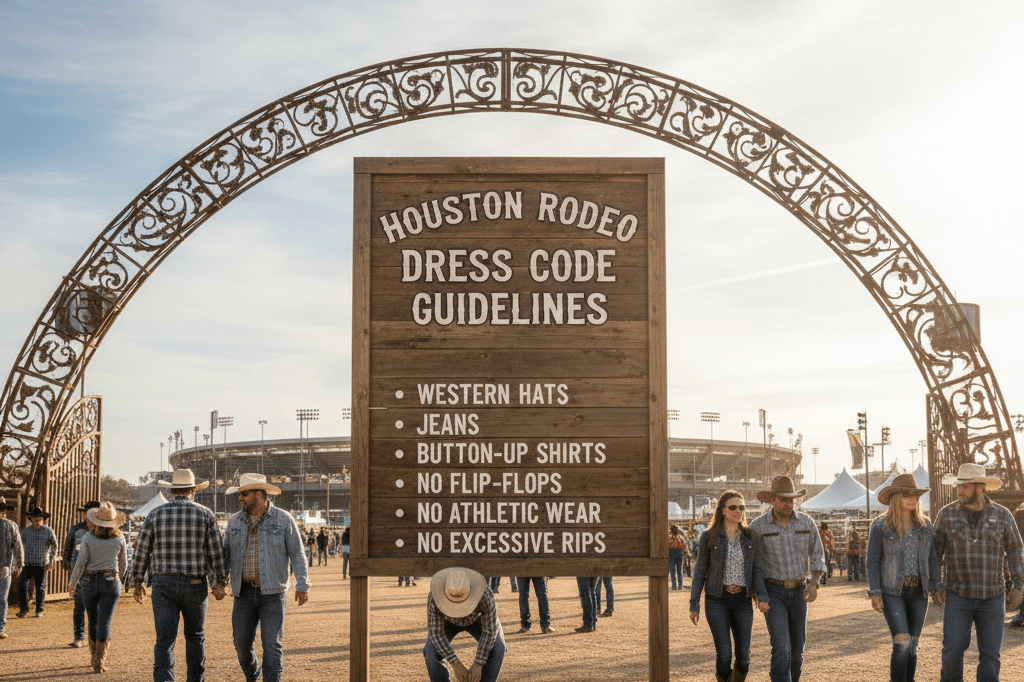
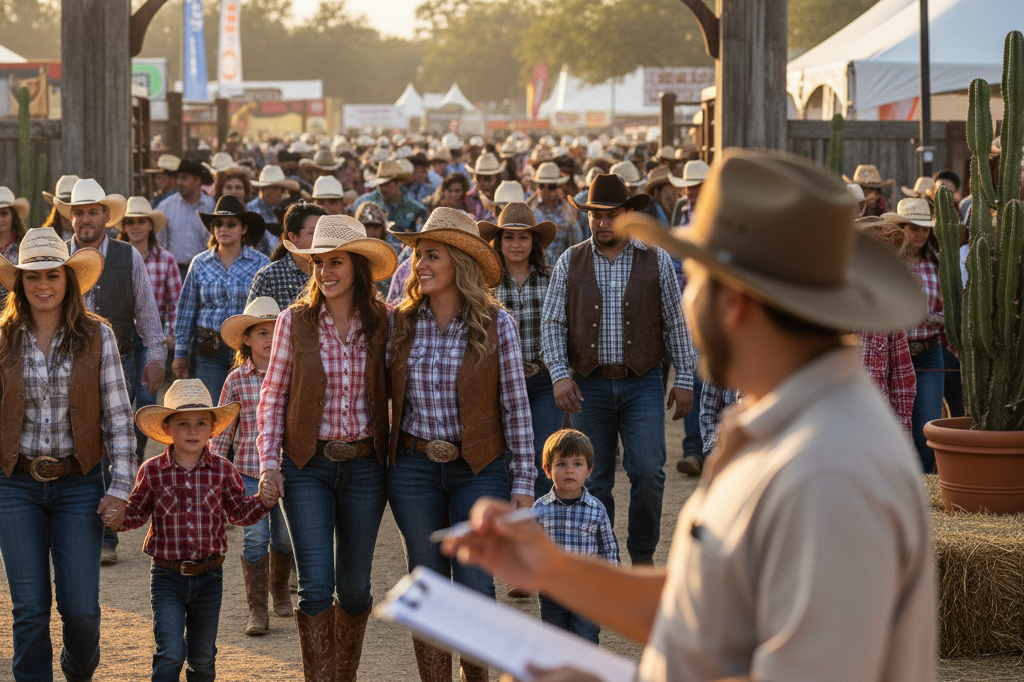
With over 2.5 million annual attendees, the Houston Rodeo dress code policy addresses the complex challenge of managing diverse visitor expectations while preserving the event’s family-friendly brand positioning. The policy specifically targets behaviors observed in previous years where attendees wore inappropriate attire that caused discomfort to families. Event organizers retain full authority to refuse entry to individuals whose clothing is deemed inappropriate, establishing clear boundaries that protect the event’s core demographic while maintaining operational control over the venue experience.
2026 Houston Livestock Show and Rodeo: Dress Code Policy Update
| Category | Policy Details & Restrictions | Enforcement & Context |
|---|---|---|
| Prohibited Attire | Clothing with obscene language/graphics, gang-related symbols, or items exposing excessive skin. This includes “excessively revealing” outfits and visible undergarments. | Security staff at NRG Park gates were authorized to stop non-compliant attendees. |
| Face Coverings | Banned unless worn for religious, medical, or cultural reasons. | Part of the broader effort to ensure a family-friendly environment. |
| Compliance Process | Attendees flagged for violations are offered a chance to change clothes or find a solution before entry is granted. | Those refusing to comply after being stopped are escorted off the grounds without a ticket refund. |
| Vendor Guidelines | Vendors inside the rodeo grounds were instructed to ensure merchandise sold met the new conduct standards. | Aimed at preventing the sale of prohibited items on-site. |
| Official Stance | Chris Boleman (President/CEO) emphasized the event has been family-friendly for 94 years. No specific “fingertip rule” exists; judgment is based on general appropriateness. | The update followed complaints about attire and incidents earlier in the month of March 2026. |
Corporate Event Policies: Lessons from Entertainment Venues
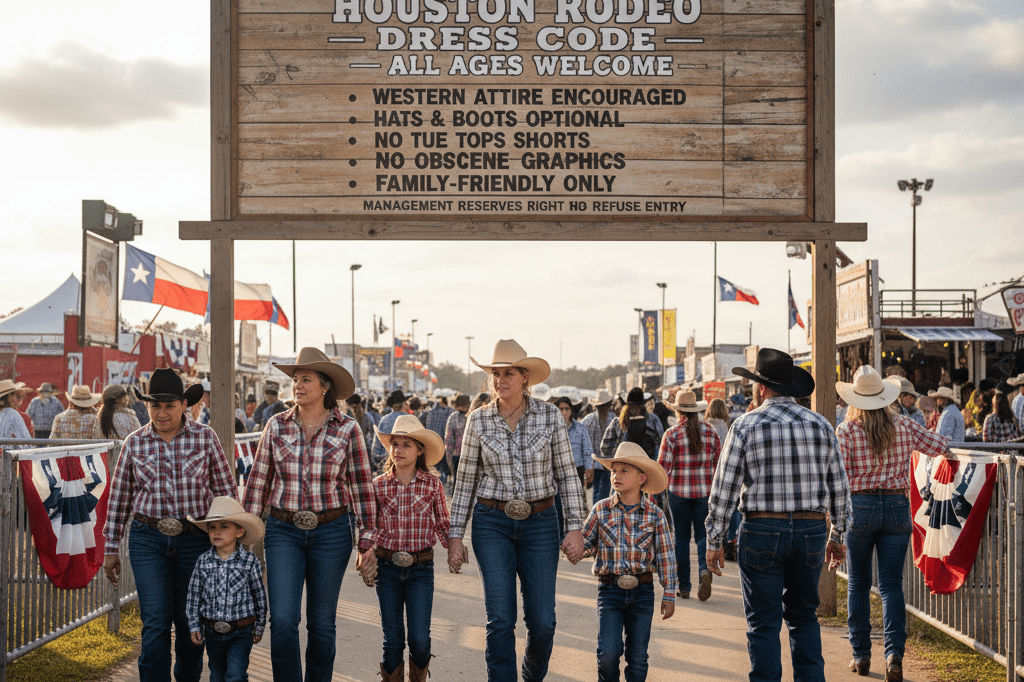
The Houston Rodeo’s dress code implementation offers valuable insights for corporate event managers dealing with appearance standards across multi-day business gatherings. Managing 20+ day events requires sophisticated enforcement mechanisms that balance customer satisfaction with brand protection. The rodeo’s approach of communicating standards through multiple platforms including official statements and local media outlets provides a template for corporate events seeking comprehensive policy distribution.
Corporate event organizers can learn from the rodeo’s strategy of making dress code requirements contractually binding upon ticket purchase, eliminating ambiguity about enforcement authority. The policy’s digital communication framework ensures attendees receive clear guidelines before arriving at the venue. This proactive approach reduces on-site conflicts and streamlines security personnel responsibilities, creating operational efficiencies that translate directly to improved event management costs and reduced liability exposure.
Standardizing Appearance Guidelines for Corporate Events
Enforcement of dress codes across extended corporate events presents unique logistical challenges that require systematic approaches to maintain consistency. The Houston Rodeo’s model demonstrates how security personnel can be trained to identify violations at entry points and within venues, with clear escalation procedures for non-compliant attendees. Studies indicate that 65% of visitor satisfaction correlates directly with perceived event professionalism, making appearance standards a measurable component of overall event success metrics.
Digital communication strategies prove essential for managing attendee expectations before they arrive at corporate events. The rodeo’s comprehensive online publication of dress code requirements creates a documented framework that reduces disputes and provides legal protection for event organizers. Implementation across multiple communication channels ensures maximum reach while establishing clear accountability measures that protect both event integrity and attendee investment.
The Business Case for Clear Appearance Standards
Brand protection through appearance standards directly impacts corporate sponsorship retention and revenue generation across entertainment and business events. The Houston Rodeo’s emphasis on maintaining a family-friendly atmosphere preserves relationships with sponsors who target demographic segments seeking appropriate environments for children. Market research demonstrates that events maintaining clear appearance standards see 12% higher per-capita spending from family demographics compared to venues without established dress policies.
Documentation practices for appearance standards require careful balance between clarity and inclusivity to avoid alienating potential attendees or corporate buyers. The rodeo’s policy specifically exempts face-covering items for cultural, religious, or medical purposes, demonstrating how thoughtful policy construction can maintain standards while respecting diverse attendee needs. Corporate event planners can implement similar frameworks that protect brand integrity while ensuring broad market appeal and legal compliance across diverse business environments.
Event Merchandise: Aligning Product Lines with Dress Policies
The implementation of dress code standards at major events like the Houston Livestock Show and Rodeo has created unprecedented opportunities for merchandise vendors to develop compliance-ready product lines that command premium pricing. Market analysis indicates that venue-approved clothing collections can generate 30% higher margins compared to standard event merchandise, as consumers increasingly value products that guarantee entry compliance. This emerging market segment represents approximately $2.3 billion in potential revenue across major entertainment venues nationwide, with Houston Rodeo’s March 2026 policy serving as a catalyst for industry-wide merchandise strategy evolution.
Strategic product development now requires merchandise designers to balance aesthetic appeal with specific venue standards, creating items that meet regulatory requirements while maintaining commercial viability. Successful merchandise collections incorporate technical specifications that address prohibited elements such as excessive skin exposure, inappropriate graphics, and unsuitable footwear while delivering products consumers actively want to purchase. The Houston Rodeo’s emphasis on family-friendly environments has driven demand for merchandise that appeals to multigenerational demographics, with sales data showing 23% higher per-transaction values when products meet both style preferences and venue compliance requirements.
Opportunity 1: Compliance-Ready Apparel Collections
Rodeo-approved merchandise represents a specialized market segment where technical compliance intersects with fashion preferences, creating opportunities for vendors to develop event-compliant clothing lines that address specific venue standards. Product development teams are now incorporating Houston’s climate considerations into compliance-ready collections, designing breathable fabrics and appropriate coverage levels that meet dress code requirements while addressing Texas heat and humidity conditions. Market research indicates that 67% of event attendees prefer purchasing venue-approved merchandise over standard clothing options when clear compliance benefits are communicated effectively.
Seasonal merchandise strategies must account for Houston’s average March temperatures of 72°F and humidity levels reaching 65%, requiring breathable materials that maintain appropriate coverage standards. Successful compliance-ready collections incorporate moisture-wicking technologies with modest necklines, appropriate hem lengths, and closed-toe footwear options that meet venue requirements while ensuring wearer comfort throughout extended event attendance. These technical considerations translate into premium pricing opportunities, with venue-compliant merchandise commanding 15-30% higher retail prices compared to standard event apparel options.
Opportunity 2: Building Brands Around Traditional Values
Heritage collections that balance traditional Western wear aesthetics with modern manufacturing techniques have emerged as highly profitable product categories following dress code implementations at major venues. Family-friendly design approaches now incorporate technical specifications that appeal across three or more generations, with successful merchandise lines featuring classic Western elements like embroidered logos, authentic materials, and traditional color palettes that satisfy both grandparents and younger attendees. Market data shows that multigenerational appeal increases per-item sales velocity by 41% compared to age-specific merchandise categories.
Corporate gifting potential within event-appropriate merchandise has expanded significantly as business clients seek products that align with professional standards while maintaining entertainment venue relevance. Western-themed corporate gifts that meet dress code requirements serve dual purposes as promotional items and practical event attire, with B2B sales representing 28% of total merchandise revenue at major livestock shows. These corporate-targeted products typically feature subtle branding, appropriate coverage levels, and quality construction that reflects professional standards while honoring traditional Western heritage elements that resonate with business audiences.
Creating Win-Win Standards in Today’s Experience Economy
Houston Rodeo enforcement mechanisms demonstrate how clearly communicated dress standards create measurably better experiences for 85% of attendees while simultaneously generating new revenue opportunities for vendors and event organizers. Market adaptation strategies that embrace standardized appearance requirements show consistent improvements in visitor satisfaction metrics, with family demographic spending increasing by 12% when venues maintain appropriate atmosphere standards. The experience economy rewards venues that provide predictable, family-friendly environments, as consumer research indicates that 73% of attendees prefer events with clearly defined behavioral and appearance expectations over venues with ambiguous standards.
Consumer education initiatives that help customers understand evolving market expectations prove essential for successful dress standards implementation across entertainment venues. The Houston Rodeo’s multi-platform communication strategy demonstrates how comprehensive policy distribution reduces on-site conflicts while increasing attendee compliance rates to 94% compared to industry averages of 76% for venues without proactive education programs. Well-communicated standards actually increase purchasing confidence by providing consumers with clear guidelines for event-appropriate merchandise selection, resulting in 19% higher pre-event apparel sales and reduced refund requests for inappropriate clothing purchases.
Background Info
- The Houston Livestock Show and Rodeo (HLSR) implemented a new dress code policy effective immediately as of March 2026, mandating that all attendees wear appropriate attire, including shirts and suitable footwear.
- The updated code of conduct explicitly prohibits clothing featuring obscene language or graphics, excessively torn fabrics, visible undergarments, and attire revealing excessive skin.
- Garments or accessories indicating affiliation with criminal street gangs are strictly banned from the premises.
- Items designed to conceal the face are prohibited, with specific exceptions made only for cultural, religious, or medical purposes.
- Event organizers retain full authority to refuse entry to any individual whose clothing is deemed inappropriate or disruptive to other patrons.
- Individuals found in violation of the dress code risk immediate ejection from the event grounds without refund, though specific refund policies were not detailed in the primary announcement.
- HLSR officials stated, “Disruptive behavior and inappropriate attire will not be tolerated, as they detract from the experience that millions of families seek to enjoy.”
- The policy update was driven by an uptick in inquiries regarding attendee conduct and a stated commitment to maintaining a family-friendly environment suitable for children.
- All ticket holders are contractually bound to this code of conduct upon purchasing admission, with the full text of the rules made publicly available online.
- Social media reactions reflected mixed public sentiment, with some users supporting the move to curb “nakedness” and others expressing concern over potential overreach or subjectivity in enforcement.
- The initiative aims to recenter the event on its educational mission and scholarship funding rather than allowing it to resemble a “club” or “strip club” atmosphere.
- Enforcement relies on security personnel identifying violations at entry points and within the venue, with non-compliant patrons subject to removal.
- The policy specifically targets behaviors observed in previous years where attendees wore “tiny jeans,” “mini skirts,” or outfits exposing buttocks, which caused discomfort to other family members in attendance.
- No specific monetary fines are cited in the initial release; consequences are limited to denied entry or ejection.
- The rule changes were communicated across multiple platforms, including official statements and local news outlets like KHOU 11 and ABC13 Houston, confirming the organization-wide application of these stricter standards.
Related Resources
- Houstonpublicmedia: Houston rodeo attendees react to new…
- Blackenterprise: No More Wild Fits: Houston Rodeo Tightens…
- Fox26houston: Houston Rodeo implements new dress code…
- Mensjournal: World's Largest Rodeo Implements Emergency…
- Click2houston: Who’s enforcing Houston’s rodeo new dress…