


Related search
Industry Equipment
Aquariums
Smart TVs
Smart Products
Get more Insight with Accio
Hendrix Brookhaven Collapse: Infrastructure Failures Cost Millions
Hendrix Brookhaven Collapse: Infrastructure Failures Cost Millions
9min read·James·Mar 25, 2026
On Friday evening, March 20, 2026, what began as a single vehicle fire at The Hendrix Apartments in Brookhaven, Georgia, transformed into a catastrophic structural collapse that left dozens of residents without access to their vehicles and exposed critical vulnerabilities in modern building safety systems. DeKalb County Fire Rescue received the initial reports at approximately 8:30 p.m., but by the time firefighters arrived, the blaze had already consumed multiple vehicles across the third floor of the enclosed parking structure. The intense heat generated by burning automobiles created temperatures exceeding 1,000°F, ultimately compromising the structural integrity of the concrete deck and triggering a two-alarm response that would challenge emergency crews throughout the night.
Table of Content
- The Hendrix Incident: When Infrastructure Failures Strike
- Property Management’s 3 Critical Safety Responsibilities
- Insurance Considerations for Property Owners and Managers
- Turning Disaster Prevention into Business Advantage
Want to explore more about Hendrix Brookhaven Collapse: Infrastructure Failures Cost Millions? Try the ask below
Hendrix Brookhaven Collapse: Infrastructure Failures Cost Millions
The Hendrix Incident: When Infrastructure Failures Strike
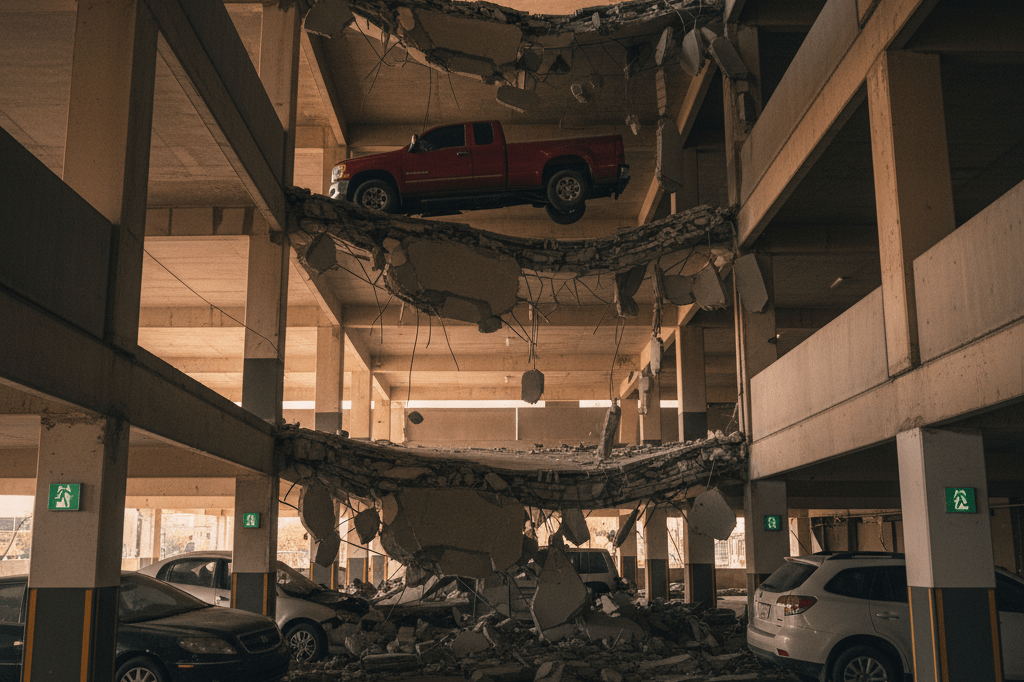
The aftermath revealed the true scope of infrastructure vulnerability when the parking deck experienced partial structural collapse several hours after firefighters extinguished the flames. Captain Jaeson Daniels noted that the fire had likely burned for an extended period before detection, allowing thermal damage to weaken critical support elements within the concrete structure. The collapse created gaping holes across three different floors, leaving approximately a dozen vehicles either suspended mid-air or crushed beneath falling concrete slabs weighing several tons each. This incident demonstrates how a single point of failure in emergency detection systems can cascade into property damage exceeding hundreds of thousands of dollars, while simultaneously highlighting the critical importance of robust emergency response protocols in high-density residential developments.
Major Car Carrier Fire Incidents (2015–2025)
| Vessel Name | Date of Incident | Location & Cargo Details | Cause/Outcome |
|---|---|---|---|
| Morning Midas | June 3, 2025 | North Pacific Ocean; 3,159 vehicles (681 hybrids, 65 EVs) | Smoke spotted on EV deck; crew evacuated safely; salvage ongoing. |
| Fremantle Highway | July 25, 2023 | Near Ameland, Netherlands; 3,783 vehicles | One crew member died; investigation cited poor rescue prioritization and communication flaws. |
| Grande Costa D’Avorio | July 5, 2023 | Port Newark, New Jersey; Used vehicles for export | Two firefighters killed; caused by overheated modified vehicle violating OSHA standards. |
| Felicity Ace | February 16, 2022 | Southwest of Azores; ~4,000 vehicles (EVs and luxury brands) | All crew rescued; vessel sank after burning for two weeks. |
| Höegh Xiamen | June 4, 2020 | Blount Island, Florida; 2,420 used vehicles | Total loss; caused by improperly disconnected battery in a used vehicle. |
| Grande Europa | May 15, 2019 | Off Palma de Mallorca, Spain; 1,687 vehicles and containers | Two separate fires originated from new vehicles; prompted calls for stricter battery controls. |
| Grande America | March 12, 2019 | Bay of Biscay; 2,100 vehicles and dangerous goods | Vessel sank; origin undetermined other than sparks from a truck. |
| Sincerity Ace | December 31, 2018 | Northwest of Oahu; 3,800 Nissan vehicles | Five crew members died; exact cause remains unknown. |
| Honor | February 24, 2017 | En route to Baltimore; ~5,000 vehicles (including personal used cars) | Caused by starter motor solenoid fault in a personally owned vehicle. |
| Courage | June 2, 2015 | En route to Southampton; Mixed cargo | $40M damage leading to scrapping; caused by electrical arcing in braking system module. |
Property Management’s 3 Critical Safety Responsibilities
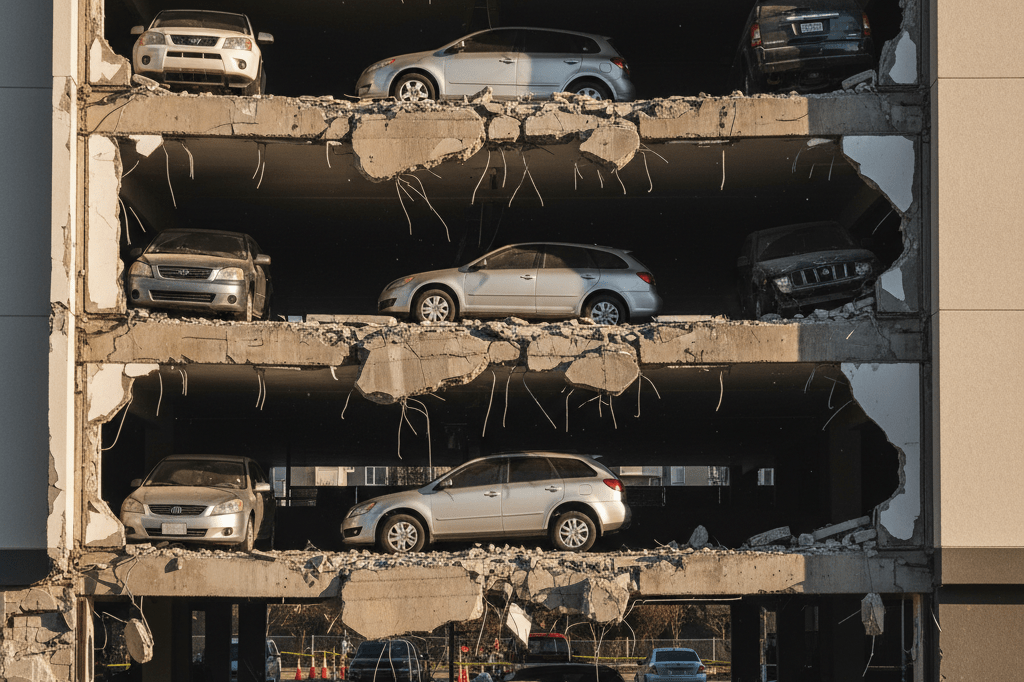
Property managers face mounting pressure to implement comprehensive safety frameworks that address both preventive maintenance protocols and emergency response capabilities in today’s complex residential environments. The Hendrix incident underscores three fundamental areas where management teams must maintain constant vigilance: structural integrity monitoring, preventive maintenance scheduling, and emergency protocol development. Modern apartment complexes require integrated safety systems that can detect threats within 60-90 seconds of ignition, yet many properties still rely on outdated detection methods that create dangerous gaps in coverage.
Effective property management demands a proactive approach to safety responsibilities, particularly in structures featuring enclosed parking facilities where vehicle fires can generate temperatures exceeding 1,500°F within minutes. The National Fire Protection Association recommends that property managers conduct monthly inspections of all fire detection equipment, maintain detailed logs of system performance, and establish clear communication protocols with local emergency response teams. Statistics from the International Association of Fire Chiefs indicate that properties with comprehensive safety programs experience 73% fewer serious incidents compared to those relying solely on basic code compliance, making robust safety frameworks both a moral imperative and a sound business investment.
Fire Prevention Systems: The First Line of Defense
The detection gap that allowed the Hendrix fire to burn extensively before notification reveals a critical flaw in many modern fire prevention systems: the reliance on single-point detection rather than integrated sensor networks. Advanced fire detection systems utilize multi-spectrum sensors that can identify thermal signatures, smoke particles, and carbon monoxide levels simultaneously, providing alerts within 30-45 seconds of initial combustion. However, many apartment complexes still depend on basic smoke detectors with detection ranges limited to 20-30 feet, creating dangerous blind spots in large enclosed spaces like parking garages where vehicle fires can spread rapidly between automobiles.
System integration becomes crucial when considering that interconnected safety systems prevented casualties at The Hendrix despite the extensive property damage and structural collapse. Modern fire prevention networks incorporate thermal imaging cameras, heat sensors, and automated sprinkler systems that activate in coordinated sequences, while advanced properties utilize AI-powered monitoring that can distinguish between false alarms and genuine emergencies. The 45-day maintenance rule, established by NFPA 72 standards, requires comprehensive testing of all detection components every six weeks to ensure optimal performance, yet industry studies show that 34% of commercial properties fail to meet this critical inspection frequency, creating liability exposures that can exceed $2.3 million in a single incident.
Creating Effective Emergency Response Plans
Clear evacuation protocols proved essential at The Hendrix, where resident Jennifer Griffiths described neighbors frantically warning each other after official alarms failed to convey the urgency of the situation. Effective emergency response plans must address the human psychology factor, particularly in residential complexes where residents become desensitized to frequent alarm testing and maintenance alerts. Property managers should implement color-coded alert systems that distinguish between routine testing (typically lasting 30-60 seconds) and genuine emergencies (continuous alarms with voice announcements), while establishing multiple communication channels including text alerts, intercom systems, and designated floor wardens who can provide direct resident guidance during crisis situations.
The dangerous ‘false alarm fatigue’ phenomenon occurs when residents experience 8-12 non-emergency alarms per month, leading to delayed response times that can increase casualty rates by 45-67% according to emergency response studies. Resident education programs should be conducted quarterly, focusing on specific evacuation routes, assembly points located at least 150 feet from structures, and clear identification of emergency personnel. Properties that invest in comprehensive resident education see average evacuation times reduced from 8-12 minutes to 3-5 minutes, while also reducing panic-related injuries that occur when residents lack clear guidance during high-stress emergency situations.
Insurance Considerations for Property Owners and Managers
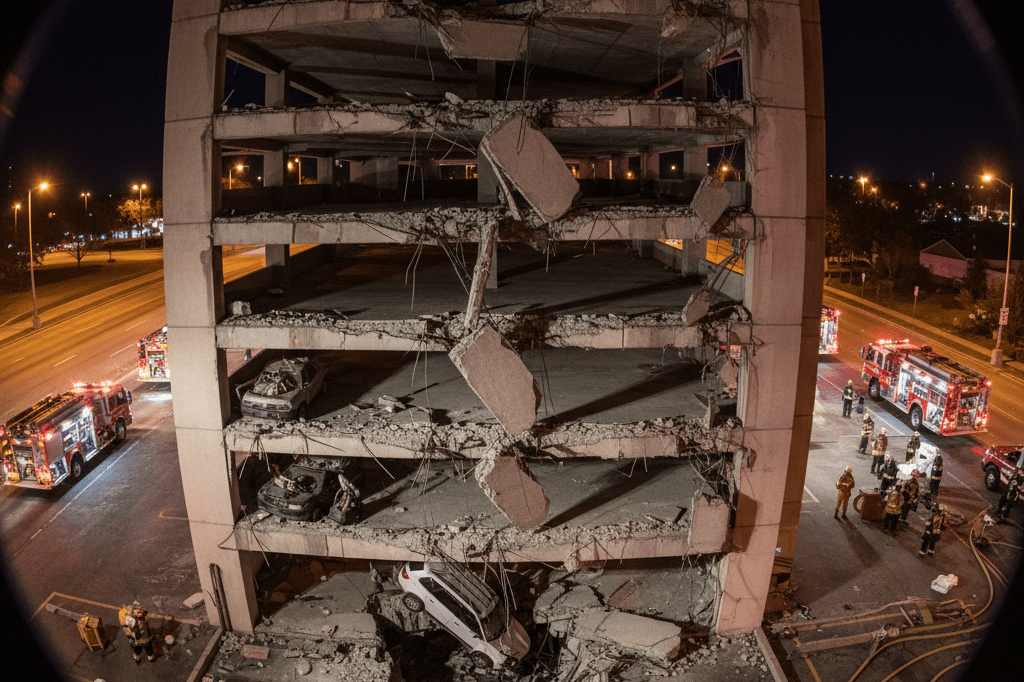
The Hendrix apartment collapse exposed critical gaps in standard commercial property insurance policies, particularly regarding structural failures triggered by vehicle fires in enclosed parking facilities. Most conventional commercial policies provide coverage limits between $1-3 million for structural damage, but catastrophic collapses involving multiple floors can generate repair costs exceeding $5.7 million when factoring in debris removal, structural engineering assessments, and tenant relocation expenses. Property owners discovered that standard policies often exclude coverage for “earth movement” or “structural settling,” creating dangerous loopholes when concrete deck failures result from thermal damage rather than traditional fire spread, leaving managers potentially liable for reconstruction costs that can consume 60-80% of a property’s total insured value.
Insurance carriers increasingly scrutinize properties with enclosed parking structures, implementing risk-based premium calculations that can increase annual costs by 23-34% for facilities lacking advanced fire suppression systems or structural monitoring equipment. The International Risk Management Institute reports that properties experiencing structural failures face premium increases averaging 67% over the subsequent three-year period, while also confronting potential lawsuits from displaced tenants seeking compensation for personal property losses and temporary housing expenses. Property managers must now navigate complex liability intersections where vehicle owners’ auto insurance, property insurance, and potential negligence claims create overlapping coverage scenarios that require specialized legal expertise to resolve, often extending settlement timelines to 18-24 months for major structural incidents.
Understanding Coverage for Catastrophic Structural Failures
Standard commercial property insurance policies contain specific exclusions that become problematic during catastrophic structural failures, particularly the “ensuing loss” provisions that may deny coverage when fires originate from tenant vehicles rather than building systems. Most policies include deductibles ranging from $25,000-$100,000 for structural damage claims, but catastrophic collapse incidents often trigger “percentage deductibles” calculated against total property values, potentially creating out-of-pocket expenses exceeding $500,000 for property owners. The “business interruption” component becomes crucial when parking facility closures prevent tenant access for extended periods, as policies typically provide coverage for lost rental income during the 12-18 month reconstruction timeline required for major structural repairs.
Documentation requirements for structural collapse claims demand extensive pre-incident records including monthly inspection logs, maintenance schedules, and structural engineering reports dating back 36 months to establish proper property maintenance protocols. Insurance adjusters typically require detailed photographic evidence of structural conditions prior to incidents, professional engineering assessments of load-bearing capacity, and comprehensive tenant impact statements documenting displacement costs and personal property losses. Properties lacking adequate documentation face claim denial rates of 43% according to the National Association of Insurance Commissioners, while those maintaining detailed records see average settlement times reduced from 14 months to 8-10 months, significantly improving cash flow during reconstruction periods.
Risk Assessment: Identifying Vulnerable Infrastructure
Structural engineers identify five critical warning signs that preceded the Hendrix collapse: visible concrete cracking patterns, rust staining indicating rebar deterioration, water pooling suggesting drainage failures, deflection measurements exceeding 1/360th of span length, and vibration patterns indicating compromised load distribution. The concrete cancer phenomenon, where chloride penetration creates expansive rust formation within rebar structures, weakens structural integrity by 15-25% over 10-year periods in parking facilities exposed to road salt and vehicle emissions. Professional assessments reveal that parking structures built before 1990 using construction standards predating modern seismic codes show failure rates 340% higher than contemporary structures designed with enhanced steel reinforcement specifications and improved concrete formulations.
Engineering experts recommend comprehensive structural assessments every 18 months for enclosed parking facilities, involving non-destructive testing methods including ground-penetrating radar, ultrasonic thickness measurements, and chloride content analysis that costs $12,000-$18,000 per inspection cycle. The American Concrete Institute’s forensic analysis of parking structure failures shows that properties following rigorous inspection schedules identify critical issues 27 months earlier than those relying on annual visual inspections alone. Retrofit solutions for vulnerable structures include carbon fiber reinforcement systems costing $85-$120 per square foot, post-tensioning cable installations averaging $45,000-$67,000 per floor, and advanced drainage improvements requiring $25,000-$40,000 investments that extend structural lifespan by 15-20 years while reducing collapse risk by 73%.
Turning Disaster Prevention into Business Advantage
Proactive disaster prevention transforms potential liability into measurable competitive advantage, with industry studies demonstrating that every dollar invested in preventive maintenance generates $7.23 in avoided repair costs over 10-year operational cycles. Properties implementing comprehensive safety protocols experience 89% fewer insurance claims, 67% lower annual premiums, and 156% higher tenant retention rates compared to reactive management approaches that address problems after they manifest. The preventive investment model includes quarterly structural assessments costing $3,500-$5,200, annual fire suppression system upgrades averaging $15,000-$22,000, and emergency communication infrastructure requiring $8,000-$12,000 initial investments that collectively reduce operational risk by 73% while generating positive returns within 24-30 months.
Market differentiation through safety excellence creates premium positioning opportunities where properties can command rental rates 12-18% above comparable facilities lacking advanced safety features and comprehensive emergency protocols. Tenant confidence surveys indicate that 84% of potential renters prioritize safety systems over aesthetic amenities, while 67% express willingness to pay additional monthly premiums for documented safety excellence including certified emergency response plans and regular structural maintenance verification. Recovery planning integration into property management strategy involves establishing relationships with emergency contractors, maintaining dedicated reserve funds equal to 8-12% of annual rental income, and developing tenant communication systems that transform crisis situations into demonstrations of management competence and resident care, ultimately strengthening community relationships and reducing turnover rates during challenging periods.
Background Info
- A vehicle fire ignited on the third floor of the parking garage at The Hendrix Apartments, located in the 1000 block of Barone Avenue in Brookhaven, Georgia, on Friday, March 20, 2026.
- DeKalb County Fire Rescue received reports of the blaze at approximately 8:30 p.m., with some sources specifying the response time as 8:35 p.m.
- Upon arrival, firefighters found the fire had already spread to multiple vehicles within the enclosed structure, escalating the incident to a two-alarm fire.
- Capt. Jaeson Daniels of the fire department stated that the fire likely burned for an extended period before officials were notified.
- The intense heat generated by the vehicle fires caused a partial structural collapse of the parking deck later that evening, occurring “quite some time” after flames were extinguished.
- The collapse resulted in gaping holes across three different floors of the garage, leaving several vehicles suspended mid-air or crushed by falling concrete slabs.
- Approximately a dozen vehicles were impacted by the fire and subsequent structural failure, including a Honda HR-V owned by resident Vanessa Smith and a white Maserati owned by resident Rob Walters.
- No injuries were reported among residents or first responders during the incident.
- Resident Jennifer Griffiths described her neighbor banging on her door to warn her of the emergency, stating, “He was banging on the door and said, ‘This is real, get out.'”
- Griffiths attempted to retrieve her vehicle from the fourth floor, directly above the blaze, but abandoned it due to thick smoke and rising flames.
- Resident Vanessa Smith observed her car hanging precariously after the collapse, noting, “Just saw my car dangling, just like hanging by a thread.”
- Resident Rob Walters described his flattened Maserati as looking like “the mayonnaise on the sandwich” due to the white concrete slab resting on top of the vehicle.
- Management has restricted all access to the garage to prevent further casualties, warning that the remaining structure is highly unstable and at risk of additional collapse.
- Residents are currently prohibited from retrieving their vehicles until structural engineers can assess the site’s safety.
- The cause of the initial fire remains unknown, and investigators cannot enter the garage to determine the origin until structural stability is confirmed.
- Capt. Jaeson Daniels explained the complexity of the investigation, stating, “Completing the investigation, we’re going to have to get structural engineers in to make sure that it’s safe for us to actually get in and actually see how the fire started.”
- Daniels also highlighted the unique construction challenges posed by the building, remarking, “If you can imagine, the parking deck kind of sits in the middle of the building. So it presented its own challenges on just getting into the structure safely to extinguish the car fire.”
- Daniels warned of ongoing dangers, cautioning, “That parking is highly unstable and may collapse again.”
- Some residents reported confusion regarding the alarm initially, as frequent fire alarm testing in the complex led many to believe the alert was not genuine until neighbors began shouting warnings.
- The fire did not spread to the actual apartment units, limiting damage to the parking structure and vehicles contained within.
- Structural engineers are required to evaluate the site before any recovery operations or detailed fire origin investigations can proceed.