


Related search
Jade
Skin Care Tool
Gaming Laptops
Dresses
Get more Insight with Accio
8 Head-Turning 350 Motor Customization Trends for 2026
8 Head-Turning 350 Motor Customization Trends for 2026
7min read·Oriana·Apr 2, 2026
The legendary Chevy 350 motor is more than just an engine; it’s the heartbeat of countless dream cars. While finding a 350 motor for sale is your first step, the real journey begins with customization. In 2026, the game is all about blending classic power with modern aesthetics. Gone are the days when a simple chrome dress-up kit would turn heads at car shows. Today’s builders are pushing the boundaries of what’s possible, treating their engines as mechanical masterpieces that deserve center stage. This guide will walk you through 8 of the hottest, most visually stunning 350 motor customization trends that are inspiring professional builders and garage enthusiasts alike, providing a blueprint for your next unforgettable build that seamlessly marries performance with jaw-dropping visual appeal.
Table of Contents
1. The ‘Tucked & Shaved’ Minimalist Engine Bay
2. Neo-Retro Finned Aluminum Finishes
3. Stealth EFI: Modern Tech, Classic Looks
4. The Rise of Matte & Carbon Fiber
5. Billet Aluminum Serpentine Systems as Jewelry
6. Hydro-Dipped Graphic Statements
7. Compact Forced Induction Packages
8. Integrated LED Accent Lighting
2. Neo-Retro Finned Aluminum Finishes
3. Stealth EFI: Modern Tech, Classic Looks
4. The Rise of Matte & Carbon Fiber
5. Billet Aluminum Serpentine Systems as Jewelry
6. Hydro-Dipped Graphic Statements
7. Compact Forced Induction Packages
8. Integrated LED Accent Lighting
Want to explore more about 8 Head-Turning 350 Motor Customization Trends for 2026? Try the ask below
8 Head-Turning 350 Motor Customization Trends for 2026
1. The ‘Tucked & Shaved’ Minimalist Engine Bay
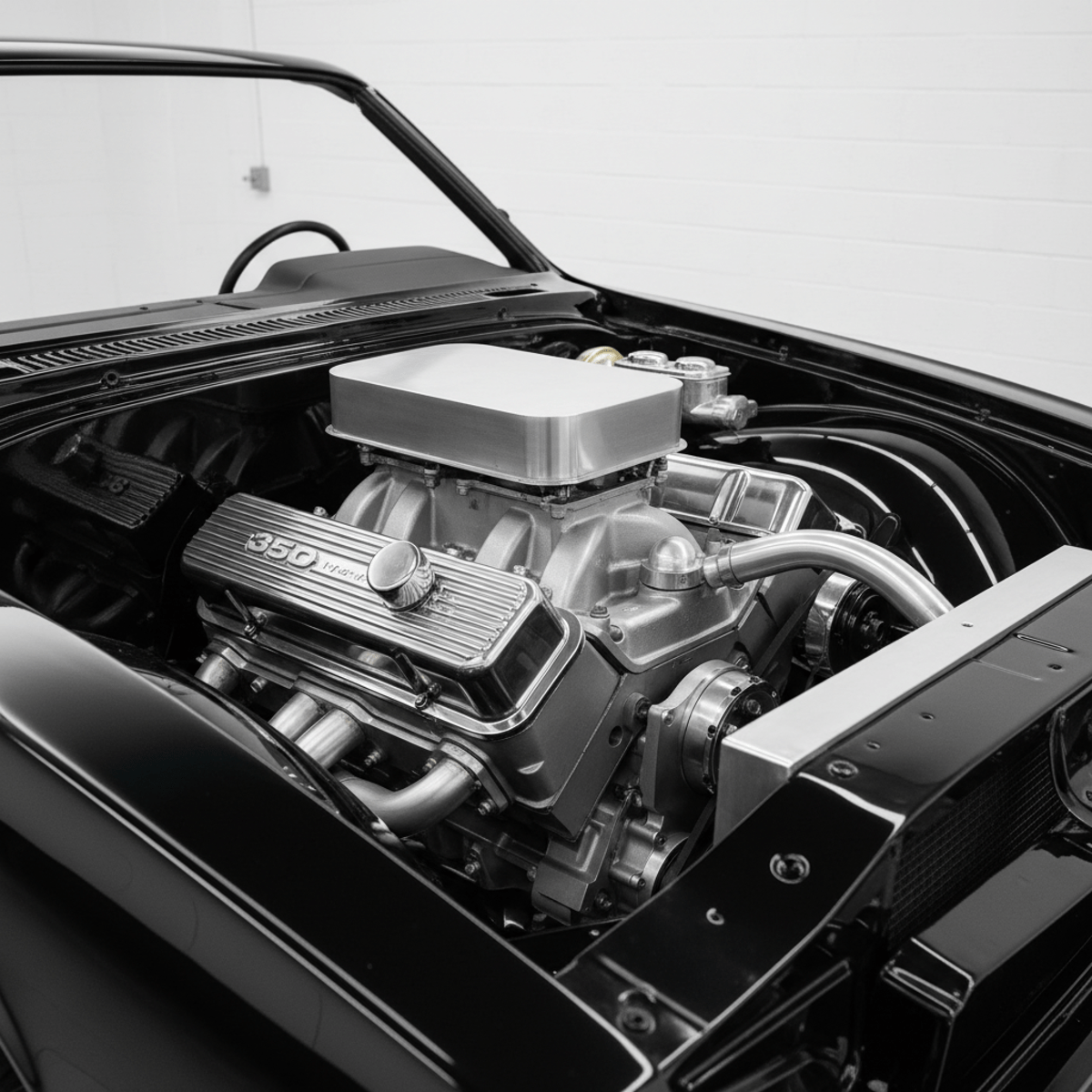
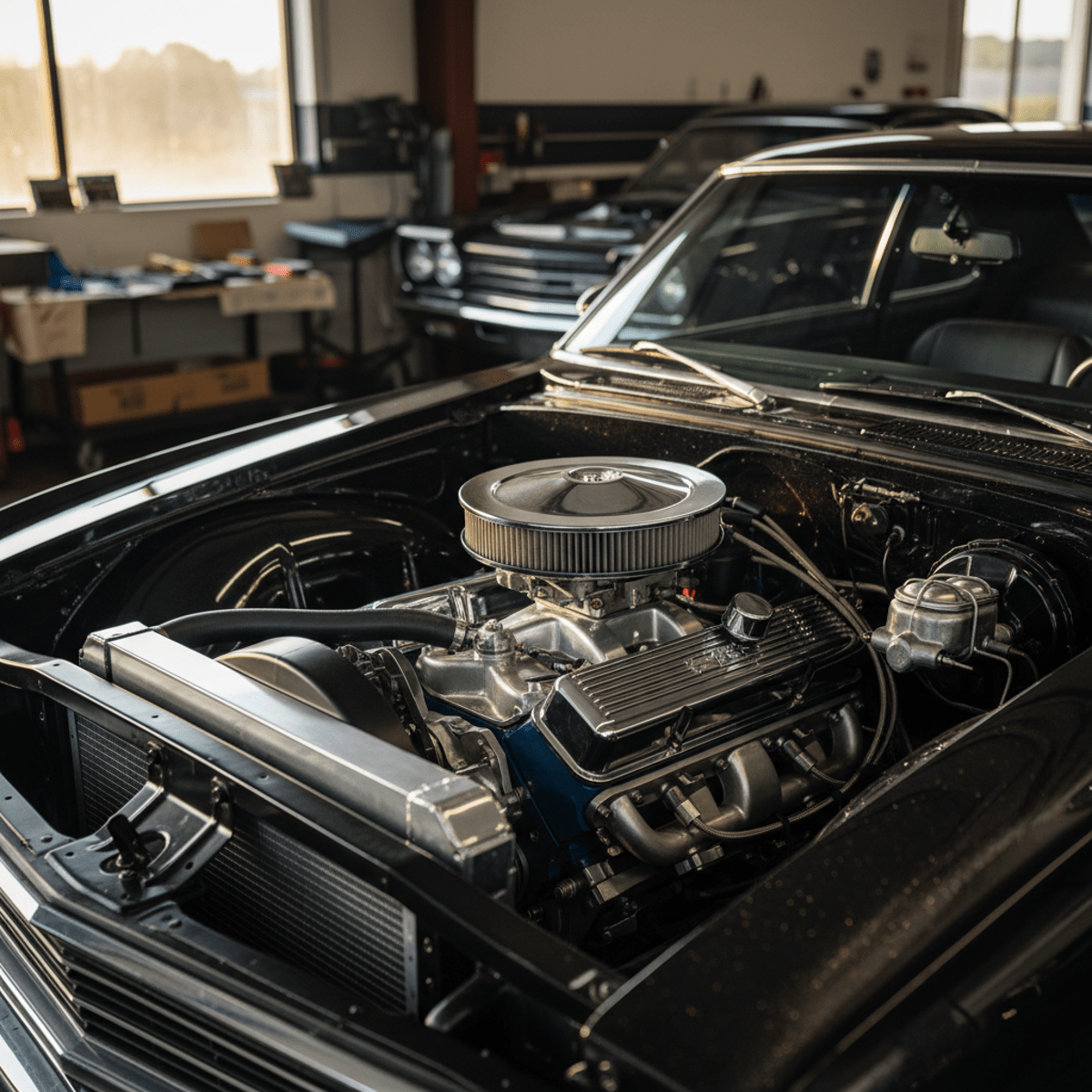
The ultimate in clean aesthetics, this trend focuses on what you don’t see. All wiring, hoses, and fluid reservoirs are meticulously hidden or relocated, leaving the 350 motor as the undisputed centerpiece in a ‘shaved’ (smoothed) engine bay. The look is surgical and architectural, often paired with a simple, high-quality paint job on the block to emphasize its form. Master craftsmen are achieving this look by routing wiring through custom firewall passages, relocating the battery to the trunk, and using remote-mounted reservoirs for brake fluid and coolant overflow. The result is an engine bay that looks more like a museum display than a functional powerplant. This is a top-tier look for high-end restomods and show cars, requiring expert planning and fabrication skills that command premium pricing in the custom car market.
2. Neo-Retro Finned Aluminum Finishes
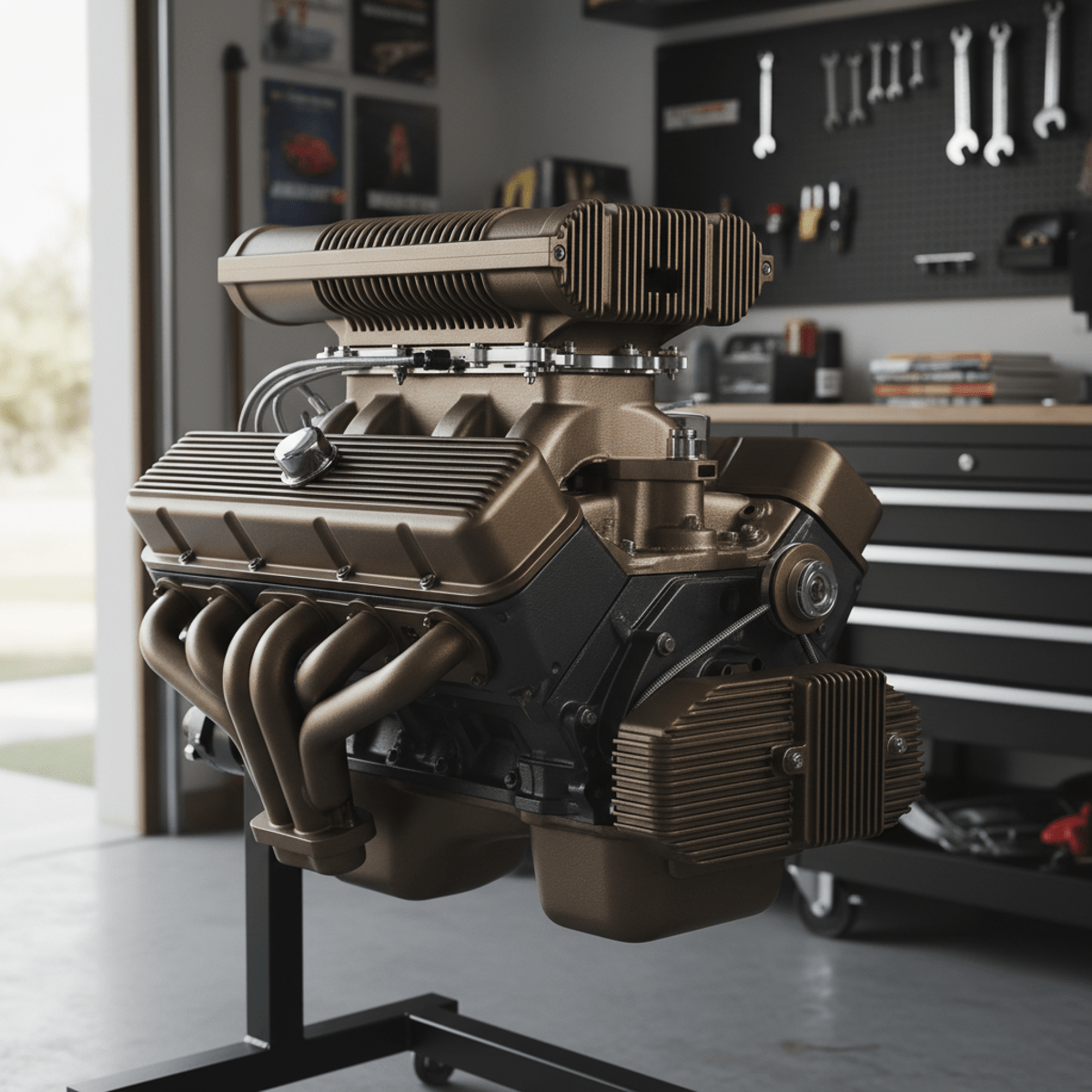
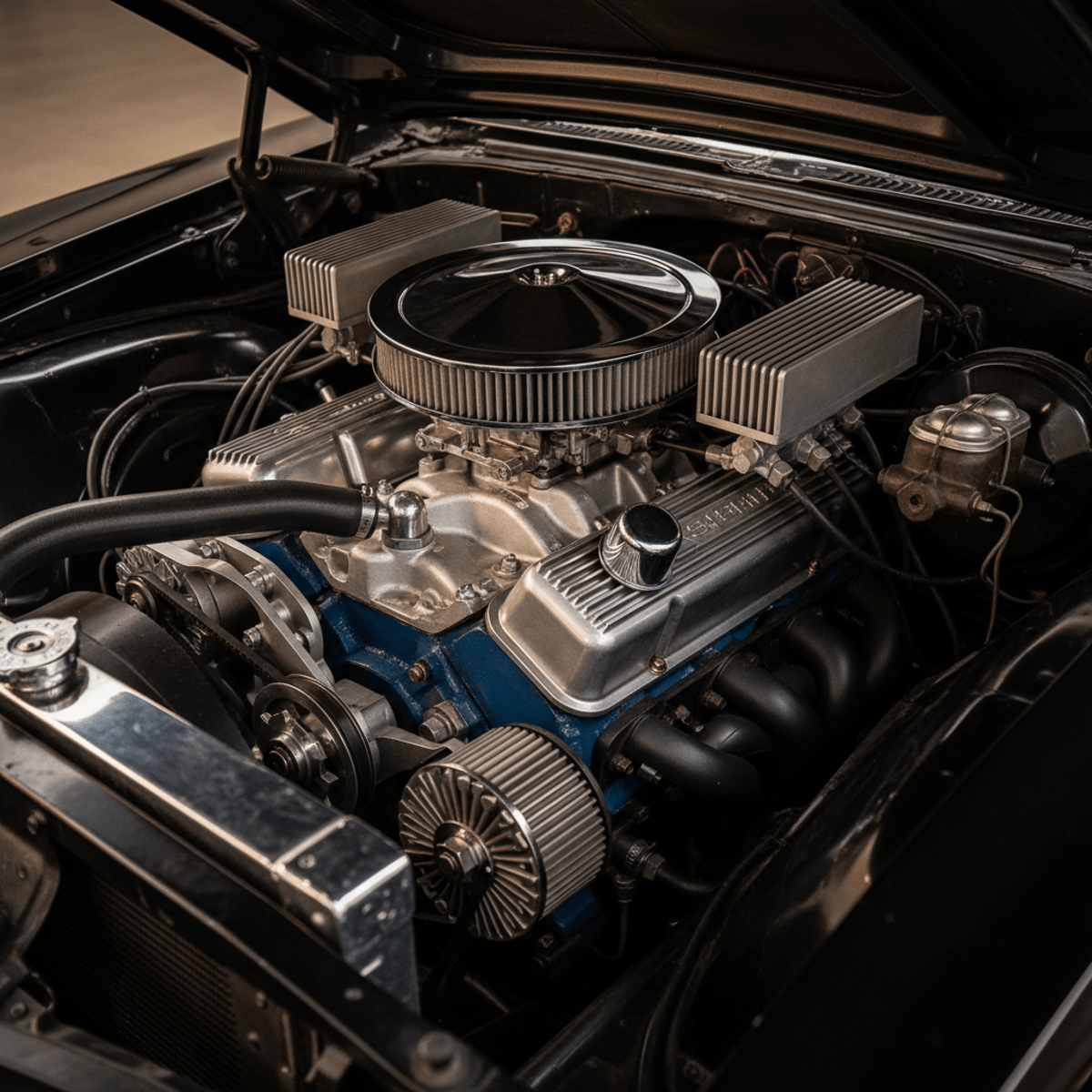
A nod to the golden age of hot rodding, but with a 2026 twist. This trend involves using cast aluminum valve covers, air cleaners, and oil pans with classic finned designs that evoke the legendary engines of the 1960s. The modern update comes from the finishes: instead of traditional polish, think matte bronze, black anodized, or gunmetal grey powder coating. These sophisticated surface treatments create a tactile, contemporary look that feels both vintage and cutting-edge. Builders are pairing these components with matching finned headers and intake manifolds, creating a cohesive theme throughout the engine bay. The textured surfaces not only look stunning under both natural and artificial lighting but also hide minor imperfections better than high-gloss finishes, making them practical for daily-driven classics and weekend warriors alike.
3. Stealth EFI
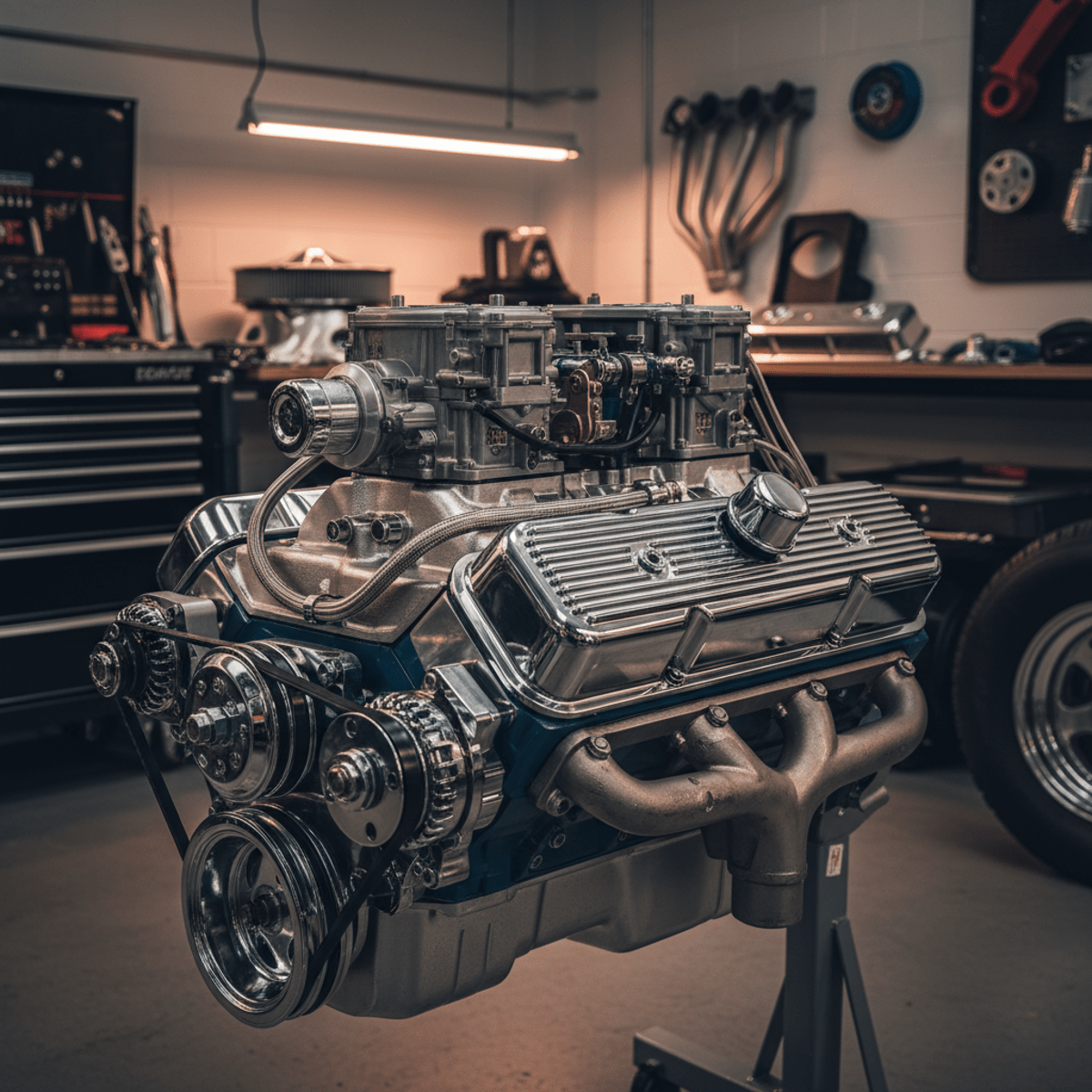
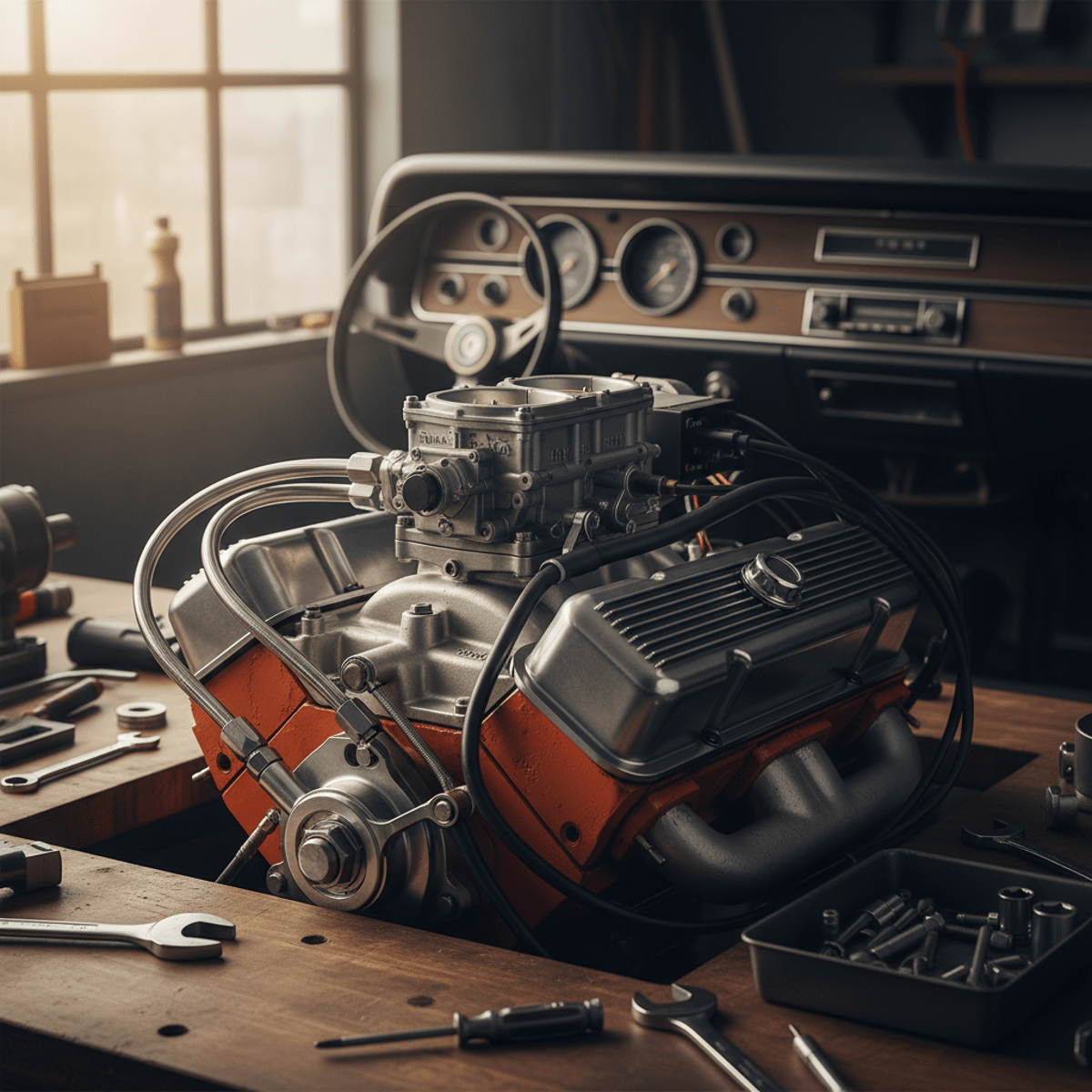
Modern Tech, Classic Looks: Get the reliability and performance of modern Electronic Fuel Injection without sacrificing vintage aesthetics. Leading aftermarket systems now package throttle body injection units to look almost identical to a classic four-barrel carburetor, complete with fake accelerator pump covers and choke mechanisms. Paired with fuel lines and linkages that mimic old-school mechanical setups, this trend allows builders to have a car that starts instantly, runs perfectly in any weather, and passes emissions tests while maintaining that authentic carburetor appearance. Advanced systems even include programmable ECUs hidden behind dash panels, allowing for precise tuning without visible modern components. This technology bridge is particularly popular among owners of classic muscle cars who want the convenience of modern fuel injection but refuse to compromise the period-correct visual authenticity that makes their builds special.
4. The Rise of Matte & Carbon Fiber
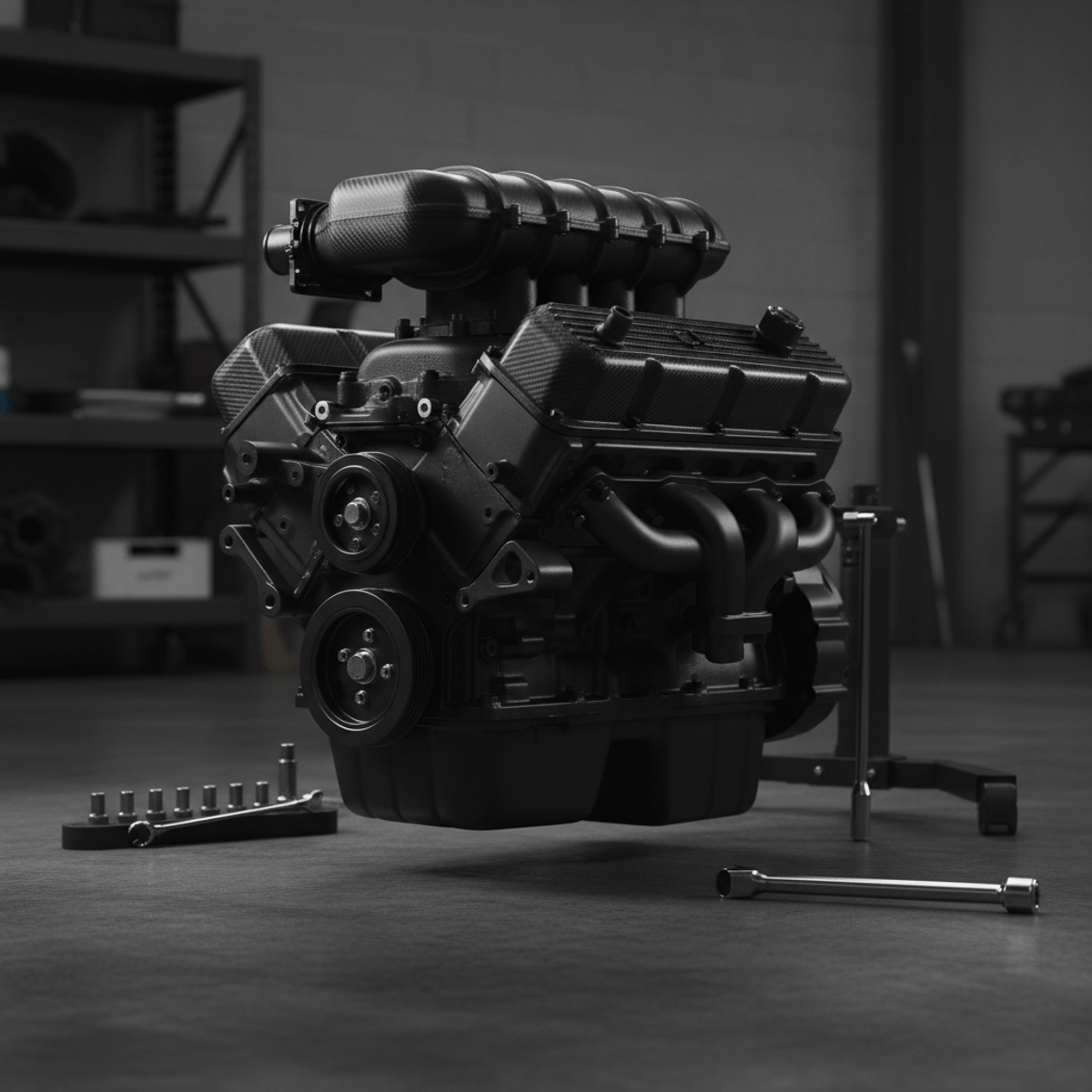
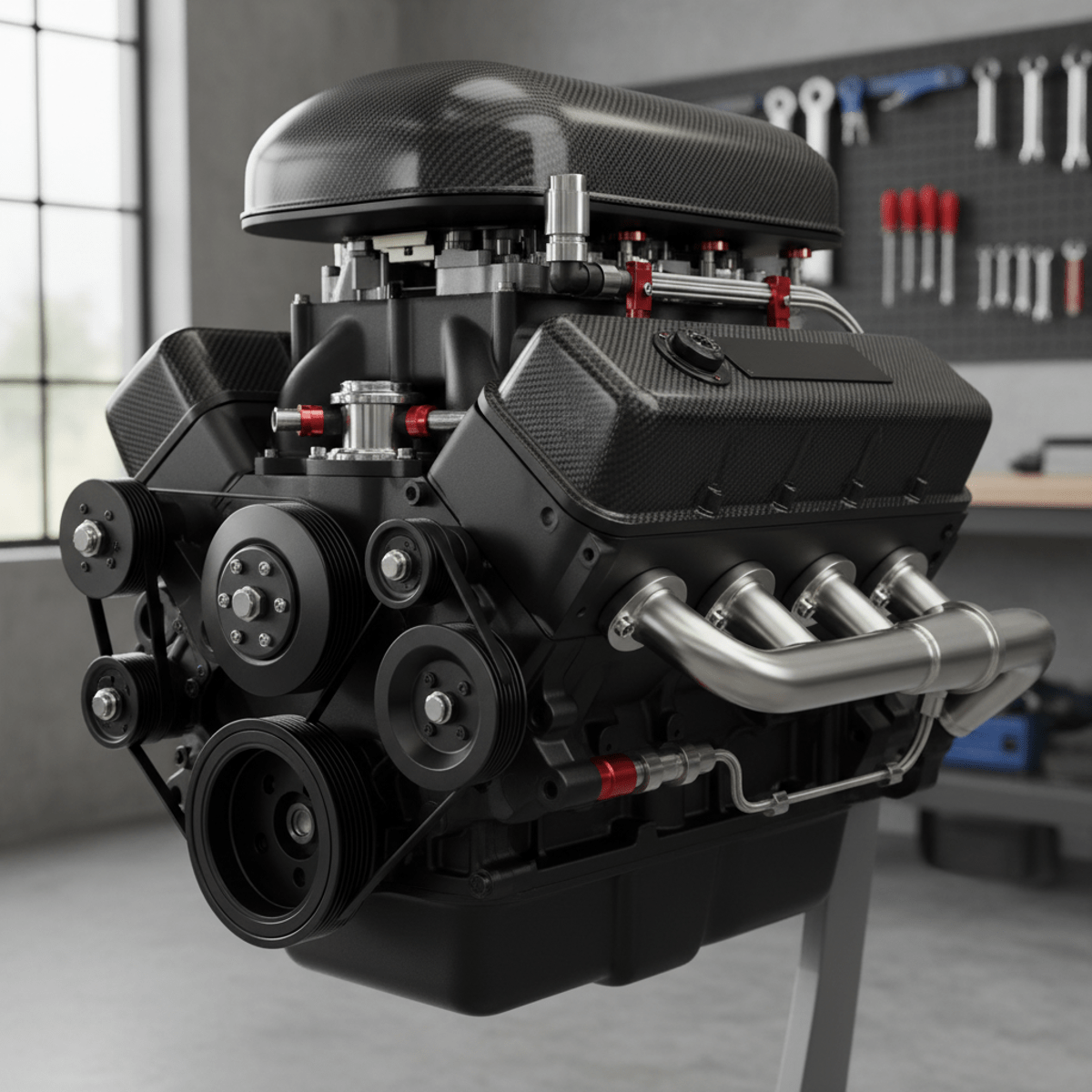
High-gloss chrome is taking a backseat to more subtle, performance-oriented finishes that speak to a new generation of builders. Coating the engine block, heads, and accessories in a durable matte or satin black finish creates a sinister, all-business look that suggests serious performance intentions. This monochromatic approach is often accented with genuine carbon fiber components, such as valve covers, intake plenums, or air cleaner assemblies, to signal lightweight performance and cutting-edge style. The contrast between the deep matte black and the distinctive carbon fiber weave creates visual depth and interest without relying on flashy chrome. These finishes also photograph beautifully under various lighting conditions, making them favorites for social media builds and magazine features where the engine needs to look impressive both in person and in digital formats.
5. Billet Aluminum Serpentine Systems as Jewelry
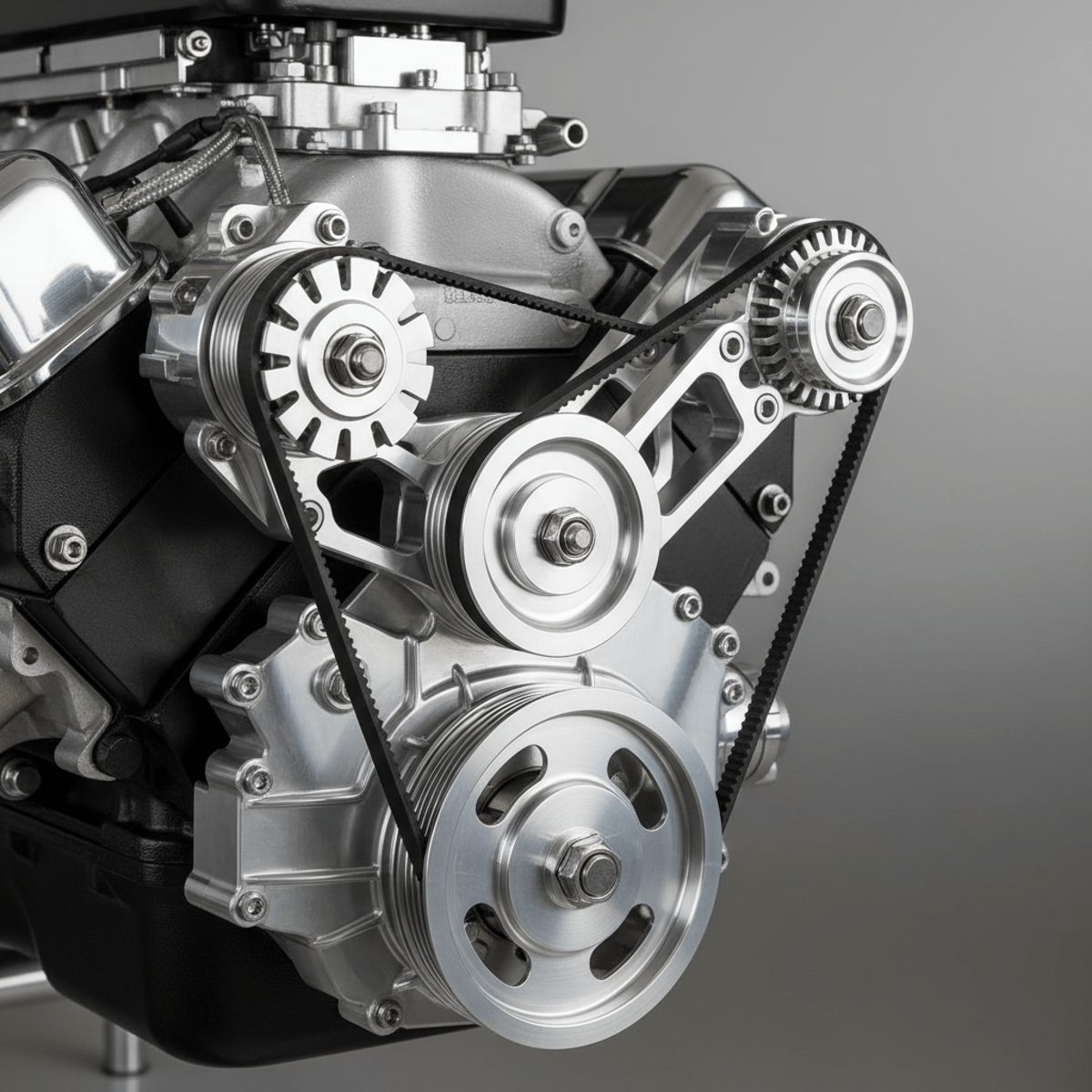
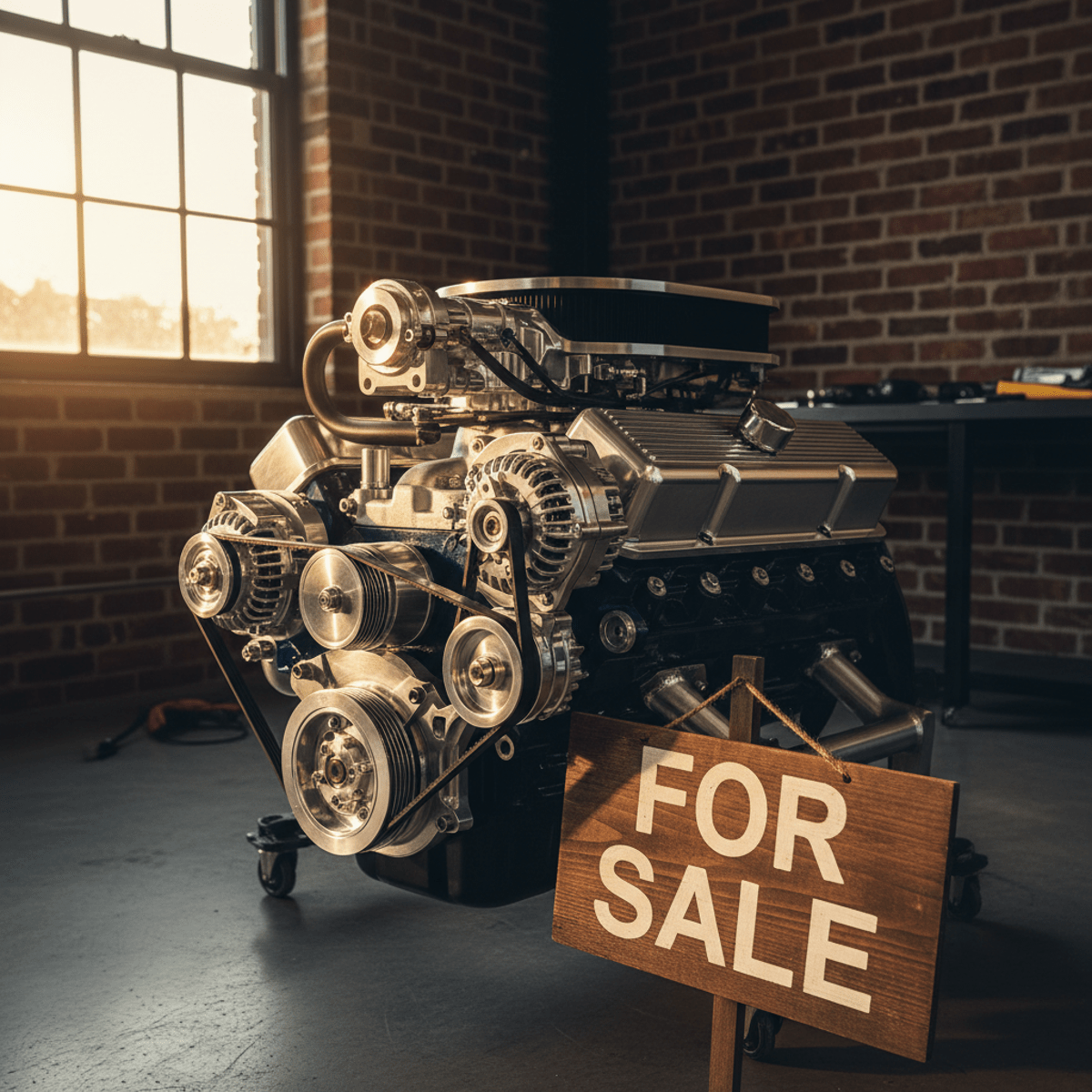
The front of the engine is no longer just functional; it’s become a showcase for precision engineering and artistic machining. Complete serpentine belt systems, featuring intricately machined billet aluminum brackets, pulleys, and tensioners, transform the accessory drive into a work of mechanical art. These kits, often available in polished, clear-anodized, or custom color finishes, organize the alternator, A/C compressor, and power steering pump into a compact and visually stunning assembly. The precision-machined surfaces catch and reflect light beautifully, while the geometric patterns created by the belt routing add dynamic visual interest. Top-tier systems include matching billet aluminum water pump housings and crank pulleys, creating a cohesive front-end appearance that screams ‘high-end build’ to anyone who knows quality when they see it. These systems have become status symbols in the custom car community.
6. Hydro-Dipped Graphic Statements
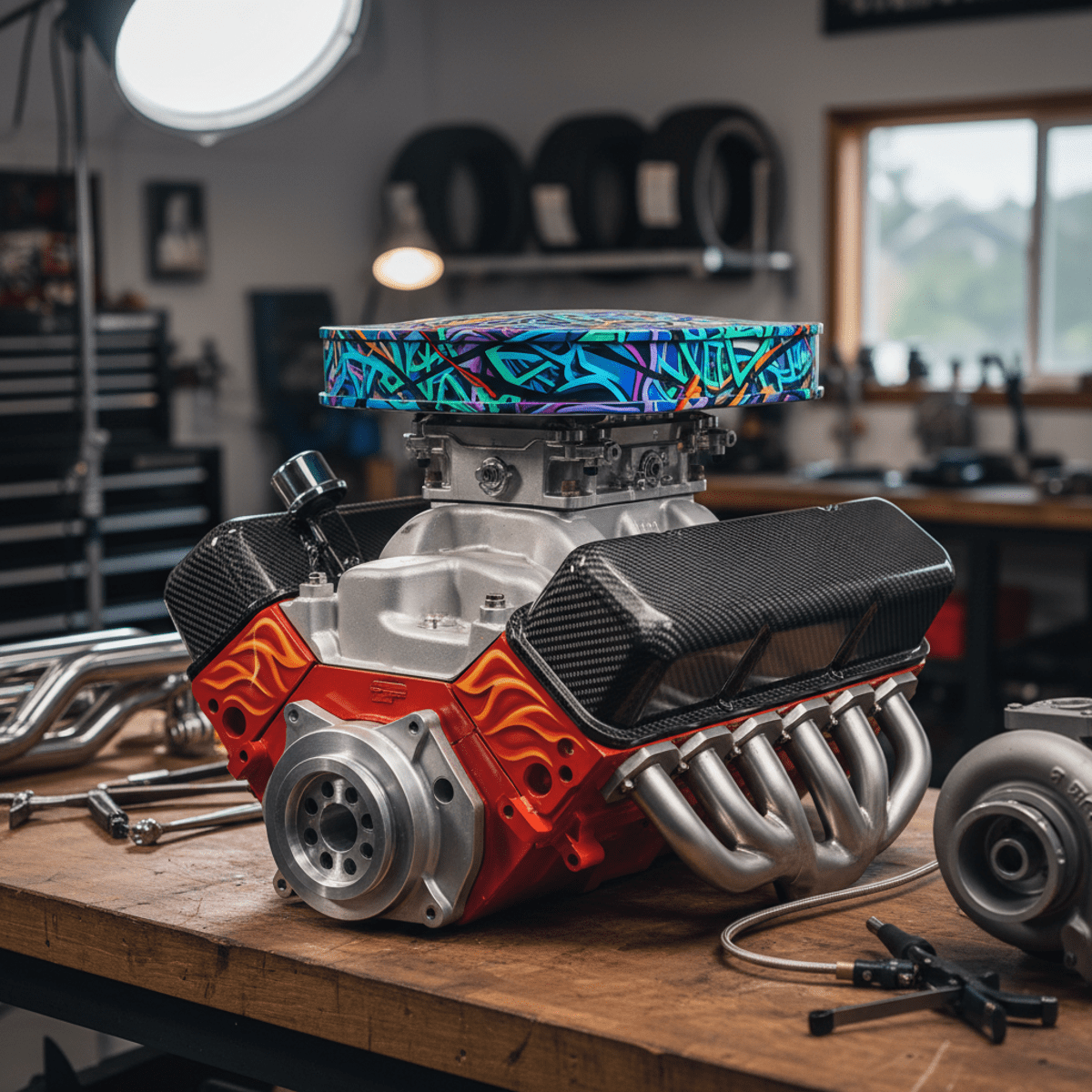
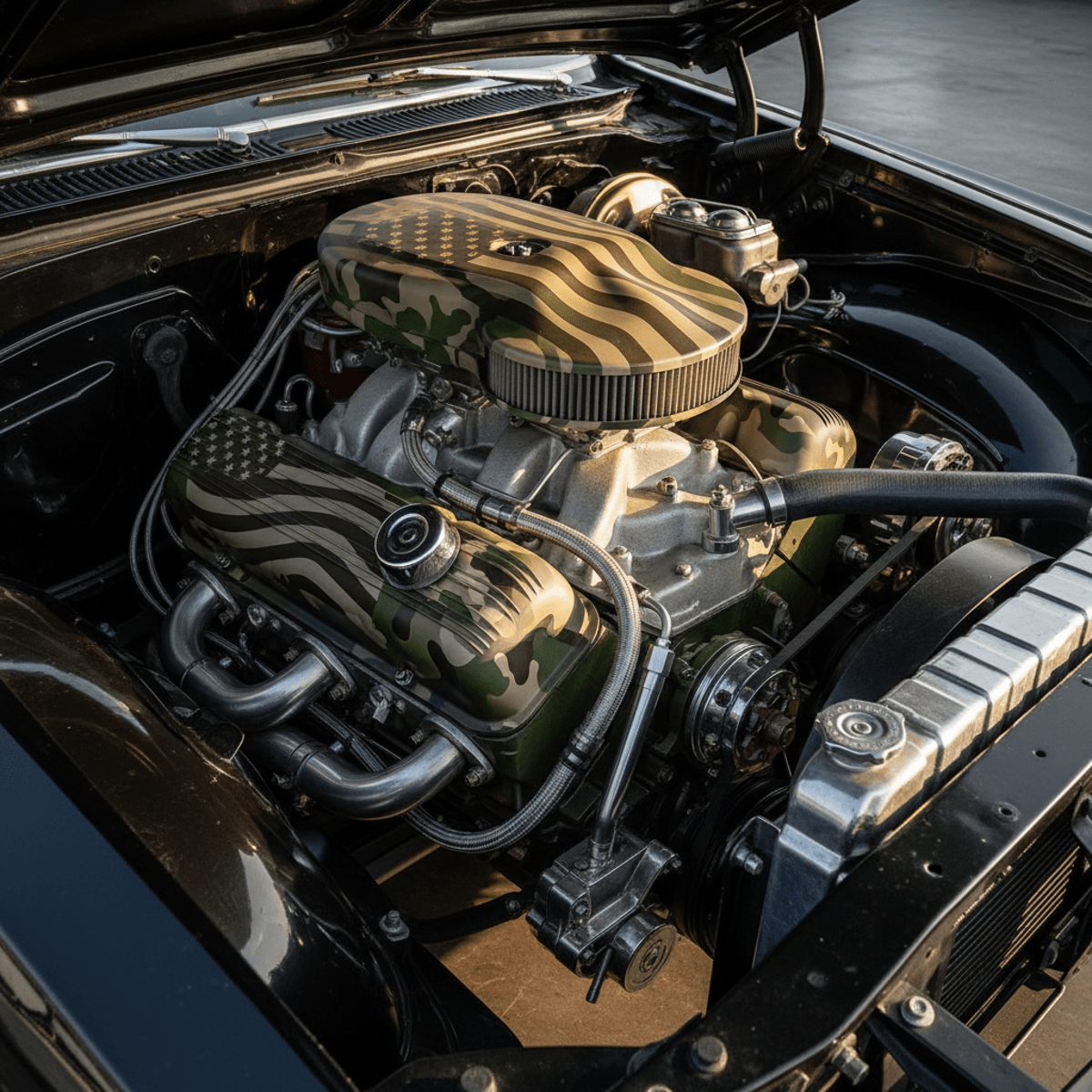
For builders who want to make a bold, personalized statement, hydro-dipping has emerged as the ultimate customization technique. This water transfer printing process allows for the application of complex patterns—like realistic carbon fiber weave, military camouflage, skull motifs, flame patterns, or abstract artistic designs—onto three-dimensional parts like intake manifolds, valve covers, and air cleaner assemblies. The process creates seamless coverage that follows every curve and contour of the part, resulting in graphics that appear to be integral to the component itself rather than applied afterward. Popular themes range from patriotic flag patterns to custom company logos for shop builds, allowing builders to incorporate personal meaning or brand identity directly into their engine bay. The durability of modern hydro-dip films ensures these artistic statements will withstand the heat and chemical exposure of engine bay environments while maintaining their visual impact.
7. Compact Forced Induction Packages
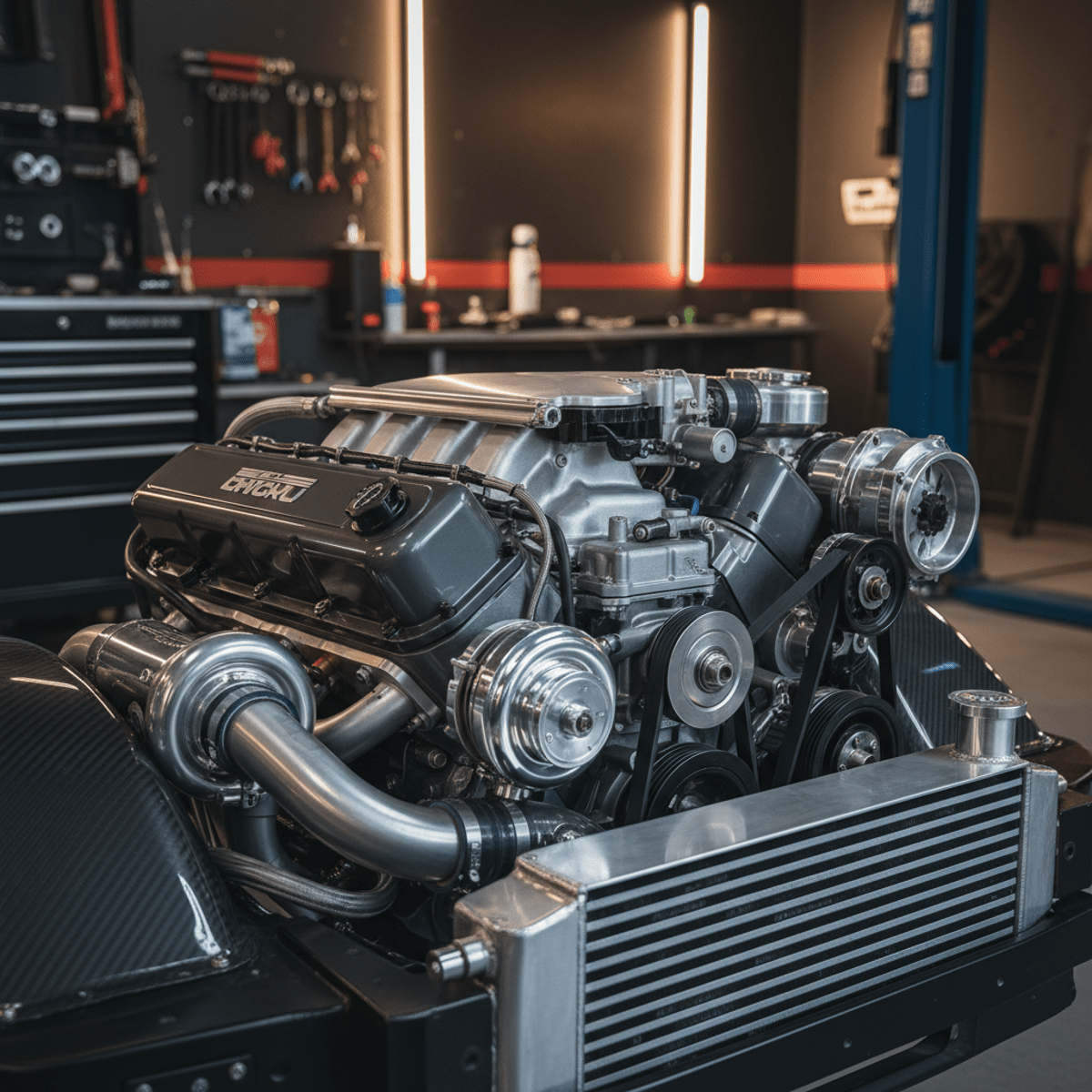
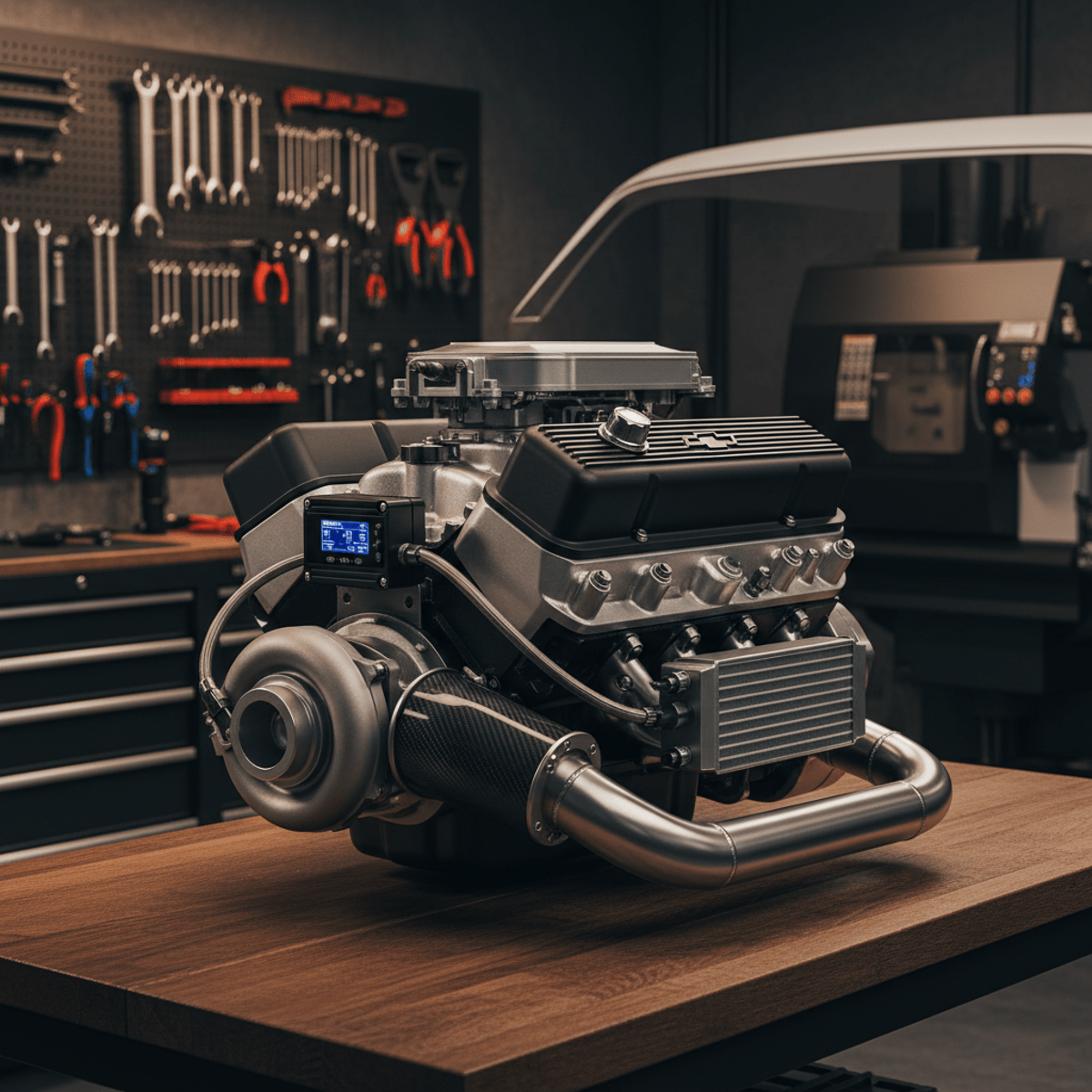
Power adders are getting smarter, cleaner, and more sophisticated in 2026. The trend is toward compact, neatly integrated turbocharger or supercharger kits that fit under a stock hood while delivering impressive power gains. Modern systems feature clean, mandrel-bent plumbing with integrated intercoolers, OEM-level fit and finish, and electronic boost control for precise tuning. Low-mount turbo systems position the turbocharger near the oil pan, using the engine’s natural heat shielding while keeping the center of gravity low. Centrifugal supercharger kits mount compactly at the front of the engine, often incorporating the blower into an elegant serpentine belt system. The focus is on adding substantial horsepower without creating a chaotic, cluttered engine bay full of exposed plumbing and aftermarket brackets. These systems blend performance seamlessly with design, appealing to builders who want serious power without sacrificing the clean, professional appearance that defines high-end builds.
8. Integrated LED Accent Lighting
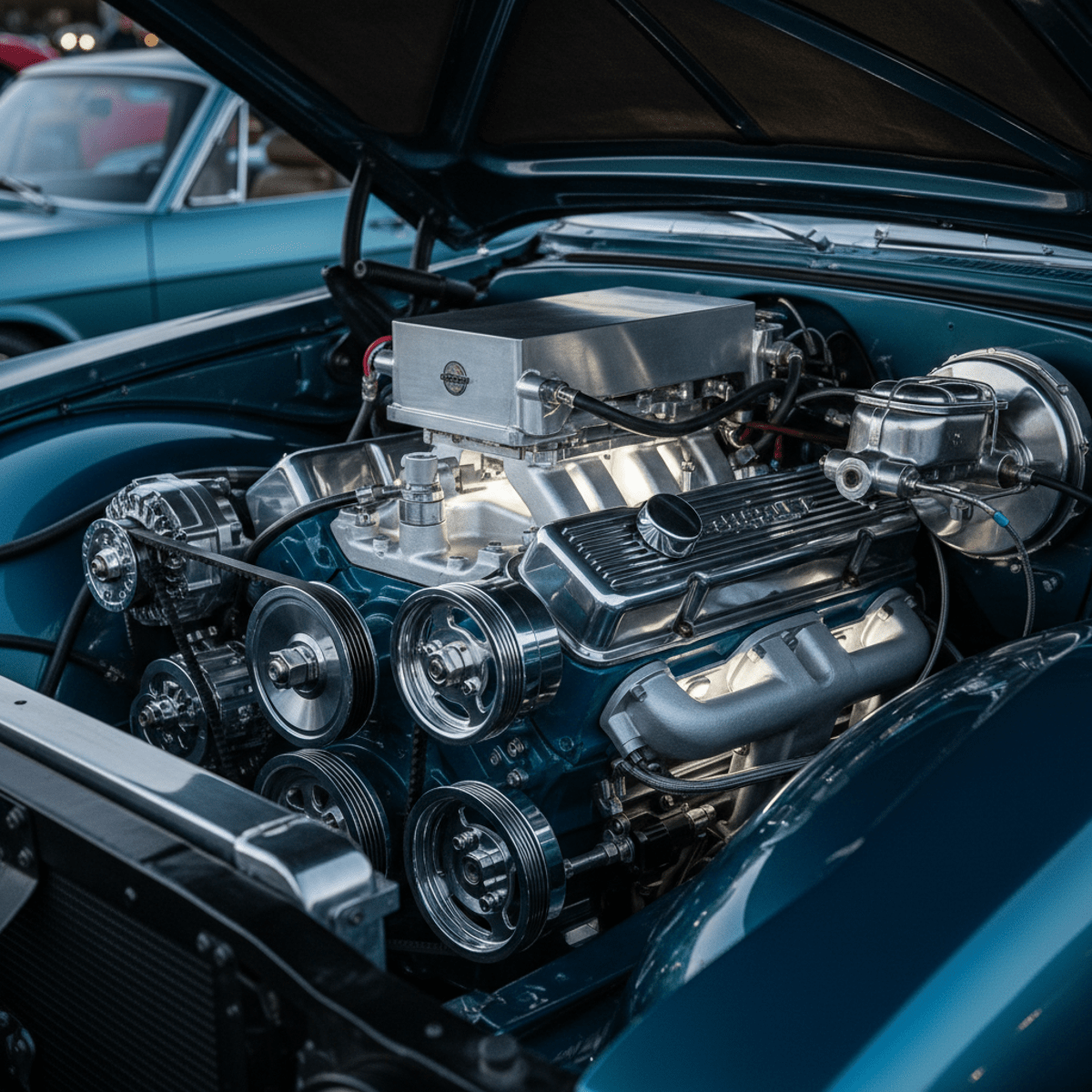
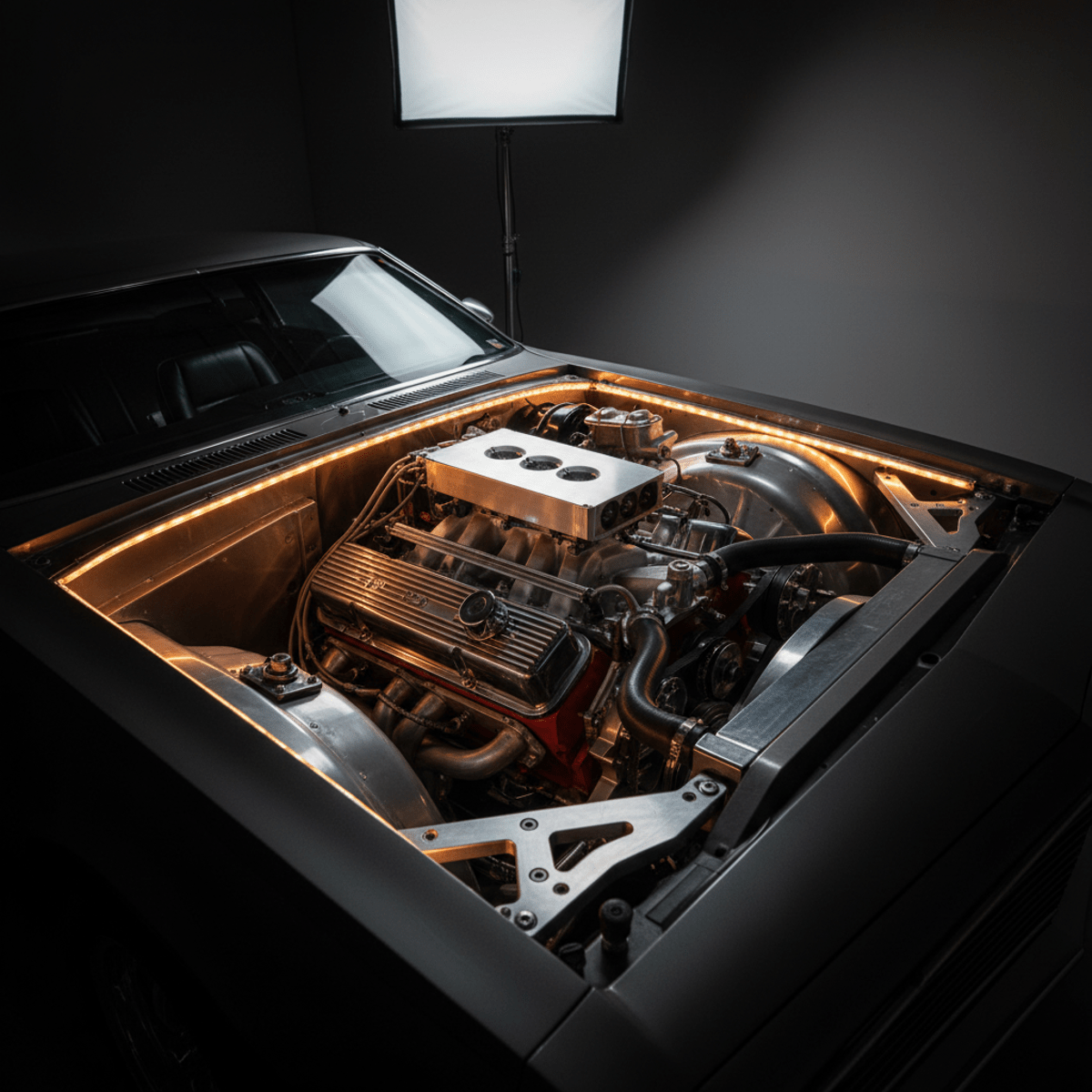
Subtlety and sophistication define this emerging show-car trend that transforms engine bays into illuminated displays after dark. Instead of jarring neon tubes or gaudy colored lights, builders are using small, strategically placed white or single-color LED strips to highlight the engine’s best features with museum-quality lighting. A soft white glow might emanate from under the intake manifold to showcase a custom block color, or precisely aimed spotlights might catch the machined details on billet pulleys and brackets. Advanced installations include temperature-controlled LED systems that automatically adjust brightness and can be synchronized with the vehicle’s electrical system to create startup sequences or respond to engine RPM. The key is restraint—the lighting should enhance the engine’s natural beauty rather than overwhelm it. When executed properly, these systems turn the engine bay into a curated mechanical exhibit that draws crowds at evening car shows and cruise nights.
From the ultra-clean ‘tucked and shaved’ minimalist approach to bold hydro-dipped graphic statements, it’s clear the legendary 350 motor remains the perfect canvas for builder innovation in 2026. These eight trends demonstrate a clear evolution toward sophisticated finishes, seamless technology integration, and treating the engine as a piece of mechanical art worthy of gallery display. Whether you’re drawn to the surgical precision of hidden wiring, the timeless appeal of neo-retro finned aluminum, or the cutting-edge performance of compact forced induction, each trend represents a different philosophy of combining form with function. The modern 350 build is no longer just about horsepower—it’s about creating a complete sensory experience that captivates viewers and reflects the builder’s vision and craftsmanship. But these stunning visuals are more than just inspiration—they are direct signals of growing market demand and emerging business opportunities. For every trend showcased here, there’s an expanding need for the specific parts, materials, finishes, and specialized services that create these looks. This represents untapped potential for parts manufacturers, custom shops, and entrepreneurs ready to serve this passionate, quality-focused market. Ready to turn these trends into your next business opportunity? Use our AI-powered sourcing tool, Accio, to instantly analyze market demand for ‘billet serpentine systems,’ discover manufacturers specializing in ‘neo-retro valve covers,’ or find suppliers who can deliver the unique finishes and components that will set your products or builds apart from the competition. Stop just admiring these trends—start sourcing, manufacturing, and selling the components that make them possible with Accio today.