


Related search
Trucker Hats
Sportswear
Bluetooth Receiver
Feminine Hygiene Products
Get more Insight with Accio
7 Groundbreaking Arbitrary Waveform Generator Applications Shaping 2026
7 Groundbreaking Arbitrary Waveform Generator Applications Shaping 2026
7min read·Oriana·Jan 14, 2026
The arbitrary waveform generator (AWG) has evolved far beyond a simple lab tool. In 2026, it’s the invisible engine powering the world’s most advanced technological leaps. From orchestrating delicate quantum states to simulating complex radar environments for autonomous vehicles, these precision instruments are enabling breakthroughs across industries. If you’re looking to understand where this critical technology is headed, you’re in the right place. This article provides a visual tour of the seven most innovative and impactful AWG applications that are defining the future of industries from quantum computing to autonomous vehicles, offering inspiration for your next big project. Each application showcases not just technical capability, but the transformative potential of precise signal generation in solving tomorrow’s most challenging engineering problems.
Table of Contents
1. Orchestrating Qubits in Quantum Computers
2. Simulating Reality for Autonomous Vehicle Sensors
3. Pioneering 6G and Terahertz (THz) Communications
4. Advancing Brain-Computer Interfaces with Neural Simulation
5. Stress-Testing the Next Generation of Semiconductor Chips
6. Enhancing Aerospace & Defense Radar Systems
7. Leveraging AI for Smarter Signal Generation
2. Simulating Reality for Autonomous Vehicle Sensors
3. Pioneering 6G and Terahertz (THz) Communications
4. Advancing Brain-Computer Interfaces with Neural Simulation
5. Stress-Testing the Next Generation of Semiconductor Chips
6. Enhancing Aerospace & Defense Radar Systems
7. Leveraging AI for Smarter Signal Generation
Want to explore more about 7 Groundbreaking Arbitrary Waveform Generator Applications Shaping 2026? Try the ask below
7 Groundbreaking Arbitrary Waveform Generator Applications Shaping 2026
1. Orchestrating Qubits in Quantum Computers
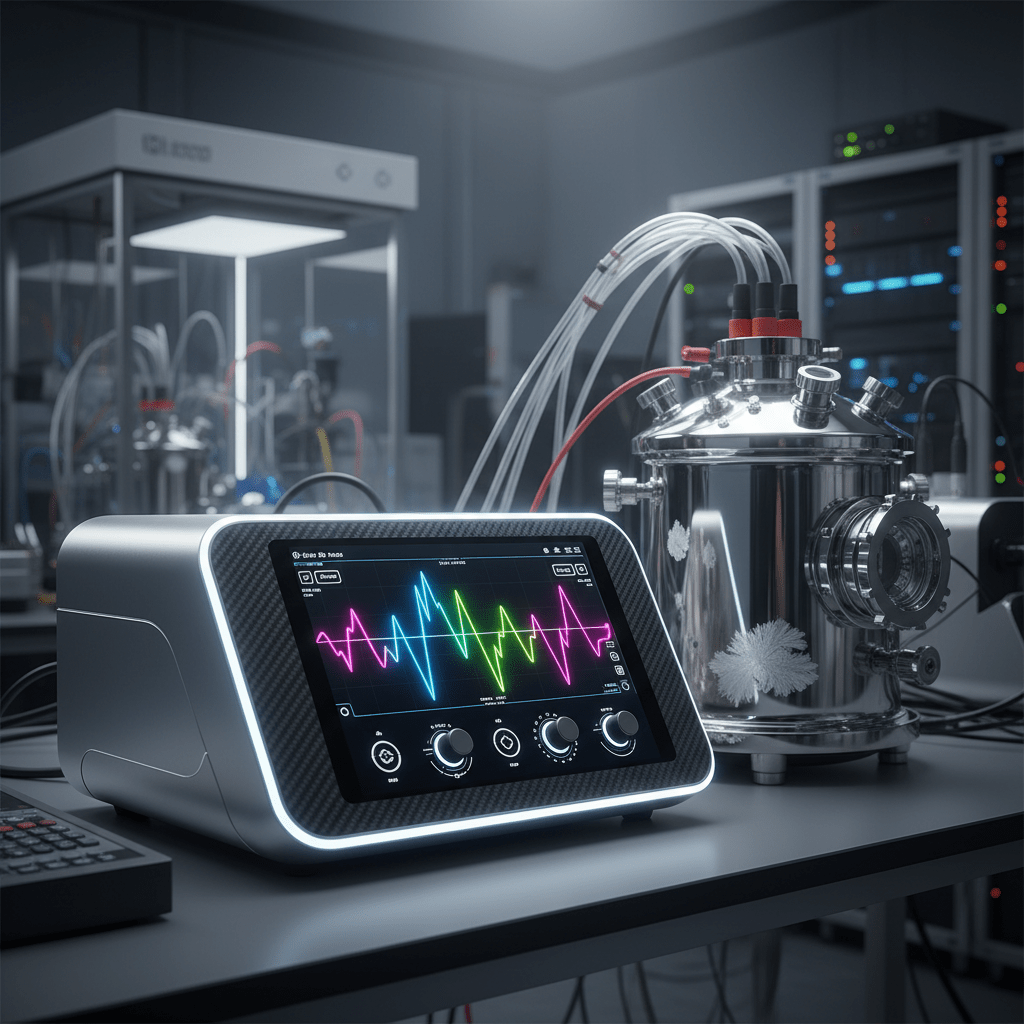

In the race for quantum supremacy, precision is everything. Arbitrary waveform generators are the conductors of the quantum orchestra, generating highly complex and precisely timed microwave pulses to control the delicate state of qubits. By 2026, multi-channel AWGs with advanced sequencing capabilities have become essential for scaling up quantum processors, enabling researchers to run increasingly sophisticated algorithms. These instruments create intricate pulse sequences with nanosecond timing precision, directly controlling quantum gate operations that form the foundation of quantum computation. The visual landscape is striking: a sleek AWG interface displaying complex pulse sequences in vivid detail, with fiber-optic connections leading to gleaming cryogenic chambers where quantum processors operate at temperatures near absolute zero. This application represents the pinnacle of precision engineering, where even the smallest timing error can collapse quantum states and derail breakthrough discoveries.
2. Simulating Reality for Autonomous Vehicle Sensors


How do you test a self-driving car for scenarios that haven’t happened yet? You generate them with unprecedented realism. AWGs create complex, realistic radio frequency signals that simulate dense urban environments for automotive radar and LiDAR systems, enabling comprehensive testing without real-world risks. These systems generate multi-target scenarios, weather conditions, and edge cases that would be impossible to reproduce consistently in field testing. Engineers can simulate everything from a child chasing a ball to sudden braking of vehicles obscured by trucks, all within controlled laboratory conditions. The visual environment is sophisticated: high-tech vehicle-in-the-loop setups where AWGs feed simulated sensor data into actual automotive systems, with massive anechoic chambers housing test vehicles surrounded by precisely positioned antenna arrays. Multiple screens display real-time radar returns and point cloud data, demonstrating how synthetic signals create convincing virtual worlds for autonomous vehicle validation.
3. Pioneering 6G and Terahertz (THz) Communications


As 5G infrastructure matures globally, the research frontier has decisively moved to 6G and the largely untapped terahertz spectrum. AWGs with exceptionally high bandwidth and sampling rates exceeding 100 GHz are critical for creating the ultra-wideband and complex modulated signals needed to test next-generation communication components. These advanced generators enable researchers to experiment with novel waveforms and modulation schemes that promise terabit-per-second data speeds, fundamentally changing how we think about wireless connectivity. The technical challenges are immense: maintaining signal integrity at frequencies where atmospheric absorption becomes significant, and creating modulation schemes complex enough to maximize spectral efficiency. Visually, this represents the cutting edge of RF engineering: futuristic test benches featuring prototype THz horn antennas and waveguide components, with high-resolution oscilloscopes displaying constellation diagrams so intricate they resemble abstract digital art, each point representing data transmission rates that seemed impossible just years ago.
4. Advancing Brain-Computer Interfaces with Neural Simulation


The intersection of electronics and biology represents one of 2026’s most promising and delicate fields. High-precision AWGs generate subtle, low-voltage electrical signals that can mimic or influence neural activity with unprecedented accuracy and safety. This capability is crucial for developing sophisticated brain-computer interfaces, advanced prosthetics that respond to thought, and revolutionary therapies for neurological disorders including Parkinson’s disease and depression. The technical requirements are extraordinary: signals must be precisely shaped to match the complex temporal patterns of biological neurons while maintaining biocompatibility and safety margins. These applications demand AWGs capable of generating arbitrary waveforms with sub-microvolt precision and microsecond timing control. The imagery evokes precision medicine at its finest: sterile laboratory environments where microelectrode arrays interface with neural tissue, while AWG displays show organic-looking waveforms that mirror the natural electrical patterns of the human brain, representing the delicate dance between technology and biology.
5. Stress-Testing the Next Generation of Semiconductor Chips


The relentless demand for faster data processing drives continuous innovation in semiconductor validation. Engineers utilize AWGs to generate high-speed data streams exceeding 200 Gb/s with precisely controlled impairments including jitter, crosstalk, and inter-symbol interference. This rigorous stress-testing ensures that chips powering future data centers, quantum computers, and mobile devices maintain signal integrity under the most demanding conditions. The process involves creating worst-case scenarios that push semiconductor designs to their absolute limits, revealing potential failure modes before products reach market. Advanced AWGs can simulate years of operational stress in hours of testing, dramatically accelerating development cycles. The compelling visual narrative centers on the famous ‘eye diagram’ displayed on high-resolution oscilloscopes: clear, wide-open ‘eyes’ indicate robust signal quality generated by precision AWGs on semiconductor probe stations. These diagrams, with their characteristic shape resembling a human eye, provide immediate visual feedback on signal quality, making complex electrical measurements accessible to engineers optimizing next-generation chip designs.
6. Enhancing Aerospace & Defense Radar Systems


In aerospace and defense applications, AWGs create sophisticated electronic warfare scenarios and validate the performance of mission-critical radar and satellite communication systems. These instruments generate complex threat signatures, jamming signals, and atmospheric interference patterns that military and aerospace systems must withstand in operational environments. The testing scenarios encompass everything from stealth aircraft signatures to GPS spoofing attempts, ensuring that defense systems maintain effectiveness against evolving threats. By 2026, software-defined radar systems rely heavily on AWG-generated training data to improve their machine learning algorithms and threat detection capabilities. The applications extend to space communications, where AWGs simulate the harsh electromagnetic environment of orbit, including solar radiation effects and ionospheric disturbances. The visual environment is impressive: massive satellite dishes in specialized test facilities, surrounded by racks of sophisticated measurement equipment where AWGs serve as the primary signal sources. The atmosphere conveys both technological sophistication and national security importance, with clean rooms and secure facilities housing equipment that protects critical infrastructure and military operations.
7. Leveraging AI for Smarter Signal Generation


By 2026, the most advanced AWGs incorporate artificial intelligence as a core capability rather than an add-on feature. These intelligent instruments use machine learning algorithms to automatically pre-distort waveforms, compensating for systematic distortions in test setups and ensuring perfect signal fidelity at the device under test. More remarkably, they can ‘learn’ and replicate complex, real-world signals captured in field environments, enabling lab recreation of challenging operational conditions. The AI capabilities extend to predictive maintenance, automatically adjusting parameters to maintain calibration accuracy and suggesting optimal test sequences based on device characteristics. Some systems can even generate entirely new waveform types by analyzing patterns in large signal databases, accelerating research into novel modulation schemes and communication protocols. The visual focus emphasizes the seamless integration of AI: stunning modern user interfaces on large touchscreen displays show neural network models optimizing waveforms in real-time, with clear before-and-after signal comparisons demonstrating dramatic improvements in signal quality and testing efficiency through intelligent automation.
From manipulating quantum states with femtosecond precision to ensuring the safety of autonomous vehicles through comprehensive sensor simulation, it’s clear that the arbitrary waveform generator has become a cornerstone of 2026’s technological landscape. These seven applications represent more than engineering marvels; they embody the next wave of commercial opportunities and design challenges that will define the coming decade. Whether advancing quantum computing capabilities, enabling 6G communications, or pioneering brain-computer interfaces, AWGs are the invisible foundation supporting breakthrough innovations across multiple industries.
Now, how do you translate this inspiration into your next project? Staying ahead in these rapidly evolving fields requires having access to the right equipment, the right partners, and the right market intelligence. Whether you need to source a multi-channel AWG for quantum research, find specialized design firms for bioelectronics applications, or analyze emerging market trends for automotive sensor components, success depends on making informed decisions quickly. This is where Accio comes in. Our AI-powered search and sourcing platform connects you with the suppliers, manufacturers, and technical partners who can turn these cutting-edge applications into reality. Move seamlessly from inspiration to implementation—start your search on Accio today and begin building the future.