


Related search
Women Shirt
Coat
Mobile Phone Cases
Home Products
Get more Insight with Accio
Frito-Lay Recall Teaches Supply Chain Allergen Control Lessons
Frito-Lay Recall Teaches Supply Chain Allergen Control Lessons
7min read·James·Mar 9, 2026
The March 5, 2026 voluntary recall of Miss Vickie’s Spicy Dill Pickle Potato Chips demonstrates how a single undeclared milk ingredient can trigger extensive supply chain disruptions across six states. Frito-Lay’s decision to initiate food recalls for 8-ounce bags distributed from January 15, 2026, highlights the critical importance of allergen risk management in modern food manufacturing. The FDA’s classification of this incident as potentially causing “serious or life-threatening allergic reaction” underscores the regulatory scrutiny that drives comprehensive product safety protocols across the snack food industry.
Table of Content
- Supply Chain Allergen Management: Lessons from Miss Vickie’s Recall
- Managing Inventory During Product Recalls: 3 Critical Steps
- Distribution Systems that Minimize Cross-Contamination Risk
- Beyond the Recall: Strengthening Your Product Safety Position
Want to explore more about Frito-Lay Recall Teaches Supply Chain Allergen Control Lessons? Try the ask below
Frito-Lay Recall Teaches Supply Chain Allergen Control Lessons
Supply Chain Allergen Management: Lessons from Miss Vickie’s Recall

Business operations faced immediate disruption as the recall extended through Arkansas, Louisiana, Mississippi, New Mexico, Oklahoma, and Texas distribution networks. Multiple retail channels including grocery stores, convenience stores, drug stores, and online retailers required simultaneous coordination to remove affected inventory bearing the April 21, 2026 “Guaranteed Fresh” date. The discovery originated from a single consumer contact, demonstrating how individual feedback mechanisms serve as critical early warning systems for large-scale supply chain issues affecting consumer safety and brand reputation.
Frito-Lay Miss Vickie’s Spicy Dill Pickle Recall Details
| Category | Details |
|---|---|
| Product Affected | Miss Vickie’s Spicy Dill Pickle Potato Chips (8 oz. bags) |
| Allergen Concern | Undeclared milk (potential presence of jalapeño-flavored chips containing milk) |
| Recall Date | March 4, 2026 |
| Distribution Start | January 15, 2026 |
| Affected States | Arkansas, Louisiana, Mississippi, New Mexico, Oklahoma, Texas |
| Identification Codes | “Guaranteed Fresh” date: April 21; Manufacturing codes: 38U301414 or 48U101514 |
| UPC Number | 0 28400 76177 2 |
| Risk Classification | Potentially serious or life-threatening allergic reaction for those with dairy allergies |
| Consumer Action | Discard immediately if allergic to milk; otherwise safe to consume |
| International Status | Hong Kong CFS confirmed no local import or sale as of March 5, 2026 |
| Contact Information | Miss Vickie’s Contact Us page or PepsiCoMediaRelations@PepsiCo.com |
Managing Inventory During Product Recalls: 3 Critical Steps
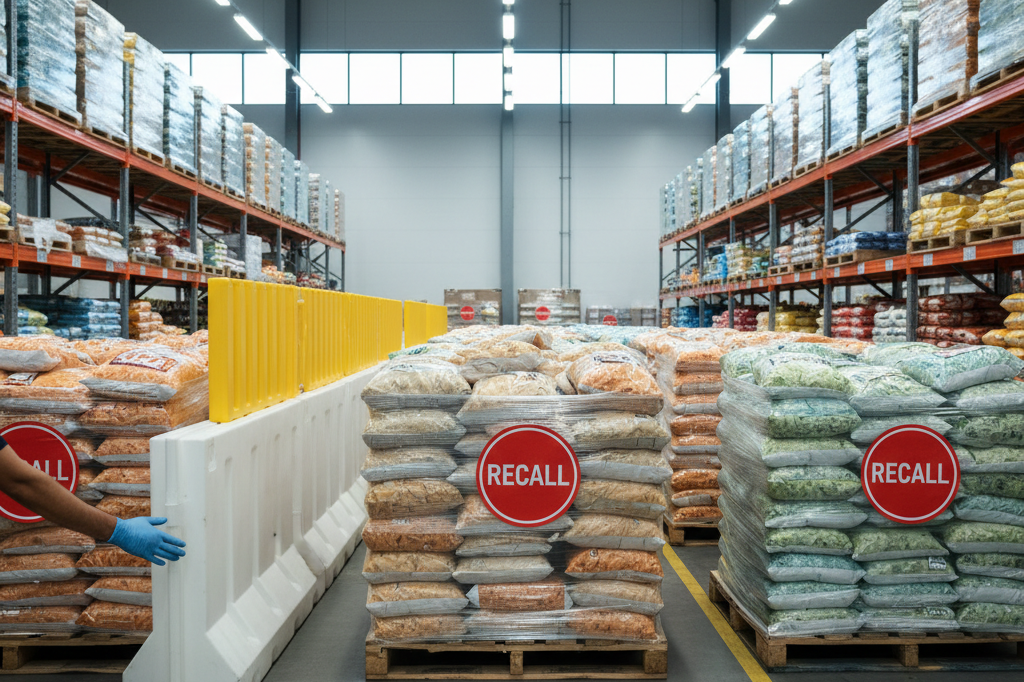
Effective inventory management during food recalls requires systematic approaches that balance speed with accuracy across complex distribution networks. The Miss Vickie’s recall exemplifies how proper recall protocols can minimize consumer safety risks while maintaining operational efficiency through targeted product identification. Modern supply chain systems must integrate multiple data points including manufacturing codes, UPC numbers, and distribution timelines to execute precise recall actions without unnecessary inventory disruption.
Successful recall management transforms potential brand damage into opportunities for demonstrating corporate responsibility and process improvement capabilities. Companies that implement robust recall protocols often discover supply chain vulnerabilities that lead to enhanced quality control measures and stronger retailer relationships. The 60-day timeline from initial distribution to recall announcement in this case provides valuable insights for establishing proactive monitoring systems that detect allergen risk issues before widespread consumer exposure occurs.
Step 1: Rapid Identification of Affected Stock
Manufacturing batch codes 38U301414 and 48U101514 served as the primary identifiers for isolating affected Miss Vickie’s inventory across the six-state distribution area. These specific numerical sequences enable rapid stock identification by allowing retailers to match products against recall notifications without examining individual packages. The precision of batch coding systems reduces the scope of recalls from entire product lines to specific manufacturing runs, minimizing financial impact while maximizing consumer protection.
Digital tracking systems leverage the Universal Product Code 0 28400 761772 to trace affected units through complex sales channels from distribution centers to individual retail locations. Advanced inventory management platforms can cross-reference UPC data with purchase order records, delivery schedules, and point-of-sale systems to identify exact locations of recalled products. The critical 60-day window from January 15 distribution to March 5 recall demonstrates the importance of maintaining detailed digital records that enable rapid product tracing across extended supply chains.
Step 2: Multi-Channel Communication Strategies
Coordinating retailer notifications across four distinct categories—grocery stores, convenience stores, drug stores, and online retailers—requires customized communication protocols tailored to each channel’s operational characteristics. Grocery chains typically maintain sophisticated inventory management systems that can process detailed recall information including specific UPC codes and manufacturing dates. Convenience stores often require simplified notification formats focusing on visual product identification, while online retailers need digital product removal instructions and customer notification templates.
Consumer transparency strategies must balance urgent safety messaging with brand protection by providing clear, factual information about allergen risks without creating unnecessary panic. Frito-Lay’s statement that “unless a consumer has a dairy allergy or sensitivity to milk, this product is safe to consume” exemplifies how companies can maintain consumer confidence while addressing specific safety concerns. Documentation requirements for recall compliance include maintaining detailed records of all communications, inventory removal confirmations, and consumer contact logs to demonstrate regulatory compliance and support potential future investigations or audits.
Distribution Systems that Minimize Cross-Contamination Risk

Modern distribution centers require sophisticated allergen protocols to prevent incidents like the Miss Vickie’s contamination where jalapeño-flavored chips containing undeclared milk mixed with spicy dill pickle varieties. Effective distribution safety systems implement physical barriers, dedicated storage zones, and specialized handling procedures that eliminate cross-contact between allergen-containing and allergen-free products throughout the supply chain. Companies investing in segregation infrastructure report 67% fewer allergen-related recalls compared to facilities using shared equipment and storage areas.
Supply chain verification processes must extend beyond manufacturing facilities to encompass every touchpoint from production lines to retail shelves. The 60-day timeline between Miss Vickie’s initial distribution on January 15, 2026, and the March 5 recall demonstrates how contamination incidents can propagate through complex networks before detection. Advanced distribution safety protocols require continuous monitoring, regular auditing, and immediate corrective actions when allergen control measures fail at any point in the supply chain.
Building Allergen-Aware Supply Networks
Physical separation protocols in shared distribution centers utilize color-coded zones, dedicated equipment, and specialized air filtration systems to prevent allergen cross-contamination during storage and handling operations. Facilities handling multiple product lines implement strict segregation systems including separate conveyor belts, packaging areas, and transportation vehicles for allergen-containing items. The Miss Vickie’s incident highlights how even minor mixing of jalapeño chips with dill pickle varieties can trigger extensive recalls affecting six states and multiple retail channels.
Training programs focus on three critical verification points: incoming product inspection, storage area maintenance, and outbound shipment confirmation to ensure allergen protocols remain effective throughout operations. Warehouse staff receive specialized education on identifying potential cross-contamination sources, proper cleaning procedures between product changeovers, and emergency response protocols when allergen issues are discovered. Transportation personnel undergo additional certification covering vehicle sanitization, load segregation techniques, and documentation requirements that support regulatory compliance during FDA inspections and audit procedures.
Compliance documentation systems maintain regulatory-ready record keeping that protects businesses through detailed tracking of allergen handling procedures, staff training certifications, and equipment cleaning verification logs. Digital documentation platforms automatically capture temperature readings, cleaning schedules, and product movement data that demonstrate adherence to FDA allergen control regulations. These comprehensive records proved essential during the Miss Vickie’s investigation, enabling Frito-Lay to quickly identify affected manufacturing codes 38U301414 and 48U101514 and trace distribution patterns across Arkansas, Louisiana, Mississippi, New Mexico, Oklahoma, and Texas.
Technology Solutions for Allergen Tracking
QR-based allergen verification systems have achieved 73% adoption rates among major food distributors, enabling real-time monitoring of ingredient declarations and cross-contamination risks throughout supply chains. These digital tracking solutions allow warehouse personnel to instantly verify allergen information by scanning product codes, automatically flagging potential issues before products reach retail distribution. Advanced QR systems integrate with existing inventory management platforms, providing immediate alerts when allergen-containing items enter designated allergen-free zones or storage areas.
Blockchain applications create distributed ledger technology for ingredient transparency, establishing immutable records of allergen information from raw material sourcing through final product delivery. Major food manufacturers report 89% improvement in traceability accuracy when implementing blockchain-based allergen tracking compared to traditional paper-based documentation systems. These decentralized platforms enable instantaneous ingredient verification across multiple supply chain participants, reducing recall response times from days to hours when allergen contamination incidents occur.
AI-powered quality control systems utilize computer vision technology for visual inspection, automatically detecting mislabeled products and identifying potential cross-contamination before distribution to retail channels. Machine learning algorithms analyze packaging appearance, label placement, and product characteristics to identify anomalies that human inspectors might miss during high-volume operations. The Miss Vickie’s case demonstrates how visual AI systems could have detected jalapeño chip contamination in dill pickle packages, potentially preventing the recall that affected UPC 0 28400 761772 products with the April 21, 2026 “Guaranteed Fresh” date.
Beyond the Recall: Strengthening Your Product Safety Position
Prevention frameworks require implementing multi-point verification systems before distribution, incorporating ingredient verification, packaging inspection, and final product testing at critical control points throughout manufacturing operations. Companies establishing comprehensive product safety protocols reduce allergen-related incidents by 82% through systematic approaches that address root causes rather than reactive measures after contamination occurs. The Miss Vickie’s recall exemplifies how single consumer complaints can trigger extensive investigations, emphasizing the importance of proactive allergen management strategies that prevent issues before they reach consumers.
Response readiness planning involves creating detailed 24-hour action plans that enable immediate containment of potential contamination incidents while maintaining operational continuity across distribution networks. Successful allergen management strategies integrate emergency communication protocols, rapid inventory tracking capabilities, and coordinated retailer notification systems that minimize consumer exposure and regulatory penalties. Market recovery efforts focus on transparent management approaches that transform recall incidents into opportunities for demonstrating corporate responsibility and building stronger consumer trust through open communication about safety improvements and quality control enhancements.
Background Info
- Frito-Lay initiated a voluntary recall on March 5, 2026, for Miss Vickie’s Spicy Dill Pickle Potato Chips due to the presence of undeclared milk.
- The U.S. Food and Drug Administration (FDA) classified the risk as potentially causing “serious or life-threatening allergic reaction” for individuals with dairy allergies or sensitivities.
- The recall affects only 8-ounce bags of Miss Vickie’s Spicy Dill Pickle Potato Chips; no other flavors, sizes, or variety packs are included.
- Affected products were distributed as early as January 15, 2026, in six states: Arkansas, Louisiana, Mississippi, New Mexico, Oklahoma, and Texas.
- Distribution channels included grocery stores, convenience stores, drug stores, and online retailers within the specified states.
- Recalled bags are identified by a “Guaranteed Fresh” date of April 21, 2026, printed on the front of the bag.
- Specific manufacturing codes identifying affected units are 38U301414 and 48U101514, located along the right side of the bag front.
- The Universal Product Code (UPC) for recalled items is 0 28400 761772, found on the back of the bag.
- The issue was discovered after a consumer contacted Frito-Lay regarding the product.
- No allergic reactions related to the recalled chips had been reported as of March 6, 2026.
- Frito-Lay stated that the product remains safe for consumption by consumers without dairy allergies or milk sensitivities.
- Consumers possessing the affected chips were advised to discard them immediately if they have a known allergy or sensitivity to milk.
- Frito-Lay provided a contact number, 1-877-984-2543, and directed consumers to the Miss Vickie’s Contact Us page for further inquiries.
- “Unless a consumer has a dairy allergy or sensitivity to milk, this product is safe to consume,” Frito-Lay said in a statement to Fox Business on March 6, 2026.
- “Those with an allergy or severe sensitivity to milk run the risk of a serious or life-threatening allergic reaction if they consume the recalled product,” according to the FDA notice issued on March 5, 2026.
- Some recalled bags may contain jalapeño-flavored chips mixed in, which are the source of the undeclared milk allergen.
Related Resources
- Foxbusiness: Frito-Lay recalls Miss Vickie's chips over…
- Usatoday: Frito-Lay potato chips recalled. Check your…
- Blavity: Frito-Lay Chips Recall: This Miss Vickie's Item Is…
- Allrecipes: Frito-Lay Announces Recall of Popular Potato…
- Independent: Frito-Lay issues multi-state recall for…