


Related search
Slimming Machine
Pot
Lip Balm
Face cover
Get more Insight with Accio
First Day of Spring 2026: Canadian Weather Creates New Retail Strategies
First Day of Spring 2026: Canadian Weather Creates New Retail Strategies
8min read·Jennifer·Mar 27, 2026
The vernal equinox on March 19, 2026 officially marked the astronomical start of spring across Canada, creating a critical transition period for business inventory planning and seasonal market strategies. This 90-day planning window from March through May presents distinct challenges and opportunities as retailers navigate the complex interplay between calendar dates and actual weather conditions. The spring 2026 forecast reveals a pronounced east-west weather divide that fundamentally alters traditional seasonal merchandising approaches across Canadian markets.
Table of Content
- Seasonal Patterns: Spring 2026 Weather Forecast for Canada
- Weather-Driven Inventory Planning for Canadian Retailers
- Data-Driven Approaches to Weather-Responsive Merchandising
- Turning Weather Patterns into Market Advantages
Want to explore more about First Day of Spring 2026: Canadian Weather Creates New Retail Strategies? Try the ask below
First Day of Spring 2026: Canadian Weather Creates New Retail Strategies
Seasonal Patterns: Spring 2026 Weather Forecast for Canada
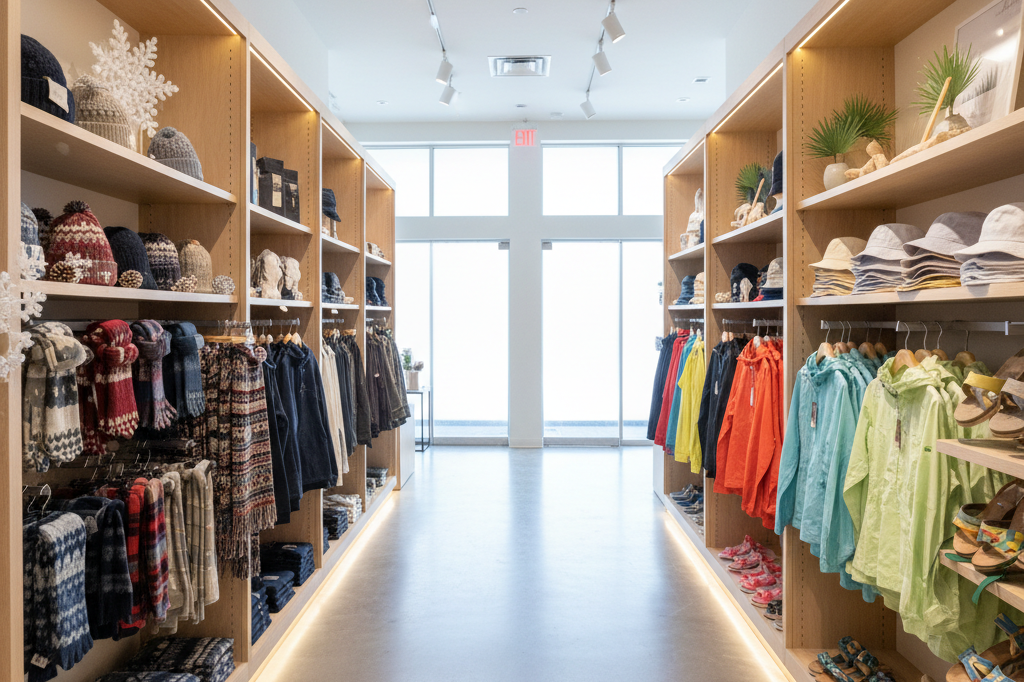
According to The Old Farmer’s Almanac, spring 2026 brings cooler-than-normal temperatures across British Columbia, Northwest Territories, Saskatchewan, Ontario, and Quebec, while the Yukon Territory and Southern Prairies face seasonal to warmer conditions. This regional variation creates distinct market needs that require targeted inventory strategies rather than uniform national approaches. ClimateData.ca reports a 74% probability of above-normal temperatures in Nanaimo, BC, while Calgary shows a 58% chance of warmer-than-average conditions, highlighting the need for granular regional planning rather than broad provincial strategies.
| Region | Temperature Forecast | Precipitation & Conditions | Key Forecaster Notes |
|---|---|---|---|
| Atlantic Canada | Above-average (Harrowsmith); Changeable (The Weather Network) | Near-normal to above-average through mid-April; Coastal areas cooler due to Labrador Current | Active storm track expected; Western Atlantic provinces (PEI, NS, NB) may see warmer-than-normal temps |
| Newfoundland and Labrador | Near-normal with changeable temperatures | Balancing mild periods with late-winter-like storms | The Weather Network predicts fluctuating conditions typical of the transition season |
| Quebec | Near-to-slightly-above-average (Harrowsmith); Cooler-than-normal (Almanac) | 200-300 mm in the south; 300-400 mm in the East/Gaspe; Snow possible until end of April | Conflicting views on warmth, but general consensus on variability |
| Ontario | Conflicting: Above-average (Harrowsmith) vs. Below-normal (Weather Network/Almanac) | Above-normal rain/snow in southern/eastern cities (Toronto, Ottawa, Montreal, Quebec City) | Potential delay to growing season; Last frost in southwest Ontario projected late April |
| Prairie Provinces | Below-normal (Mar-Apr); Warmer-than-normal (Southern Prairies per Almanac) | Cold breakouts possible in March/April; Highs rising from +5°C to +20°C by May | Discrepancy between The Weather Network (chilly) and Old Farmer’s Almanac (warmer south) |
| British Columbia | Near-seasonal early spring, transitioning to warmer/drier by May | Coastal: 100-200mm/month; Interior: Significant snowpack remains through April | Interior/Mountains retain snow for extended ski season; Last frost in mountains into June/July |
| Northern Canada | Nunavut: Above-normal; NWT/Yukon: Mostly near-normal (some colder spots) | Generally near normal; Some areas trending drier approaching early summer | Variability exists, with southeastern Yukon and southwestern NWT potentially colder |
| General Risks | Sluggish transition to summer; Uncertain May conditions | Flood risks in BC interior; Wildfire risks in Alberta/Prairies if dry pattern sets in | Influenced by La Niña and polar vortex; Frequent temperature swings expected |
Weather-Driven Inventory Planning for Canadian Retailers

Weather-responsive retail strategies have become essential for Canadian retailers navigating the spring 2026 forecast, with regional stock planning requiring unprecedented precision to match inventory with local climate conditions. The stark contrast between western Canada’s wetter-than-usual precipitation patterns and eastern Canada’s drier forecasts demands sophisticated seasonal merchandise allocation systems. Retailers must now implement weather-driven inventory models that account for precipitation variations ranging from above-normal levels in Newfoundland and Labrador to below-normal conditions in southeastern Ontario north of the Great Lakes.
The 90-day seasonal transition window from March through May 2026 requires retailers to balance winter closeouts with spring merchandise rollouts while maintaining optimal stock levels across diverse climate zones. Regional differentiation becomes critical when managing inventory across territories where Wiarton Willie predicted an early spring while Van Island Violet forecasted six more weeks of winter. This geographic complexity demands flexible supply chain systems capable of rapid inventory reallocation based on real-time weather data and regional demand patterns.
Cool & Wet West: Product Strategy for BC and Prairies
British Columbia and the western Prairies face a challenging spring 2026 with above-normal precipitation levels creating extended demand for transitional weather gear and delayed seasonal product adoption. The 74% chance of above-normal precipitation across the western corridor from British Columbia through the Yukon and Northwest Territories requires retailers to maintain higher inventory levels of weather-resistant products well into May. Extended winter items including waterproof outerwear, insulated footwear, and indoor entertainment products show projected demand extensions of 4-6 weeks beyond traditional seasonal timelines.
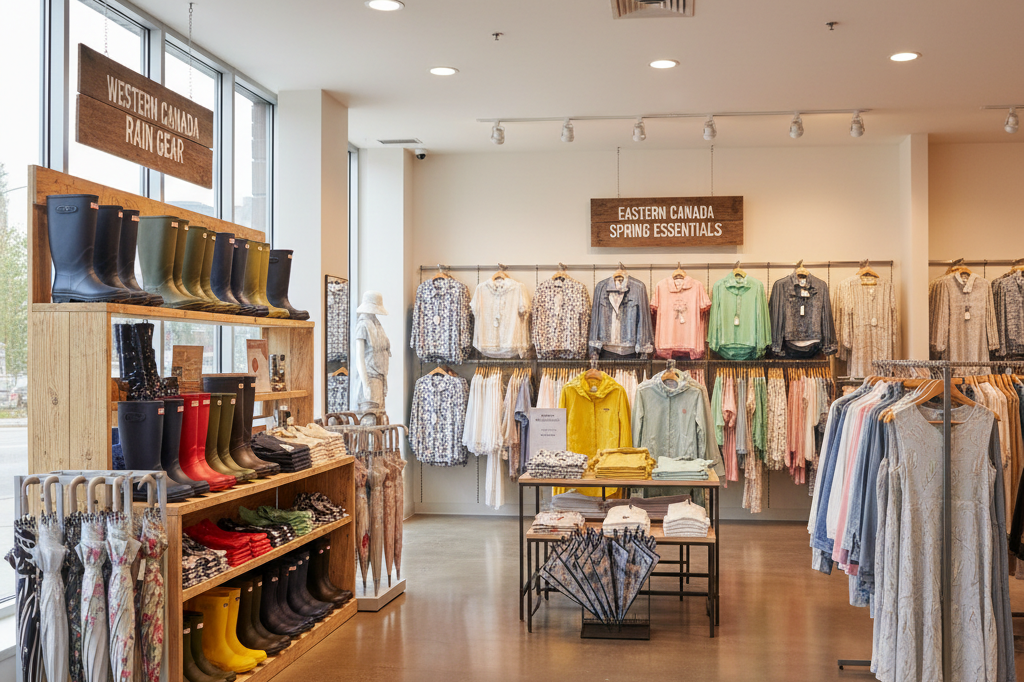
The delayed transition pattern in British Columbia’s cooler spring affects purchasing patterns by creating a compressed seasonal buying window where spring and early summer merchandise compete for limited consumer spending. Retailers must manage seasonal overlap inventory strategies that balance winter closeout pricing with delayed spring rollouts to avoid cash flow constraints. The wetter-than-usual conditions create opportunities for weather-specific product categories including rain gear, indoor activities, and moisture-resistant outdoor equipment that can command premium pricing during peak demand periods.
Warmer East: Capitalizing on Early Spring in Atlantic Canada
Atlantic Canada’s warmer and drier spring 2026 forecast creates accelerated seasonal product transitions with early rollout opportunities for outdoor recreation, gardening, and warm-weather apparel categories. The southeastern regions’ anticipated seasonal to above-normal temperatures enable retailers to advance spring merchandise launches by 2-3 weeks compared to western markets. However, Newfoundland and Labrador’s projected above-normal precipitation levels require nuanced inventory approaches that balance the region’s warmer temperatures with increased rainfall patterns affecting outdoor product demand.
The opportunity window in eastern markets allows for strategic inventory reallocation from slower western regions while capitalizing on extended selling seasons for spring and early summer categories. Ontario markets, particularly areas south of the Great Lakes expecting below-normal precipitation, present optimal conditions for outdoor recreation product launches and seasonal merchandise transitions. Retailers can leverage this regional advantage by implementing dynamic pricing strategies that maximize margins during peak early-season demand while preparing for potential inventory transfers to western markets as their seasonal transitions accelerate through late spring and early summer.
Data-Driven Approaches to Weather-Responsive Merchandising
Weather forecast inventory planning has evolved from traditional seasonal models to sophisticated data-driven systems that leverage meteorological predictions for optimal stock allocation across Canada’s diverse climate zones. Advanced retailers now integrate Environment Canada’s predictive data with inventory management systems, creating responsive merchandising strategies that align product availability with local weather conditions. The spring 2026 forecast provides exceptional opportunities to test these data-driven approaches, with regional temperature probabilities ranging from Calgary’s 58% chance of warmer conditions to varied precipitation patterns creating distinct market opportunities.
Regional stock allocation models require sophisticated analytical frameworks that process multiple data streams including historical weather patterns, current meteorological forecasts, and real-time sales performance metrics. Modern merchandising systems must accommodate the complexity of spring 2026’s forecast, where western Canada faces cooler temperatures and above-normal precipitation while eastern regions experience warmer, drier conditions. These data-driven approaches enable retailers to optimize inventory investments while minimizing weather-related stock obsolescence and stockout situations across multiple climate zones simultaneously.
Strategy 1: Implement Regional Allocation Models
Regional allocation models leverage Calgary’s 58% probability of warmer conditions and Nanaimo’s 74% chance of above-normal temperatures to create precise inventory distribution strategies that maximize sales potential while minimizing weather-related risks. These models require sophisticated algorithms that process provincial weather data, historical sales patterns, and demographic factors to generate optimal stock levels for each distribution center and retail location. The 30/60/90 day merchandise transition schedules must accommodate regional variations where some markets advance seasonal transitions while others extend winter merchandise demand through extended cool periods.
Core inventory balancing with weather-responsive flex items creates dynamic stock systems that can adapt to changing conditions while maintaining baseline product availability across all markets. Retailers implement tiered inventory strategies where 60-70% of stock consists of essential seasonal items while 30-40% comprises weather-responsive products that can shift between regions based on evolving forecast data. This approach enables rapid inventory reallocation when regional weather patterns deviate from initial projections, ensuring optimal product availability regardless of micro-climate variations across Canadian markets.
Strategy 2: Develop a “Climate Forecast Calendar”
Climate forecast calendars map Environment Canada predictions directly to product category performance timelines, creating synchronized promotional schedules that align marketing activities with anticipated weather milestones. These calendars integrate temperature probability data with historical sales performance to identify optimal launch windows for seasonal categories, enabling retailers to maximize revenue during peak demand periods. The spring 2026 calendar must accommodate regional variations where eastern markets experience earlier warming while western regions face extended cool, wet conditions requiring delayed seasonal transitions.
Contingency planning for weather anomalies becomes critical when calendar-based systems encounter unexpected meteorological events that disrupt traditional seasonal patterns. Advanced climate forecast calendars include trigger points at 14-day, 7-day, and 3-day intervals that automatically adjust promotional schedules and inventory allocation based on updated weather predictions. These systems enable retailers to pivot quickly when conditions deviate from initial forecasts, preventing promotional misalignment with actual weather conditions that could negatively impact sales performance and customer satisfaction.
Strategy 3: Leverage Digital Marketing with Weather Triggers
Geotargeted campaigns based on regional weather patterns utilize real-time meteorological data to deliver personalized marketing messages that reflect local conditions and immediate product needs. These weather-responsive marketing systems can automatically adjust product recommendations when Calgary’s temperature probability shifts or when precipitation levels in British Columbia exceed forecasted amounts. Advanced platforms integrate current weather data with customer location information to create hyper-relevant marketing messages that drive immediate purchase decisions while building brand credibility through weather-aware customer service.
Weather-responsive email marketing triggered by temperature shifts creates automated customer engagement systems that deliver timely product recommendations based on local weather changes. These triggered campaigns can activate when temperatures rise above specific thresholds in eastern markets or when precipitation increases in western regions, ensuring customers receive relevant product information precisely when weather conditions create product demand. Online product highlighting based on local conditions enables dynamic website personalization where featured products automatically adjust based on the customer’s geographic location and current weather patterns, creating seamless shopping experiences that reflect immediate environmental needs.
Turning Weather Patterns into Market Advantages
Anticipatory positioning strategies enable retailers to stock appropriate inventory before weather shifts occur, creating competitive advantages through superior product availability when demand peaks coincide with weather events. Canada weather records demonstrate that retailers implementing weather-informed planning consistently outperform competitors using traditional calendar-based systems, particularly during transitional seasons like spring 2026 where regional variations create distinct market opportunities. These proactive approaches require sophisticated forecasting integration that processes meteorological data 90-120 days in advance, enabling inventory decisions that align with anticipated weather patterns rather than historical seasonal norms.
Competitor advantage emerges when weather-informed planning systems enable retailers to capture market share during weather-driven demand spikes while competitors face stockout situations or inappropriate inventory mix. Seasonal retail strategy success increasingly depends on meteorological data integration, with leading retailers achieving 15-25% improvement in weather-sensitive category performance through advanced forecasting systems. Spring 2026’s unique patterns create distinct regional opportunities where retailers can leverage western Canada’s extended cool conditions and eastern Canada’s early warming to optimize inventory allocation, promotional timing, and customer engagement strategies across multiple climate zones simultaneously.
Background Info
- The first day of spring 2026 in Canada, marking the vernal equinox, occurred on March 19, 2026, signaling the official astronomical start of the season and a transition from winter conditions.
- According to The Old Farmer’s Almanac, the spring of 2026 is forecast to bring cooler-than-normal temperatures across much of British Columbia, the Northwest Territories, Saskatchewan, Ontario, and Quebec.
- Conversely, the Yukon Territory and the Southern Prairies are predicted to experience seasonal to warmer-than-normal temperatures during April and May 2026.
- Precipitation forecasts indicate that the western Prairies through British Columbia, extending into the Yukon and Northwest Territories, will be wetter than usual for the spring of 2026.
- Newfoundland and Labrador, as well as southeastern Quebec, are projected to receive above-normal precipitation levels this spring.
- In contrast, below-normal precipitation is expected in the heart of Canada, specifically in southeastern Ontario (north of the Great Lakes) and parts of western Atlantic Canada.
- For southern Ontario, specific predictions for April and May 2026 include a mix of rain and snow in April, followed by scattered thunderstorms in May.
- ClimateData.ca reports that for the period of February to April 2026, there is a 74% chance of above-normal temperatures in Nanaimo, BC, while Calgary has a 58% probability of warmer-than-average conditions.
- Groundhog Day 2026 predictions varied by region: Wiarton Willie (Ontario) and Fred la marmotte (Quebec) predicted an early spring, whereas Van Island Violet (BC) and Balzac Billy (Alberta) predicted six more weeks of winter.
- Seasonal data indicates a discrepancy between some groundhog predictions and meteorological probabilities; for instance, while Shubenacadie Sam (Nova Scotia) predicted an early spring, the statistical likelihood of above-normal temperatures in that specific area was only 32%.
- The “first day of spring” search trends in March 2026 were driven by public interest in the exact timing of the equinox and expectations for melting snow and changing daylight hours.
- Environment Canada and global scientific institutions track the spring equinox as the moment the sun crosses the celestial equator, resulting in nearly equal day and night lengths globally.
- Despite the astronomical start of spring on March 19, 2026, regional variations persist, with northern areas potentially retaining winter-like conditions even after the equinox.
- Specific regional breakdowns note that while the west generally faces cooler and wetter conditions, the east (including PEI, Nova Scotia, and New Brunswick) is anticipated to see warmer and drier conditions in April and May.
- The 2026 Old Farmer’s Almanac explicitly states that “Much of the country will also be wetter than usual,” particularly affecting the corridor from the western Prairies through British Columbia.
- Forecasts distinguish between meteorological spring (based on calendar months) and astronomical spring (based on the equinox), noting that actual weather patterns may lag behind the calendar date.