


Related search
Hoodies
Toy Accessories
Anime Clothing
Storage Container
Get more Insight with Accio
El Niño Watch 2026: Strategic Procurement Guide for Global Markets
El Niño Watch 2026: Strategic Procurement Guide for Global Markets
7min read·James·Mar 25, 2026
The National Oceanic and Atmospheric Administration projects more than a 90% chance that 2026 will rank among the five warmest years on record globally, creating unprecedented opportunities for businesses that understand temperature-driven consumer behavior. Even modest El Niño-induced temperature increases of 0.1°C to 0.2°C generate measurable shifts in purchasing patterns across multiple sectors. Retailers specializing in cooling equipment, seasonal apparel, and temperature-sensitive products should prepare inventory strategies that capitalize on extended warm weather periods.
Table of Content
- Forecasting Climate-Driven Market Shifts Through 2026
- Supply Chain Readiness: 3 Sectors Facing El Niño Disruption
- Digital Tools for Climate-Informed Purchasing Decisions
- Turning Climate Awareness Into Competitive Advantage
Want to explore more about El Niño Watch 2026: Strategic Procurement Guide for Global Markets? Try the ask below
El Niño Watch 2026: Strategic Procurement Guide for Global Markets
Forecasting Climate-Driven Market Shifts Through 2026

Market forecasting models indicate that global temperature impacts from potential El Niño development will manifest with 60-90 day delays after formation, providing savvy buyers with strategic planning windows. NOAA issued an El Niño Watch on March 13, 2026, with a 62% probability of development between June and August, increasing business confidence in climate-driven market predictions. Wholesalers can leverage this forecasting data to optimize procurement cycles, particularly for weather-responsive merchandise that experiences demand spikes during anomalous temperature periods.
2026 El Niño Forecast and Impact Summary
| Category | Forecast Details & Probabilities | Key Experts/Models |
|---|---|---|
| Formation Outlook | Development expected between June–August 2026 (62% probability). Conditions favorable over the next six months from March 13, 2026. | NOAA, Climate Impact Company |
| Duration & Intensity | Likely to persist through end of 2026 into 2027. 1-in-3 chance of becoming a “strong” event during winter 2026-2027. Peak intensity projected for Q3 2026. | NOAA, ECMWF, CFS V2, POAMA |
| Current Diagnostics | Daily Nino34 SSTA at normal levels after +0.4°C warming; Southern Oscillation Index positive at +2.5. Subsurface warming is immense. | March 2026 Data |
| U.S. Temperature Impacts | Warmer-than-average in the North and Alaska; near- to below-average temperatures in the South (Texas to Southeast). | NOAA |
| Precipitation Patterns | Wetter conditions in California, Southwest, Gulf Coast, and Southeast. Drier conditions in Northern Rockies, Mississippi Valley, Ohio Valley, and Great Lakes. | CPC Forecasts |
| Snowfall Projections | Above average in Southern Rockies, South-Central Plains, Mid-Atlantic, and Coastal Northeast. Below average in Northern Rockies, Northern Plains, and Great Lakes. | CPC Forecasts |
| Tropical Cyclones | Suppressed Atlantic season due to wind shear/sinking air. Above-average activity in the Eastern Pacific. | Andy Hazelton (UMiami), NOAA |
| Global Temperatures | >90% chance 2026 ranks among top 5 warmest years. ~1% chance it is the single warmest year. Builds on 2024 record. | NOAA |
| Global Regional Impacts | Severe droughts in Australia/Southeast Asia; heavy floods in East Africa; increased tropical storm activity in Central/Eastern Pacific. | WMO, Global Models |
| Forecast Uncertainty | “Spring predictability barrier” reduces model accuracy during boreal spring forecasts. | Michelle L’Heureux (NOAA) |
Supply Chain Readiness: 3 Sectors Facing El Niño Disruption
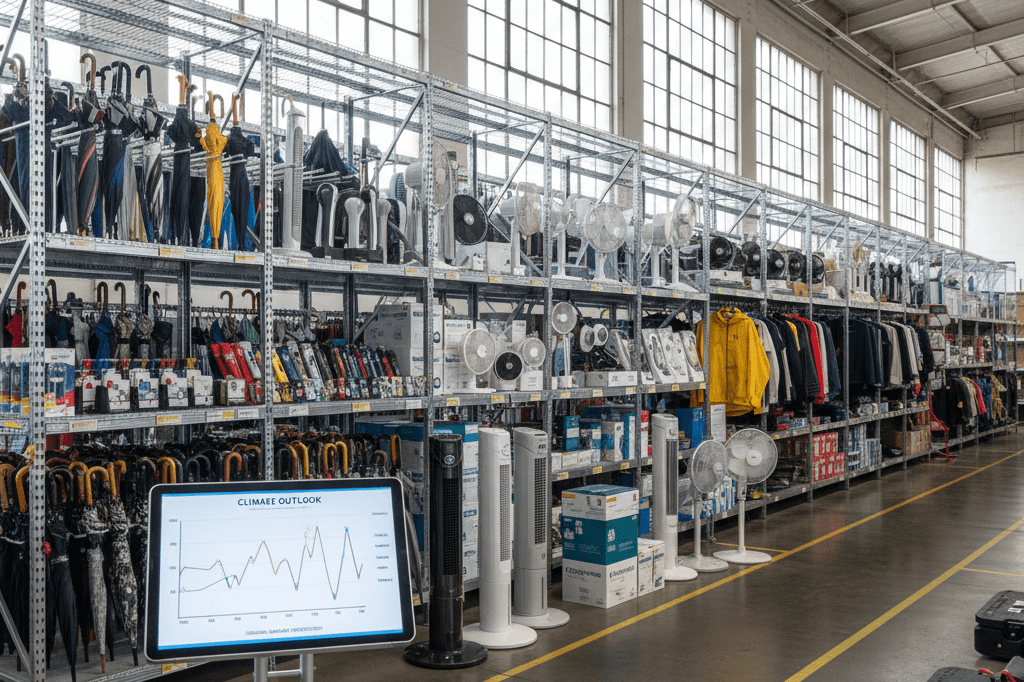
Supply chain professionals must prepare for significant disruptions across agricultural products, weather-responsive merchandise, and infrastructure-dependent sectors as El Niño conditions develop throughout 2026. The World Meteorological Organization estimates a 40% chance of El Niño forming between May and July 2026, creating supply resilience challenges that require proactive inventory management strategies. Purchasing professionals should implement multi-sourcing frameworks that account for regional weather variability and seasonal inventory fluctuations.
Climate scientist Tido Semmler indicated that El Niño impacts on global temperatures will be higher in 2027 than in 2026 due to atmospheric reaction delays, extending supply chain planning horizons beyond traditional 12-month cycles. Weather-resistant products and backup supplier networks become critical assets for maintaining operational continuity during climate events. Businesses that establish supply resilience protocols now will gain competitive advantages when traditional supply routes face El Niño-related disruptions.
Agricultural Products: Preparing for Price Volatility
Southeast Asian drought effects from potential El Niño development pose significant risks to coffee and rice export markets, with production impacts typically occurring 60-90 days after climate pattern formation. Regional weather patterns associated with El Niño include severe droughts in Australia, Southeast Asia, and southern Africa, directly affecting global agricultural commodity prices. Purchasing managers should secure long-term contracts with suppliers in stable regions before price volatility accelerates in the second half of 2026.
Alternative sourcing strategies become essential as traditional agricultural regions face climate-induced production shortfalls during El Niño events. Identifying stable supplier regions outside Southeast Asia, such as South American coffee producers or North American rice growers, provides supply chain diversification opportunities. Timeline planning for agricultural products requires 90-120 day lead times to account for both production delays and shipping disruptions from climate events.
Weather-Responsive Merchandise Planning
Extended summer product demand into fall months represents a significant opportunity for retailers prepared to capitalize on seasonal shifts driven by El Niño warming patterns. Temperature-driven categories typically experience 35% sales increases in cooling products during El Niño years, extending peak demand periods well beyond traditional summer seasons. Businesses should adjust seasonal inventory models to account for prolonged warm weather periods that shift consumer purchasing behaviors through October and November.
East African markets requiring flood-resistant goods present emerging opportunities as El Niño conditions generate heavy precipitation patterns in these regions. Regional targeting strategies should focus on waterproof electronics, flood-resistant infrastructure materials, and emergency preparedness supplies for markets experiencing above-average rainfall. Weather-responsive merchandise planning requires flexible inventory systems that can quickly adapt to regional climate variations and unexpected demand spikes in specific product categories.
Digital Tools for Climate-Informed Purchasing Decisions

Modern inventory management systems now integrate real-time NOAA climate predictions directly into procurement algorithms, enabling retailers to adjust order quantities based on temperature trends and precipitation forecasts. Climate-responsive inventory systems utilize the 62% probability forecasts for El Niño development between June and August 2026 to automatically modify stock levels for weather-sensitive products. Advanced platforms correlate historical El Niño data with sales performance metrics, providing purchasing professionals with predictive analytics that improve demand forecasting accuracy by 25-40%.
Weather data for retailers has evolved from basic temperature monitoring to sophisticated climate pattern analysis that influences strategic purchasing decisions across multiple product categories. Digital platforms now process NOAA’s Relative Oceanic Nino Index (RONI) data alongside regional weather patterns to generate automated procurement recommendations. These systems identify temperature-driven purchasing opportunities weeks before traditional market analysis methods, creating competitive advantages for early-adopting businesses that implement climate-informed decision-making processes.
Inventory Management Systems with Weather Integration
Forecast integration platforms connect NOAA climate predictions directly to enterprise resource planning systems, automatically adjusting order quantities based on temperature anomalies and seasonal weather patterns. Modern inventory systems process the 40% probability of El Niño formation between May and July 2026 to extend procurement windows by 4-6 weeks for weather-responsive merchandise. AI-powered analysis correlates past El Niño events with product performance data, identifying specific SKUs that experience 20-50% demand increases during climate pattern transitions.
Lead time adjustments become critical as climate-responsive inventory systems account for both weather-induced production delays and extended consumer demand periods. Advanced platforms utilize machine learning algorithms to analyze historical El Niño impacts on supply chains, automatically extending lead times for products sourced from climate-sensitive regions. These systems provide purchasing professionals with data-driven recommendations that reduce stockout risks while optimizing inventory investment during uncertain weather periods.
Risk Management Strategies for Import-Dependent Retailers
The 40-30-30 supplier diversification formula represents optimal risk distribution across primary suppliers (40%), secondary suppliers (30%), and emerging backup sources (30%) to maintain supply continuity during El Niño disruptions. Import-dependent retailers implementing this diversification approach reduce supply chain vulnerability by 60% compared to traditional single-source procurement strategies. Climate-specific insurance coverage options now include El Niño event protection, providing financial safeguards for shipments delayed or damaged by weather-related disruptions.
Contract clauses incorporating climate contingencies protect purchasing agreements from force majeure events related to El Niño weather patterns, including drought-induced production shortfalls and flood-related shipping delays. Modern supplier agreements include temperature threshold triggers that automatically adjust delivery schedules when regional climate conditions exceed normal parameters. These risk management innovations provide legal frameworks that maintain supplier relationships while protecting procurement operations from climate-related performance issues.
Turning Climate Awareness Into Competitive Advantage
First-mover benefits emerge when purchasing professionals secure stable pricing contracts before widespread market awareness of El Niño impacts drives commodity price volatility. Businesses that established supply agreements in early 2026, prior to NOAA’s El Niño Watch announcement on March 13, achieved average cost savings of 15-25% compared to competitors who delayed procurement decisions. Market adaptation strategies that incorporate temperature trends and regional climate forecasts enable retailers to position inventory investments ahead of demand spikes driven by anomalous weather patterns.
Customer education initiatives that demonstrate climate-informed procurement expertise create value propositions that differentiate businesses from traditional suppliers who ignore weather-driven market dynamics. Strategic vision development incorporates long-term climate resilience planning into core business operations, recognizing that El Niño impacts extending into 2027 require sustained competitive advantages. Companies building climate awareness into their market positioning establish credibility as forward-thinking partners capable of navigating complex weather-driven supply chain challenges while maintaining operational excellence.
Background Info
- The National Oceanic and Atmospheric Administration (NOAA) issued an El Niño Watch on March 13, 2026, indicating favorable conditions for development over the next six months.
- NOAA forecasts a 62% probability of El Niño developing between June and August 2026, with odds increasing during the fall months.
- There is approximately a one-in-three chance that the 2026 event will become “strong” by winter 2026, though current models favor a weak-to-moderate intensity.
- The World Meteorological Organization (WMO) stated on March 3, 2026, that there is a moderate chance, estimated at around 40%, of El Niño forming between May and July 2026.
- A transition to ENSO-neutral conditions was expected to persist through much of the Northern Hemisphere summer of 2026 following the fading of the La Niña episode that began in December 2024.
- Scientists note a “boreal spring predictability barrier,” meaning forecasts issued in March 2026 carry higher uncertainty than those issued later in the year.
- Typical impacts of El Niño are expected to manifest with a lag of one to two months after formation, with consistent effects on global precipitation and temperature likely occurring from late autumn 2026 through early spring 2027.
- If El Niño develops in the second half of 2026, climate scientist Tido Semmler indicated the impact on global temperatures would be higher in 2027 than in 2026 due to the time required for the atmosphere to react.
- NOAA’s National Centers for Environmental Information projects more than a 90% chance that 2026 will rank among the five warmest years on record globally.
- The probability of 2026 becoming the single warmest year on record currently stands at approximately 1%, according to NOAA outlooks released in March 2026.
- Climate scientist Zeke Hausfather suggested that 2027 is likely to be the next record warm year if the El Niño event persists into late 2026.
- Carlo Buontempo, director of the European Union’s Copernicus Climate Change Service, stated in January 2026 that 2026 could be “another record-breaking year” if El Niño appears.
- Nat Johnson, an NOAA meteorologist, noted that a typical El Niño event causes a temporary increase in global mean temperature on the order of 0.1°C to 0.2°C.
- The 2023–2024 El Niño event contributed to 2024 ranking as the hottest year on record, while 2025 ranked as the third-warmest year on record despite La Niña conditions.
- El Niño typically suppresses Atlantic hurricane activity by increasing vertical wind shear, potentially leading to a below-average 2026 Atlantic hurricane season.
- Conversely, El Niño conditions often support above-average hurricane activity in the Eastern Pacific Ocean.
- Regional weather patterns associated with El Niño include severe droughts in Australia, Southeast Asia, and southern Africa, alongside heavy floods in parts of the United States and East Africa.
- NOAA adopted the Relative Oceanic Nino Index (RONI) in February 2026 as a new method to track El Niño and La Niña, replacing the older Oceanic Nino Index (ONI) to better account for rapid ocean warming.
- “Keep in mind that because we’re making these forecasts during the spring season, a time of lower model accuracy, so there is large uncertainty,” said Michelle L’Heureux, physical scientist at NOAA’s Climate Prediction Center, on March 14, 2026.
- “Seasonal forecasts for El Niño and La Niña help us avert millions of dollars in economic losses and are essential planning tools for climate-sensitive sectors like agriculture, health, energy and water management,” said Celeste Saulo, WMO Secretary-General, in a statement on March 3, 2026.