


Related search
Solar Panels
Kitchen Gadgets
Cap
LEDs
Get more Insight with Accio
Eden Project’s £6.8 Billion Success: Green Economy Impact
Eden Project’s £6.8 Billion Success: Green Economy Impact
8min read·James·Mar 25, 2026
The Eden Project’s landmark Impact Report released on March 5, 2026, delivered striking proof that sustainability innovation translates directly into economic impact metrics. The organization’s 25-year journey generated £6.8 billion in total economic impact for the South West of England, with an additional £5.7 billion in net economic impact specifically benefiting Cornwall since opening in 2001. These figures demonstrate how environmental vision drives economic growth on a scale that traditional business models often struggle to achieve.
Table of Content
- Sustainability Success: Eden Project’s 25-Year Economic Impact
- Visitor Economy: Turning Nature into Market Opportunity
- Scaling the Model: Lessons from Eden’s Global Expansion
- The Green Economy: From Vision to £6.8 Billion Reality
Want to explore more about Eden Project’s £6.8 Billion Success: Green Economy Impact? Try the ask below
Eden Project’s £6.8 Billion Success: Green Economy Impact
Sustainability Success: Eden Project’s 25-Year Economic Impact
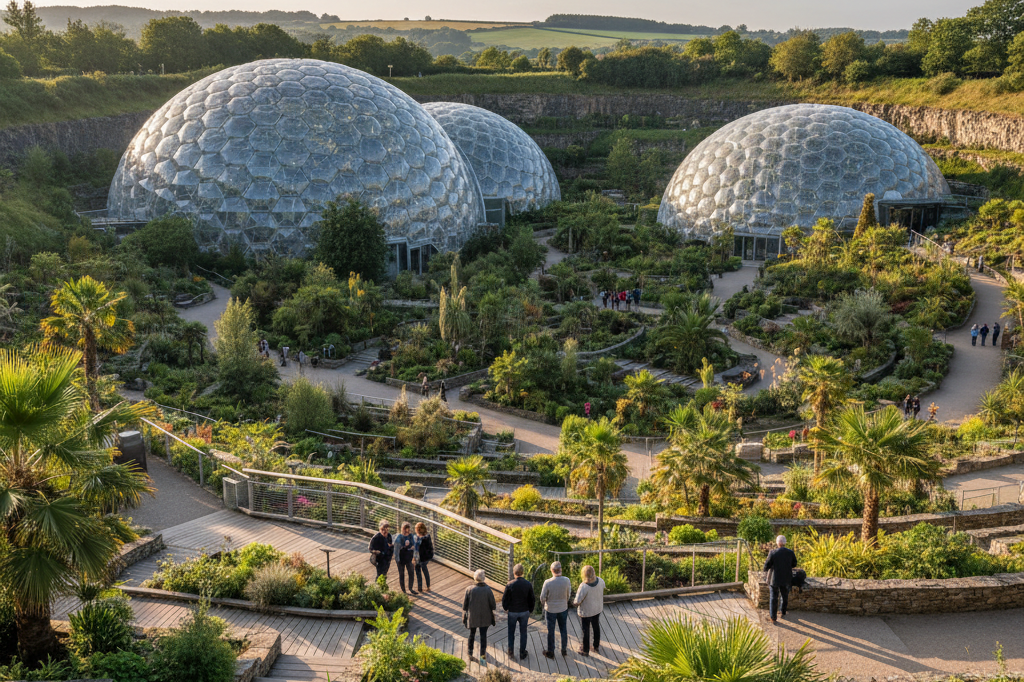
This sustainability success story spans 25 years of consistent performance, attracting over 25 million visitors who collectively fueled the regional economy through direct spending and multiplier effects. The project transformed a former clay pit into a global destination that proves environmental initiatives can deliver measurable economic returns. Chief Executive Andy Jasper emphasized on March 5, 2026, that investing in nature, culture and education serves as “a blueprint for economic growth” rather than a luxury expenditure.
Eden Project: 25-Year Economic and Social Impact (2001–2026)
| Metric | Value/Statistic | Context & Details |
|---|---|---|
| Total Economic Contribution | £6.8 billion | Generated for Cornwall and the South West region over 25 years (Counter Culture, March 2026). |
| Cornish Economy Specific | Over £1.7 billion | Direct contribution to the Cornish economy specifically (UK Parliament evidence, March 2026). |
| Visitor Spending | £8.4 billion | Estimated total spending across the 25-year period. |
| Total Visitors | Approximately 25 million | Since launch in 2001; 80% originated from outside Cornwall. |
| Annual Job Support | Average of 700 jobs | Comprises 430 direct roles (91% local residents) and 260 wider regional positions. |
| Operating Expenditure | £630 million | Total spend over 25 years; less than 2% directed outside the UK. |
| Initial Capital Funding | £56 million | From the Millennium Commission (National Lottery) to transform a former china clay pit. |
| 2023-24 Visitor Numbers | ~604,000 | Representing a 10% increase compared to the previous year. |
| Carbon Emissions Reduction | 42% (Scope 1) | Reduction in Scope 1 emissions in 2023/24 vs 2019/20 baseline; total emissions down 20%. |
| Educational Outreach | Over 750,000 visits | School and college visits historically; supports ~200 sustainability-focused students. |
| The Big Lunch Initiative | 1.5 million events | Facilitated since 2009, connecting 120 million people and raising £87m+ for charities. |
| Volunteer Contribution | Over 15,000 hours | Contributed in 2023/24 by 140 regular volunteers and short-term participants. |
Visitor Economy: Turning Nature into Market Opportunity
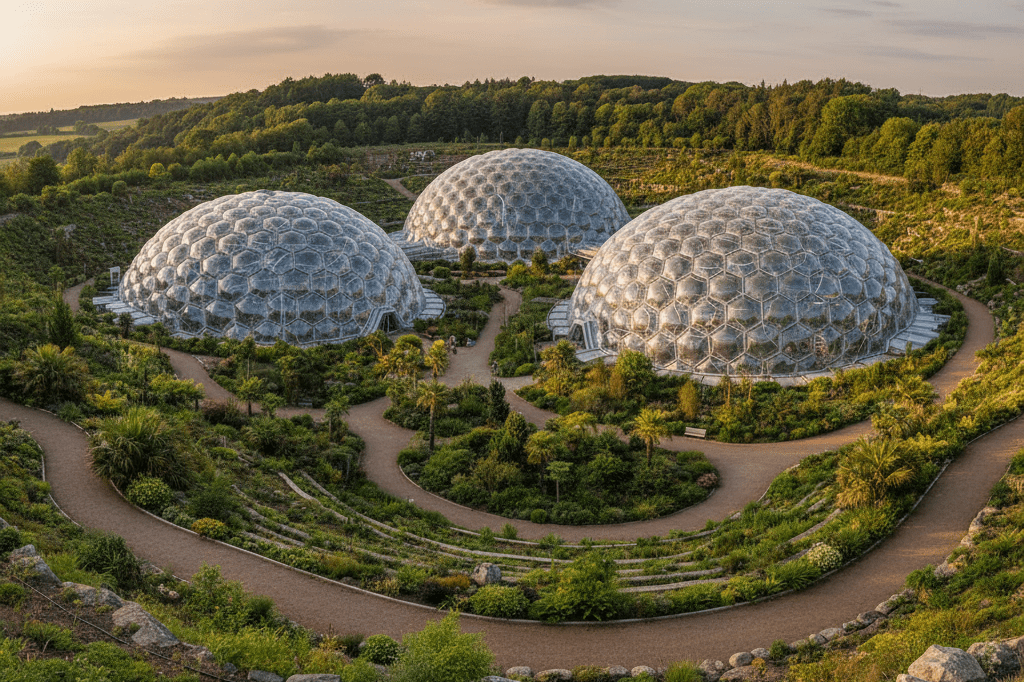
The Eden Project’s visitor economy model demonstrates how ecological education can generate substantial tourism economics returns through strategic destination marketing. Over 25 years, the site sustained consistent visitor flows that created ripple effects throughout Cornwall’s economy, proving that nature-based attractions can compete with traditional entertainment venues. The project’s unique biomes and sustainability messaging attracted visitors willing to spend premium amounts on educational experiences, transforming environmental consciousness into commercial viability.
Market analysis reveals that Eden Project’s approach created sustained tourism demand by combining educational content with immersive experiences that encourage repeat visits and extended stays. The facility’s success in converting ecological themes into customer spending patterns offers valuable lessons for businesses seeking to capitalize on growing consumer interest in sustainability. This model shows how environmental stewardship can serve as a primary revenue driver rather than merely a corporate social responsibility initiative.
The £8.4 Billion Visitor Spending Phenomenon
Eden Project’s visitor spending data reveals remarkable economic ripples generated by attracting outside traffic to Cornwall, with approximately 80% of the 25 million visitors originating from outside the region. This non-local visitor percentage created an estimated cumulative visitor spend of £8.4 billion over the 25-year period, demonstrating how destination marketing can transform regional economic prospects. The sustained flow of external visitors injected fresh capital into local businesses, hotels, restaurants, and transportation services throughout Cornwall.
The biomes themselves became revenue streams that sustained tourism demand through multiple visitor touchpoints, from admission fees to retail merchandise and food services. Market lessons from Eden’s success show how converting ecological education into customer spending requires creating memorable experiences that justify premium pricing while encouraging ancillary purchases. This approach proves that environmental attractions can generate visitor spending patterns comparable to traditional entertainment destinations when properly positioned and marketed.
Employment Creation: 700 Jobs and Growing
Eden Project’s employment creation track record shows an average of 700 jobs sustained annually, comprising approximately 430 direct roles with an impressive 91% local employment rate and 260 indirect positions within the wider regional economy. This direct impact on local workforce development demonstrates how green sector initiatives can provide substantial career opportunities without requiring external labor importation. The high percentage of local hiring created a skills base that supports both Eden’s operations and broader sustainability sector growth in Cornwall.
Operating expenditure totaling £630 million over 25 years created significant supply chain effects, with less than 2% of spending directed outside the UK, indicating strong support for domestic suppliers and service providers. This operational spending pattern shows how skill development in green sector expertise builds workforce value that extends beyond the primary employer. The project’s approach to workforce development created transferable skills in sustainability, horticulture, visitor services, and environmental education that enhanced regional economic capacity.
Scaling the Model: Lessons from Eden’s Global Expansion
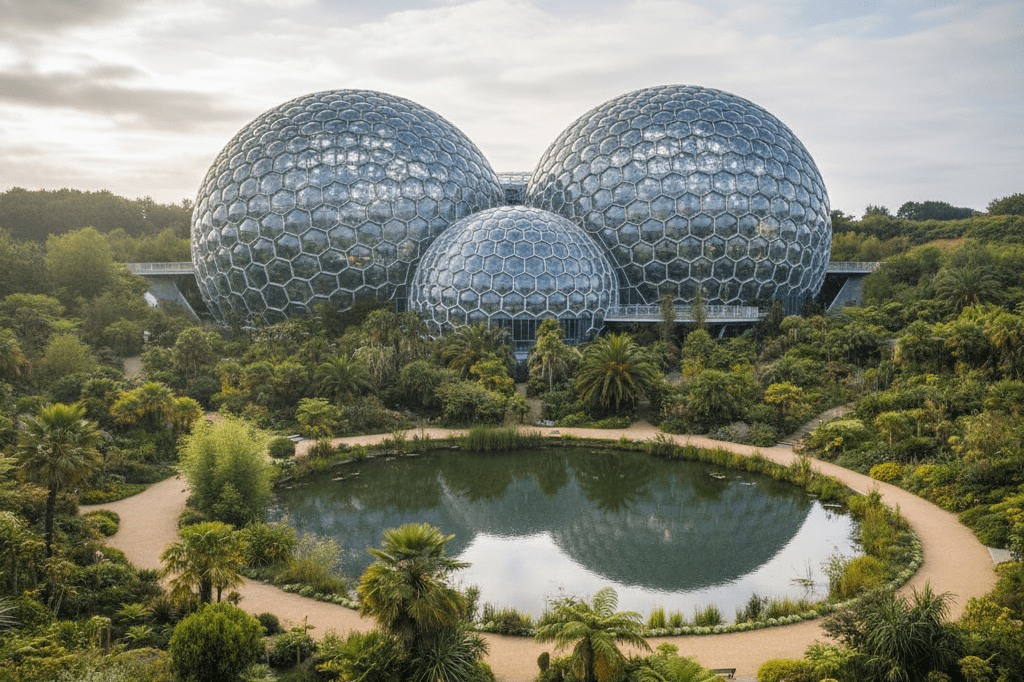
Eden Project’s global expansion strategy demonstrates how destination economics principles can be replicated across diverse international markets while maintaining core sustainability messaging. The organization’s active projects in Expo City Dubai and Qingdao, China, along with developments for Eden Project Morecambe in Lancashire and Eden Project Scotland in the design phase, showcase systematic scaling of the experiential attraction development model. These international ventures prove that the Eden formula of combining environmental education with immersive experiences translates across cultural boundaries and different regulatory environments.
The scaling approach focuses on adapting core visitor journey design principles to local contexts while preserving the premium pricing structure that drives revenue generation. Each new location builds upon Eden’s 25-year track record of converting environmental themes into commercially viable attractions that command higher visitor spending than traditional tourism offerings. The global expansion validates that experiential attraction development based on sustainability principles creates replicable business models that can attract international investment and generate sustained economic returns.
Strategy 1: Location-Based Experience Development
Eden’s replication success in international markets stems from creating location-specific experiences that integrate local environmental challenges with global sustainability messaging, as demonstrated by projects in Dubai and China. The Dubai development leverages desert ecosystem themes while maintaining Eden’s signature biome concept, showing how destination economics can adapt to different climatic conditions and cultural preferences. Community integration becomes crucial for commercial success, with local partnerships providing cultural authenticity and regulatory support that international visitors seek in premium experiential attractions.
Visitor journey design at each location emphasizes unique environmental storytelling that justifies premium pricing while creating multiple revenue touchpoints throughout the customer experience. The model transforms local ecological features into interactive educational content that encourages extended visits and repeat attendance, driving higher per-visitor spending than conventional tourist attractions. This approach demonstrates how experiential attraction development can create differentiated offerings that resist price-based competition while building strong local economic partnerships.
Strategy 2: Education as Business Model Component
Eden’s educational outreach strategy converted 750,000 children and young people into long-term market opportunities through school and college trips averaging 30,000 visits annually. This approach transforms educational programming into revenue generation while building future consumer bases through youth engagement that creates family return patterns. The workshop economics model featuring nearly 40 curriculum-linked offerings demonstrates how educational content can generate multiple revenue streams beyond admission fees while establishing institutional relationships with schools and colleges.
The educational business model component creates sustainable demand by converting one-time school visitors into family return customers who bring additional spending power during leisure visits. University-level partnerships supporting around 200 sustainability-focused students annually build professional networks that generate long-term brand advocacy and potential future business partnerships. This strategy shows how educational programming serves dual purposes of revenue generation and market development, creating customer loyalty patterns that extend beyond traditional tourism cycles.
Strategy 3: Innovation as Market Differentiator
Eden’s geothermal leadership position, operating the UK’s first new operational deep geothermal power plant since 1986, demonstrates how technological innovation creates unique market positioning that competitors cannot easily replicate. The 5km-deep well system that heats buildings while cutting up to 500 tonnes of CO₂ emissions annually serves as both operational cost reduction and visitor attraction, showing how environmental technology becomes part of the customer experience. This innovation strategy transforms infrastructure investments into marketing assets that justify premium pricing while reducing operational expenses.
The climate-positive goal targeting 2030 creates commercial advantage by positioning Eden ahead of regulatory requirements and consumer expectations regarding sustainability commitments. Converting environmental technology into visitor attractions allows Eden to monetize infrastructure investments while demonstrating practical sustainability solutions that enhance educational value. This approach shows how technology showcase strategies can generate revenue streams from what traditionally represent pure cost centers, creating competitive moats that protect market position while advancing environmental objectives.
The Green Economy: From Vision to £6.8 Billion Reality
The transformation from initial National Lottery funding of £56 million into £6.8 billion in total economic impact over 25 years provides compelling ROI evidence that sustainable business growth strategies can outperform traditional investment approaches. This return multiple of approximately 121:1 demonstrates how green economy investment principles can generate returns that exceed conventional business development metrics. The Millennium Commission’s original investment, sourced from National Lottery proceeds, created economic multiplier effects that continue generating regional prosperity decades after the initial funding decision.
Eden’s growth trajectory from single site operation to global influence illustrates how environmental leadership can serve as a proven economic strategy that attracts international expansion opportunities and partnership investments. The organization’s evolution from co-founders Sir Tim Smit and architect Jonathan Ball’s original vision into a multi-site international operation shows systematic scaling of green economy principles across different markets and regulatory environments. This expansion pattern validates that sustainable business growth models can achieve commercial success while maintaining environmental mission integrity and generating measurable economic development outcomes.
Background Info
- The Eden Project marked its 25th anniversary in 2026, with a landmark Impact Report released on March 5, 2026, revealing the organization generated £6.8 billion in total economic impact for the South West of England and an additional £5.7 billion in net economic impact specifically for Cornwall since opening in 2001.
- Over the 25-year period from 2001 to 2026, more than 25 million visitors attended the site, approximately 80% of whom originated from outside Cornwall, contributing to an estimated cumulative visitor spend of £8.4 billion.
- The project has sustained an average of 700 jobs annually, comprising roughly 430 direct roles (91% held by local residents) and 260 indirect positions within the wider regional economy.
- Operating expenditure totaled £630 million over 25 years, with less than 2% of this spending directed outside the UK, indicating strong support for domestic supply chains.
- Initial capital funding included £56 million from the Millennium Commission, sourced from National Lottery proceeds, which was secured based on the vision of co-founders Sir Tim Smit and architect Jonathan Ball.
- Since 2009, the charity’s “The Big Lunch” initiative facilitated over 1.5 million events across the UK, connecting an estimated 120 million people, while nature-based wellbeing programs launched in 2005 have engaged over 1,000 participants annually.
- Educational outreach reached more than 750,000 children and young people through school and college trips, averaging 30,000 visits per year, alongside nearly 40 curriculum-linked workshops and partnerships supporting around 200 sustainability-focused students at the university level.
- The site operates the UK’s first new operational deep geothermal power plant since 1986, utilizing a 5km-deep well to heat buildings and cut up to 500 tonnes of CO₂ emissions annually, with a stated target of becoming climate-positive by 2030.
- International and domestic expansion efforts include active projects in Expo City Dubai and Qingdao, China, with further developments for Eden Project Morecambe in Lancashire currently in progress and Eden Project Scotland in the design phase.
- On March 5, 2026, Chief Executive Andy Jasper stated: “The Eden Project unearths the wonder of the natural world and enriches life through positive action for the planet. This Impact Report is proof of the difference it makes and demonstrates that investing in nature, culture and education is not a luxury – it is a blueprint for economic growth.”
- Reflecting on the organization’s history, Co-founder Sir Tim Smit noted: “Eden is not the starry-eyed creation of visionaries. On the contrary, a group of ordinary people dared to dream yet organised to deliver to show everyone that we are not naïve, but realistic – it is revolutionary.”
- Baroness Floella Benjamin, reflecting on the initial funding decision as a former committee member of the Millennium Commission, confirmed the project was one of the most successful investments made with National Lottery funds.
- While all sources agree on the £6.8 billion total economic figure, specific breakdowns vary slightly by region; reports specify the £6.8 billion applies to the South West region, with a distinct £5.7 billion attributed specifically to net additional impact within Cornwall.
Related Resources
- Environmentjournal: Eden Project is a £6.8bn example of…
- Bbc: Eden Project's 'moving and wonderful story' shared to…
- Bbc: The Repair Shop restores Eden Project's Plant Takeaway…
- Superdeluxeedition: The Who / Live at Eden Project 2023
- Theguardian: Sky monkeys, pink tutus and bum nuts: behind…