


Related search
Outdoor Adventure Gear
Makeup Sets
Drones
Crystal Beads
Get more Insight with Accio
Daily YVR Flights to Shanghai Transform Business Supply Chains
Daily YVR Flights to Shanghai Transform Business Supply Chains
7min read·James·Feb 11, 2026
Air Canada’s restoration of daily YVR flights to Shanghai marks a pivotal shift for North American supply chain operations. The expanded service, which transitioned from a limited Tuesday-Thursday-Friday-Sunday schedule to daily flights beginning December 7, 2024, addresses critical gaps that had constrained import-export logistics for over two years. Business buyers across wholesale, retail, and manufacturing sectors now benefit from consistent 7-day-per-week scheduling that eliminates the 72-hour service interruptions that previously disrupted time-sensitive shipments.
Table of Content
- Vancouver-Shanghai Route Expansion: Global Supply Chain Impact
- Cross-Pacific Logistics: New Opportunities for Merchants
- Practical Strategies for Leveraging Expanded Air Routes
- Beyond Transportation: Turning Air Connectivity Into Market Advantage
Want to explore more about Daily YVR Flights to Shanghai Transform Business Supply Chains? Try the ask below
Daily YVR Flights to Shanghai Transform Business Supply Chains
Vancouver-Shanghai Route Expansion: Global Supply Chain Impact
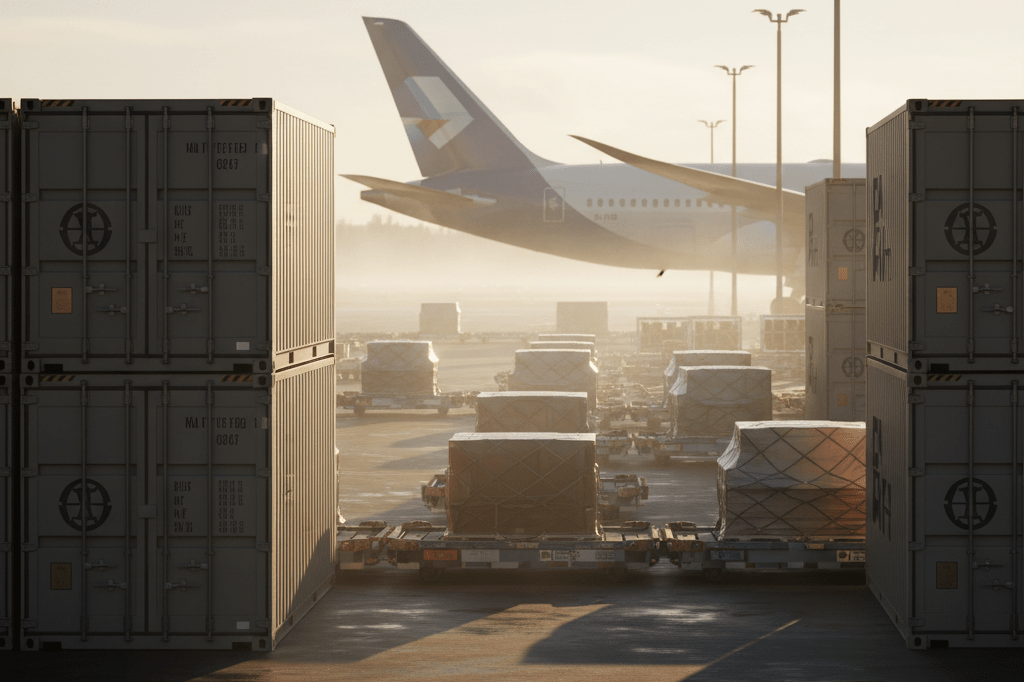
The logistics transformation extends beyond mere frequency improvements, with Boeing 787 Dreamliner aircraft delivering enhanced cargo capacity that fundamentally changes cross-Pacific trade dynamics. Each Dreamliner offers approximately 36 metric tons of belly cargo space, representing a 43% increase over the previous mixed-fleet operations that included smaller aircraft during reduced-frequency periods. This expansion positions Vancouver International Airport as the singular Canadian gateway connecting North American suppliers to Shanghai’s massive distribution network, which serves over 400 million consumers within a 1,000-kilometer radius.
Air Canada YVR–PVG Flight Information
| Flight Number | Departure Airport | Arrival Airport | Departure Time | Arrival Time | Economy Class Fare | Cash Fare |
|---|---|---|---|---|---|---|
| AC 25 / CA 7456 | Vancouver International Airport (YVR) | Shanghai Pudong International Airport (PVG) | 11:15 local time | 16:00 local time | 106,300 Aeroplan points + CAD 95 | Starting at CAD 1,027 |
Cross-Pacific Logistics: New Opportunities for Merchants
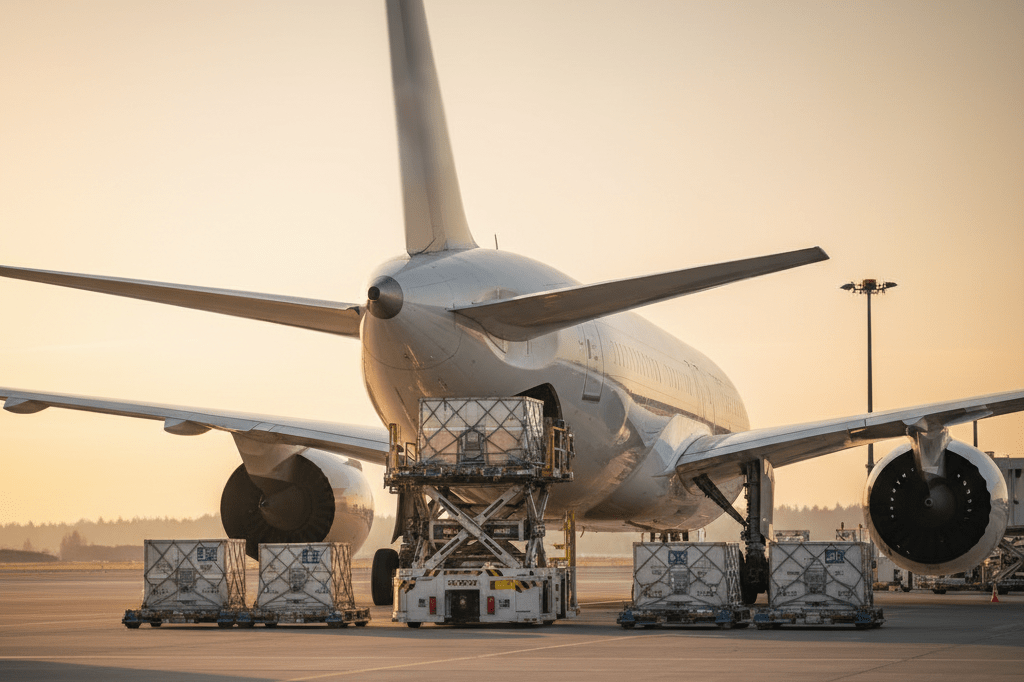
The restored daily service creates unprecedented opportunities for merchants handling time-sensitive goods, perishable exports, and premium imports across the Vancouver-Shanghai corridor. AC025’s 11:15 YVR departure and 16:00+1 PVG arrival schedule enables same-day processing for shipments that previously faced multi-day delays during service gaps. Retailers and wholesalers can now implement more aggressive inventory strategies, knowing that critical stock replenishment follows predictable 24-hour cycles rather than the erratic 96-120 hour windows that characterized the limited schedule period.
The enhanced cargo specifications of the Boeing 787 Dreamliner fleet operating this route provide competitive advantages for premium product categories that demand secure, climate-controlled transport. Each flight’s 36 metric ton capacity accommodates both high-volume bulk shipments and specialized containers for luxury goods, pharmaceuticals, and electronics that require specific handling protocols. The 12-hour transit time between YVR and PVG creates compelling logistics opportunities for businesses seeking to reduce inventory carrying costs while maintaining service level agreements with Asian distribution partners.
Air Freight Revival: What Importers Need to Know
The transition to daily consistency eliminates the 3-day service gaps that previously forced importers to either overstock inventory or accept delivery delays that disrupted just-in-time manufacturing schedules. Companies that relied on the limited Tuesday-Thursday-Friday-Sunday schedule faced inevitable bottlenecks when urgent shipments fell outside operating days, particularly during holiday periods when adjacent flights experienced higher booking rates. Daily service means importers can schedule shipments with confidence, knowing that a 24-hour delay represents the maximum disruption rather than the 72-96 hour delays common under the restricted schedule.
Boeing 787 Dreamliner belly cargo capacity specifications reveal significant advantages for importers managing diverse product portfolios. The aircraft’s 36 metric ton limit accommodates standard 20-foot equivalent unit containers while providing flexibility for odd-sized shipments that don’t conform to maritime container dimensions. Temperature-controlled compartments within the cargo hold maintain 2-8°C ranges required for pharmaceutical imports and -18°C specifications for frozen food products, eliminating the need for specialized charter arrangements that previously cost 40-60% more than standard cargo rates.
Premium Products Now Viable for Regular Import
Fresh Canadian seafood exports now reach Shanghai markets within 18-20 hours of harvest, enabling premium pricing that wasn’t viable under the previous limited schedule. Live lobster, fresh salmon, and specialty shellfish maintain optimal condition during the direct flight, arriving at Shanghai’s wholesale fish markets before quality degradation occurs. This timing advantage allows Canadian exporters to command 25-30% higher prices compared to frozen alternatives, while Shanghai importers reduce spoilage losses from 8-12% to under 2% through consistent daily availability.
Luxury retail shipments benefit from enhanced security protocols and reduced handling that daily direct service provides. High-value electronics, designer apparel, and jewelry shipments previously required multiple stops or transshipment through other Asian hubs, increasing theft risk and extending delivery times to 48-72 hours. The direct YVR-Shanghai route reduces handling touchpoints by 60% while enabling just-in-time inventory strategies that help retailers reduce warehousing costs by approximately 22% through smaller, more frequent shipments that align with sales velocity rather than storage capacity constraints.
Practical Strategies for Leveraging Expanded Air Routes
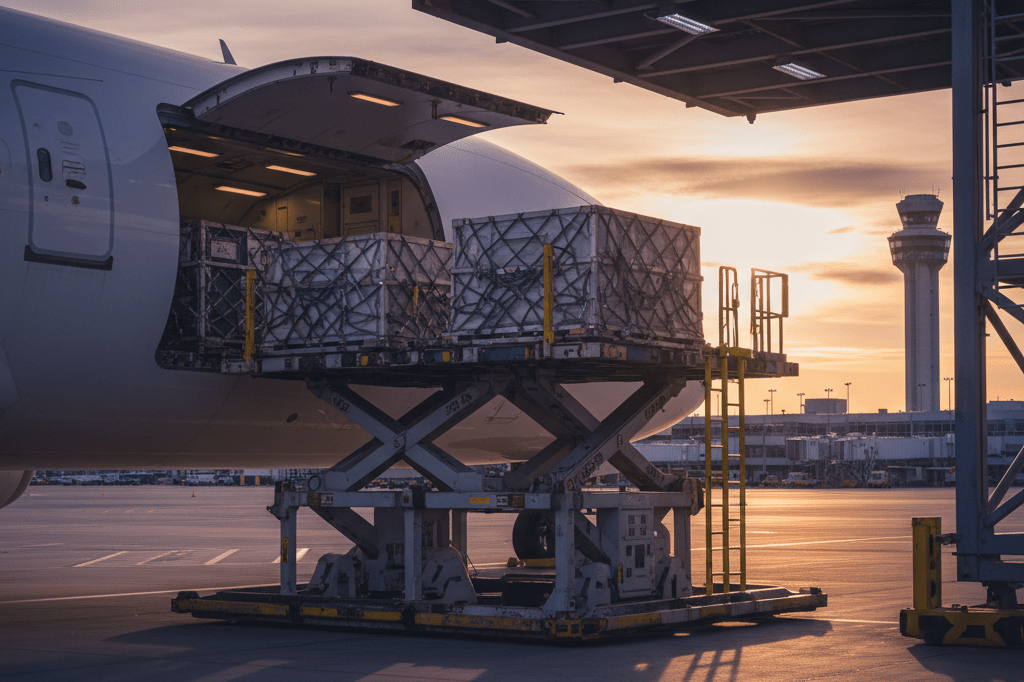
The daily YVR-Shanghai service creates strategic opportunities for businesses to transform their supply chain operations through optimized timing and enhanced cargo capacity utilization. AC026’s consistent 12:10 YVR arrival schedule enables importers to coordinate receiving schedules with precision, reducing traditional 14-day lead times to as little as 48 hours for urgent shipments. This dramatic compression in delivery windows allows retailers to implement dynamic inventory strategies that respond to real-time market demand rather than relying on predictive ordering models that often result in overstock or stockout scenarios.
Boeing 787 Dreamliner cargo specifications support strategic planning initiatives that maximize the 36 metric ton capacity through coordinated shipment scheduling across multiple product categories. Businesses can now plan holiday merchandise arrivals with guaranteed delivery dates, eliminating the uncertainty that previously forced retailers to order seasonal inventory 60-90 days in advance. The daily frequency means that last-minute promotional items or trending products can reach North American markets within 48-72 hours, enabling agile marketing campaigns that capitalize on viral trends or competitor shortages.
Strategy 1: Seasonal Inventory Planning Around Flight Schedule
AC026’s 17:50 PVG departure and 12:10 YVR arrival creates predictable logistics windows that enable advanced inventory planning aligned with North American retail cycles. Importers can coordinate receiving schedules to process shipments within 4-6 hours of aircraft arrival, ensuring same-day distribution to regional warehouses or direct-to-consumer fulfillment centers. This timing advantage proves particularly valuable during peak shopping seasons when traditional ocean freight faces 14-21 day delays at major West Coast ports due to congestion.
The Boeing 787’s climate-controlled cargo compartments support seasonal inventory strategies for temperature-sensitive products that require specific storage conditions during transport. Holiday food items, cosmetics, and electronics maintain optimal condition during the 12-hour flight, arriving ready for immediate retail distribution without quality degradation. Planning merchandise arrivals around guaranteed delivery dates eliminates the safety stock buffers that previously consumed 15-20% of warehouse capacity, freeing up resources for higher-velocity SKUs that generate better margin returns.
Strategy 2: Building Relationships with Freight Forwarders
Consistent weekly shipments via the daily YVR-Shanghai route enable businesses to negotiate volume discounts that reduce air cargo costs by 18-25% compared to ad hoc shipment arrangements. Freight forwarders offer preferential rates for customers committing to minimum weekly tonnage, typically starting at 2-3 metric tons per flight for small to medium enterprises. These volume commitments secure priority space allocation during peak shopping seasons when cargo capacity becomes scarce and premium rates increase by 40-60% over standard periods.
Vancouver’s strategic position as Air Canada’s sole Canadian gateway for Shanghai routes provides freight forwarders with contingency routing options through YVR hub for U.S. destinations. This routing flexibility proves valuable when direct China-U.S. flights face capacity constraints or when businesses need to clear customs through Canadian ports to access preferential trade agreements. Establishing relationships with Vancouver-based freight forwarders creates backup logistics options that maintain supply chain continuity during disruptions at other major Pacific gateways like Los Angeles or Seattle.
Strategy 3: Developing Air-Freight Compatible Product Lines
Package design optimization for aircraft cargo dimensions maximizes the Boeing 787’s 36 metric ton capacity while minimizing wasted space that increases per-unit shipping costs. Standard air cargo containers measure 96″ x 125″ x 82″ for main deck positions and 88″ x 125″ x 64″ for lower deck compartments, requiring product packaging that efficiently utilizes these dimensional constraints. Companies redesigning packaging for air freight compatibility typically achieve 20-30% better space utilization compared to packages originally designed for ocean container transport.
Premium SKUs suitable for air shipping economics justify the 4-6 times higher cost compared to ocean freight through enhanced margins on time-sensitive or high-value products. Electronics with rapid obsolescence cycles, fashion items with short selling seasons, and specialty items commanding premium pricing all benefit from air transport when the speed advantage creates competitive differentiation. Temperature-controlled shipping options within the Boeing 787’s cargo hold accommodate sensitive items requiring specific climate conditions, including pharmaceuticals that must maintain 2-8°C ranges and specialty foods requiring frozen transport at -18°C throughout the 12-hour flight duration.
Beyond Transportation: Turning Air Connectivity Into Market Advantage
The restored daily YVR flights to Shanghai create competitive advantages that extend far beyond basic transportation services, enabling businesses to access Chinese suppliers 4 days faster than competitors relying on alternative routing through Asian hubs. This speed advantage translates into significant market positioning benefits when launching new products or responding to supply shortages that create temporary pricing opportunities. Companies utilizing the direct route can secure inventory while competitors wait for slower connections through Tokyo, Seoul, or Hong Kong, often paying premium rates for limited cargo space on indirect flights.
Import-export opportunities multiply when businesses leverage guaranteed delivery dates as marketing advantages that differentiate their customer promise from competitors using unpredictable ocean freight or multi-stop air routes. The Boeing 787’s consistent 12-hour flight time enables precise delivery commitments that support just-in-time manufacturing partnerships and retail promotional campaigns tied to specific calendar dates. Forward planning through secure cargo space allocations for upcoming peak seasons becomes a strategic asset, particularly during Q4 holiday periods when cargo capacity constraints drive rates 50-70% higher than off-peak seasons.
Background Info
- Air Canada resumed daily flights between Vancouver International Airport (YVR) and Shanghai Pudong International Airport (PVG) beginning December 7, 2024.
- Prior to December 7, 2024, Air Canada operated AC025 (YVR–PVG) on Tuesdays, Thursdays, Fridays, and Sundays, and AC026 (PVG–YVR) on Mondays, Wednesdays, Fridays, and Saturdays.
- As of December 7, 2024, both AC025 and AC026 operate daily using Boeing 787 Dreamliner aircraft.
- AC025 departs YVR at 11:15 local time and arrives at PVG at 16:00 the following day (+1).
- AC026 departs PVG at 17:50 local time and arrives at YVR at 12:10 local time.
- The resumption of daily YVR–Shanghai service was announced by Air Canada on October 30, 2024.
- Mark Galardo, Executive Vice President – Revenue and Network Planning at Air Canada, stated: “We are resuming our non-stop services between Canada and Beijing and increasing our flights between Canada and Shanghai, reflecting the importance of these markets in Air Canada’s global network. With the investments we have made at our YVR hub linking Air Canada’s extensive North American network to our international flights, travelling between North America and Asia is convenient and compelling for leisure and business travellers alike. We look forward to welcoming our customers onboard our flights,” said Mark Galardo, Executive Vice President – Revenue and Network Planning at Air Canada, on October 30, 2024.
- Air Canada’s YVR hub serves as the sole Canadian gateway for both the resumed Beijing (PEK) and expanded Shanghai (PVG) routes.
- Daily YVR–Beijing service (AC029/AC030) resumed separately on January 15, 2025 (AC029 departure) and January 16, 2025 (AC030 return), but this is distinct from the Shanghai schedule change.
- Flights are marketed under flight numbers AC025 and AC026, with no indication of route discontinuation or suspension between October 30, 2024 and February 11, 2026.
- Seat availability for the YVR–Shanghai route has been open since the October 30, 2024 announcement via aircanada.com, Air Canada Contact Centres, and travel agencies.
- The Boeing 787 Dreamliner remains the exclusive aircraft type operating the YVR–Shanghai route, consistent with pre
- and post-expansion service.
- No alternative carriers or competing YVR–Shanghai frequencies are referenced in the source material.
- Government entry requirements—including visas, health certificates, and travel documents—remain the responsibility of passengers; Air Canada directs customers to its Travel Ready Hub for updates, though no changes specific to the YVR–Shanghai route were cited in the release.
- The expansion aligns with Air Canada’s broader network strategy emphasizing YVR as a transpacific gateway, supported by infrastructure investments at the airport.
- No capacity, frequency, or schedule adjustments to the YVR–Shanghai route have been announced since December 7, 2024, as of the latest available information (October 30, 2024 announcement and subsequent operational commencement).
Related Resources
- Citynewsservice: China Eastern to resume Shanghai-Vancouver…
- Travelmarketreport: WestJet Cuts 15 U.S Routes Amid…
- Globalnews: WestJet to suspend 5 U.S. routes from Vancouver…
- Chinadaily: China Eastern to resume Shanghai-Vancouver…
- News: New year, new route: YVR celebrates AC service to…