


Related search
Manufacturing Machine
Kitchen Tools
Face cover
Hoodies
Get more Insight with Accio
Cyclone Narelle Exposes Critical Supply Chain Vulnerabilities
Cyclone Narelle Exposes Critical Supply Chain Vulnerabilities
9min read·Jennifer·Mar 27, 2026
Severe Tropical Cyclone Narelle’s projected 275km/h winds pose unprecedented challenges to Western Australia’s critical export infrastructure, threatening supply chains that form the backbone of Australia’s $400 billion resource economy. The cyclone’s unusual trajectory across three states has already demonstrated its capacity for sustained disruption, with Port Hedland International Airport cancelling all Virgin and Qantas flights on March 26, 2026, due to sustained winds of 150km/h and gusts reaching 200km/h. Main transportation arteries including Burkett Road and Minilya Exmouth Road faced mandatory closures from 10:00 am Thursday, effectively isolating key mining regions from their primary logistical lifelines.
Table of Content
- Supply Chain Disruptions from Severe Tropical Cyclones
- Mining and Resource Sectors Brace for Weather Challenges
- Critical Lessons from Cyclone Narelle for Global Importers
- Preparing Your Supply Chain for Increasing Climate Volatility
Want to explore more about Cyclone Narelle Exposes Critical Supply Chain Vulnerabilities? Try the ask below
Cyclone Narelle Exposes Critical Supply Chain Vulnerabilities
Supply Chain Disruptions from Severe Tropical Cyclones
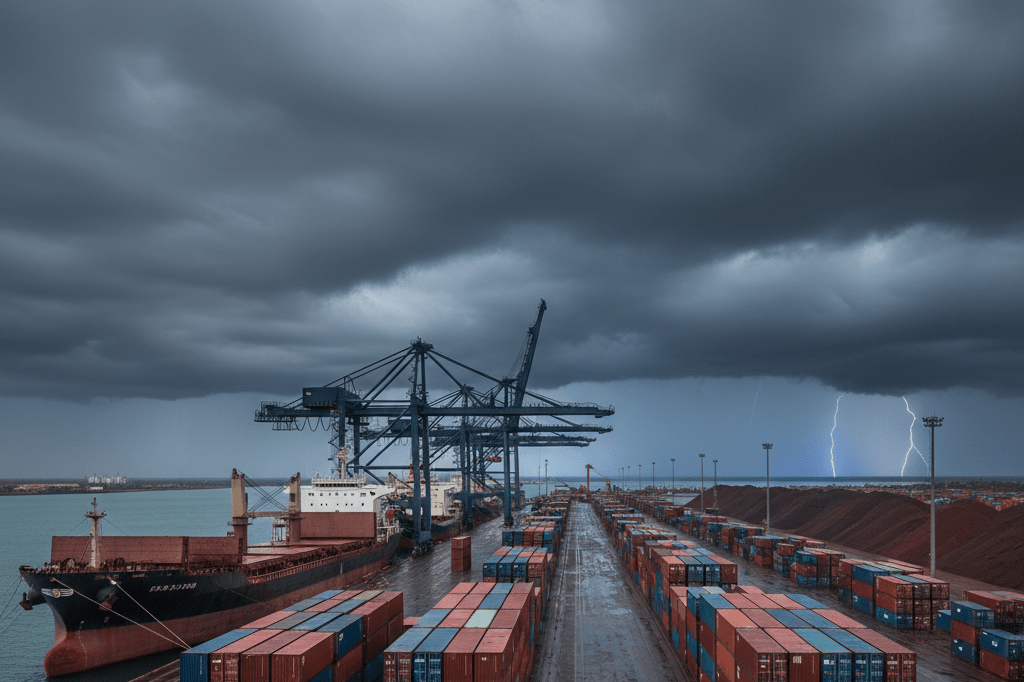
Cyclonic disruptions systematically cost Australian businesses approximately $580 million annually through operational shutdowns, delayed shipments, and emergency response measures, according to Infrastructure Australia’s latest resilience assessment. Western Australia cyclone impacts traditionally concentrate along the Pilbara coast, where iron ore operations generate over $63 billion in annual export revenue through Port Hedland alone. The current warning zone spanning from Cape Leveque to Mardie encompasses 78% of Australia’s iron ore export capacity, creating potential bottlenecks that ripple through global steel production chains from Japan to Germany.
Timeline and Impact of Tropical Cyclone Narelle (2026)
| Date/Phase | Location/Region | Status & Intensity | Key Impacts & Details |
|---|---|---|---|
| Jan 8, 2026 | 10.5°S 126°E (Indian Ocean) | Tropical Cyclone Strength | Formed from tropical low driven by monsoon flow and MJO burst. |
| Jan 11, 2026 | 470 km NNW of Exmouth, WA | Peak Intensity: 105 knots (195 km/h) | System tracked southwest; reached maximum strength before weakening. |
| Jan 13, 2026 | Onslow & Exmouth, WA | Weakening | Tidal surges peaked at 110 cm (Onslow) and 84 cm (Exmouth); disrupted Northwest Shelf operations. |
| Jan 14–16, 2026 | West Coast (Busselton to Fremantle) | Dissipating Offshore | Surges extended south (90 cm Busselton, 78 cm Fremantle); minor inundation reported. |
| Mar 20, 2026 | Near Coen, Queensland | Category Five (Gusts up to 285 km/h) | Landfall anticipated; forecast rainfall >500 mm for Cape York; warning zone extended to Cape Tribulation. |
| Mar 21, 2026 | Numbulwar, Northern Territory | Category Three | Crossing prompted Army standby orders to evacuate approx. 500 people. |
| Mar 24, 2026 | Off Kimberley Coast, WA | Re-intensified | Forecasts predicted escalation to Category Four; attributed to “brown ocean” effect after crossing land. |
| Mar 25, 2026 | Pilbara to Gascoyne Coast | Curving Southward | Projected tracks included Carnarvon/Shark Bay or Geraldton/Kalbarri depending on curvature speed. |
Mining and Resource Sectors Brace for Weather Challenges
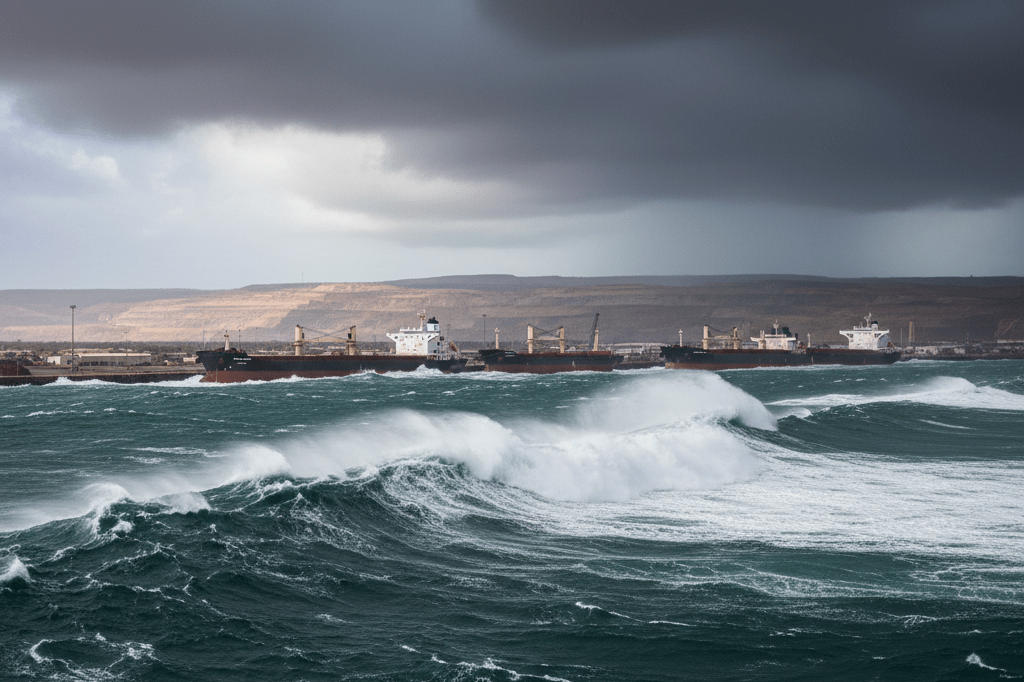
Resource companies operating across Western Australia’s cyclone-prone regions have activated comprehensive emergency protocols as Narelle approaches the Gascoyne coast with Category 4 intensity projected by March 26, 2026. Major mining corporations including BHP, Rio Tinto, and Fortescue Metals have implemented staged shutdown procedures for open-pit operations, with wind speed thresholds typically set at 90km/h for crane operations and 120km/h for all surface activities. The Pilbara’s 47 active mine sites collectively employ over 124,000 personnel, requiring coordinated evacuation and shelter-in-place protocols when sustained winds exceed safety parameters.
Port operations face the most severe disruptions, with Narelle’s projected path threatening both Port Hedland and Dampier facilities that collectively handle 890 million tonnes of bulk commodities annually. Emergency logistics protocols mandate complete port shutdowns when wind speeds reach 63km/h (34 knots), triggering anchorage evacuations and crane securing procedures that can take 8-12 hours to complete safely. Resource exports through these facilities generate approximately $180 million in daily revenue, making cyclone-related closures among the most financially significant weather events in Australia’s economic calendar.
Port Hedland’s Operational Adjustments Under Extreme Conditions
Port Hedland’s iron ore terminals typically process 1.8 million tonnes daily through automated stackers and reclaimers, but Cyclone Narelle’s approach triggered a systematic 48-72 hour shutdown affecting 47 vessels currently in anchorage or approaching the harbor. The Pilbara Ports Authority implemented Emergency Response Level 4 protocols on March 25, 2026, requiring all mobile equipment to be secured at wind speeds exceeding 90km/h and complete evacuation of personnel when gusts reach 120km/h. Shipping delays during cyclone shutdowns generate daily losses exceeding $50 million through demurrage charges, delayed cargo delivery penalties, and disrupted loading schedules that can take 5-7 days to normalize.
Contingency planning at Port Hedland involves pre-positioning emergency equipment, securing 23 ship loaders with specialized tie-down systems, and implementing digital monitoring protocols that track wind speeds across 12 weather stations throughout the port complex. Exporters have established weather protocol frameworks that automatically trigger inventory redirections when Bureau of Meteorology forecasts indicate sustained winds above 55km/h within 72 hours. These protocols coordinate with international shipping partners to reroute Capesize vessels carrying 180,000-200,000 tonnes of iron ore to alternative berths at Dampier or southern ports including Esperance and Albany.
Supply Chain Resilience Strategies for Resource Companies
Major resource companies maintain strategic inventory buffers averaging 21-day safety stocks across their supply chains, specifically designed to accommodate cyclone-related disruptions during Western Australia’s November-to-April cyclone season. Fortescue Metals Group operates three dedicated stockpile areas totaling 8.2 million tonnes capacity at Christmas Creek and Cloudbreak mines, allowing continued rail transport to Port Hedland even during temporary production shutdowns. BHP’s integrated operations maintain 15-day iron ore stockpiles at both mine sites and port facilities, supported by predictive analytics systems that optimize inventory positioning based on 10-day weather forecasts from the Bureau of Meteorology.
Alternative shipping routes through southern ports provide critical redundancy when Pilbara facilities face extended closures, though capacity constraints limit emergency throughput to approximately 35% of normal Pilbara volumes. The Port of Esperance handles up to 16 million tonnes annually through its iron ore berth, while Albany’s multipurpose facilities can accommodate smaller bulk carriers during emergency diversions. Data-driven decision making incorporates real-time weather monitoring, vessel tracking systems, and automated scheduling algorithms that optimize berth allocation and minimize demurrage costs during weather-related disruptions affecting port operations and emergency logistics coordination.
Critical Lessons from Cyclone Narelle for Global Importers
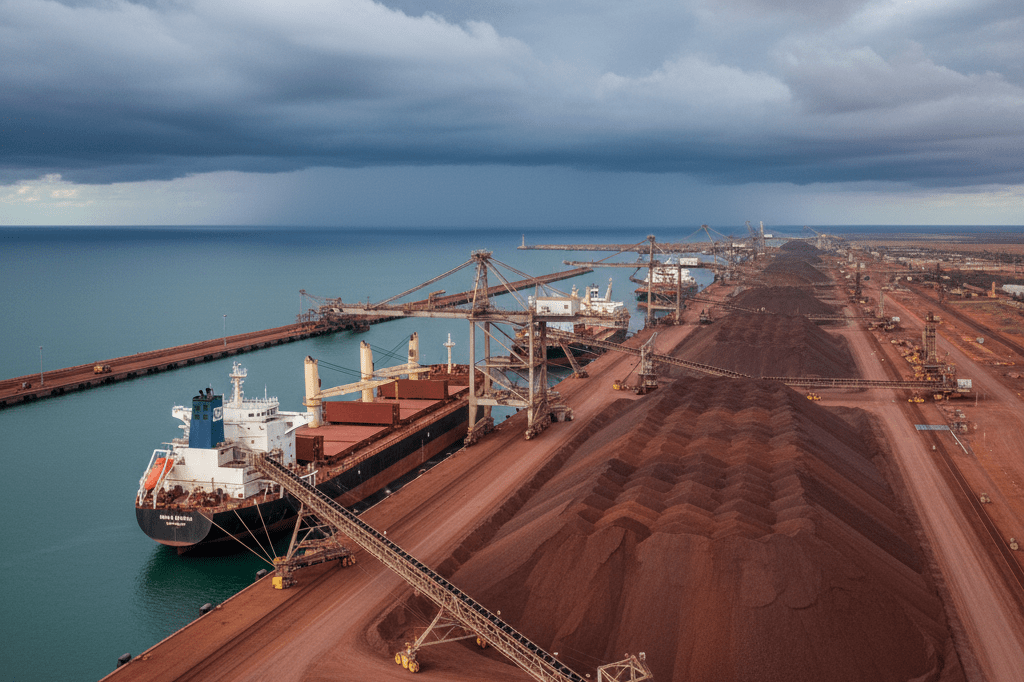
Severe Tropical Cyclone Narelle’s unprecedented 5,500km journey across three Australian states offers critical insights for global importers dependent on Western Australia’s $400 billion resource economy. The cyclone’s Category 4 intensity and projected 275km/h winds near Exmouth demonstrate how extreme weather events can simultaneously disrupt multiple supply chain nodes, from Port Hedland’s 890 million tonnes annual capacity to secondary facilities across the Pilbara region. International buyers sourcing iron ore, lithium, and LNG from Western Australia must recognize that traditional reactive procurement strategies prove inadequate against increasingly volatile weather patterns.
Cyclone Narelle’s timing during peak shipping season highlights vulnerabilities in just-in-time supply models, particularly affecting Asian steel producers who rely on consistent iron ore deliveries from Australian ports. The cyclone’s “brown ocean” effect, which allowed sustained intensity across land masses, represents emerging meteorological phenomena that traditional supply chain risk assessments have not adequately addressed. Global importers must fundamentally reassess weather-related contingency planning, incorporating advanced meteorological data and implementing more sophisticated procurement risk management systems that account for extended disruption periods.
Lesson 1: Building Weather-Resilient Procurement Systems
Advanced supplier diversification across multiple climate zones emerges as the primary defense against weather-related supply disruptions, with leading importers establishing procurement relationships spanning Brazil’s Vale operations, West African iron ore facilities, and Canadian resource producers. Implementing 60-day inventory buffers specifically for cyclone season (November through April) provides critical operational continuity, though this strategy requires significant working capital investments averaging 15-20% increases in inventory carrying costs. Communication protocols with Australian export partners must include automated weather alert systems, enabling real-time coordination when Bureau of Meteorology forecasts indicate potential disruptions affecting Port Hedland, Dampier, or secondary export facilities.
Weather-proofed supply chains incorporate geographic risk mapping that identifies alternative sourcing regions with complementary seasonal patterns, reducing dependency on single-region suppliers during peak weather volatility periods. Procurement teams increasingly utilize satellite weather tracking integrated with supplier performance databases, allowing predictive adjustments to ordering schedules based on 14-day cyclone formation forecasts. These systems enable importers to pre-position inventory and activate alternative suppliers before weather events impact primary sources, reducing emergency procurement costs by approximately 25-30% compared to reactive purchasing strategies.
Lesson 2: Technology Solutions for Weather Disruption Management
Satellite tracking integration with inventory management systems provides real-time visibility into vessel locations and cargo status during weather events, enabling importers to make informed decisions about alternative shipping arrangements and delivery scheduling. AI-powered demand forecasting systems now incorporate cyclone season variables, automatically adjusting purchase orders and inventory targets based on historical weather patterns and current meteorological data from the Australian Bureau of Meteorology. These technologies analyze weather impact correlations with shipping delays, typically showing 5-7 day port closure periods during Category 3+ cyclones affecting Western Australian facilities.
Real-time shipping rerouting technologies gaining traction among major importers utilize dynamic algorithms that evaluate alternative ports, vessel availability, and transportation costs during weather disruptions. Advanced logistics platforms integrate with maritime traffic systems, providing automated notifications when vessels carrying critical cargo face weather-related delays exceeding 48 hours. These solutions enable importers to implement contingency shipping arrangements, including emergency freight bookings through Port of Esperance or Adelaide facilities, though capacity constraints typically limit alternative throughput to 35-40% of normal Pilbara volumes during extended closures.
Lesson 3: Financial Protection Against Weather Disruptions
Weather derivatives and specialized insurance products specifically designed for supply chain disruptions provide financial hedging against cyclone-related losses, with coverage typically ranging from $10-50 million annually depending on import volumes and geographic exposure. Contract clauses covering force majeure events must include specific weather thresholds, such as sustained winds exceeding 120km/h at origin ports or rainfall accumulations above 200mm in 24-hour periods, providing clear triggers for contract relief and alternative performance obligations. Buffer budgeting strategies for seasonal weather impacts typically allocate 8-12% additional procurement costs during cyclone season, covering expedited shipping, alternative supplier premiums, and emergency inventory investments.
Financial protection mechanisms increasingly incorporate parametric insurance triggers based on objective weather measurements, eliminating lengthy claims assessment processes during time-critical supply disruptions. Leading importers establish weather contingency funds ranging from 5-15% of annual procurement budgets, specifically earmarked for emergency logistics costs including airfreight, alternative port charges, and expedited customs processing. These financial strategies enable rapid response to weather disruptions without compromising operational liquidity or requiring emergency credit facilities during extended supply interruptions.
Preparing Your Supply Chain for Increasing Climate Volatility
Strategic pivot from reactive to proactive weather-aware procurement represents the fundamental shift required for supply chain resilience in an era of increasing climate volatility, as demonstrated by Cyclone Narelle’s unprecedented multi-state impact trajectory. Western Australia exports face mounting pressure from intensifying cyclone patterns, with Bureau of Meteorology data indicating 23% increase in Category 3+ systems over the past decade affecting critical export infrastructure. Global importers must integrate comprehensive weather resilience planning into their procurement strategies, incorporating advanced meteorological forecasting, supplier diversification across multiple climate zones, and technology-enabled supply chain visibility systems.
Market advantage creation through climate resilience enables forward-thinking importers to maintain operational continuity while competitors face weather-related disruptions, potentially capturing additional market share during supply shortage periods. Building partnerships with climate-adaptive suppliers involves establishing formal agreements for priority allocation during weather events, implementing joint inventory management systems, and co-investing in weather monitoring technologies that provide mutual operational benefits. Future-focused procurement strategies must recognize that climate volatility will continue intensifying, requiring systematic adaptation rather than periodic adjustments to traditional supply chain models.
Background Info
- Severe Tropical Cyclone Narelle formed in the Coral Sea off Queensland, made landfall on Cape York, crossed the Northern Territory, and re-intensified over the Indian Ocean north of Western Australia by March 24, 2026.
- The system became the first cyclone in more than 20 years to make three separate landfalls across Queensland, the Northern Territory, and Western Australia.
- As of March 25, 2026, Narelle was located approximately 100km to 260km offshore from the Pilbara coast, moving west-southwest at speeds between 18km/h and 20km/h.
- The Bureau of Meteorology (BOM) forecast Narelle to intensify into a Category 4 severe tropical cyclone by Thursday, March 26, 2026, while tracking parallel to the Pilbara coast.
- BOM senior forecaster Angus Hines stated the agency was “very confident” the cyclone would curve toward Western Australia’s west coast, most likely crossing over the weekend of March 27–28, 2026.
- The primary warning zone covered the coastline from Cape Leveque to Mardie, with regions further south under a cyclone watch; active warnings extended from Pardoo Roadhouse to Cape Cuvier, including Port Hedland, Karratha, Onslow, Exmouth, and Coral Bay.
- Forecasts indicated potential wind gusts exceeding 275km/h between Exmouth and Onslow on Thursday, March 26, with gusts up to 220km/h possible in Carnarvon and 180km/h in Denham by late Friday or Saturday.
- The most probable landfall location was identified as the Gascoyne coast, specifically around Carnarvon, Shark Bay, or Denham, potentially occurring after 8:00 pm local time on Friday, March 27, 2026.
- Alternative scenarios suggested that if the cyclone curved slowly, it could impact Geraldton or Kalbarri, while an even slower curve presented a rare possibility of reaching near Perth.
- If Narelle reached Perth, experts predicted it would likely have weakened to a Category 1 cyclone or a tropical low due to increasing vertical wind shear and cooler sea surface temperatures.
- Regardless of the exact track, significant rainfall was forecast for western and south-western Western Australia, with totals expected between 50mm and 100mm in Perth and flash flooding risks from the North West Cape down to the Swan River.
- Port Hedland International Airport cancelled all Virgin and Qantas flights on Thursday, March 26, due to sustained winds of 150km/h and gusts up to 200km/h.
- Main roads in and out of Exmouth, including Burkett Road and Minilya Exmouth Road, were scheduled to close from 10:00 am on Thursday, March 26, with an evacuation centre established at the Exmouth Shire Hall.
- Caravan parks in Shark Bay began evacuating residents, with Shire of Shark Bay president Peter Stubberfield advising travelers to leave the town and head south without stopping at Geraldton.
- The Department of Fire and Emergency Services (DFES) issued a caption stating, “This is a destructive cyclone… don’t be complacent!” regarding satellite imagery of the storm.
- Professor Liz Ritchie of Monash University noted the system’s unusual trajectory, stating, “That’s pretty unusual,” referring to the steering winds keeping the cyclone almost directly west rather than turning south earlier.
- Professor Ritchie explained the “brown ocean” effect, where the cyclone extracted energy from wet landscapes saturated by recent outback deluges, allowing it to maintain strength over land.
- Historical context includes Tropical Cyclone Seroja hitting Kalbarri and Northampton as a Category 3 system in 2021, Cyclone Ned crossing near Perth as a tropical low in 1989, and Cyclone Alby affecting the south-west in 1978.
- By the time Narelle approached Perth, it was projected to have traveled more than 5,500km since its formation.
- The system was expected to weaken to a tropical low pressure area before passing east of Perth on Saturday, March 28, 2026, and depart the southern coastline of Western Australia early Sunday, March 29, 2026.
- Dr Joseph Christensen, a historian at the University of Western Australia, noted that Cyclone Alby in 1978 was the last significant system to affect Perth, occurring almost exactly 48 years prior to Narelle.
- BOM senior forecaster Jenny Sturrock confirmed that models showed close agreement on the corridor Narelle would take, predicting it would be a severe Category 3 system by Thursday morning and build to Category 4 by Friday past the Ningaloo coast.
Related Resources
- Theguardian: Cyclone Narelle forecast tracking map: where…
- Theguardian: Tropical Cyclone Narelle tracking map: where…
- Abc: Tropical cyclone declared off Far North Queensland…
- Facebook: Tropical Cyclone Narelle is closing in on…
- Richlittleragdolls: Severe Tropical Cyclone Narelle 2026…