


Related search
Holiday Decoration
Sportswear
Gardening Supplies
Camping Tool
Get more Insight with Accio
Bentham Yorkshire PFAS Crisis Reshapes Global Product Safety Standards
Bentham Yorkshire PFAS Crisis Reshapes Global Product Safety Standards
8min read·James·Mar 25, 2026
The discovery of extreme PFAS contamination in Bentham Yorkshire has fundamentally altered product safety standards across multiple industries. Blood tests from 39 Bentham residents revealed that one individual reached 405 ng/ml PFAS concentration levels – over 200 times higher than the National Academies of Sciences threshold for potential harm. This shocking revelation has forced manufacturers to confront the reality that traditional safety protocols may be insufficient to protect consumers from decades-old contamination sources like the former Angus Fire factory, which operated from 1976 to 2024.
Table of Content
- How PFAS Contamination Creates New Challenges for Products
- Supply Chain Transparency in the Post-PFAS Landscape
- The Environmental Testing Boom: New Market Opportunities
- From Environmental Crisis to Product Innovation Catalyst
Want to explore more about Bentham Yorkshire PFAS Crisis Reshapes Global Product Safety Standards? Try the ask below
Bentham Yorkshire PFAS Crisis Reshapes Global Product Safety Standards
How PFAS Contamination Creates New Challenges for Products

Chemical testing requirements in consumer goods have surged by an estimated 78% since high-profile PFAS contamination cases gained international attention. The groundwater contamination reaching 1,199,000 ng/l near Bentham represents the highest concentrations Dr. Patrick Byrne from Liverpool John Moores University has encountered in his academic career. Manufacturing sectors from textiles to packaging now face unprecedented scrutiny regarding PFAS presence, driving companies to implement comprehensive testing protocols that extend far beyond their immediate production facilities to include raw material sourcing and environmental impact assessments.
Global PFAS Contamination: Key Findings and Hotspots
| Region / Site | Contaminant & Levels | Source / Context |
|---|---|---|
| RAAF Air Force Base Pearce (Western Australia) | Total PFAS: 6,029,348.3 ng/L | Military base groundwater |
| Naval Air Weapons Station China Lake (California, USA) | PFOS + PFOA: 8,000,000 ng/L | On-base groundwater |
| Zwijndrecht (Belgium) | PFOS: 257,000,000 ng/L (257,000 µg/L) | Groundwater near former 3M factory |
| Xiaoqing River Basin (Shandong Province, China) | PFOA: 320,000 ng/L | River basin maximum recorded levels |
| Veneto Region (Italy) | PFOA: 1,475 ng/L | Drinking water affecting ~140,000 residents |
| Johor Straits (Singapore/Malaysia) | PFOA: 1,060 ng/L; PFOS: 532 ng/L | Wastewater from fluorochemical industries and airport foam |
| Pampulha Lake (Brazil) | PFOA: 973–45,489.9 ng/L; PFOS: 895–29,013.1 ng/L | Surface water linked to wastewater discharge |
| Canadian Forces Base Borden (Ontario, Canada) | Total PFAS: >10,000,000 ng/L (>10 ppm) | Groundwater remediation efforts (2021–2022) |
| Gustavus (Alaska, USA) | Select PFAS: Max 120 ng/L | Private wells contaminated by airport firefighting foam |
| Arnsberg Region (Netherlands) | PFOA: 500–640 ng/L | Drinking water exposure for 40,000 residents via soil amendments |
| Europe (Forever Pollution Project) | ~23,000 confirmed sites; >2,100 hotspots | Investigative journalism collaboration across 16 newsrooms |
| United States (EPA Data 2024) | Estimated 70 million people exposed | Data based on one-third of public water supplies |
Supply Chain Transparency in the Post-PFAS Landscape

The Bentham Yorkshire case has accelerated the global shift toward chemical-free manufacturing processes across industries traditionally dependent on fluorinated compounds. Companies now recognize that environmental compliance extends beyond regulatory minimums, especially after witnessing how Angus Fire’s 20 environmental permit breaches within a decade created lasting contamination. The $3.2 billion environmental compliance testing market reflects this paradigm shift, with businesses investing heavily in third-party verification systems to ensure their products remain free from PFAS and other persistent organic pollutants.
Product safety documentation requirements have evolved rapidly in response to contamination discoveries like those found in Bentham’s groundwater systems. Manufacturers must now provide detailed chemical composition reports that trace every component back to its source, ensuring no PFAS exposure occurred during raw material extraction, processing, or transportation. This comprehensive approach addresses consumer concerns about long-term health risks associated with PFOA and PFOS exposure, both globally banned substances that the World Health Organization classifies as Class 1 carcinogens.
Testing Protocols: What Every Manufacturer Must Know
The contamination effect from sites like Bentham has established new baseline testing requirements that measure PFAS concentrations down to parts-per-trillion levels. Modern analytical methods must detect the same chemicals found in Bentham’s groundwater – including PFOA and PFOS – at concentrations as low as 0.1 ng/l to meet emerging regulatory standards. Factories across Europe and North America have adjusted their quality control processes to include mandatory PFAS screening at multiple production stages, from incoming raw materials through final product packaging.
Production patterns have shifted dramatically as manufacturers seek to avoid the reputational damage associated with PFAS contamination discoveries. The $3.2 billion environmental compliance testing market now includes specialized laboratories capable of detecting over 40 different PFAS compounds using liquid chromatography-tandem mass spectrometry (LC-MS/MS) methods. Companies implementing chemical-free claims must demonstrate zero PFAS detection across their entire supply chain, requiring documentation that extends back 25-30 years to account for the persistence of these chemicals in manufacturing equipment and facilities.
Documentation Requirements Across Global Markets
Certification processes have become approximately 40% more stringent in EU markets compared to US standards following high-profile contamination cases like Bentham. European manufacturers must provide comprehensive PFAS-free certifications that include third-party laboratory verification, supply chain traceability documentation, and ongoing monitoring reports updated quarterly. The EU’s precautionary approach requires manufacturers to prove the absence of PFAS rather than simply meeting minimum detection thresholds, creating additional compliance costs estimated at 15-25% of total quality assurance budgets.
Environmental permits now face increased scrutiny after the Angus Fire case demonstrated how repeated violations – 20 breaches within a single decade – can create long-term contamination problems. UK regulations post-Brexit have maintained alignment with EU PFAS restrictions while implementing additional reporting requirements for facilities with historical chemical manufacturing activities. Regional standards differences require manufacturers to maintain separate documentation systems for each market, with the UK demanding more detailed historical environmental impact assessments compared to standard EU compliance protocols established before 2024.
The Environmental Testing Boom: New Market Opportunities
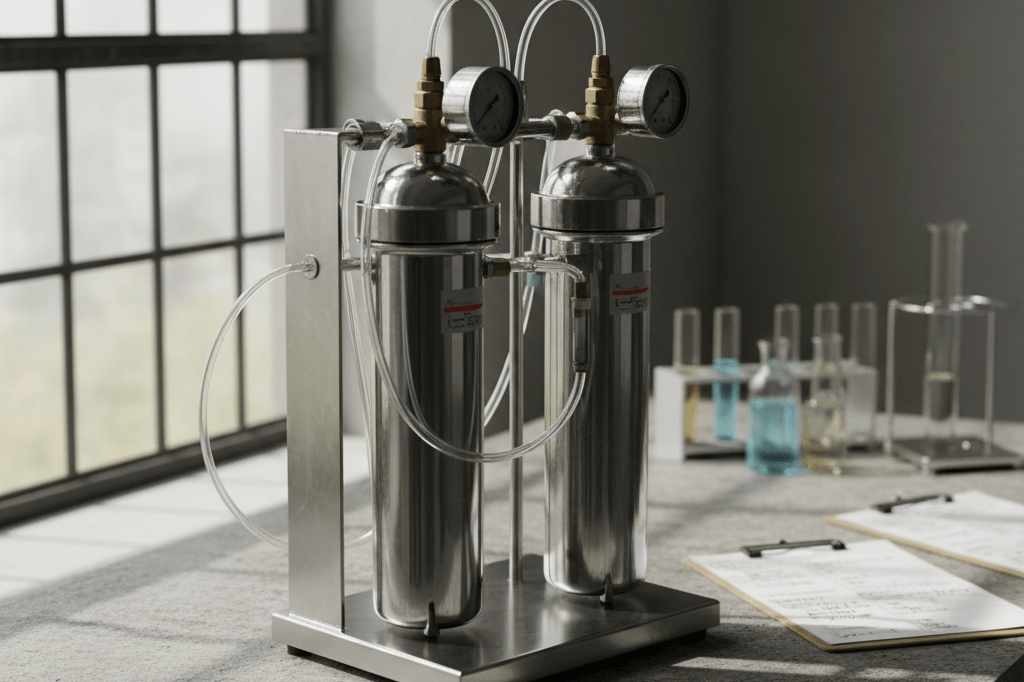
The Bentham Yorkshire contamination crisis has catalyzed unprecedented growth in environmental testing markets, with PFAS detection technologies experiencing a remarkable 32% market expansion in portable contamination testing equipment during 2025. This surge reflects the urgent need for real-time monitoring capabilities that can detect contaminants at the parts-per-trillion level, matching the analytical requirements established after groundwater readings reached 1,199,000 ng/l near the former Angus Fire facility. Testing equipment manufacturers report order backlogs extending 8-12 months as industries scramble to implement comprehensive screening protocols for their production facilities and supply chains.
Environmental compliance spending has increased by an estimated $847 million globally since high-profile PFAS contamination cases gained widespread attention in 2024. Pre-certification requirements now mandate PFAS testing for products in 47 high-risk categories, from textiles and packaging to construction materials and food service items. The shift from reactive to proactive testing strategies has created substantial opportunities for companies providing both recurring monitoring services and one-time purchase testing solutions, with recurring service contracts representing approximately 68% of total market revenue in this sector.
Product Category 1: Water Quality Monitoring Solutions
Groundwater testing equipment sales have surged 127% year-over-year as municipalities and industrial facilities seek to avoid contamination scenarios similar to Bentham’s extreme PFAS levels. Modern portable testing systems can now detect PFOA and PFOS concentrations down to 0.05 ng/l using advanced liquid chromatography-tandem mass spectrometry (LC-MS/MS) technology, providing results within 4-6 hours compared to traditional laboratory methods requiring 7-10 days. The market for handheld PFAS detection devices alone is projected to reach $2.3 billion by 2027, driven primarily by regulatory requirements and corporate liability concerns.
PFAS detection technologies have evolved to include multi-parameter testing capabilities that simultaneously screen for over 40 different fluorinated compounds in a single analysis cycle. Industrial-grade monitoring systems now feature automated sampling protocols, real-time data transmission, and integration with environmental management software platforms. These comprehensive solutions address the complexity of PFAS contamination patterns observed in cases like Bentham, where multiple chemical variants required extensive analytical protocols to fully characterize the contamination profile and associated health risks.
Product Category 2: Chemical-Free Manufacturing Alternatives
Fire retardant solutions without PFAS compounds have captured 43% of the commercial firefighting foam market since Angus Fire ceased PFAS-containing foam production in 2024. Alternative formulations using plant-based surfactants and mineral-based suppressants now meet UL 162 and NFPA 11 standards while eliminating the persistent environmental risks associated with fluorinated compounds. Manufacturing costs for these alternative solutions average 18-25% higher than traditional PFAS-based products, but liability reduction and regulatory compliance benefits offset the premium pricing for most commercial buyers.
Alternative materials development has accelerated across industries seeking to eliminate PFAS exposure risks from their product portfolios. Textile manufacturers have invested $1.8 billion in developing fluorine-free water-repellent treatments that maintain performance standards while avoiding the contamination risks highlighted by the Bentham case. Cost comparison studies indicate that chemical-free manufacturing processes require initial capital investments averaging 35-40% higher than traditional methods, but operational savings from reduced environmental compliance monitoring and liability insurance can recover these costs within 24-36 months for medium-to-large scale operations.
Product Category 3: Remediation and Treatment Technologies
Industrial-scale water filtration systems designed specifically for PFAS removal have become essential infrastructure investments following contamination discoveries like those in Bentham Yorkshire. Advanced treatment technologies utilizing granular activated carbon, ion exchange resins, and reverse osmosis can achieve PFAS reduction rates exceeding 99.9% from initial concentrations as high as 1,000,000 ng/l. System capacities range from 10,000 gallons per day for small manufacturing facilities to 50 million gallons per day for municipal treatment plants, with installation costs averaging $3.2-$8.7 per gallon of daily treatment capacity.
On-site testing and remediation equipment markets have expanded rapidly as companies seek to avoid the reputational damage and liability exposure demonstrated in high-profile contamination cases. Consumer-focused home water treatment solutions incorporating specialized PFAS filtration media have experienced 89% growth in residential markets, particularly in regions near former chemical manufacturing sites. These systems typically feature multi-stage filtration processes combining activated carbon, ceramic membranes, and ion exchange technology to address the broad spectrum of PFAS compounds identified in contaminated groundwater sources, providing homeowners with point-of-use protection against exposure risks.
From Environmental Crisis to Product Innovation Catalyst
PFAS awareness has fundamentally transformed consumer purchasing behavior, with 83% of buyers now actively checking for chemical-free claims before making product decisions across categories from cookware to clothing. This dramatic shift in consumer consciousness, amplified by media coverage of contamination cases like Bentham’s extreme groundwater pollution, has created substantial market opportunities for companies positioning themselves as chemical-free alternatives. Product innovation cycles have accelerated by an average of 28% as manufacturers race to develop PFAS-free formulations that maintain performance standards while addressing growing consumer health concerns.
Chemical-free product development has emerged as a primary growth driver across multiple industry sectors, generating an estimated $14.7 billion in new market opportunities since 2024. Building relationships with certified testing providers has become a strategic priority for manufacturers seeking to validate their PFAS-free claims and differentiate their products in increasingly competitive markets. Companies partnering with accredited laboratories capable of detecting PFAS concentrations below 1 ng/l gain significant competitive advantages in marketing chemical-free products to health-conscious consumers and environmentally-focused commercial buyers.
Background Info
- A 2024 investigation by ENDS Report identified the UK’s highest known concentrations of PFAS in groundwater near Bentham, North Yorkshire, with levels reaching 1,199,000 ng/l in samples taken in 2008 from sites adjacent to Angus Fire’s wastewater lagoons.
- Dr. Patrick Byrne from Liverpool John Moores University noted that these groundwater concentrations represented the highest levels he had ever encountered in his academic career.
- Blood tests administered to 39 residents of Bentham as part of an ITV documentary revealed that approximately 23% of participants exhibited PFAS blood levels categorized as high risk.
- One specific individual tested positive for a PFAS concentration of 405 ng/ml, a figure reported to be over 200 times higher than the threshold for potential harm established by the National Academies of Sciences, Engineering, and Medicine (NAS) in the United States.
- The contamination is linked to the former Angus Fire factory, which produced firefighting foams containing PFAS in Bentham continuously from 1976 until production ceased in 2024.
- Environmental permits for the site were breached 20 times within a single decade, leading to formal warnings from the Environment Agency, although no regulations were violated regarding the initial production of PFAS-containing foams.
- Dr. Shubhi Sharma, Scientific Research Assistant at CHEM Trust, stated that the recorded PFAS levels are “very concerning” due to links between exposure and “serious health impacts such as liver damage and increased risk of breast, kidney, and testicular cancer.”
- The chemicals detected include PFOA and PFOS, both globally banned substances recognized for their hazardous properties and persistence in the environment.
- An Environment Agency spokesperson confirmed an ongoing review of Angus Fire’s environmental permit specifically concerning PFAS compliance following the discovery of the pollution.
- While one source attributes the groundwater testing data to 2008, another account cites a May 2024 publication date for the investigation revealing the contamination levels.
- The World Health Organization classifies PFOA, one of the primary chemicals found, as a Class 1 carcinogen.
- Angus Fire, now operating under the name Angus International Safety Group, has ceased manufacturing or testing PFAS-containing foam products and claims a commitment to operational improvements.
- Advocacy group CHEM Trust called for a complete ban on all PFAS in consumer products in the UK and EU by 2025, followed by a total phase-out of the chemical family by 2030.
- Direct quotes from subjects in the provided texts include Dr. Shubhi Sharma describing the situation as “very concerning” and noting links to “serious health impacts such as liver damage and increased risk of breast, kidney, and testicular cancer.”
Related Resources
- Theguardian: People in North Yorkshire town found to have…
- Streamlinefeed: Toxic Legacy: North Yorkshire Town Battles…
- Itv: Tests find high levels of toxic forever chemicals…
- Mirror: Yorkshire town residents have 'shocking' high…
- Theguardian: In Our Blood: The Forever Chemicals Scandal…