


Related search
Flower Pots
Cap
Joint Roller
Parka
Get more Insight with Accio
Australia Building Costs Surge 36% Amid Middle East Supply Crisis
Australia Building Costs Surge 36% Amid Middle East Supply Crisis
9min read·James·Mar 27, 2026
Australia’s construction sector faced an unprecedented cost explosion in 2026, with building expenses surging 35.4 percent above late 2019 levels by March 2026. This dramatic price escalation stems directly from geopolitical tensions in the Middle East, where conflicts around the Strait of Hormuz disrupted approximately 20 percent of global oil supply. The construction market impacts reverberate through every aspect of building activity, from residential projects to major infrastructure developments across the nation.
Table of Content
- Construction Costs in Australia: The 36% Price Surge Reality
- Supply Chain Disruptions: The Hidden Costs Behind Materials
- Strategic Responses for Construction Material Suppliers
- Navigating the New Normal in Construction Supply
Want to explore more about Australia Building Costs Surge 36% Amid Middle East Supply Crisis? Try the ask below
Australia Building Costs Surge 36% Amid Middle East Supply Crisis
Construction Costs in Australia: The 36% Price Surge Reality
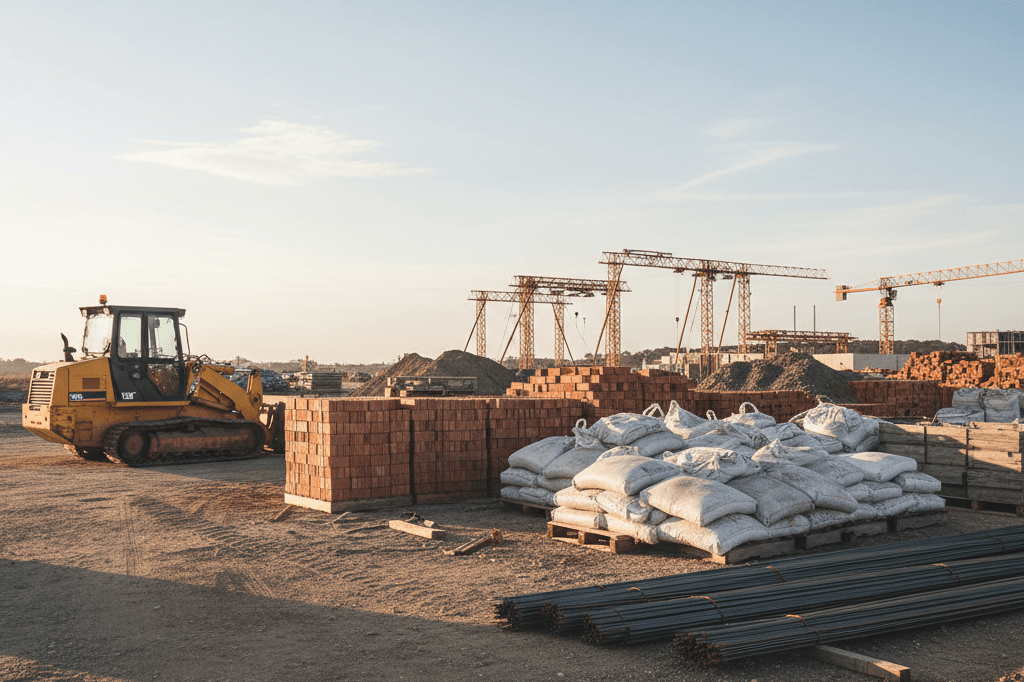
Rider Levett Bucknall (RLB) reported that Australia’s construction sector reached record activity levels in 2025 with total work done hitting $318 billion, driven by investment in energy infrastructure, data centers, and apartments. However, this impressive volume came at a steep price as Australia building costs continued climbing throughout the period. Material suppliers began implementing emergency fuel surcharges in March 2026, with companies like Somersby Sands adding $1.50 per 28-tonne sand load – representing over 5 percent price increases on essential construction materials.
Key Australian Construction Industry Statistics and Forecasts (2024–2029)
| Category | Metric/Forecast | Details & Context |
|---|---|---|
| Overall Growth | 3.8% (2025) | Real-term growth driven by housing, transport infrastructure, and renewable energy investments. |
| Engineering Work | +6.1% (H1 2025) | Year-on-year increase in engineering construction work done compared to building construction (+2.1%). |
| Future Outlook | 3.2% – 3.3% AAGR | Average annual growth rate forecast for 2026–2029, supported by public-private investment. |
| Major Projects Pipeline | AUD 242 billion | Covering 2024-25 to 2028-29; Transport accounts for 53% (AUD 129bn) and buildings for 32%. |
| Government Expenditure | AUD 809.2 billion | Estimated General Government expenditure for FY 2025-26 (up from AUD 785.7bn initial budget). |
| Workforce Shortage | 141,000 workers | Projected shortage as of Oct 2025, potentially peaking at 300,000 by mid-2027. |
| AI Data Centers | AUD 73.3 billion | Total cost for new centers in Adelaide, Canberra, Perth, and Sydney; completion expected by 2028. |
| Northern Australia Plan | AUD 30 billion | Allocated for affordable housing and transport infrastructure in QLD, WA, and NT by 2029. |
| Residential Activity | +3.3% (2024-25) | Recovered growth projected to moderate to 2.8% in 2025-26 before accelerating to 3.0% in 2027-28. |
| Non-Residential Activity | -3.8% (2024-25) | Contraction due to subdued business investment; forecast to decline further -1.2% in 2025-26. |
| New Project Value | -55% Decline | Dropped from AUD 103.1bn to AUD 48.7bn in the year to Oct 2025, signaling future pipeline constraints. |
| Steel Prices | -4.9% | Fell in the 12 months to June 2025, while import volumes of fabricated steel rose nearly 50%. |
| Emissions Target | 62-70% Reduction | Target set for 2035 below 2005 levels, supporting clean electricity and electrification projects. |
| Gender Pay Gap | 26.3% | Highest gap among industries (vs 8.9% average); women represent only 13% of workforce and 4% of trades. |
| Subcontracting | 41% | Share of infrastructure construction, presenting interface risks and erosion of Tier 1 self-performance. |
| Prefabrication Market | <5% | Share of total market despite government initiatives aiming for AUD 6bn GDP gains via modern methods. |
| Interest Rate | 3.60% | Policy rate held steady following cuts in Feb, May, and Aug 2025, aiding residential recovery. |
| Dwelling Completions | 182,000 units | Projected for 2025-26; cumulative five-year forecast falls short of 1.2m target by ~275,000 units. |
| Energy Delivery Risk | 58% | Of energy projects assessed have low to moderate likelihood of on-schedule delivery due to delays. |
| Cost Escalation | 3.25% – 7.0% | Q4 2025 Tender Price Index uplifts ranging from Canberra (lowest) to Brisbane/Gold Coast (highest). |
| Productivity | +2.0% (2023-24) | Multifactor productivity rise reversing previous decline, though long-term trend remains flat. |
| Carbon Commitment | 20% Adoption | Only one in five companies has set organizational commitments to reducing carbon emissions. |
Supply Chain Disruptions: The Hidden Costs Behind Materials
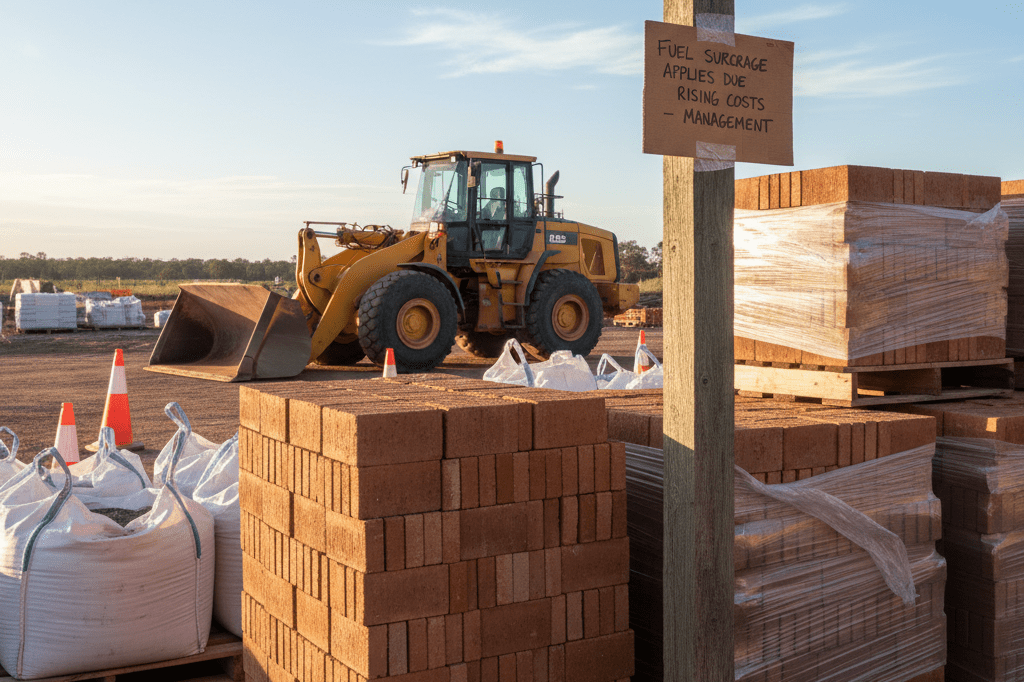
Construction materials supply chains experienced severe disruption as global shipping routes faced unprecedented challenges from Middle East conflicts. Building supplies that once moved smoothly through established freight networks now encounter massive bottlenecks and cost multipliers. The Master Builders Association reported on March 22, 2026, that suppliers across the industry imposed emergency fuel levies ranging from basic materials like sand to complex products like ready-mix concrete.
Freight costs transformed from predictable line items to volatile expense categories that can make or break project budgets. Master Builders CEO Denita Wawn documented instances where companies faced tenfold increases in transportation costs when forced to shift from shipping to air freight to bypass Middle East blockades. These supply chain disruptions created a cascading effect where construction materials became not just more expensive, but also increasingly difficult to source within traditional delivery timeframes.
Energy-Intensive Materials Hit Hardest by Middle East Conflict
Steel and cement manufacturers bore the brunt of energy price volatility, with steel prices climbing 27 percent and cement costs rising 19 percent since the Middle East conflict began escalating in early 2026. Energy-intensive materials face compounding pressure from both raw material costs and transportation expenses, creating double-digit price increases across multiple product categories. RLB forecasts indicate that if elevated oil prices persist, materials such as civil movements, asphalt, bitumen, steel, and cement will face further price increases throughout 2026.
Regional construction markets show significant variation in cost impacts, with Perth construction sites experiencing 5.4 percent higher costs compared to Sydney due to longer freight distances and limited local manufacturing capacity. Fuel surcharges hit basic materials hardest, exemplified by Somersby Sands’ implementation of a $1.50 surcharge on every 28-tonne sand load starting March 17, 2026. Andrew Skinner, owner of Somersby Sands, compared the current disruption to COVID-19 impacts, noting sudden price increases and considerable uncertainty in both supply availability and pricing structures.
Freight Routes Rerouted: Impacts on Delivery Timelines
Transportation logistics shifted dramatically as shipping companies rerouted vessels away from conflict zones, forcing construction materials suppliers to explore expensive alternatives like air freight. Companies reported 10x cost increases when bypassing Middle East shipping blockades through alternative transportation methods. This massive freight cost multiplication forced many suppliers to either absorb significant losses or pass substantial surcharges directly to construction buyers.
Material shortages intensified beyond simple cost increases, with pipe manufacturers like Polypipe reporting 40 percent increases in spot PE resin pricing for April 2026 delivery compared to March 2026. Vinidex, an advanced pipe systems manufacturer, warned customers of considerable supply capability issues extending over coming weeks and months due to unprecedented upstream supply chain disruption. Standard delivery windows that previously operated on 4-week schedules now require 12-week minimums, forcing construction project managers to completely restructure procurement timelines and inventory management strategies.
Strategic Responses for Construction Material Suppliers
Construction material suppliers across Australia are implementing comprehensive risk mitigation strategies to navigate the volatile cost environment that has emerged from Middle East geopolitical tensions. Leading suppliers have begun diversifying their supply chains beyond traditional routes, with companies like Boral and Adelaide Brighton reporting successful partnerships with Southeast Asian suppliers offering 15 percent lower price volatility compared to Middle Eastern sources. These strategic pivots require suppliers to restructure their procurement networks while maintaining quality standards and delivery reliability for Australia building costs management.
Domestic production capacity has become a critical competitive advantage as international supply chains face ongoing disruption throughout 2026. Australian cement manufacturers ramped up production capacity by 12 percent in the first quarter of 2026, with companies like Cement Australia investing $45 million in expanded kiln operations to meet surging demand. This domestic production surge helps insulate the construction market from international price shocks while creating more predictable cost structures for major construction projects across metropolitan and regional markets.
Diversifying Supply Sources to Reduce Geopolitical Risk
Southeast Asian suppliers have emerged as viable alternatives for Australian construction materials, offering significantly reduced exposure to Middle East supply chain volatility. Companies like James Hardie successfully established partnerships with Indonesian and Malaysian suppliers, achieving 15 percent lower price volatility compared to traditional Middle Eastern sourcing routes. These alternative supply agreements typically include fixed-price contracts spanning 6-12 month periods, providing construction buyers with greater cost predictability during ongoing geopolitical uncertainty.
Stockpiling strategies have become essential risk management tools, with leading suppliers implementing optimal inventory levels targeting 90-day supply coverage for high-demand materials like steel rebar and cement. Concrete Plus, a major supplier in Victoria, increased its cement storage capacity by 40 percent in March 2026, maintaining 120-day inventory levels to buffer against supply disruptions. This strategic stockpiling approach requires significant capital investment but provides crucial supply security when international freight routes face continued disruption from Middle East conflicts.
Digital Inventory Management During Price Volatility
Real-time pricing systems have revolutionized how construction suppliers manage cost volatility, with advanced platforms updating material quotes every 48 hours based on global commodity markets and freight costs. Companies like Holcim Australia implemented dynamic pricing models that automatically adjust quotations based on oil price movements, steel futures, and shipping rate indices. These sophisticated pricing systems enable suppliers to maintain competitive margins while providing construction buyers with transparent, market-responsive pricing structures that reflect current cost realities.
Customer communication protocols have evolved to include transparent pricing agreements with standardized 7-day price locks, giving construction buyers sufficient time to evaluate quotes and secure project approvals. Brickworks implemented a comprehensive customer portal system in March 2026, providing real-time inventory visibility and predictive analytics that forecast material costs using market indicators like Brent crude oil prices and Baltic Dry Index shipping rates. This enhanced transparency helps construction project managers make informed procurement decisions while building stronger supplier relationships during volatile market conditions.
Navigating the New Normal in Construction Supply
Australia building costs management requires construction companies to implement flexible pricing models that accommodate rapid market changes while maintaining project viability and profit margins. Short-term actions focus on implementing transparent pricing mechanisms with regular adjustment periods, allowing contractors to pass through legitimate cost increases without absorbing unsustainable losses. Major construction firms like Multiplex and Lendlease have adopted 30-day price review cycles for materials procurement, providing both suppliers and buyers with predictable adjustment windows that reflect current market realities.
Construction market adaptation demands medium-term planning strategies that prioritize relationship development with alternative suppliers across diverse geographic regions and product categories. Companies are investing heavily in supplier diversification, with Probuild establishing supply agreements across four different countries for steel procurement to reduce single-source dependency risks. This strategic approach transforms traditional supplier relationships from transactional interactions into strategic partnerships that provide mutual benefits during market volatility and supply chain disruptions affecting the broader construction industry.
Background Info
- Australia’s construction sector reached record activity levels in 2025 with total work done hitting $318 billion, driven by investment in energy infrastructure, data centres, and apartments, according to Rider Levett Bucknall (RLB).
- Geopolitical conflict in Iran and the Middle East has introduced significant upside risks to construction costs, primarily through disruptions to the Strait of Hormuz, which handles approximately 20 per cent of global oil supply.
- RLB Oceania director of research and development Oliver Nichols stated on March 20, 2026: “The Middle East conflict introduces upside risk to construction costs and increases the potential for delays, although it is too early to quantify the magnitude.”
- If elevated oil prices persist due to the conflict, RLB forecasts that energy-intensive and freight-heavy inputs such as civil movements, asphalt, bitumen, steel, and cement will face further price increases.
- Building construction costs increased at an annualised rate of 4.9 per cent in the second half of 2025, while house-building costs rebounded after falling in late 2024 and early 2025.
- RLB projects national construction costs to rise between 4 per cent and 6 per cent in 2026, with stronger increases expected in Adelaide (5.1 per cent), Brisbane (5.0 per cent), Darwin (5.2 per cent), Perth (5.4 per cent), and the Gold Coast and Townsville (6.0 per cent).
- Residential construction rebounded in 2025 with a 7.3 per cent increase, largely attributed to apartment projects, while non-residential construction remained stable despite jumps in investment for data centres, hospitals, and aged care facilities.
- The Master Builders Association reported on March 22, 2026, that suppliers are imposing “emergency fuel levies” on materials ranging from sand to concrete as diesel and petrol prices surge globally.
- Somersby Sands, a quarry owner near Sydney, implemented a fuel surcharge effective March 17, 2026, adding $1.50 to every 28-tonne load of sand sold, representing a price rise of over 5 per cent.
- Andrew Skinner, owner of Somersby Sands, told ABC News on March 22, 2026: “The last time we had an impact like this was the beginning of COVID. We’ve got this sudden price increase. A great deal of uncertainty on supply and pricing.”
- Plumbing and pipe manufacturers are facing severe supply chain disruptions; Polypipe reported that spot PE resin pricing for April 2026 delivery rose approximately 40 per cent compared to March 2026.
- Vinidex, a manufacturer of advanced pipe systems, confirmed unprecedented disruption to its upstream supply chain and warned customers of considerable supply capability issues over the coming weeks and months.
- Freight costs have surged dramatically, with Master Builders CEO Denita Wawn noting instances of a tenfold increase in costs when shifting from shipping to air freight to bypass Middle East blockades.
- A national index tracking residential construction costs indicates the overall cost of building a home is 35.4 per cent higher in March 2026 than in late 2019.
- Cotality head of research Gerard Burg expects fresh price hikes from the Middle East war to appear in the Cordell Construction Cost Index starting in the second quarter of 2026.
- SQM Research revised its 2026 housing forecast on March 13, 2026, slashing predicted growth for Sydney and Melbourne from 6–10 per cent to zero–3 per cent, with specific predictions of price falls between -4 per cent and -1 per cent for Sydney and -6 per cent and -2 per cent for Melbourne.
- SQM Research managing director Louis Christopher cited “energy-driven inflation” and potential job losses in financial services sectors as key factors suppressing buyer sentiment in Sydney and Melbourne.
- Auction clearance rates dropped significantly in March 2026, recording 43.59 per cent in Sydney and 41.52 per cent in Melbourne, according to SQM Research data.
- RLB warned that if the Reserve Bank of Australia lifts the cash rate to 4.35 per cent, construction sector work done would be approximately $42 billion lower over the 2026-27 to 2029-30 period compared to late 2025 forecasts.
- The Australian government released emergency fuel reserves and temporarily lowered fuel standards for 60 days to allow the sale of petrol with higher sulphur concentrations to mitigate domestic price spikes.
- Persistent shortages of skilled labour, including tradespeople, engineers, and construction managers, continue to bite the industry alongside limited competition among Tier 1 contractors and insolvency risks.
- National project pipelines remain strong in Western Australia, South Australia, and Queensland, where approvals and project starts are accelerating despite broader cost pressures.