


Related search
Smart Products
T-Shirt
Sunglasses
Televisions
Get more Insight with Accio
7 Arena Drag Innovations Redefining Equestrian Footing in 2026
7 Arena Drag Innovations Redefining Equestrian Footing in 2026
6min read·Oriana·Mar 30, 2026
For any equestrian, the quality of the arena footing is paramount for performance and soundness. But in 2026, maintaining that perfect surface goes far beyond a simple rake. The world of arena maintenance is experiencing a technological revolution that’s reshaping how facilities approach footing care. Today’s arena drag machinery represents a quantum leap from traditional grooming equipment, incorporating smart technologies, precision engineering, and specialized features that were once unimaginable. Forget basic grooming; modern arena drags are intelligent, precise, and highly specialized tools that deliver consistent results while reducing labor costs and improving safety. These innovations are setting new standards for efficiency, dust control, and surface perfection across equestrian facilities worldwide. From autonomous systems that work without human intervention to modular designs that adapt to different footing types, the arena drag industry is experiencing unprecedented advancement that benefits everyone from small riding schools to Olympic-level competition venues.
Table of Contents
1. Autonomous GPS-Guided Grooming Systems
2. Integrated Dust Suppression Water Systems
3. Modular, Multi-Footing Tool Configurations
4. All-Electric and Hybrid Power Trains
5. Laser-Guided Precision Leveling Blades
6. Advanced Rotary Harrows for Synthetic Footing
7. In-Cab Hydraulic Smart Controls
2. Integrated Dust Suppression Water Systems
3. Modular, Multi-Footing Tool Configurations
4. All-Electric and Hybrid Power Trains
5. Laser-Guided Precision Leveling Blades
6. Advanced Rotary Harrows for Synthetic Footing
7. In-Cab Hydraulic Smart Controls
Want to explore more about 7 Arena Drag Innovations Redefining Equestrian Footing in 2026? Try the ask below
7 Arena Drag Innovations Redefining Equestrian Footing in 2026
1. Autonomous GPS-Guided Grooming Systems
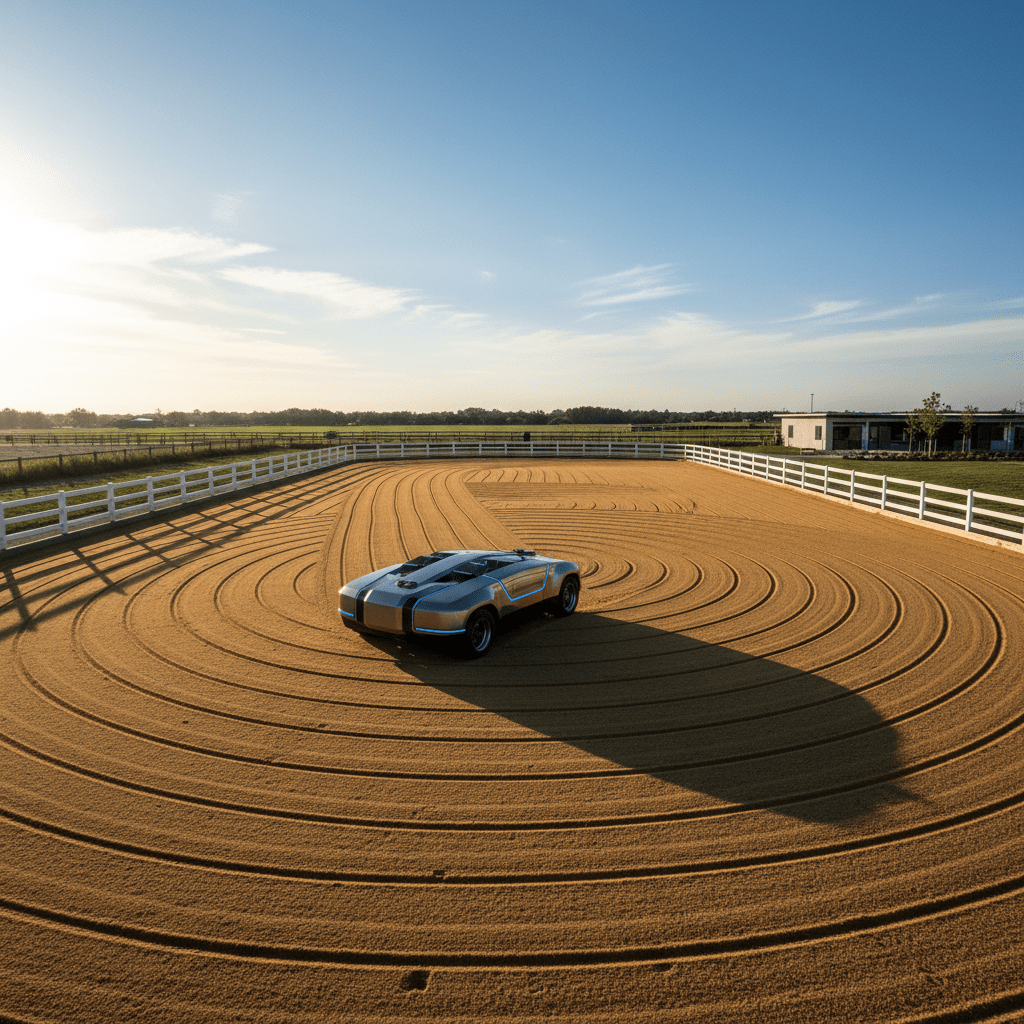
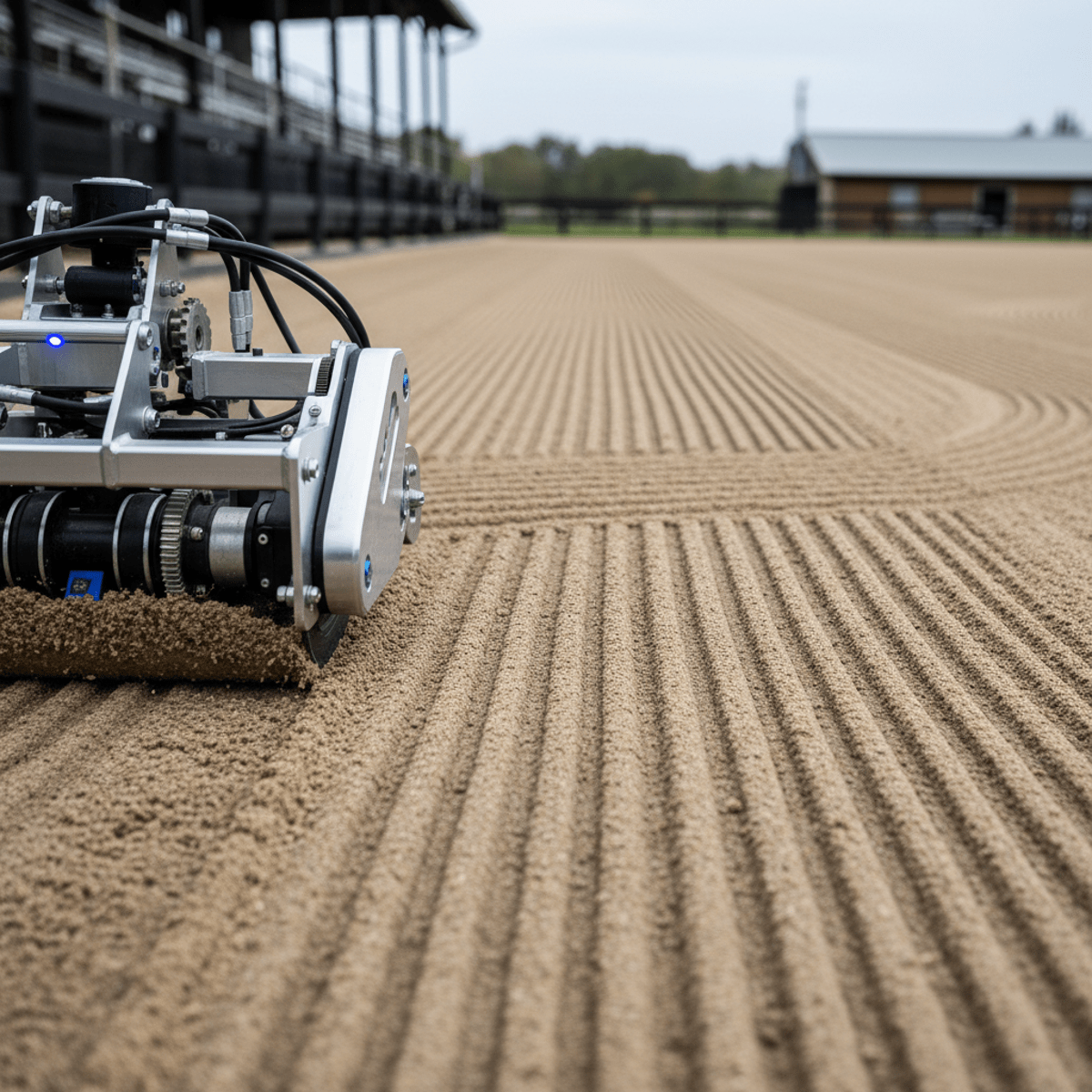
Imagine an arena that grooms itself with robotic precision, following predetermined patterns without human intervention. By 2026, autonomous GPS-guided arena drag systems have become reality for forward-thinking equestrian facilities seeking consistency and labor efficiency. These sophisticated machines utilize satellite positioning technology to follow pre-programmed grooming paths, creating flawless, geometric patterns that ensure every square foot of the arena receives identical treatment. The system eliminates human error while optimizing labor allocation, allowing staff to focus on other critical facility maintenance tasks. This technology proves especially valuable for large, multi-arena venues where maintaining uniformity across different surfaces is essential for high-level competitions. The visual impact of these systems is striking—drone footage reveals perfect geometric patterns being methodically etched into the sand, demonstrating the precision that only automated technology can achieve consistently.
2. Integrated Dust Suppression Water Systems
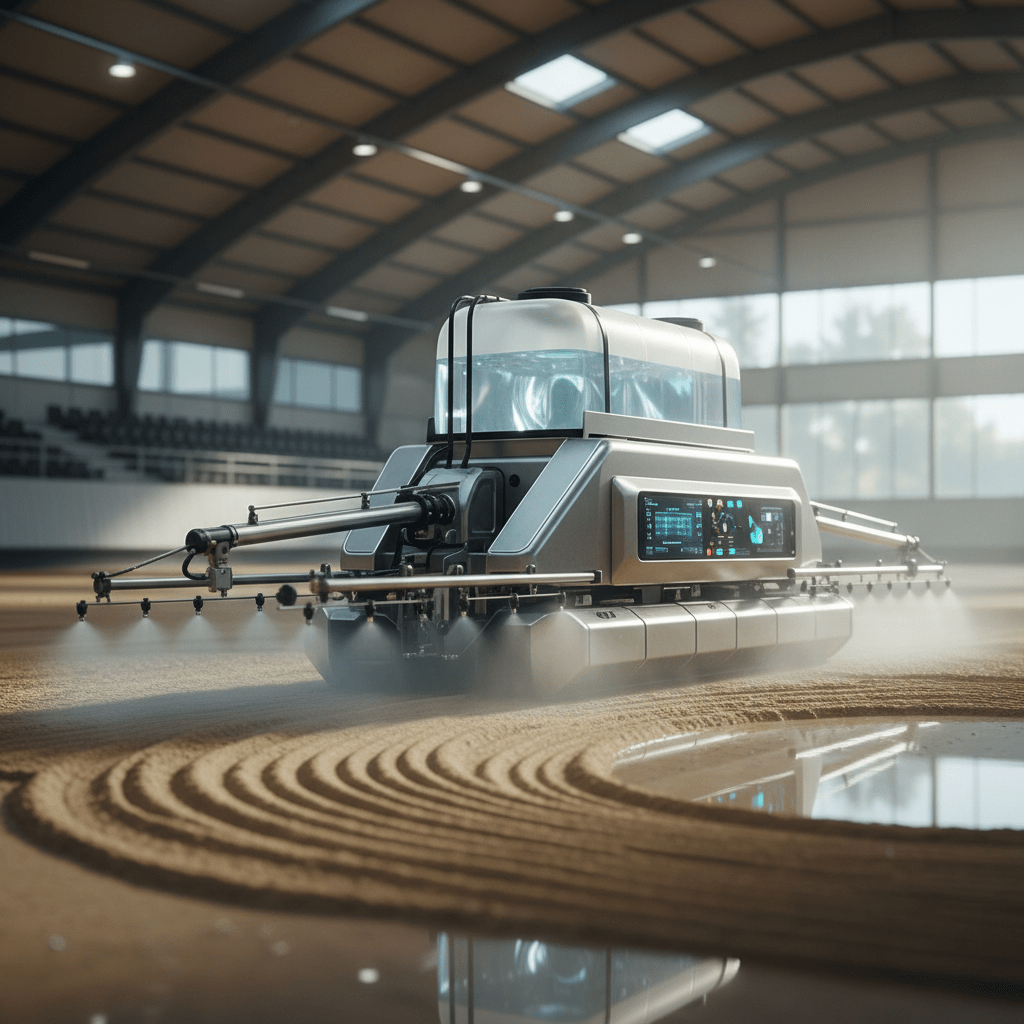
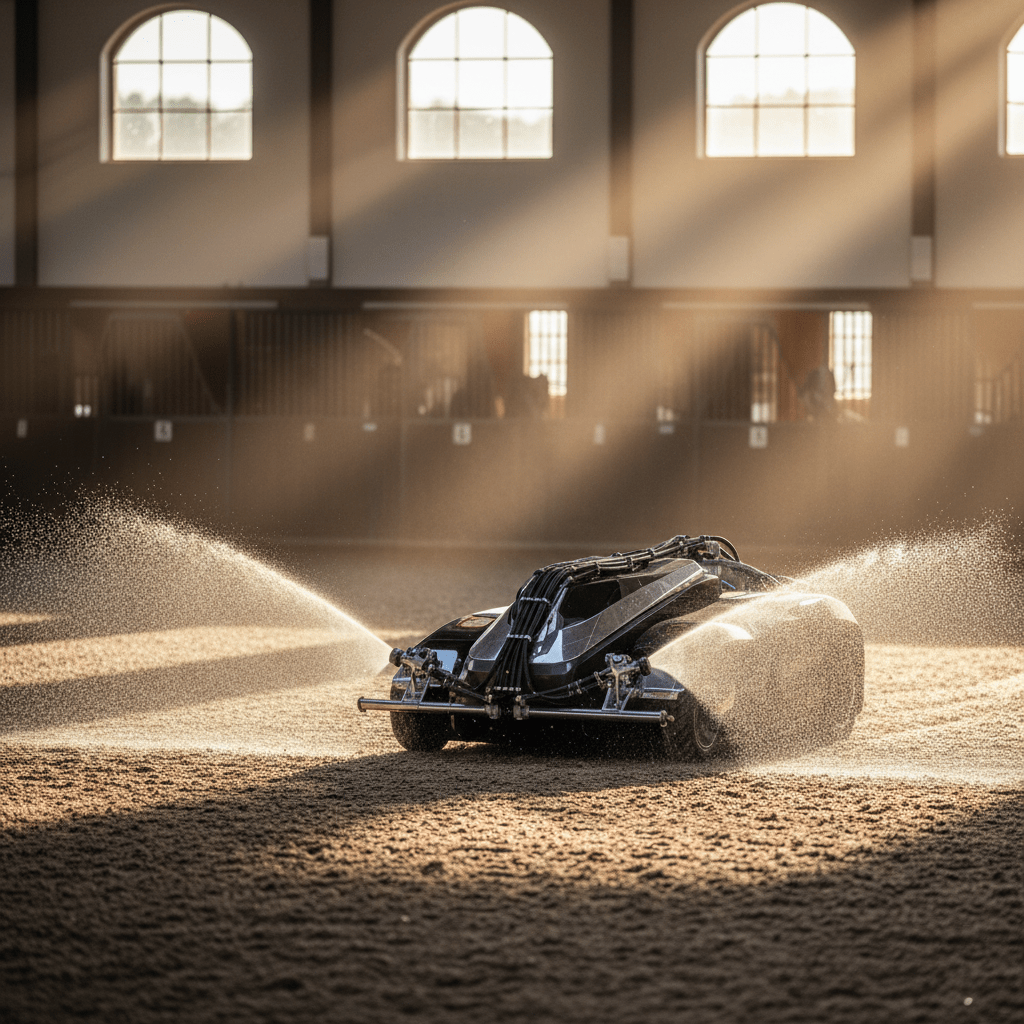
Dust control has evolved from an afterthought to a critical health and safety feature in modern arena drag design. The latest innovations feature integrated water tanks and precision-adjustable sprinkler systems that apply controlled moisture levels during the grooming process. This dual-action approach simultaneously grooms and conditions the footing, effectively eliminating airborne dust particles that pose respiratory risks to both riders and horses. The integrated systems feature computerized flow controls that adjust water application based on ambient humidity, temperature, and footing moisture content. Advanced models include multiple spray patterns and pressure settings to accommodate different footing materials and environmental conditions. The visual appeal of water jets creating fine mist patterns while the drag works creates compelling imagery that demonstrates the technology’s problem-solving capabilities. These systems represent a significant advancement in creating healthier indoor environments and reducing maintenance costs associated with dust-related equipment wear.
3. Modular, Multi-Footing Tool Configurations
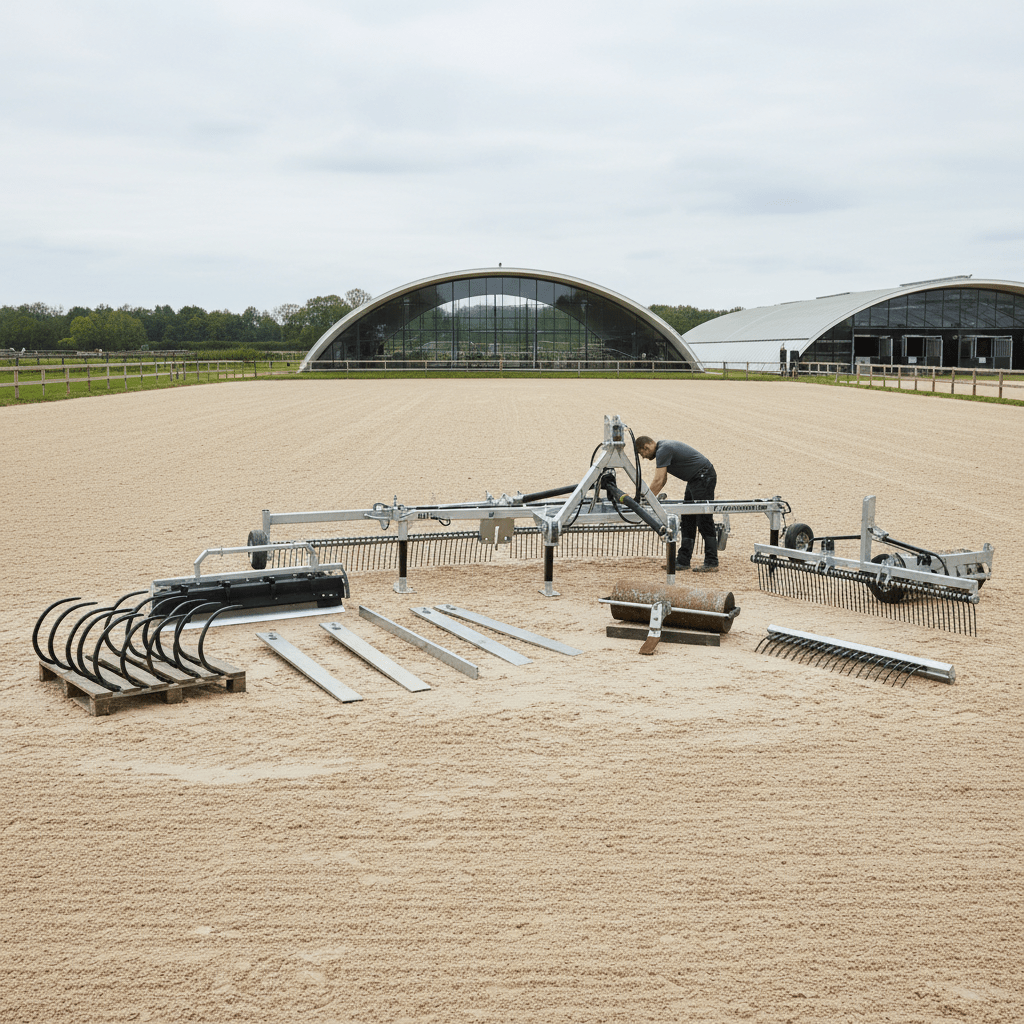
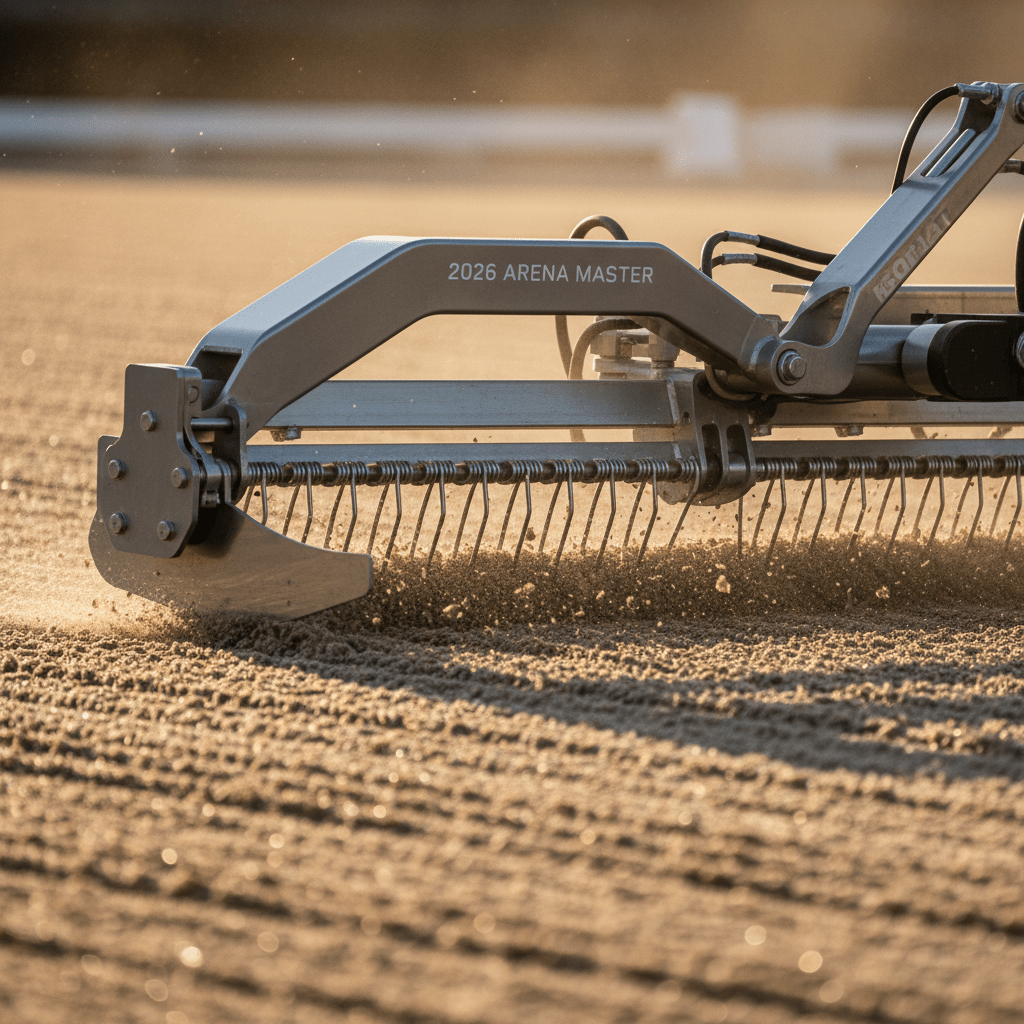
The era of single-purpose arena drags is rapidly ending as modular, multi-tool systems gain dominance in facility management. These innovative designs feature a universal frame system that accommodates various interchangeable attachments, transforming one machine into a complete grooming arsenal. Operators can quickly swap between aggressive S-tines for deep de-compacting, precision profile blades for exact leveling, finishing combs for surface smoothing, and specialized tools for different footing materials. This Swiss Army knife approach proves invaluable for facilities managing multiple arena surfaces—from traditional sand jumping arenas to synthetic-fiber dressage courts and everything in between. The modular design significantly reduces equipment investment while maximizing versatility and storage efficiency. Visual documentation of the quick-change attachment process and before-and-after surface comparisons effectively demonstrate the system’s adaptability and effectiveness across diverse footing types and maintenance requirements.
4. All-Electric and Hybrid Power Trains
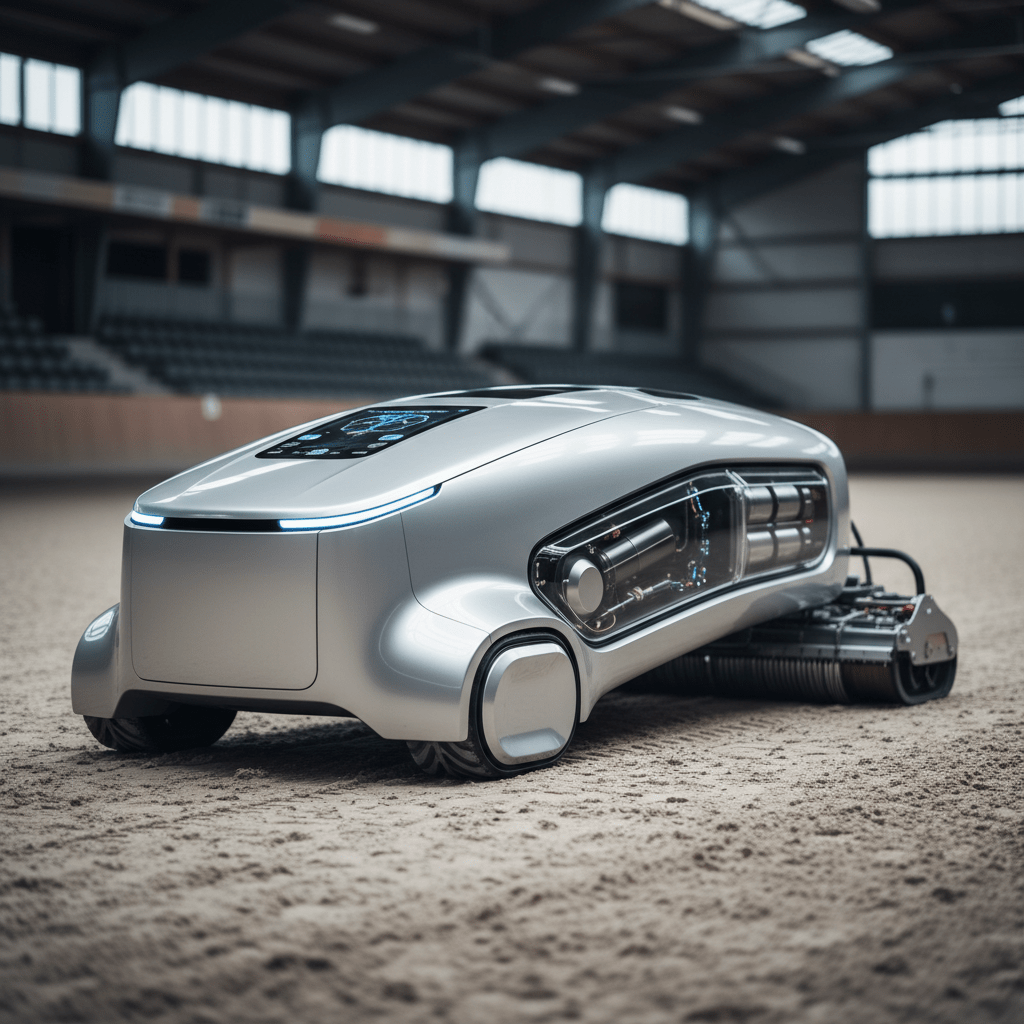

Sustainability initiatives have reached the arena as all-electric and hybrid-powered drag systems emerge as viable alternatives to traditional diesel equipment. These environmentally conscious machines offer whisper-quiet operation with zero emissions, making them ideal for indoor arenas where ventilation concerns limit traditional equipment use. The technology particularly benefits noise-sensitive equestrian communities and urban facilities where sound restrictions apply during certain hours. Beyond environmental advantages, electric systems deliver lower operating costs through reduced fuel consumption and simplified maintenance requirements—no oil changes, spark plugs, or complex engine servicing. Battery technology advances enable full-day operation on single charges, while hybrid systems provide extended range for larger facilities. The sleek, modern aesthetic of electric systems provides additional visual appeal, representing the future of sustainable arena maintenance. Fast-charging capabilities and regenerative braking systems further enhance operational efficiency while reducing the total cost of ownership.
5. Laser-Guided Precision Leveling Blades
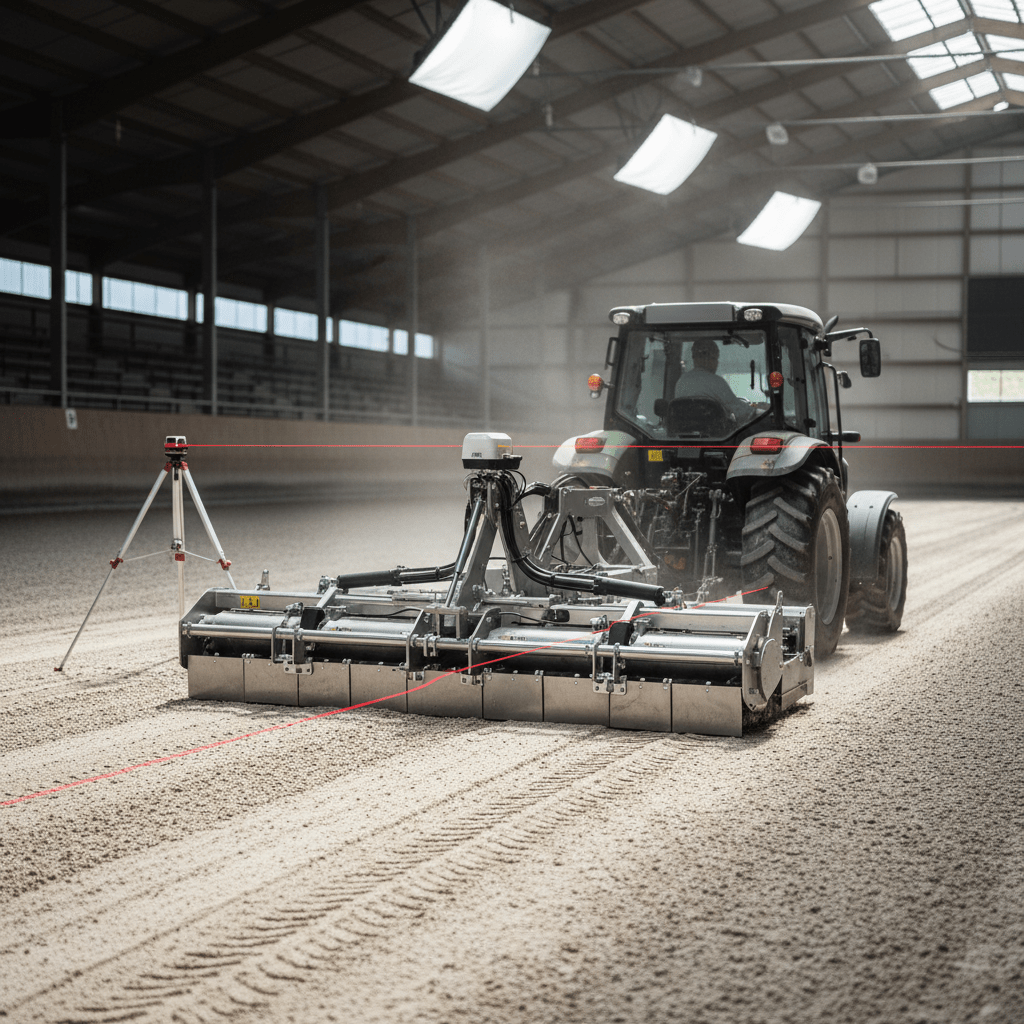
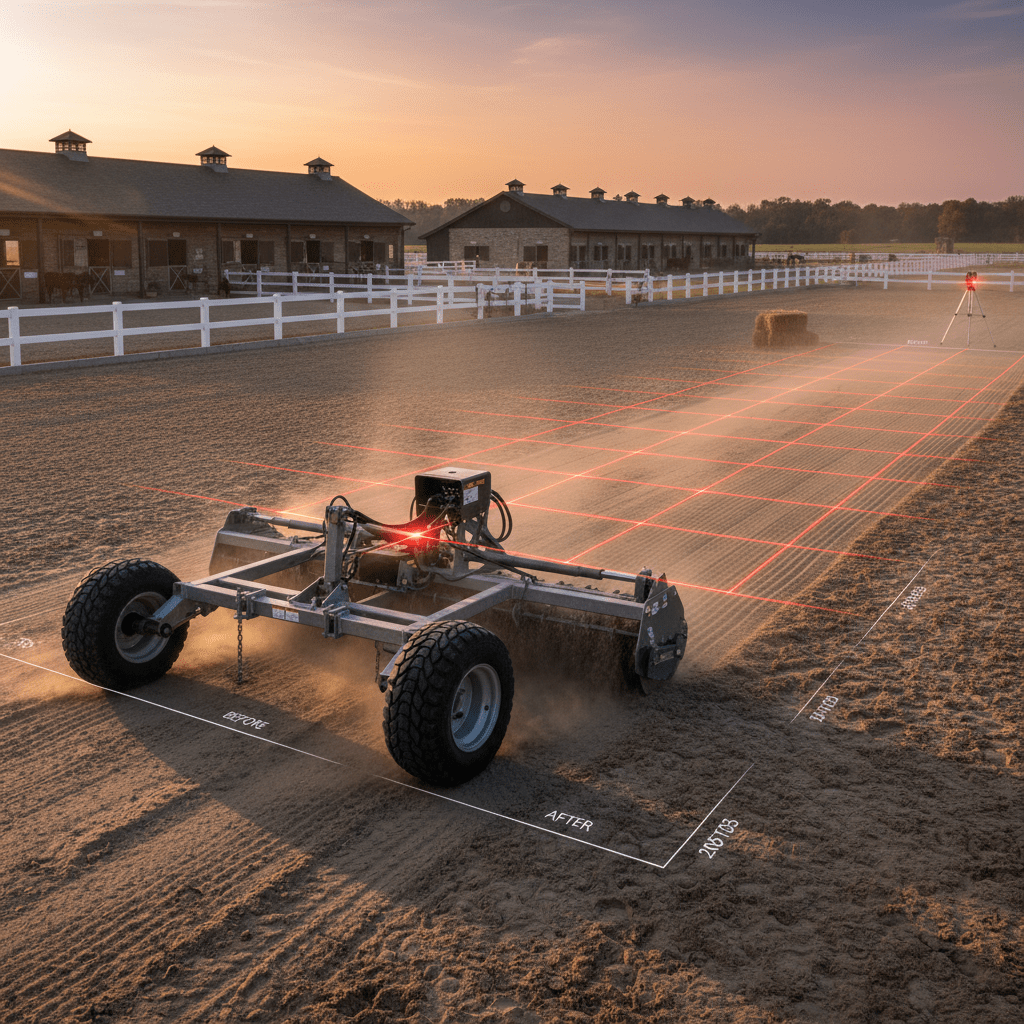
Achieving absolute surface flatness—especially critical for disciplines like dressage, reining, and therapeutic riding—now relies on laser-guided leveling technology borrowed from heavy construction applications. These sophisticated systems utilize a rotating laser transmitter positioned at arena perimeter to establish a perfectly level reference plane across the entire surface. The arena drag’s receiver automatically adjusts blade height in real-time, maintaining precise elevation throughout the grooming process regardless of ground contours or operator variations. This technology ensures unparalleled accuracy in footing maintenance, eliminating the subtle high and low spots that can affect horse performance and rider safety. The system’s precision proves particularly valuable for facilities hosting high-level competitions where surface consistency directly impacts judging and results. Visual demonstrations of the laser beam working in dusty conditions create striking imagery, while before-and-after elevation measurements provide concrete evidence of the technology’s effectiveness in achieving competition-grade surface standards.
6. Advanced Rotary Harrows for Synthetic Footing
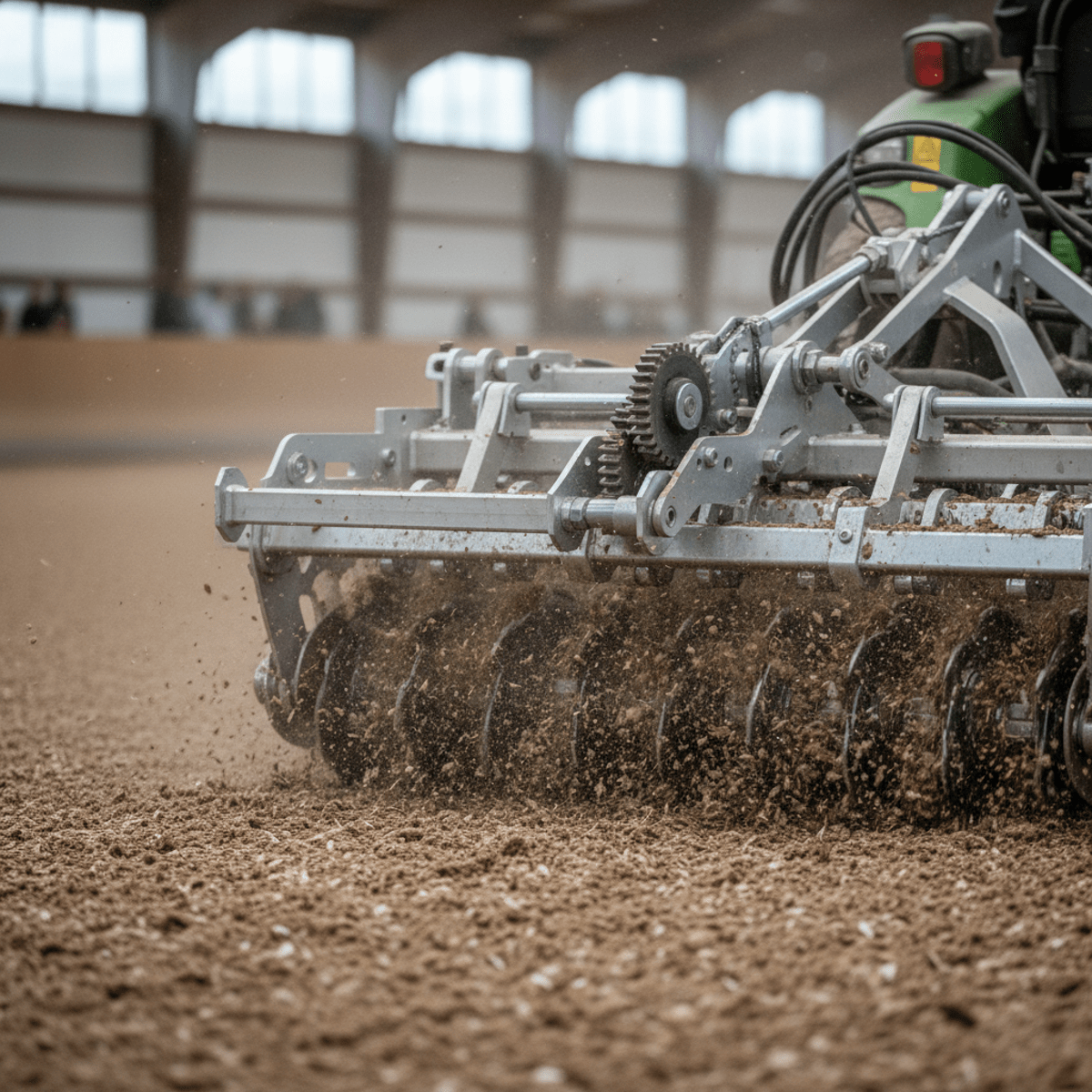
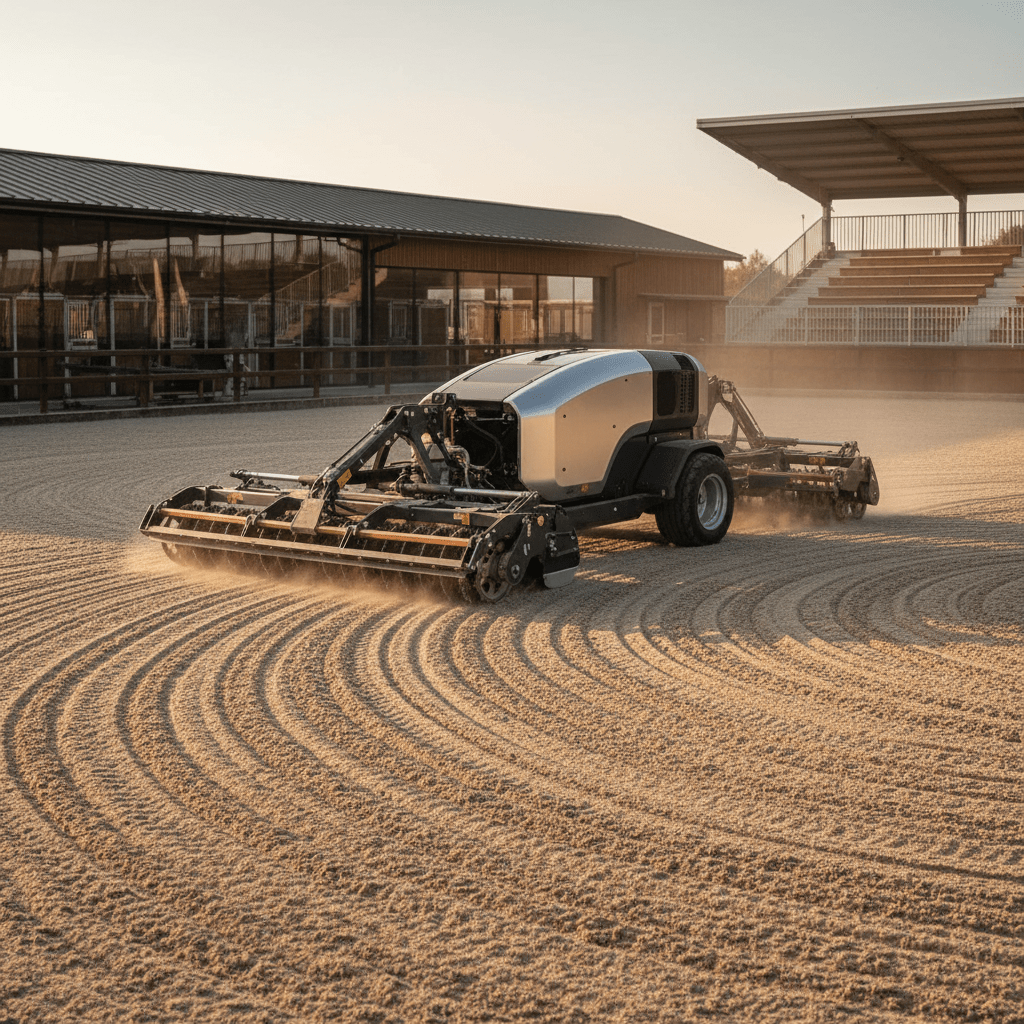
Premium synthetic and fiber-mixed footings require specialized maintenance approaches that preserve material integrity while maintaining optimal performance characteristics. Advanced rotary harrow systems feature independently powered tine assemblies that gently lift and de-compact synthetic materials from below without damaging expensive fiber components. The rotating action prevents fiber matting while restoring the cushioning and energy return properties that make synthetic surfaces valuable for horse health and performance. Unlike traditional drag systems that can snag or tear synthetic fibers, these rotary units work through the material with precise control over penetration depth and rotation speed. The technology proves essential for facilities investing in high-end footing systems that cost significantly more than traditional sand but offer superior performance benefits. Close-up imagery of rotating tines working through fiber-rich sand demonstrates the gentle yet effective action, while surface analysis shows restored fiber distribution and improved footing consistency.
7. In-Cab Hydraulic Smart Controls
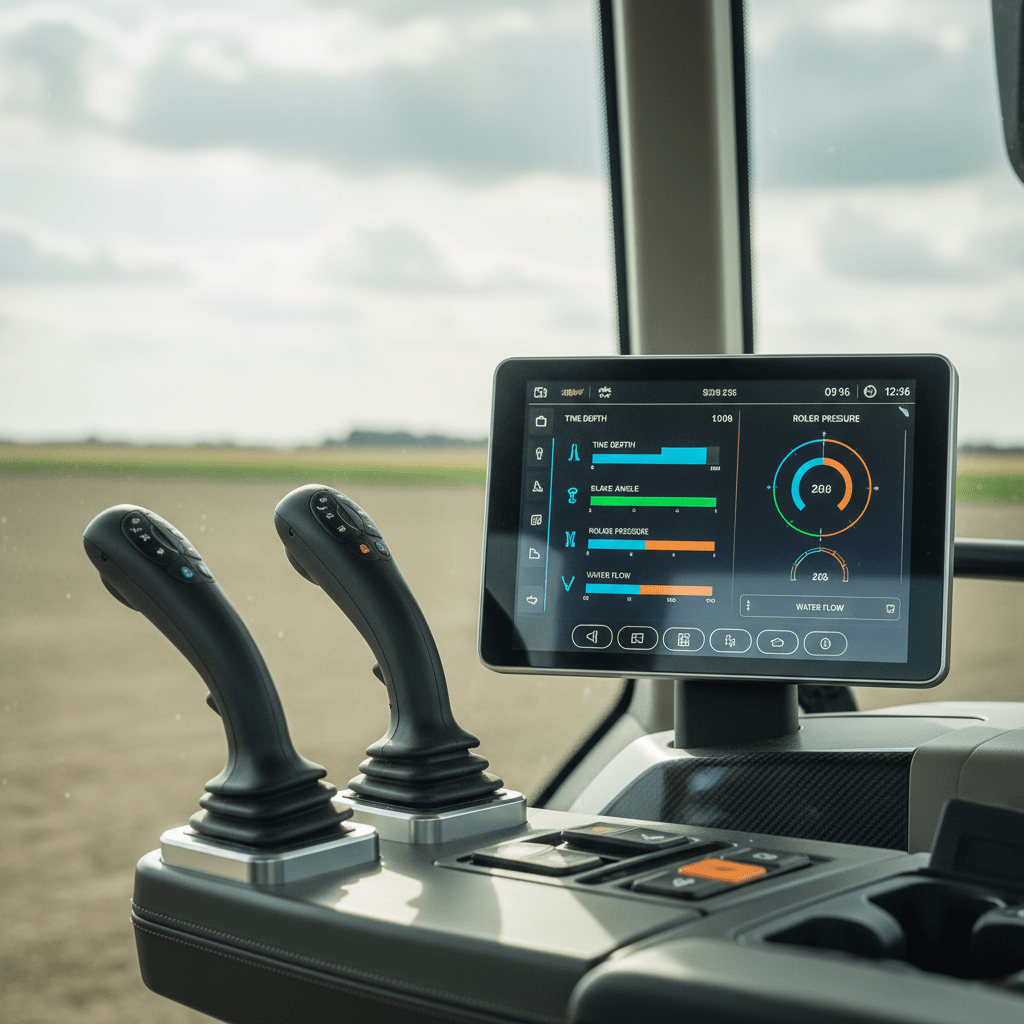
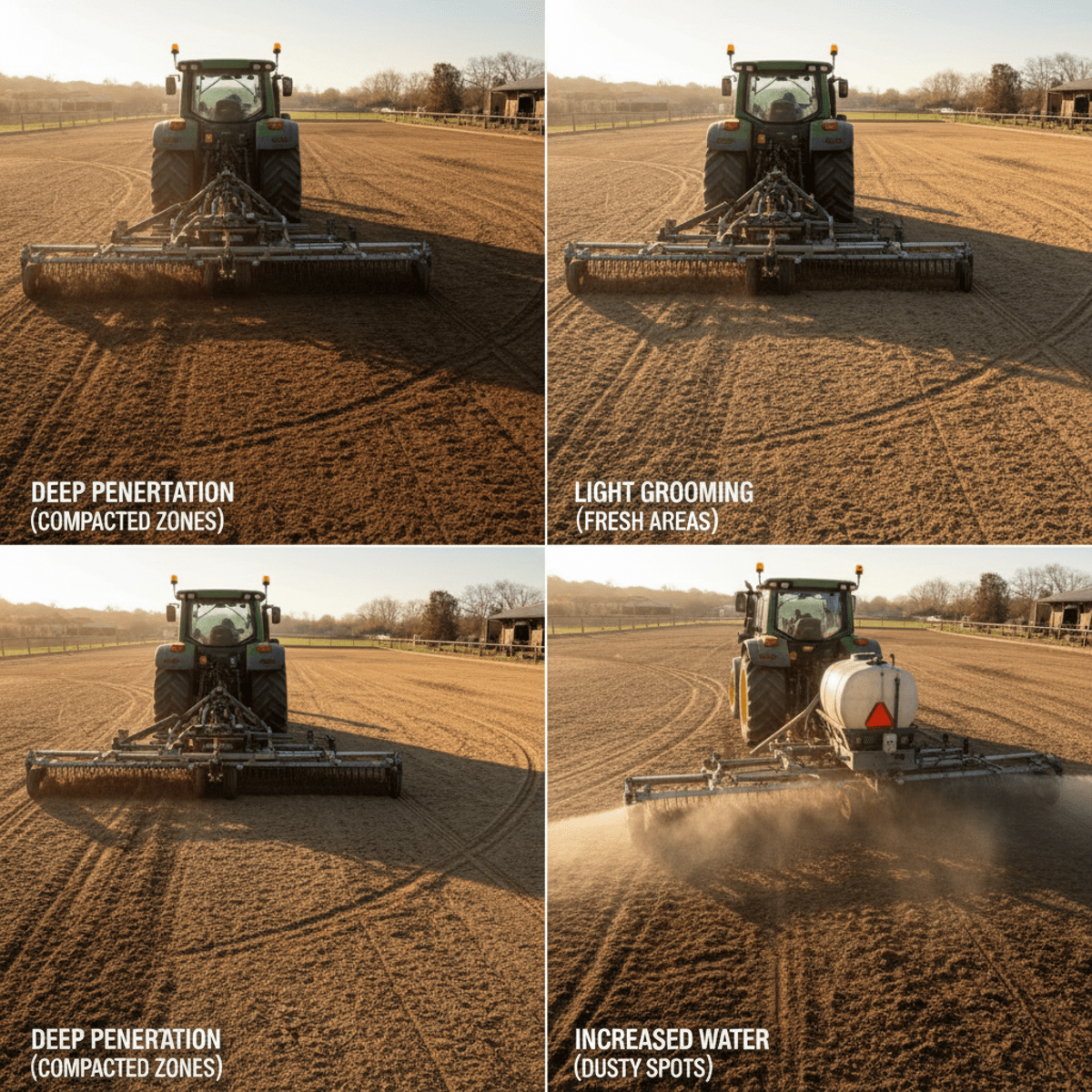
Precision arena maintenance now literally rests at operators’ fingertips through sophisticated hydraulic control systems operated from tractor cabs via joysticks and touchscreen interfaces. These smart control systems enable real-time adjustments to tine depth, blade angle, roller pressure, and water flow without stopping the grooming process. Operators can instantly respond to varying conditions within the same arena—deeper penetration for compacted areas, lighter touch for recently groomed sections, or increased water application for dusty spots. Advanced systems include memory presets for different footing types and conditions, ensuring consistent results regardless of operator experience level. GPS integration allows the system to automatically adjust settings based on location within the arena, applying predetermined parameters for specific zones. The technology minimizes downtime, maximizes grooming quality, and reduces operator fatigue during extended maintenance sessions. Cockpit views of the control interfaces and split-screen comparisons of different settings’ effects provide compelling visual evidence of the technology’s precision and versatility.
The evolution of arena drag technology in 2026 represents a fundamental transformation from basic grooming tools to sophisticated precision machinery. These seven innovations—autonomous GPS guidance, integrated dust suppression, modular configurations, electric powertrains, laser leveling, rotary harrows, and smart controls—collectively redefine what’s possible in arena maintenance. The shift toward automation, precision, and specialization transforms arena grooming from a routine chore into an exact science that directly impacts horse performance, rider safety, and facility efficiency. These technological leaps deliver measurable benefits: reduced labor costs, improved surface consistency, enhanced safety standards, and extended footing longevity that justifies significant equipment investments. For facility managers, these innovations offer unprecedented control over surface quality while reducing operational complexity. For manufacturers and dealers, they signal substantial market opportunities as facilities seek competitive advantages through superior maintenance capabilities. Ready to capitalize on these transformative trends? Whether you’re upgrading existing equipment, expanding product offerings, or developing next-generation arena maintenance solutions, our AI Sourcing Tool, Accio, provides the market intelligence and supplier connections you need. Use Accio to discover manufacturers pioneering these technologies, analyze market demand for specific innovations like integrated water systems or GPS guidance, and source specialized components for custom applications. Transform these inspiring developments into your next business success—start your search on Accio today.