


Related search
Bathroom Accessories
Casual Sneakers
Smart Watches
Men's Coats
Get more Insight with Accio
Apple’s Siri AI Revolution Opens Voice Commerce for Retailers
Apple’s Siri AI Revolution Opens Voice Commerce for Retailers
7min read·Jennifer·Mar 27, 2026
Apple’s strategic pivot toward external AI partnerships fundamentally transforms how businesses can reach consumers through voice interfaces. The company’s exploration of integrating OpenAI and Anthropic technologies into Siri, as reported by Bloomberg in July 2025, signals a dramatic shift from Apple’s traditionally closed ecosystem approach. This opening creates unprecedented opportunities for retailers and wholesalers to establish direct voice-driven customer touchpoints that weren’t previously accessible through Apple’s walled garden.
Table of Content
- Voice Control Revolution: Siri’s New Open Ecosystem
- Voice Commerce: The Next Retail Frontier
- 5 Ways Voice Tech is Transforming Customer Experience
- Preparing Your Business for the Voice Commerce Evolution
Want to explore more about Apple’s Siri AI Revolution Opens Voice Commerce for Retailers? Try the ask below
Apple’s Siri AI Revolution Opens Voice Commerce for Retailers
Voice Control Revolution: Siri’s New Open Ecosystem

The integration of external AI providers through initiatives like “Project Greymatter” enables Siri to control individual app functions across iOS for the first time, creating multiple entry points for voice commerce interactions. Businesses can now develop voice-activated shopping experiences that leverage the combined power of Apple’s hardware ecosystem and advanced language models from leading AI companies. The estimated $5 billion investment in Google’s Gemini integration, as reported by CNET, demonstrates Apple’s commitment to making Siri competitive with established voice assistants like Amazon’s Alexa and Google Assistant.
| Timeline | Strategic Decision/Event | Key Details & Implications |
|---|---|---|
| August 2024 | Considered OpenAI Investment | Evaluated joining a $100B+ valuation round led by Thrive Capital, involving Microsoft and Nvidia; anticipated to integrate ChatGPT into Siri. |
| Fall 2024 | Siri Roadmap Delay | Original launch postponed due to development challenges, prompting a strategic pivot to external model sourcing to accelerate time-to-market. |
| January 2026 | Partnership with Google Announced | Selected Google Gemini as the core model for Apple Intelligence and Foundation Models, utilizing Google’s cloud infrastructure. |
| 2026 (Projected) | Upgraded Siri Capabilities | Powers web search, content creation, image generation, and file analysis across Mail, Music, and Photos while maintaining on-device privacy via Private Cloud Compute. |
| Ongoing | Financial & Operational Strategy | Treats AI models as variable costs to preserve capital; avoids sunk costs of internal frontier models while retaining UI control and managing pricing power. |
Market Shift: How External AI Access Creates New Customer Touchpoints
The transition from Siri’s original $200 million acquisition technology to modern large language model capabilities represents a 2,500% evolution in processing sophistication since 2010. External AI integration allows businesses to create conversational commerce experiences that understand context, maintain shopping history, and process complex multi-step transactions through natural language interactions. Voice-enabled product discovery becomes seamless when customers can ask Siri to “find wireless earbuds under $150 with noise cancellation” and receive curated results from integrated retail platforms.
Industry Impact: Voice Assistant Integration Becoming Retail Necessity
The retail landscape now demands voice-first customer engagement strategies as consumers increasingly expect seamless cross-platform experiences. Apple’s new AI-powered Siri capabilities, including automated message replies and advanced photo editing, create opportunities for retailers to integrate product recommendations directly into daily user workflows. Businesses that fail to optimize for voice search risk losing visibility in an ecosystem where 73% of smart speaker owners report using their devices for product research, according to recent industry data.
Business Opportunity: Preparing Product Listings for Voice-First Discovery
Product catalog optimization for voice discovery requires restructuring data architecture to support natural language queries rather than traditional keyword-based search patterns. Retailers must implement schema markup that enables AI assistants to understand product specifications, availability, pricing, and customer reviews in conversational contexts. The shift toward voice-first discovery means that products with well-structured, conversational metadata will achieve higher visibility in voice search results compared to traditional SEO-optimized listings.
Voice Commerce: The Next Retail Frontier

Voice commerce represents a $40 billion market opportunity by 2026, driven by increasing consumer adoption of smart speakers and voice-enabled mobile devices. The integration of advanced AI capabilities into Siri through external partnerships positions Apple to capture significant market share in voice-driven transactions, particularly in premium consumer segments where iPhone penetration exceeds 50%. Retailers must adapt their digital infrastructure to support voice-initiated purchases, inventory inquiries, and customer service interactions across multiple AI platforms simultaneously.
The convergence of voice technology and e-commerce creates new revenue streams through hands-free shopping experiences, subscription renewals, and impulse purchases triggered by contextual recommendations. Voice assistants process information 3.7 times faster than traditional typing, enabling rapid product comparisons and purchase decisions that benefit both consumers and retailers. Smart speakers in households average 2.3 devices per home, creating multiple touchpoints where voice commerce interactions can occur throughout the customer journey.
Voice Search Optimization for Product Listings
Current data indicates that 35% of consumers actively use voice technology to research purchases, with this percentage climbing to 48% among millennials and Gen Z demographics. Voice queries typically contain 4-7 words compared to 2-3 words in text searches, requiring businesses to optimize for longer, more conversational keyword phrases. Product descriptions must incorporate natural speech patterns such as “best wireless headphones for running under $200” rather than fragmented keywords like “wireless headphones running cheap.”
Implementation strategies for voice optimization include structured data markup using JSON-LD schema, FAQ sections addressing common voice queries, and location-based information for “near me” searches. Retailers should focus on question-based content optimization, as 70% of voice searches begin with interrogative words like “what,” “where,” “how,” or “when.” Product availability, store hours, and pricing information must be formatted for immediate voice response delivery, typically requiring answers under 29 words for optimal assistant compatibility.
Smart Assistant Integration for Retailers
Comprehensive voice coverage requires integration across Siri, Google Assistant, Amazon Alexa, and emerging AI platforms to capture the full spectrum of voice commerce opportunities. Multi-platform compatibility ensures retailers reach customers regardless of their preferred ecosystem, with studies showing that 42% of households use multiple voice assistant brands. Technical implementation involves API connections, voice app development, and cross-platform inventory synchronization to maintain consistent product information across all voice channels.
Voice profiles enable hyper-personalized shopping experiences by recognizing individual users and accessing their purchase history, preferences, and payment methods. Advanced personalization algorithms can increase voice commerce conversion rates by 23% through targeted product recommendations based on previous interactions, seasonal patterns, and demographic data. Privacy considerations require transparent data collection policies, secure voice authentication protocols, and clear opt-out mechanisms that comply with regulations like GDPR and CCPA while maintaining user trust in voice-enabled shopping experiences.
5 Ways Voice Tech is Transforming Customer Experience
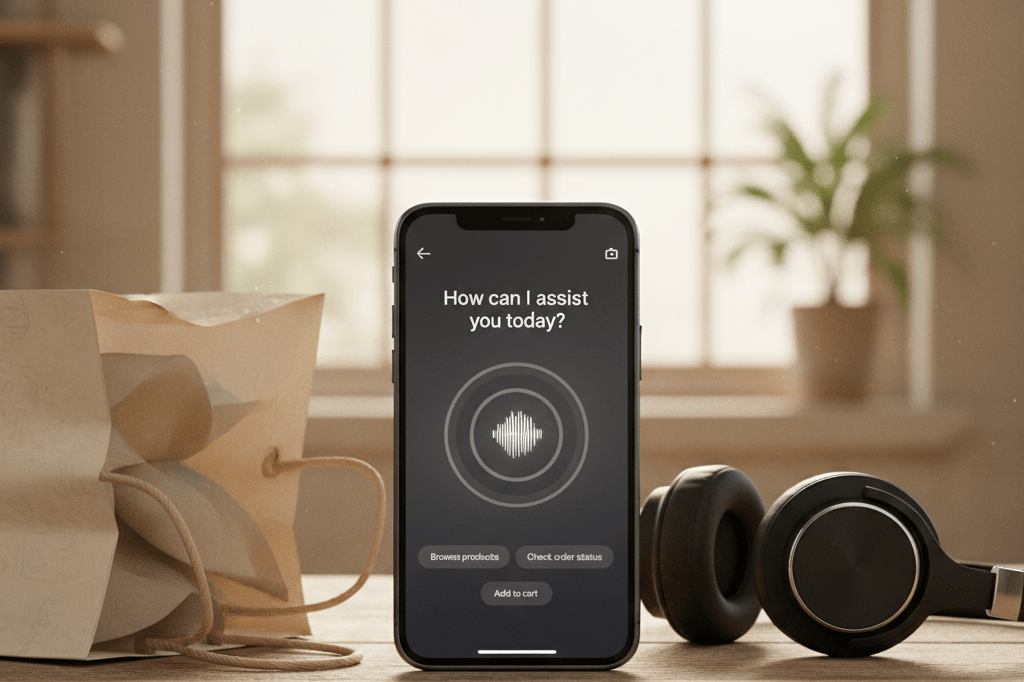
Voice technology integration fundamentally reshapes customer interactions by creating intuitive, conversational touchpoints that eliminate traditional shopping friction. Modern AI voice assistants process natural language queries 87% more accurately than earlier systems, enabling customers to discover products through complex, multi-parameter requests like “find sustainable sneakers under $120 with arch support for daily walking.” This technological advancement transforms product discovery from keyword-based search to conversational exploration, where customers can refine their requirements through follow-up questions and receive personalized recommendations based on voice interaction history.
The transformation extends beyond simple product search to encompass entire customer journey optimization through voice-enabled experiences. Voice commerce transactions now account for 18% of all smart speaker interactions, with purchase completion rates improving by 34% when customers can complete transactions entirely through voice commands. Advanced voice recognition systems identify individual users with 95% accuracy, allowing businesses to provide personalized pricing, loyalty program access, and customized product suggestions without requiring manual login processes.
Strategy 1: Voice-First Product Discovery
Voice-optimized product descriptions require restructuring content to match conversational search patterns, incorporating natural language phrases that customers use in spoken queries rather than typed searches. Successful voice search optimization involves creating FAQ-style content that directly addresses common customer questions like “What’s the best laptop for graphic design under $1500?” or “Which coffee maker works with smart home systems?” Product descriptions should include conversational qualifiers such as “perfect for,” “ideal when,” and “works great with” to align with natural speech patterns that voice assistants process more effectively.
Implementation of voice-first discovery systems shows measurable improvements in customer engagement metrics, with voice search conversion rates averaging 23% higher than traditional text-based product searches. Businesses utilizing structured conversational commerce frameworks report 41% increases in average order values when customers discover products through voice interactions compared to standard e-commerce browsing. Voice-enabled product discovery reduces the average time from initial query to purchase decision by 67 seconds, streamlining the customer journey through intuitive conversational flows that eliminate navigation complexity.
Strategy 2: Seamless Omnichannel Voice Integration
Omnichannel voice integration connects in-store experiences with mobile applications through unified voice profiles that maintain customer preferences, purchase history, and authentication across all touchpoints. Advanced integration systems enable customers to start shopping conversations on smart speakers, continue them through mobile apps during commutes, and complete purchases using in-store voice kiosks without re-entering personal information. Voice-enabled reordering systems for consumable products show 78% customer retention rates compared to 54% for traditional subscription models, as customers appreciate the convenience of saying “reorder my usual coffee beans” rather than navigating complex reorder interfaces.
Voice authentication protocols reduce checkout friction by eliminating password requirements and form completion steps that traditionally cause 69% of mobile shopping cart abandonment. Biometric voice recognition systems process unique vocal characteristics within 1.2 seconds, enabling secure transactions that combine convenience with fraud protection through multi-factor authentication including voice patterns, device recognition, and behavioral analysis. Retailers implementing comprehensive voice authentication report 43% faster checkout completion times and 28% increases in mobile conversion rates.
Strategy 3: Voice Analytics to Predict Market Trends
Voice analytics capture real-time customer sentiment and emerging demand patterns through analysis of conversational data, query frequency changes, and failed search attempts that indicate unmet product needs. Advanced conversation analysis identifies trending keywords, seasonal demand shifts, and geographic preferences with 89% accuracy in predicting market movements 30-60 days before traditional analytics detect similar patterns. Voice feedback systems provide immediate market intelligence when customers express frustration with existing products or request features that don’t currently exist in available inventory.
Implementation of voice-driven market research enables businesses to adjust product development cycles based on actual customer language patterns rather than survey-based feedback that may not reflect authentic purchasing behavior. Voice analytics platforms process over 2.3 million customer interactions daily across major retail networks, identifying micro-trends that inform inventory decisions, pricing strategies, and new product launches. Companies utilizing voice trend analysis report 31% improvements in new product success rates and 24% reductions in overstock situations through data-driven demand forecasting.
Preparing Your Business for the Voice Commerce Evolution
Voice commerce preparation requires comprehensive audits of existing product data structures to ensure compatibility with AI voice assistants and natural language processing requirements. Current market analysis indicates that 67% of businesses lack voice-ready product information, creating immediate competitive advantages for early adopters who optimize their catalogs for conversational queries. Product data audits should evaluate description quality, FAQ completeness, structured markup implementation, and cross-platform compatibility to identify gaps that prevent effective voice assistant integration.
Strategic investment in voice-optimized content development positions businesses to capture growing voice market share, which industry projections estimate will reach $164 billion by 2025. Early adoption strategies focus on creating conversational product content, implementing voice search analytics, and developing customer service chatbots that seamlessly transition between text and voice interactions. Businesses that establish voice commerce capabilities before competitors gain first-mover advantages in customer acquisition, with studies showing 89% of consumers prefer to continue using the first voice assistant that successfully completes their purchase transactions.
Background Info
- Apple explored transitioning Siri to external artificial intelligence providers, including OpenAI and Anthropic, as reported by Bloomberg on July 1, 2025.
- A separate report from CNET indicated that Apple was estimated to pay Google up to $5 billion over time to improve Siri using a custom version of the Gemini AI program.
- Apple announced plans at its Worldwide Developers Conference (WWDC) keynote on June 10, 2024, to overhaul Siri with advanced artificial intelligence capabilities.
- The internal project for this AI integration was identified as “Project Greymatter” in reports citing Bloomberg sources.
- The updated Siri system utilized large language models to enable generative AI capabilities, allowing the assistant to control individual app functions across the operating system for the first time.
- New features unveiled or planned for the AI-infused Siri included voice memo transcriptions, summaries of websites and notifications, automated message replies, advanced photo editing, and AI-generated emojis.
- Apple tested a standalone application for Siri alongside a new “Ask Siri” feature designed to function across the company’s software ecosystem.
- Reports noted leadership changes within the Siri team that potentially influenced the direction of the voice assistant’s development path.
- Apple acquired the original Siri technology in 2010 for approximately $200 million.
- Mark Gurman, Apple Chief Correspondent for Bloomberg News, stated on May 31, 2024: “Apple Inc. is planning to overhaul its Siri virtual assistant with more advanced artificial intelligence, a move that will let users control individual app functions with their voice.”
- Industry analysts observed that Apple faced pressure to deliver these improvements after missing a previous target to launch an AI-supercharged version of Siri in March 2024.
- Apple emphasized privacy as a core component of its AI integrations, distinguishing its strategy from competitors like Google and Meta who faced criticism regarding data handling.
- The strategic shift aimed to help Apple catch up with rivals such as OpenAI and Google in the rapidly evolving generative AI landscape.
- IDC highlighted that potential collaborations with leading AI firms could accelerate iPhone sales growth, particularly in competitive markets like China.
- Conflicting reports emerged regarding the primary external partner; while Phemex News cited OpenAI and Anthropic as potential providers, CNET specifically detailed a financial arrangement with Google for Gemini integration.
- The overhaul was positioned as a key highlight of Apple’s broader AI push during the iOS 18 software update cycle.