


Related search
Skin Care Tool
Wine Accessories
Outdoor Adventure Gear
Bluetooth Receiver
Get more Insight with Accio
Amazon Prime Video Ultra Tier Launches With Strategic Pricing Model
Amazon Prime Video Ultra Tier Launches With Strategic Pricing Model
6min read·Jennifer·Mar 24, 2026
Amazon’s launch of Prime Video Ultra in April 2026 exemplifies the fundamental shift occurring across digital subscription services, where streaming service pricing strategies now prioritize tiered customer segmentation over one-size-fits-all models. The introduction of limited advertisements to Belgium’s standard Prime Video tier, coupled with the $4.99 monthly Ultra upgrade option, demonstrates how major platforms balance revenue optimization with customer retention. This transformation reflects broader industry recognition that content monetization requires multiple revenue streams to sustain premium content production costs.
Table of Content
- Subscription Services Transformation: Lessons from Prime Video Ultra
- Tiered Pricing: The New Standard for Digital Services
- Global Pricing Strategy: Lessons from Streaming Giants
- Turning Service Upgrades Into Revenue Opportunities
Want to explore more about Amazon Prime Video Ultra Tier Launches With Strategic Pricing Model? Try the ask below
Amazon Prime Video Ultra Tier Launches With Strategic Pricing Model
Subscription Services Transformation: Lessons from Prime Video Ultra
The timing of Prime Video’s restructuring aligns with remarkable viewer growth metrics, as the platform’s global audience expanded from 200 million in April 2024 to over 315 million by early 2026—representing a 57.5% increase in less than two years. This substantial user base expansion provides Amazon with enhanced leverage for implementing subscription tiers without significant subscriber loss risks. The business relevance extends beyond streaming services, as digital content providers across sectors observe how premium pricing strategies can successfully segment customers while maintaining market share growth.
Prime Video Ultra vs. Standard Tier Comparison
| Feature | Prime Video Ultra | Standard Prime Video |
|---|---|---|
| Monthly Price | $4.99 | Included in $14.99 membership |
| Annual Price | $45.99 (23% discount) | Included in $139 annual membership |
| Video Quality | 4K/UHD, Dolby Vision, HDR | HD, HDR, Dolby Vision |
| Audio Quality | Dolby Atmos | Standard Audio |
| Concurrent Streams | 5 streams | 4 streams |
| Offline Downloads | Up to 100 devices | Up to 50 devices |
| Advertising | No ads (except live sports/select content) | Ad-supported default model |
| Availability | United States only (as of April 2026) | Global availability |
Tiered Pricing: The New Standard for Digital Services

The evolution toward multi-tier subscription models reflects sophisticated customer segmentation approaches that maximize revenue per user while accommodating diverse spending preferences across market segments. Prime Video Ultra’s annual pricing at $45.99 demonstrates strategic discount positioning, offering subscribers a 23% savings compared to monthly payments totaling $59.88 annually. This pricing structure incentivizes longer commitment periods while reducing churn rates—a critical metric for subscription-based business models.
Premium features differentiation serves as the cornerstone for justifying higher subscription tiers, with Ultra subscribers receiving access to five concurrent streams versus the standard three-stream limitation. The exclusive 4K/UHD streaming quality creates clear value propositions for customers willing to pay premium prices for enhanced viewing experiences. Additionally, the expanded download capacity from 25 to 100 offline downloads addresses power users who consume content across multiple devices or during travel periods.
Creating Value with Multi-Tier Product Offerings
Successful tiered pricing implementation requires measurable feature differentiation that directly correlates with perceived customer value, as demonstrated by Prime Video Ultra’s strategic enhancement package. The concurrent stream increase from three to five accommodates larger households or shared account usage patterns, while the 4K/UHD exclusivity targets premium consumers who invest in high-resolution display technology. These feature upgrades create clear upgrade pathways that justify the $2.00 monthly price increase from the previous $2.99 standard rate.
Balancing Free, Basic and Premium Customer Experiences
The ad-supported approach maintains accessibility for price-sensitive customers while generating additional revenue streams through advertising partnerships, following successful models implemented by competitors like Netflix and Disney Plus. Belgian Prime members receive grandfathered access to their current service level without forced upgrades, demonstrating retention-focused transition strategies that minimize subscriber backlash. This approach allows platforms to test new monetization methods while preserving existing customer relationships during service restructuring periods.
Upgrade pathways become critical for converting standard subscribers to premium tiers, with Amazon’s strategy focusing on convenience and enhanced user experiences rather than restrictive limitations on basic service access. The company’s statement emphasizing that “delivering ad-free streaming with premium features requires significant investment” positions the Ultra tier as value-added rather than exploitative pricing. This messaging strategy helps maintain customer goodwill while encouraging voluntary upgrades based on perceived benefits rather than service degradation fears.
Global Pricing Strategy: Lessons from Streaming Giants
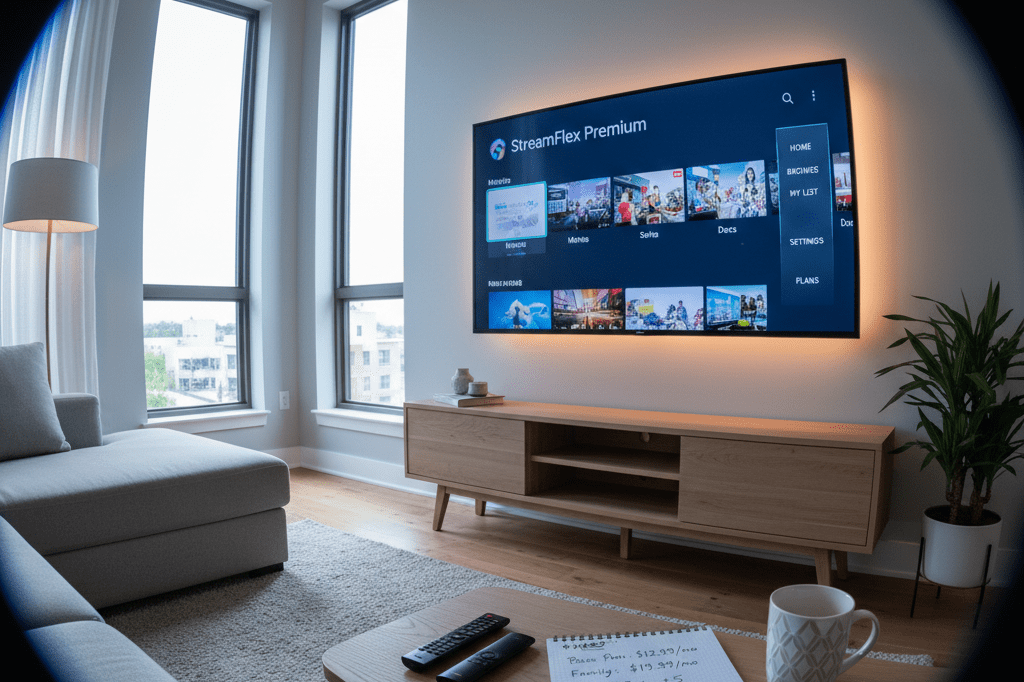
Strategic subscription price optimization requires careful orchestration of timing, market positioning, and competitive awareness to maximize revenue while minimizing subscriber churn rates. Amazon’s April 2026 implementation demonstrates sophisticated digital content monetization approaches that balance customer retention with revenue expansion objectives. The company’s global rollout strategy provides valuable insights for businesses across sectors seeking to implement tiered pricing models without alienating existing customer bases.
The streaming industry’s pricing evolution between 2025 and 2026 reveals coordinated market movements that suggest industry-wide recognition of content production cost pressures and revenue sustainability challenges. Netflix’s Standard plan increase to $18 monthly in January 2025, followed by Disney Plus and Hulu’s ad-supported tier adjustments to $12 monthly in October 2025, established new pricing benchmarks across the competitive landscape. These coordinated increases indicate market maturation where premium positioning becomes essential for maintaining profit margins amid escalating content acquisition and production expenses.
Price Adjustment Timing: When to Announce vs. Implement
Amazon’s advance notification strategy for Belgian Prime members exemplifies best practices in subscription price optimization, providing customers sufficient lead time to evaluate upgrade options before implementation deadlines. The company’s proactive communication approach contrasts sharply with industry competitors who often implement changes with minimal notice periods, resulting in higher churn rates and negative customer sentiment. This strategic timing allows subscribers to make informed decisions while reducing the psychological impact of sudden service modifications that can trigger immediate cancellation responses.
Market positioning during price adjustments becomes critical when operating in saturated streaming markets where customers maintain multiple subscription services and regularly evaluate cost-benefit ratios. HBO Max’s Premium tier increase to $23 monthly demonstrates aggressive premium positioning that targets high-value customers willing to pay substantial premiums for exclusive content access. Conversely, Fubo’s decision to reduce Pro and Elite subscription prices by $11 effective January 1, 2026, illustrates alternative strategies that prioritize market share growth over immediate revenue maximization during competitive positioning battles.
Content as Price Justification
Exclusive content assets serve as primary justification mechanisms for premium pricing strategies, with Amazon leveraging high-production-value series like “The Lord of the Rings: The Rings of Power,” “Fallout,” and “Reacher” to demonstrate value propositions that warrant Ultra tier subscriptions. These original productions require substantial investment commitments—often exceeding $100 million per season for premium series—creating tangible justifications for increased subscription costs that customers can directly correlate with viewing experiences. The strategic positioning of exclusive content behind premium tiers creates compelling upgrade incentives that transform content investments into sustainable revenue growth drivers.
Regional content preferences provide additional digital content monetization opportunities through targeted programming that resonates with specific geographic markets, as demonstrated by Amazon’s inclusion of Belgian favorites like “Patsers” and “Squeezie: Merci Internet” in their content library. Local programming creates emotional connections that increase customer loyalty and reduce price sensitivity, particularly when combined with exclusive access arrangements that prevent content availability on competing platforms. Library scale amplifies perceived subscription value through quantity effects, where extensive content catalogs justify higher pricing even when individual viewers consume only small percentages of available programming options.
Turning Service Upgrades Into Revenue Opportunities
Successful subscription revenue growth depends on clear value demonstration strategies that translate technical improvements into customer-perceived benefits, particularly when introducing premium tiers to existing service ecosystems. Amazon’s approach to communicating ad-free experience value emphasizes user convenience and viewing continuity rather than simply highlighting advertising removal, creating positive associations with upgrade decisions. The company’s messaging strategy positions Ultra tier benefits as enhancements to customer experience rather than punitive measures for standard tier subscribers, maintaining goodwill while encouraging voluntary premium tier adoption.
Feature-based upselling strategies prove most effective when highlighting tangible, measurable improvements that customers can immediately recognize and utilize in their viewing habits. The expansion from 25 to 100 download slots represents a 300% increase in offline content capacity, providing concrete value metrics that justify the $2.00 monthly premium for frequent travelers or users with limited internet connectivity. Premium tier adoption accelerates when customers can quantify specific benefits that directly impact their usage patterns, transforming abstract service improvements into demonstrable value propositions that support recurring payment justifications.
Background Info
- Starting April 10, 2026, Amazon Prime Video in Belgium will introduce limited advertisements to the standard tier, while the base cost of the overall Prime membership remains unchanged.
- A new premium ad-free tier named “Prime Video Ultra” launches globally on April 10, 2026, with a monthly price increase from $2.99 to $4.99.
- The annual plan for Prime Video Ultra is priced at $45.99, reflecting a 23% discount compared to the cumulative monthly rate.
- Prime Video Ultra includes enhanced features: support for five concurrent streams (increased from three), up to 100 downloads (up from 25), and exclusive access to 4K/UHD streaming quality.
- Amazon states that “Delivering ad-free streaming with premium features requires significant investment, and this structure aligns with other major streaming services while ensuring customers have the flexibility to choose how they want to watch.”
- Globally, the number of Prime Video viewers reached an average of more than 315 million as of early 2026, rising from 200 million in April 2024.
- The introduction of ads and the new Ultra tier aligns with a broader industry trend where competitors like Netflix, Disney Plus, HBO Max, and others raised prices between 2025 and 2026.
- Specific competitor pricing changes include Netflix raising its ad-based plan to $8 per month and its Standard plan to $18 per month starting January 2025.
- Disney Plus and Hulu increased their ad-supported tiers to $12 per month in October 2025, while HBO Max raised its Premium tier to $23 per month.
- In contrast to most platforms, Fubo reduced its Pro and Elite subscription prices by $11 effective January 1, 2026, during a carriage dispute with NBCUniversal.
- Belgian Prime members were informed prior to the launch regarding sign-up procedures for the new ad-free experience to allow time for decision-making.
- The content library supporting these tiers includes original series such as “The Lord of the Rings: The Rings of Power,” “Fallout,” “Reacher,” “The Boys,” and regional favorites like “Patsers” and “Squeezie: Merci Internet.”
- No action is required from existing Belgian Prime members to maintain their current access level, though avoiding ads now necessitates upgrading to the paid Ultra tier.
Related Resources
- Lmtw: 深度剖析 Amazon Prime Video 的定价策略
- Sportspro: Amazon Prime Video to live stream 350 MLB games…
- Evrimagaci: Amazon Prime Video Ultra Launches With New…
- Artthreat: Amazon Video launches Prime Video Ultra at $4…
- C21media: Amazon’s Prime Video India unveils 50-plus series…