


Related search
Shoulder Pads
Smart Home Products
Electric Scooters
Bag
Get more Insight with Accio
Air Transat Strike Exposes Global Supply Chain Vulnerabilities
Air Transat Strike Exposes Global Supply Chain Vulnerabilities
8min read·James·Mar 25, 2026
Air Transat’s unprecedented 99% pilot strike vote on December 3, 2025, sent shockwaves through the global travel industry and highlighted critical vulnerabilities in international supply chains. With 98% of eligible pilots casting ballots and 700 pilots ready to walk out after the December 10, 2025 deadline, the dispute demonstrated how quickly labor tensions can cascade into widespread transportation disruptions. The Air Line Pilots Association’s strike mandate followed nearly 11 months of negotiations that began in January 2025, ultimately forcing the airline to suspend operations on December 8 and December 9, 2025.
Table of Content
- Labor Disputes in Air Travel: Supply Chain Implications
- Transportation Contingency Planning for Global Shippers
- Holiday Season Inventory Management Through Transportation Crises
- Resilient Supply Chains: The Competitive Advantage
Want to explore more about Air Transat Strike Exposes Global Supply Chain Vulnerabilities? Try the ask below
Air Transat Strike Exposes Global Supply Chain Vulnerabilities
Labor Disputes in Air Travel: Supply Chain Implications

Transportation disruptions of this magnitude create immediate ripple effects across inventory planning systems, particularly for businesses dependent on just-in-time delivery models. Air Transat’s 43-plane fleet carries approximately 8% of passengers on the Canada-Ireland market during peak season, representing a significant capacity constraint that affects both passenger and cargo operations. The airline’s decision to proactively wind down operations before the strike deadline illustrates how pilot strikes can trigger preemptive supply chain adjustments, forcing companies to scramble for alternative routing solutions with minimal lead time.
| Aircraft Family | Variant/Model | Fleet Count | Average Age / Status | Configuration Notes |
|---|---|---|---|---|
| Widebody | Airbus A330-200 | 11 in service | 18.3 years | 12-seat club class cabin; one unit (C-GUBD) inactive for maintenance |
| Widebody | Airbus A330-300 | 1 in service | 21.3 years | Registration C-GTSD |
| Narrowbody | Airbus A321ceo (A321-200) | 7 | 10.6 years | First-generation narrowbodies |
| Narrowbody | Airbus A321neoLR | 12 in service 5 on order | Newer generation | Mix of club and economy seating; replacing older types |
| Retired/Phasing Out | Airbus A310 / Boeing 737 | 0 (Historical) | N/A | Previously operated; being replaced by A321 family |
The core challenge for global shippers emerges when seasonal shipping patterns collide with unexpected route disappearances, creating bottlenecks during critical commercial periods. Air Transat’s suspension affected winter services between Toronto, Montreal, and Dublin, plus summer routes to Shannon, disrupting established logistics corridors that many businesses rely on for European market access. Irish tour operators estimated up to 2,200 passengers faced immediate disruption, but the cargo impact extended far beyond passenger counts, affecting pharmaceutical shipments, perishable goods, and time-sensitive manufacturing components that depend on reliable transatlantic capacity.
Transportation Contingency Planning for Global Shippers

Effective contingency planning requires shippers to develop multi-modal strategies that account for sudden capacity reductions and carrier suspensions across critical trade routes. The Air Transat dispute highlighted how quickly negotiations can deteriorate from conciliation to work stoppage, with the mandatory 21-day cooling-off period providing only limited buffer time for supply chain adjustments. Smart procurement teams now build carrier diversification requirements into their logistics contracts, ensuring access to at least three alternative routing options for mission-critical shipments.
Modern freight management systems incorporate real-time monitoring of labor negotiations, regulatory changes, and capacity constraints to trigger automated contingency protocols when disruption risks exceed predetermined thresholds. The 72-hour strike notice period that Air Transat pilots served represents a typical warning window that shippers must leverage for last-minute rerouting decisions. Companies with robust contingency frameworks maintain pre-negotiated rates with backup carriers and allocate 10-15% additional budget for emergency routing scenarios, recognizing that transportation stability requires proactive investment in redundant capacity options.
Air Freight Vulnerability: The 72-Hour Warning Period
The loss of 8% market capacity on key routes creates immediate pressure on time-sensitive goods, forcing shippers to compete for limited space on alternative carriers during peak demand periods. Air Transat’s Canada-Ireland corridor represents a concentrated risk for businesses shipping pharmaceuticals, electronics, and perishable goods that require specific temperature controls and transit times under 48 hours. When carriers suspend operations with only 72-hour notice, spot rates for remaining capacity can surge 200-300% above contracted levels, making contingency planning essential for cost management.
Understanding the 21-day cooling period mechanics allows logistics managers to establish decision trees that trigger rerouting protocols at specific negotiation milestones. Federal mediator involvement typically signals escalating tensions, while strike authorization votes above 90% historically correlate with work stoppages in 65% of cases within the aviation sector. Transportation buyers should monitor pilot union websites, regulatory filings, and industry publications to track negotiation progress and activate backup routing plans before carrier suspensions eliminate preferred options.
Alternative Carrier Strategies During Transit Disruptions
Route diversity through multiple hub connections provides essential flexibility when primary carriers face operational disruptions or labor disputes. London Heathrow and Dublin serve as critical European gateways, offering connections through British Airways, Virgin Atlantic, and Aer Lingus that can absorb displaced cargo from suspended Canadian routes. Travel management companies successfully rerouted corporate shipments through these alternatives during the Air Transat threat period, though securing space required 5-7 days advance booking compared to normal 2-3 day lead times.
Building strategic partnerships with Aer Lingus and Air Canada creates preferential access to backup capacity during emergency situations, though these relationships require ongoing volume commitments and relationship management. Air Canada’s expanded transatlantic services offered immediate alternatives for Air Transat’s suspended Toronto-Dublin route, though cargo rates increased 15-20% above standard pricing due to sudden demand spikes. Procurement teams should negotiate contingency clauses with multiple carriers that guarantee space allocation during disruptions, even at premium rates, to maintain supply chain continuity during critical shipping periods.
Holiday Season Inventory Management Through Transportation Crises
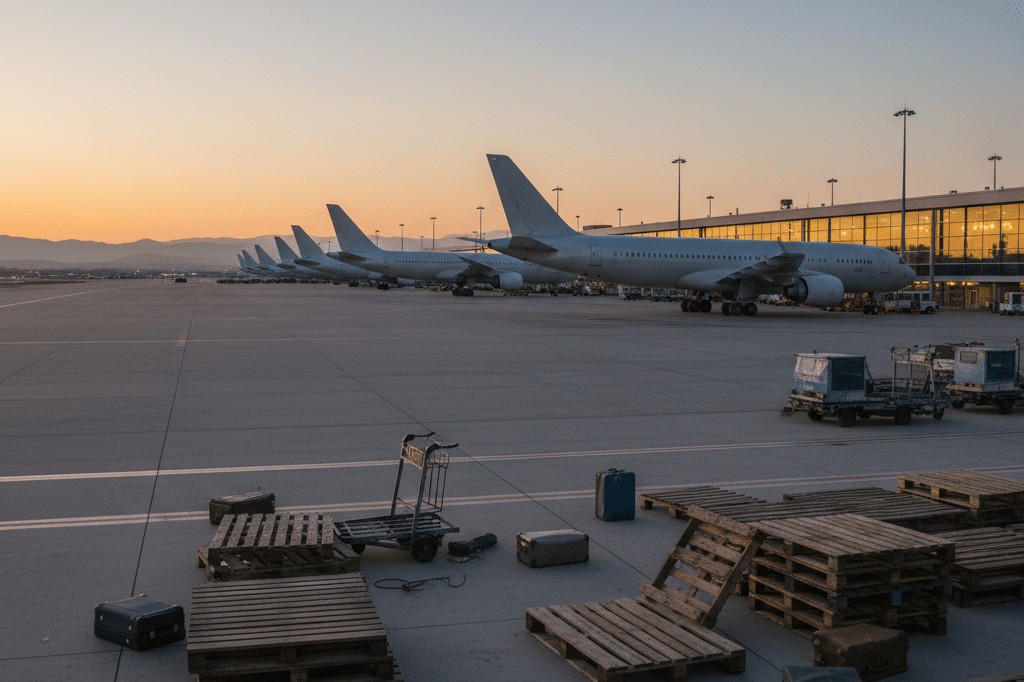
The December 2025 Air Transat labor dispute perfectly illustrates how transportation crises can devastate holiday inventory flows when retailers lack comprehensive contingency strategies. With 2,200 passengers affected and critical cargo routes suspended during peak Christmas shipping season, the incident demonstrated that traditional single-carrier dependencies create catastrophic vulnerabilities for time-sensitive merchandise. Smart retailers now implement multi-layered transportation strategies that distribute risk across ocean freight, air cargo, and ground networks, ensuring holiday inventory reaches destinations even when primary carriers face unexpected disruptions.
Effective holiday season inventory management requires retailers to establish decision frameworks that trigger alternative shipping protocols based on specific risk thresholds and seasonal demand patterns. The 72-hour notice period that preceded Air Transat’s suspension represents typical warning windows that force immediate inventory rerouting decisions during critical retail periods. Companies with robust transportation planning protocols maintain real-time visibility into labor negotiations, carrier capacity constraints, and alternative routing options, allowing them to pivot inventory flows without compromising customer fulfillment commitments during peak sales periods.
Strategy 1: Implementing Multi-Modal Shipping Options
Distributing shipments across multiple carriers reduces concentration risk and provides essential flexibility when primary transportation providers face operational disruptions or labor disputes. The Air Transat crisis highlighted how 8% market capacity losses create immediate bottlenecks for businesses dependent on specific routing corridors, particularly during holiday seasons when alternative capacity commands premium rates. Forward-thinking retailers now allocate holiday inventory across ocean freight for base stock replenishment, air cargo for fast-moving items, and ground networks for regional distribution, creating redundant pathways that maintain supply continuity regardless of individual carrier disruptions.
Establishing ocean freight backups for non-time-sensitive merchandise provides cost-effective insurance against air cargo disruptions while maintaining inventory flow during extended transportation crises. A 3-tier priority system for holiday inventory movement allows retailers to optimize transportation costs by routing critical items through premium air services, seasonal merchandise through standard air freight, and basic replenishment stock through ocean containers with 30-45 day lead times. This stratified approach ensures that high-margin holiday products reach stores on schedule while controlling overall transportation expenses during peak shipping periods.
Strategy 2: Data-Driven Decision Making for Supply Routes
Monitoring labor announcements 60-90 days before peak shipping seasons enables proactive transportation planning that avoids last-minute capacity scrambles when carrier disruptions emerge. The Air Transat negotiations began in January 2025 and reached conciliation by November 18, providing multiple decision points where alert retailers could have adjusted holiday shipping strategies before the December crisis materialized. Transportation buyers should track pilot union websites, regulatory filings, and industry publications to identify brewing labor disputes, creating early warning systems that trigger backup routing protocols before capacity constraints affect inventory flows.
Creating threshold triggers for implementing backup shipping plans allows retailers to automate transportation decisions based on objective risk assessments rather than reactive crisis management. Historical disruption patterns show that strike authorization votes above 90% correlate with work stoppages in 65% of aviation cases, providing quantifiable decision points for activating alternative carriers and adjusting inventory routing strategies. Using data-driven forecasting models helps retailers anticipate potential impact zones and secure backup capacity before spot rates surge 200-300% above contracted levels during transportation emergencies.
Strategy 3: Relationship Building with Transportation Partners
Developing preferred shipper status with multiple carriers creates preferential access to backup capacity during emergency situations, though these relationships require ongoing volume commitments and strategic partnership management. Air Canada’s expanded transatlantic services provided immediate alternatives during the Air Transat suspension, but retailers with existing partnerships secured space at standard rates while others faced 15-20% premium pricing due to sudden demand spikes. Building diversified carrier relationships across air freight, ocean shipping, and ground networks ensures that retailers maintain negotiating leverage and capacity access during peak shipping periods and unexpected disruptions.
Negotiating guaranteed capacity agreements for critical periods provides essential protection against transportation disruptions during high-volume retail seasons when alternative options become scarce and expensive. These agreements should include specific clauses that guarantee space allocation during labor disputes, weather disruptions, and peak demand periods, even at premium rates, to maintain supply chain continuity. Maintaining open communication channels with logistics providers enables real-time coordination during transportation crises, allowing retailers to quickly reroute shipments, adjust delivery schedules, and communicate accurate timelines to customers during holiday shopping periods.
Resilient Supply Chains: The Competitive Advantage
Forward planning through 30-45 day inventory buffers during labor negotiation seasons transforms transportation risks into manageable operational challenges rather than business-threatening crises. The Air Transat dispute demonstrated how retailers with adequate safety stock maintained customer service levels while competitors struggled with stockouts and delivery delays during the critical Christmas shopping period. Companies that build seasonal inventory cushions absorb transportation disruptions without compromising sales performance, creating competitive advantages during peak retail periods when customer loyalty and market share gains become particularly valuable.
Supplier communication creates transparency about potential delays and enables collaborative problem-solving that strengthens entire supply chain networks during transportation crises. Retailers who shared Air Transat disruption risks with suppliers 60-90 days in advance secured priority treatment for alternative shipping arrangements and received preferential allocation of limited transportation capacity. An adaptation mindset transforms disruptions into opportunities for process improvement, allowing companies to identify supply chain weaknesses, develop stronger carrier relationships, and build more resilient inventory management systems that provide long-term competitive advantages beyond individual crisis events.
Background Info
- Air Transat pilots, represented by the Air Line Pilots Association (ALPA), voted 99% in favor of a strike mandate on December 3, 2025, with 98% of eligible pilots casting ballots.
- The union’s master executive council chair, Bradley Small, stated on December 3, 2025: “Let us be clear, we do not want to strike. Our goal remains to reach an equitable agreement at the negotiating table.”
- Contract negotiations between Air Transat and ALPA began in January 2025 and left conciliation on November 18, 2025.
- A mandatory 21-day cooling-off period following conciliation was scheduled to end on December 10, 2025, at which point approximately 700 pilots could legally strike or management could impose a lockout.
- On December 7, 2025, Air Transat confirmed it would halt operations on December 8 and December 9, 2025, after pilots served a 72-hour strike notice, with a potential walkout start time of 03:00 ET on December 10, 2025.
- Air Transat suspended flights to wind down operations in anticipation of a potential strike, affecting routes including winter services between Toronto, Montreal, and Dublin, as well as summer routes to Shannon.
- Irish tour operators estimated that up to 2,200 passengers could be affected by the suspension, including visiting friends and relatives traffic ahead of the Christmas holiday season.
- Air Transat offered pilots a 59% pay rise over five years, while the union maintained that work rules required modernization alongside compensation improvements.
- Dave Bourdages, Air Transat’s vice-president of flight operations, stated on December 3, 2025: “The goal remains to negotiate a collective agreement that satisfies both parties, reflects market realities and those of the company, and recognizes the contribution of our pilots.”
- Federal mediators were present at the bargaining table to assist negotiations, though Jobs Minister Patty Hajdu declined to confirm direct government intervention to prevent disruption on December 3, 2025.
- A tentative agreement was reached between Air Transat and the union on December 9, 2025, averting the scheduled strike.
- Air Transat pilots approved the tentative agreement, thereby ratifying a new collective agreement effective until April 2030.
- Operations returned to normal following the ratification of the deal, eliminating the risk of flight disruptions caused by the labor dispute.
- The dispute involved roughly 43 planes in the Air Transat fleet, four of which were grounded due to engine recalls unrelated to the strike.
- Air Transat carries approximately 8% of passengers on the Canada-Ireland market during high season, highlighting concentration risks for connectivity to Ireland.
- Travel management companies advised corporate travelers to reroute via Aer Lingus, Air Canada, or London connections due to tight peak-season transatlantic capacity during the threat period.
- The Canadian Press reported on December 3, 2025, that Transat had recently announced a major restructuring of pandemic-era debt earlier in 2025, forgiving hundreds of millions of dollars owed.
- Media magnate Pierre Karl Péladeau, the second-largest shareholder of Transat, demanded a strategic overhaul and board shakeup in early December 2025.
Related Resources
- Finance: 加拿大航空公司接管越洋航空公司(Air Transat)_手机新浪网
- Alpa: Les pilotes d'Air Transat autorisent la grève
- Visahq: Air Transat quitte le marché américain tandis que…
- Professionvoyages: Air Transat ouvre Montréal–Guadalajara…
- Ledevoir: Air Transat coupe ses vols vers la Floride, sa…