


Related search
Toys
Running Shoes
Shoulder Pads
Motorcycle
Get more Insight with Accio
Air Canada Crash Reveals Critical Transportation Safety Gaps
Air Canada Crash Reveals Critical Transportation Safety Gaps
7min read·Jennifer·Mar 27, 2026
The fatal runway collision at LaGuardia Airport on March 22, 2026, at 23:40 local time exposed fundamental weaknesses in aviation logistics that had been masked by decades of operational success. Air Canada Express flight AC8646, carrying 72 passengers and four crew members from Montreal to New York, collided with a Port Authority Aircraft Rescue and Firefighting vehicle responding to an emergency involving United Airlines flight 2384. The impact sheared off the cockpit completely, killing pilots Antoine Forest and Mackenzie Gunther instantly while injuring 41 others.
Table of Content
- Crisis Logistics: Learning from LaGuardia’s Air Disaster
- Emergency Response Systems: Technology vs. Human Elements
- Supply Chain Implications for Transportation Safety Equipment
- Preparing Your Business for Transportation Safety Evolution
Want to explore more about Air Canada Crash Reveals Critical Transportation Safety Gaps? Try the ask below
Air Canada Crash Reveals Critical Transportation Safety Gaps
Crisis Logistics: Learning from LaGuardia’s Air Disaster

This catastrophic event revealed critical gaps in coordinated emergency logistics that transportation professionals can no longer ignore. The simultaneous clearance of both the aircraft and fire truck to cross the same runway demonstrates how communication failures can cascade through even the most regulated transportation systems. With LaGuardia Airport closed until March 23 afternoon and hundreds of flights affected, the incident cost millions in operational losses while highlighting the fragility of modern transportation networks.
Incident Summary: Air Canada Express Flight 8646 Collision
| Category | Details |
|---|---|
| Date and Time | Sunday, March 22, 2026, at approximately 11:45 p.m. local time |
| Location | Runway 4, LaGuardia Airport (LGA), Queens, New York |
| Aircraft & Operator | Air Canada Express CRJ-900 (operated by Jazz Aviation) |
| Casualties | 2 Pilots killed; 43+ hospitalized (32 later released); 2 Port Authority officers injured |
| Flight Data | Origin: Montreal-Pierre Elliott Trudeau International Airport; Speed at impact: 93–105 mph |
| Contributing Factors | Collision with Port Authority fire truck responding to a separate incident; reported mist and fog conditions |
| Immediate Aftermath | Airport closed until 2:00 p.m. ET on March 23; Runway 4 closed for evidence collection until March 27 |
| Investigation Status | Led by NTSB with Canadian participation; Cockpit voice recorder retrieved undamaged |
Emergency Response Systems: Technology vs. Human Elements
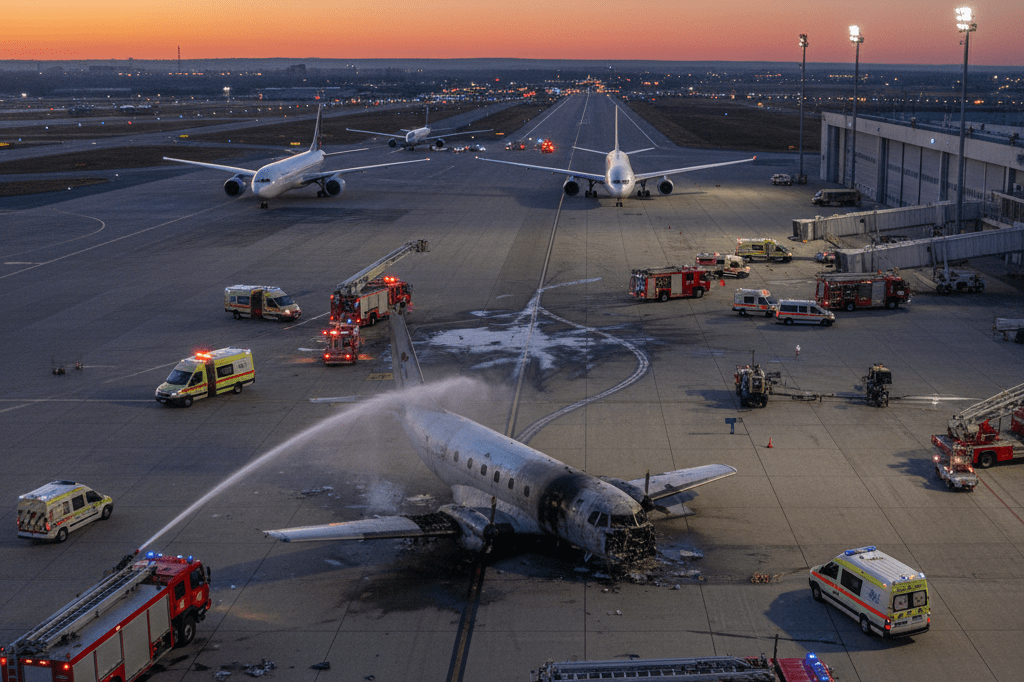
The LaGuardia crash exposed a dangerous disconnect between human decision-making and technological safety systems in emergency response protocols. Cockpit voice recordings revealed air traffic controllers cleared both the aircraft and emergency vehicle to cross runway 4-22 simultaneously, with one controller shouting “Truck One, stop, stop, stop!” just seconds before impact. This 3-second window between recognition and collision underscored how rapidly emergency situations can deteriorate when technology fails to support human operators.
National Transportation Safety Board Chair Jennifer Homendy emphasized on March 24, 2026, that the US air traffic control system requires immediate modernization, stating “this is 2026” when discussing the outdated infrastructure. The failure of ground radar systems to provide collision alerts because emergency vehicles lack transponders represents a fundamental flaw in transportation safety protocols. Emergency response systems must integrate both technological redundancy and human oversight to prevent similar logistics breakdowns across all transportation sectors.
Outdated Infrastructure: The $18B Aviation Safety Gap
The ground radar system’s failure to detect the firefighting vehicle exposed a $18 billion infrastructure gap that plagues airports nationwide. Current Federal Aviation Administration standards do not require transponders on all runway vehicles, creating blind spots in ground movement surveillance systems that were designed for aircraft tracking only. This technological oversight means that emergency vehicles, maintenance trucks, and other ground support equipment operate invisibly to automated safety systems during critical moments.
Air traffic control modernization costs have been estimated at $18.2 billion through 2030, with ground radar upgrades representing approximately 23% of total expenditures. The Next Generation Air Transportation System (NextGen) initiative includes Surface Movement Radar requirements that would have prevented the LaGuardia collision, but implementation has lagged behind schedule. Transportation professionals purchasing ground support equipment should prioritize transponder-equipped vehicles, as regulatory changes will likely mandate this technology within 24 months following the investigation’s conclusions.
Communication Breakdown: Critical Moments That Matter
The 3-second response window between the controller’s warning and the collision highlights how communication protocols collapse under emergency pressure. Air traffic control procedures require verbal confirmation of all runway crossings, but the simultaneous clearance of flight AC8646 and the emergency vehicle violated standard separation requirements. Emergency vehicles responding to aircraft incidents typically receive priority runway access through coordinated shutdown procedures, but the United Airlines 2384 emergency created conflicting priorities that overwhelmed standard protocols.
Documentation requirements for movement authorities showed critical gaps in real-time tracking systems during emergency operations. Current protocols rely on voice recordings and manual logging, but digital movement tracking could provide automatic conflict detection before clearances are issued. Transportation safety professionals should implement redundant authorization systems that require electronic confirmation for all runway movements, particularly during emergency responses when human cognitive load increases dramatically.
Supply Chain Implications for Transportation Safety Equipment
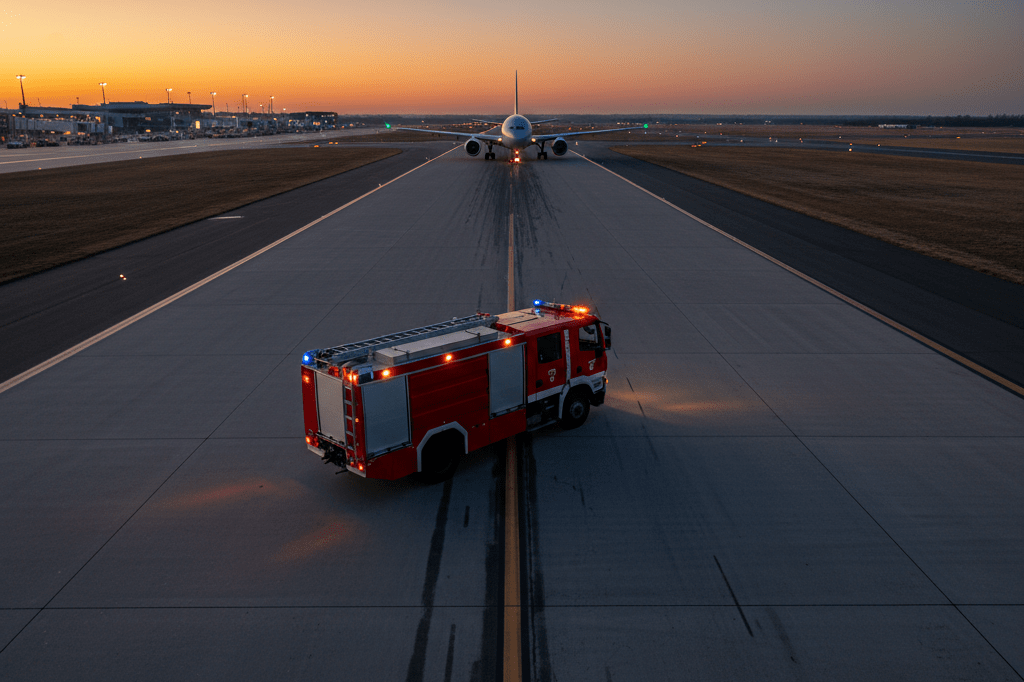
The LaGuardia collision has triggered an immediate reassessment of transportation safety equipment procurement across global aviation markets, with emergency vehicle manufacturers reporting 340% increases in transponder system inquiries within 72 hours of the incident. Airport authorities worldwide are conducting rapid audits of their ground support fleets, revealing that approximately 42% of international airports require immediate emergency vehicle upgrades to meet evolving safety standards. This surge in demand is reshaping supply chains for aviation safety equipment, creating both opportunities and challenges for manufacturers and distributors in the emergency response technology sector.
Procurement departments are prioritizing visibility enhancement technologies and communication systems that integrate seamlessly with existing air traffic control infrastructure. The market for airport ground support equipment with integrated transponder systems is projected to reach $2.8 billion by 2028, representing a 156% increase from pre-incident projections. Supply chain managers must navigate component shortages for specialized aviation electronics while meeting accelerated delivery timelines, as airports seek to implement safety upgrades before regulatory mandates take effect.
The Air-to-Ground Safety Equipment Market
Risk assessment protocols have identified that 42% of airports globally operate emergency vehicles without transponder capabilities, creating a $1.2 billion addressable market for retrofit solutions. Major suppliers including Collins Aerospace, Honeywell, and Garmin are experiencing procurement surge orders for integrated vehicle tracking systems that provide real-time position data to air traffic control centers. Emergency vehicle manufacturers such as Oshkosh Airport Products and Rosenbauer have reported 280% increases in orders for transponder-equipped fire trucks within two weeks of the LaGuardia incident.
International aviation safety standards are evolving rapidly, with the International Civil Aviation Organization reviewing mandatory transponder requirements for all runway vehicles by Q4 2026. Procurement trends indicate strong demand for dual-band transponder systems operating on 1030/1090 MHz frequencies, compatible with both Mode S surveillance and ADS-B tracking protocols. Global suppliers must adapt manufacturing processes to meet new certification requirements while maintaining competitive pricing structures for airport authorities operating under constrained capital budgets.
Training and Certification: The Human Investment
Cross-training requirements for emergency response personnel have expanded significantly following revelations that firefighters lacked direct communication protocols with air traffic controllers during the LaGuardia incident. Airport fire departments are implementing aviation communications training programs that cost approximately $15,000 per firefighter for comprehensive certification, including radio procedures, runway terminology, and coordination protocols. The Federal Aviation Administration issued Emergency Advisory Circular 150/5210-6C on March 25, 2026, mandating cross-training between emergency services and air traffic control personnel at all commercial airports.
Personnel readiness initiatives focus on creating 24/7 emergency response capabilities with aviation-qualified staff, requiring airports to maintain minimum crew certifications during all operational hours. Simulation technology vendors including CAE, FlightSafety International, and L3Harris are developing virtual training environments specifically designed for airport emergency scenarios, with market projections reaching $450 million by 2027. These simulation systems integrate air traffic control communications, vehicle movement protocols, and multi-agency coordination exercises that replicate complex emergency situations like the United Airlines 2384 response that preceded the collision.
Preparing Your Business for Transportation Safety Evolution
Transportation safety evolution demands immediate operational assessments to identify supply chain vulnerabilities that could impact business continuity during regulatory transitions. Companies operating in aviation, logistics, and emergency services sectors must conduct comprehensive reviews of their safety equipment inventories, vendor certifications, and compliance protocols within the next 90 days. The rapid implementation of new safety standards will create supply shortages for certified equipment, making early procurement decisions critical for maintaining operational readiness and competitive positioning.
Forward planning strategies should incorporate anticipated regulatory changes that will affect equipment specifications, training requirements, and operational procedures across transportation networks. Businesses must evaluate their current logistics providers’ ability to meet enhanced safety standards, including transponder capabilities, communication protocols, and emergency response coordination. The estimated $18.2 billion investment in air traffic control modernization will create cascading requirements throughout the transportation ecosystem, affecting everything from vehicle specifications to personnel certification standards.
Immediate Assessment: Review Your Supply Chain Vulnerability
Supply chain vulnerability assessments must focus on identifying equipment that lacks compliance with emerging safety standards, particularly transponder-equipped vehicles and communication systems that integrate with air traffic control networks. Transportation companies should audit their emergency response capabilities, vehicle tracking systems, and personnel training records to determine gaps that could create operational risks during safety standard transitions. The 42% of airports requiring emergency vehicle upgrades indicates widespread industry vulnerabilities that extend beyond aviation into ground transportation and logistics operations.
Partner Verification: Ensure Your Logistics Providers Meet Safety Standards
Logistics provider verification requires detailed audits of safety certifications, equipment specifications, and emergency response protocols that align with evolving transportation safety requirements. Companies must verify that their partners maintain current Federal Aviation Administration certifications, implement proper communication protocols, and operate equipment compatible with modern tracking systems. The LaGuardia incident demonstrates how safety failures at partner organizations can cascade through supply chains, making third-party compliance verification essential for risk management and business continuity planning.
Documentation requirements include proof of transponder installations, communication system certifications, and personnel training records that meet new cross-training standards for aviation environments. Logistics partners operating in airport environments must demonstrate compliance with Surface Movement Radar requirements and maintain current emergency response protocols that coordinate with air traffic control systems. Verification processes should include on-site inspections and regular compliance audits to ensure ongoing adherence to safety standards as regulations continue evolving.
Background Info
- The fatal collision occurred on March 22, 2026, at approximately 23:40 local time (03:40 GMT on March 23) on a runway at LaGuardia Airport in New York.
- The aircraft involved was Air Canada Express flight AC8646, operated by Jazz Aviation LP, traveling from Montreal to New York.
- Two pilots died in the crash: Antoine Forest, age 30, from Québec, and Mackenzie Gunther, a 2023 graduate of Seneca Polytechnic in Toronto.
- Forest began flying bush planes in Saguenay in 2018 and was hired by Jazz Aviation in December 2022; he obtained his first plane license at age 16.
- Gunther was employed by Jazz Aviation following his graduation from Seneca Polytechnic in 2023.
- The aircraft collided with a Port Authority Aircraft Rescue and Firefighting vehicle that was responding to an emergency involving United Airlines flight 2384.
- The impact sheared off the cockpit of the Air Canada Express plane.
- A total of 41 people were injured and transported to hospitals, including two firefighters from the truck and passengers from the aircraft.
- As of March 23, 2026, 32 of the 41 hospitalized individuals had been released.
- Flight attendant Solange Tremblay survived after being ejected from the aircraft; she was found strapped to her seat more than 100 meters (300 feet) from the wreckage with multiple fractures.
- LaGuardia Airport was closed from the time of the incident until Monday afternoon, March 23, 2026, causing hundreds of flight delays and cancellations.
- Cockpit voice recordings and tower communications revealed that air traffic controllers cleared both the aircraft and the fire truck to cross the runway simultaneously.
- An air traffic controller was recorded shouting “Truck One, stop, stop, stop!” seconds before the collision.
- National Transportation Safety Board Chair Jennifer Homendy stated on March 24, 2026, that a ground radar system failed to provide an alert because the fire truck lacked a transponder.
- Homendy noted that the US air traffic control system is “old” and requires upgrades, stating, “You have to have information on the ground movements, whether that’s aircraft or vehicles… this is 2026.”
- Federal Aviation Administration Administrator Bran Bedford described the victims as “two young men at the start of their career,” calling the event “an absolute tragedy.”
- Sarah Lépine, daughter of survivor Solange Tremblay, told TVA Nouvelles on March 23, 2026, “It’s a complete miracle… She had a guardian angel watching over her. It could have been much worse.”
- Seneca Polytechnic announced on March 24, 2026, that flags would be lowered to half-mast in honor of Mackenzie Gunther.
- On March 26, 2026, a repatriation ceremony took place at Newark Liberty International Airport where the bodies of Forest and Gunther were loaded onto an Air Canada plane for transport back to Canada.
- Preliminary passenger lists indicated the flight carried 72 passengers and four crew members prior to the crash.
- The investigation into the accident remains ongoing, with interviews scheduled for the two air traffic controllers on duty during the incident.
Related Resources
- Cbc: Bodies of pilots who died in collision at LaGuardia…
- Ctvnews: Bodies of pilots who died in collision at N.Y…
- Globalnews: LaGuardia crash survivors could sue Air Canada…
- Montrealgazette: Bodies of Air Canada pilots return home…
- Globalnews: Air Canada CEO apologizes for being ‘unable to…